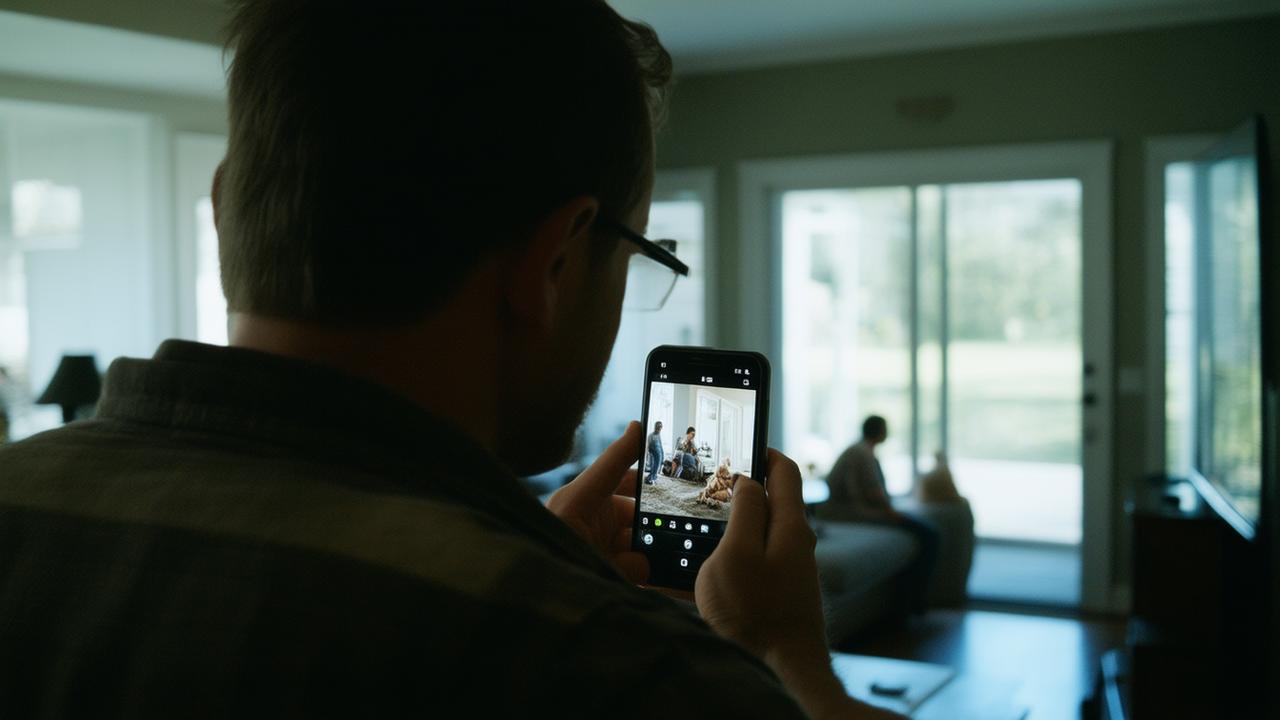
The first time he watched the footage, he thought the app had glitched. The video box on his phone showed his living room, washed in the soft amber light of the late afternoon sun. His dog, Maple, a caramel-colored mutt with suspiciously soulful eyes, was sprawled upside down on the couch, paws in the air. So far, so normal. Then a stranger walked past the coffee table, holding a red Solo cup and wearing shoes in his apartment. Behind him, another stranger. And someone else. Laughter drifted faintly through the phone speakers, growing louder as the camera auto-adjusted. For a moment, he just stared, blinking, unable to reconcile the scene with what was supposed to be happening: a quiet evening with a dog sitter, a slow walk around the block, maybe a game of fetch in the hallway.
The Quiet Trust We Hand to Strangers
It had seemed like a small, modern miracle—finding a dog sitter in under an hour. He’d posted a listing late on a Wednesday: weekend away, one dog, Maple, friendly, needs two walks a day, likes belly rubs and frozen blueberries. Within minutes, his phone pinged with applications. Profile photos of smiling twenty-somethings, retired couples, side-hustling grad students. Star ratings, short bios, glowing reviews. The woman he picked—Lena—had a profile that practically radiated warmth.
“Animals are my happy place,” she’d written. Her photos were with a golden retriever at the beach, a gray cat curled in her lap, a pit bull nuzzling her cheek. She had thirty-seven five-star reviews and a long thread of praise: reliable, kind, communicative, treated our house like her own. He read each one carefully, scanning for anything off. Nothing. She was, as far as he could tell, the kind of person you wanted watching the living, breathing heart of your home.
The first time they met, Maple barreled into the hallway like a furry torpedo and hurled herself at Lena’s knees. Maple was picky about people—she’d once barked nonstop at a plumber for twenty solid minutes—but she melted under Lena’s touch, rolling over for a belly rub almost immediately. That, more than anything, tipped the scales. Dogs know, he told himself. You can trust the dog.
He walked her through the apartment: the plant he was trying not to kill, the finicky lock on the bedroom door, the treat jar on the counter. He showed her the small black security camera in the corner of the living room, angled over Maple’s favorite sleeping spot. “It’s mostly for the dog,” he said, suddenly self-conscious. “Just to check in on her.”
Lena smiled easily. “Of course. I totally get it. I send photo updates too, if you want.” She crouched again, scratching behind Maple’s ears. “We’re going to be best friends, right?”
When the Camera Becomes a Storyteller
He didn’t intend to check the camera that first night. He’d driven out of the city, the highway unwinding in front of him in a blur of headlights and white lines, his mind already half at the quiet cabin he’d rented. The whole point of the trip was to unplug, to step away from the pull of screens and notifications and the low-grade hum of constant anxiety that seemed to live in the walls of his apartment. Maple would be fine, he told himself. He’d paid well. He’d chosen carefully.
Still, at the hotel, after brushing his teeth and lining up his phone on the nightstand, his thumb hovered over the pet cam app. It was just a tap. Just a quick check. He told himself it would help him relax.
The screen loaded slowly, the way things do right at the edge of decent Wi-Fi. And then there it was: his living room. The familiar green throw blanket bunched on the couch. The crooked stack of books he kept meaning to organize. Maple, curled in a cinnamon roll near the coffee table. And someone else’s feet.
They entered the frame halfway, just calves and Nike sneakers, one shoe already planted on the gray rug he’d bought last fall. He hit the volume icon, and a wave of sound rushed in—music, high and bright, the clink of glass, the murmur of overlapping voices. He dragged the timeline back, breath shallow, heart doing a strange uneven dance in his chest.
Six-thirty that evening: Lena came in alone, keys in hand, Maple dancing at her side. She dropped her backpack, took off her shoes, and knelt to rub Maple’s belly. He relaxed a little watching that part. She moved around the kitchen, opening the cabinet where he’d said the dog food was, measuring the evening ration, filling the water bowl. It was normal, domestic, unthreatening.
Seven-thirty: the door again. This time, three people trailed in behind her. Two men, one woman. None of them were carrying leashes. One of the men dumped a grocery bag on the counter; the rustle of plastic was loud in the quiet of his hotel room. Bottles emerged. A crinkling of chips. Pop music rose, somehow sharper and more invasive when it was echoing from a place that was supposed to be still.
Strangers in the Sanctuary
There is a particular kind of discomfort that comes from watching someone else move comfortably through your private space. Not a close friend borrowing a mug from your cabinet, but a stranger leaning back in your chair, laughing in a way that suggests this place belongs to them, at least for now. Watching the men and woman fan out across his tiny living room, he felt that discomfort settle like a cold stone in his stomach.
One of the men flopped down onto the couch, right where Maple liked to press her nose into the cushion and sigh herself to sleep. Another wandered toward the bookshelf, fingers trailing across spines, pulling one out and flipping lazily through the pages before setting it, carelessly, on the coffee table. The woman headed for the window, tugging the curtain back to look at the street below as if she were considering the view from an apartment she might one day rent.
Lena moved among them like a hostess. She opened the cutlery drawer—his cutlery drawer—pulled out a corkscrew, and twisted it into the neck of a bottle of red wine. The bright pop of the cork might as well have been a starting gun. Someone turned the music louder. Glasses clinked. The air on his phone screen shifted from the soft quiet of an evening with a dog to the humming clutter of a small, impromptu party.
Maple, on the other hand, looked bewildered. She paced between furniture and feet, tail half-raised, ears slightly back. She sniffed at a backpack left near the chair, pausing over a smell that was new, unfamiliar. When one of the men reached down, she flinched, then forced herself to accept the pat on the head. He knew that body language. Maple was trying to be polite.
He watched as someone rested a sweating glass on the wooden coffee table, no coaster. A ring of condensation spread slowly under the glass. It was a small detail, almost petty, but it hit him with disproportionate force. These people did not know this table had belonged to his grandfather. They did not know the story of the hallway rug, the crack in the lampshade he promised himself he would fix, the way Maple loved to burrow under the corner of that green throw blanket on particularly stormy nights.
What the Camera Revealed Over Time
He might have told himself this was a one-time lapse in judgment. A poor decision, sure, but maybe not a pattern. It was late. It was one evening. But curiosity curdled slowly into something sharper, more pointed. He scrolled further along the timeline, finger dragging across the thin line of neon blue that marked motion events.
Friday night bled into Saturday afternoon. Faces changed; strangers rotated in and out like guests at a long, casual open house. Some stayed only an hour; others remained long enough for the light in the room to shift from bright afternoon gold to the softer, grainier blue of early evening. The guest count went from three to five to, at one point, seven.
It wasn’t that there was chaos—no one smashed anything, no one screamed. It was worse in a subtler, more invasive way. It looked… ordinary. Like a group of friends using his home as a convenient backdrop for their weekend lives. A place to pour drinks, to scroll through social media on his couch, to lean against his counter and tell stories he would never hear.
At one point, Lena disappeared down the hallway with one of the men. The camera stayed fixed on the living room, but he could hear the muffled thump of a closed bedroom door. Silence, except for the low murmur of the TV someone had turned on. Maple, left with the remaining guests, climbed onto the couch and curled herself into the smallest ball she could manage, nose tucked under her tail. No one seemed to notice.
By the time he finally closed the app, the numbness had settled into something like grief. It wasn’t just anger that someone had broken a clearly stated rule—no guests. It was the sense that something delicate had been misused. His home, his quiet, his trust. He stared up at the hotel ceiling, the air conditioner humming a low, relentless tune, and realized he wasn’t going to sleep easily that night.
A Quiet Reckoning in the Living Room
When he walked back into his apartment on Sunday evening, the space looked, at first glance, unchanged. The same faint citrus-cleaner smell, the same shoes by the door, the same green throw blanket folded (not quite how he’d left it) on the couch. Maple exploded with joy, skidding across the hardwood, nails clicking frantically as she launched herself at him. He buried his face in her fur, letting the familiar warmth of her body soften the knot in his chest.
“Hey,” Lena said from the kitchen. She had just finished rinsing a bowl; the drying rack was neatly arranged with a plate, a mug, and two forks. Two, he noted. Not one. “Weekend was great. Maple was an angel.”
The camera footage was a weight in his pocket—his phone, heavier than it had any right to be. He looked around, suddenly attuned to the tiny shifts. The slightly different angle of a lamp. A faint ring on the coffee table that hadn’t been there before. The ghost of someone else’s evening.
He didn’t confront her immediately. Instead, he walked through the apartment, Maple padding at his heels, Lena following at a careful distance. The bedroom door was closed. He opened it. The bed was made, but not in his style. His pillows were arranged in an unfamiliar order. A small indentation in the duvet suggested the recent weight of a body.
Back in the living room, he finally met her eyes. “Did you have people over?”
Her face flickered—a brief flicker, easily missed if he hadn’t spent hours watching her on that tiny screen. Then she smiled. “Just my sister for a bit. I hope that’s okay. She’s great with dogs.”
He pulled out his phone, the glass cold against his fingertips, and opened the app. The living room sprang to life again in the three-inch square on the screen: music, bodies, a flash of a red Solo cup, someone laughing too loudly. He turned the volume off, let the images speak for themselves, and handed the phone to her.
The silence that followed was long and heavy. Maple sat between them, ears flicking as their breaths filled the room with something brittle and strange.
What We Learn From Being Watched
Later, after she’d left—muttering apologies and explanations that slid off him like water off wax—and after he’d sat for a long time on the floor with Maple’s head in his lap, he tried to make sense of the unease that lingered. It wasn’t just about her breaking a rule. It was about the strange intimacy of being able to replay his home like a movie.
➡️ How walking the exact same routes every day quietly reshapes how the brain handles uncertainty, novelty, and change
➡️ Goodbye to grey hair: the trick to add to your shampoo to revive and darken your hair
➡️ I kept turning up the heat and still felt cold: experts explain this common home problem
➡️ Hanging bay leaves on the bedroom door: why it’s recommended
➡️ I saw how they sharpen knives in India, and now I do it myself at home, even old knives become razor sharp in just one minute.
➡️ If you want your kids to respect you when they are older stop clinging to these 8 selfish habits
➡️ Goodbye microwave as households switch to a faster cleaner device that transforms cooking habits
The camera had started as a comfort, a way to check on Maple during long days at the office. He’d loved those small moments: watching her rearrange the pillows with her nose, leap up at the faint sound of the mail slot, or curl herself into a loaf in a rare beam of sun. It felt like a secret window into her world.
Now, that same window had shown him something else: how easily the edges of privacy can blur when you hand a stranger a key and assume good intentions will be enough. How many unspoken agreements we rely on. Treat this space as if it’s fragile, because it is. See my dog not as an accessory to your life, but as the living creature I stay up worrying about when she sneezes wrong.
He found himself thinking about all the little gaps he hadn’t considered: the vague language in the app about “appropriate use,” the assumption that a five-star rating equaled shared values. He’d read reviews that said “trustworthy,” but no one had thought to mention whether that trust extended to not turning a client’s home into a weekend hangout.
The next day, he sat at his kitchen table with a notebook and Maple snoring softly at his feet. He made a list, not of rules for sitters—that would come later—but of what he wanted to protect. Maple’s sense of safety. The feeling of exhaling when he stepped through the door. The unspoken promise that the place he slept and thought and grieved and celebrated was not a backdrop for someone else’s social life.
Drawing New Lines of Care and Caution
In the weeks that followed, his relationship to trust didn’t shatter, but it evolved. He still needed help—weekends away, long days. He still believed that most people were trying their best. But now, his messages to potential sitters sounded different.
“No guests under any circumstances,” he wrote, plainly. “The camera is on. If this boundary is crossed, I will end the booking immediately.”
He scheduled meet-and-greets not just so Maple could sniff new hands, but so he could ask the questions he hadn’t thought to ask before. How do you feel about being on camera? What does ‘treating someone’s home like your own’ mean to you, specifically? Have you ever had a situation where a client felt their trust was broken?
He also started paying closer attention to patterns in reviews—little hints about communication styles, respect for space, the small red flags buried under glowing praise. He wasn’t looking for perfection, but for alignment.
Along the way, he realized he wasn’t alone. Friends had their own stories—the sitter who “borrowed” a sweater, the house cleaner who invited her boyfriend over, the cat sitter who rearranged the kitchen cabinets. Different details, same thread: how much of ourselves we hand to strangers when we share our keys.
Maple, for her part, adjusted easily. Dogs live so firmly in the present tense. She shook off the strange weekend the way she shook off bath water—one vigorous full-body tremor, then back to chasing dust motes in the sunlight. Watching her, he learned something, too: boundaries are not about bitterness. They are about making it possible to relax again.
Simple Ways to Protect Your Home and Heart
Sitting at his laptop one evening, Maple’s head heavy on his foot, he sketched out a small guide for himself—part ritual, part checklist. It wasn’t meant to build walls; it was meant to keep them sturdy enough that the inside could stay soft.
| Step | What He Does Now | Why It Matters |
|---|---|---|
| 1. Meet in Person | Always schedules an in-home meet before confirming a booking. | Body language and small reactions tell him more than a profile ever could. |
| 2. Spell Out Boundaries | Writes clear rules: no guests, no closed doors, no parties, no smoking. | Removes the “gray areas” people might interpret for themselves. |
| 3. Talk About Cameras | Tells sitters exactly where cameras are and that footage is reviewed. | Transparency filters out anyone uneasy with accountability. |
| 4. Check-In Rituals | Requests daily photo/video updates plus brief notes on behavior. | Keeps a real-time sense of his dog’s emotional world. |
| 5. Trust His Gut | Walks away from any sitter who makes him hesitate, even slightly. | Recognizes that intuition is data, too, born from past experience. |
None of this erased what had happened that weekend. The image of strangers drifting through his rooms, Maple curled small on the couch, would probably stay with him for a long time. But it did something else: it turned raw unease into a kind of practiced care. A new way of honoring the space he and his dog shared, the quiet they returned to each night, the trust that, while shaken, could be rebuilt with intention.
The camera still sits in its corner of the living room, its unblinking eye trained on Maple’s favorite spot. Some days, he doesn’t open the app at all. On others, stuck in a long meeting or lingering too long on a subway platform, he taps it open just long enough to see her there—a puddle of fur, a slow wag of recognition whenever the door opens. The difference now is that he knows the story the camera is capable of telling, and he’s rewritten the script to better protect the ending.
Frequently Asked Questions
Is it legal to record a pet sitter in your home?
In most places, it is legal to use security cameras in your own home as long as they are in common areas and not in private spaces like bathrooms or inside bedrooms. However, laws vary by region, and it is generally best practice—and often required—to inform sitters that cameras are present.
Should you tell a sitter about your cameras?
Yes. Being transparent builds a baseline of trust and filters out anyone uncomfortable with accountability. It also helps avoid legal or ethical issues later if a dispute arises over what was recorded.
How common is it for sitters to bring guests without permission?
Most professional sitters respect house rules, but occasional boundary-crossing does happen. Clear written expectations and reviews that mention respect for space can greatly reduce the risk.
What should you do if a sitter violates your trust?
Document what happened, save any relevant footage or messages, contact the platform you booked through (if applicable), and consider ending the booking immediately. You may also want to leave an honest review so others are informed.
How can you feel comfortable hiring a sitter again after a bad experience?
Start with tighter boundaries: meet sitters in person, ask more direct questions, use clear written agreements, and rely more heavily on detailed reviews. Over time, positive experiences can gently replace the anxiety of the negative one.





