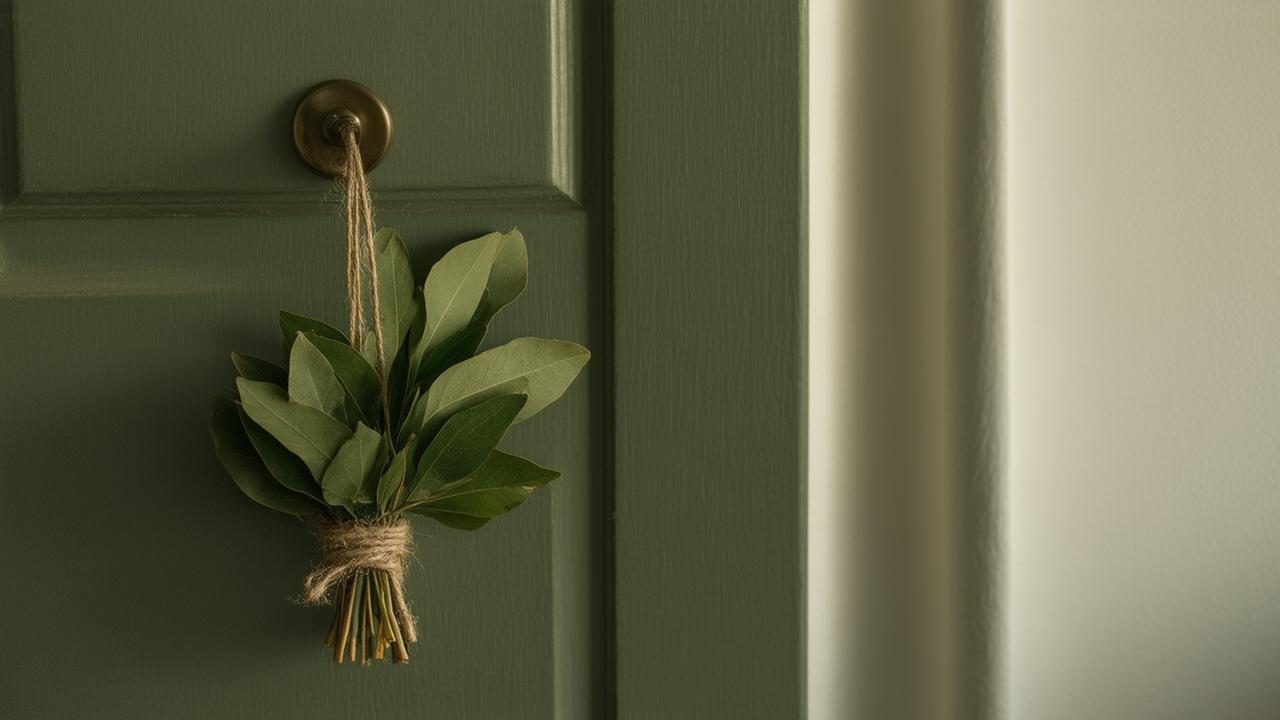
The first time I saw a bay leaf hanging from a bedroom door, it was taped there with a sliver of yellowing masking tape, quietly fluttering every time someone walked past. The house smelled faintly of spices and sun-warmed wood, and somewhere in the kitchen, something was simmering. But that single, curling leaf on the doorframe tugged at my attention more than whatever was on the stove. It looked out of place and oddly intentional, like a whisper pinned to the wall: remember.
The Leaf on the Door
“It keeps the heaviness out,” my host said when I finally asked about it. She was an elderly woman who had spent her life between city apartments and countryside kitchens, and she spoke about herbs the way some people speak about old friends—with a mischievous sort of faith. “You put bay on the bedroom door, you sleep lighter,” she added, as if it were the most obvious thing in the world.
I remember standing in the doorway, fingers brushing that dry, silky surface—veins raised like tiny rivers, edges crisp. The leaf sighed against my knuckle, fragile but not quite brittle, carrying that familiar aromatic scent I knew from soups and stews. Except here, away from boiling pots and kitchen noise, the smell seemed deeper, slightly woody, like an old book that had been tucked into a spice drawer.
That moment has stayed with me, because it was the first time I realized something important: some rituals are not about whether we can prove them with data tables and laboratory notes. They are about atmosphere and intention, and the way they shape the spaces we live and sleep in. Hanging bay leaves on the bedroom door lives in that in‑between place—part science, part story, part sensory experience. And once you start to pay attention, it’s hard not to feel how much a small leaf can change the whole mood of a room.
The Old Stories Behind a Simple Leaf
Bay laurel has never been a modest plant, not in the old stories. In ancient Greece and Rome, it crowned the heads of poets and victorious athletes. Wreaths of bay were symbols of triumph, clarity, and protection. To wear bay was to be touched, however lightly, by the favor of the gods—or at least that’s what people liked to believe as they walked beneath arched laurel garlands.
In kitchens across the Mediterranean, bay leaves were slipped into broths and sauces not just for flavor, but for what they represented: good fortune, protection from illness, a little extra blessing in the daily bread. Folk healers burned bay to cleanse spaces or wrote wishes on leaves and threw them into the fire, watching the smoke curl up like a small prayer.
From there, it’s not a big leap to the bedroom door. If bay could guard thresholds of homes and temples, why not the threshold between waking and sleep? Some traditions treat the bedroom door as a soft border between worlds—the everyday one where we worry about emails and unpaid bills, and the quieter inner world of dreams, rest, and whatever the mind works through behind closed eyes. Hanging a bay leaf right at that hinge point is like stationing a friendly night watchman at the edge of your private universe.
The Science in the Scent
Of course, the old stories were woven long before we knew much about essential oils and aromatic compounds. Today, we know that bay leaves contain substances like cineole and eugenol—compounds that contribute to that distinctive, peppery, resinous scent. When bay is gently warmed or simply allowed to release its fragrance over time, those molecules mingle with the air we breathe.
We also know that scent has a direct line to memory and emotion. The olfactory system—our sense of smell—connects straight to the parts of the brain involved in feeling, recalling, and regulating stress. Even if bay leaves were never meant to guard us against “evil spirits,” they can influence the atmosphere we sleep in. A faint, steady herbal aroma at the bedroom door can become the brain’s cue: this is a place of safety, this is the transition into rest.
Is a single leaf going to fix insomnia or banish nightmares on its own? No. But as part of a wider sensory landscape—soft lighting, cooler air, uncluttered spaces—that subtle fragrance can be a quiet ally. It’s one more message to the body that it’s time to soften and let go.
Why the Door Matters More Than You Think
There’s something psychologically powerful about thresholds. Every doorway is a line: outside / inside, public / private, busy / quiet. When you pause at a door, hand on the handle, you’re unconsciously preparing for a different mode of being. In the case of a bedroom, you’re stepping into a space where you are—ideally—unobserved, unperformed, and unburdened.
Hanging a bay leaf right there, at that small daily crossing, introduces a moment of gentle ritual. Maybe you touch it lightly as you pass, or maybe you just notice its shadow in the corner of your vision. Either way, your brain learns the pattern: leaf, door, rest. Ritual doesn’t have to be grand to be effective; it just has to be repeated.
Some people say the bay leaf “blocks negativity” from entering the bedroom. In more grounded language, you could think of it as a tiny invitation to leave the day—its worries, tensions, arguments—on the other side of the door. It’s a tangible reminder: you don’t have to drag everything into bed with you. Here, at the bay‑marked threshold, you can set a few things down.
Sensory Boundaries and Sleep Quality
Good sleep isn’t only about how long you rest, but how clearly your body understands when it’s allowed to rest. Strong signals help: lowering lights, quieting noise, cooling the air. Smell is one more of those signals, often overlooked but surprisingly potent.
The bay leaf, with its restrained, comforting scent, functions as a boundary marker you can actually perceive. Crossing that scent line—however faint—can become part of the nightly wind‑down choreography. Over time, the association between that smell on the door and sleep inside the room can make it easier to drop into rest. It’s like a pathway smoothed by many passes of the same footstep.
How to Hang Bay Leaves on Your Bedroom Door
You don’t need a complicated setup. A single, thoughtfully placed leaf can do more for the feel of a room than a dozen half‑hearted decorations. Here’s a simple way to begin, and some variations if you want to play with the ritual until it fits the rhythms of your own home.
| Step | What to Do | Tips |
|---|---|---|
| 1. Choose Your Bay | Use whole, unbroken dried bay leaves with a strong scent. | Crush one lightly in your fingers; if the aroma is weak, pick fresher leaves. |
| 2. Decide the Spot | Choose the top of the frame, side of the door, or just above the handle. | Pick a place you’ll notice without bumping into it. |
| 3. Attach Gently | Use a small piece of tape, thread, or a discreet hook. | Avoid pins or nails if you’re renting or protecting woodwork. |
| 4. Set an Intention | Pause for a breath and silently name what you want in that space: calm, clarity, gentler dreams. | This step turns a decoration into a personal ritual. |
| 5. Refresh Regularly | Replace the leaf every few weeks or when the scent fades. | Use the swap as a quiet check‑in: what do you need from your rest right now? |
You can keep it as minimal as one bay leaf folded into a piece of thread, or you can build a tiny doorway charm: a short twig of bay tied with a thin ribbon, maybe a sprig of rosemary for remembrance and peace. The point is not perfection; it’s presence. Every time your hand brushes that little bundle, it brings you back, even briefly, to the simple fact that you deserve a gentler night.
Making It Your Own
Some people like to write a single word on the leaf: “rest,” “clarity,” “dream,” “heal.” The ink will curl with the leaf over time, softening and fading—an almost poetic reminder that needs evolve, and so do we. When the word no longer fits, you retire the leaf and choose another.
➡️ How walking the exact same routes every day quietly reshapes how the brain handles uncertainty, novelty, and change
➡️ Goodbye to grey hair: the trick to add to your shampoo to revive and darken your hair
➡️ He hired a dog sitter and later discovered through his home camera that the sitter was bringing unknown people into his apartment in ways he never expected
➡️ I kept turning up the heat and still felt cold: experts explain this common home problem
➡️ I saw how they sharpen knives in India, and now I do it myself at home, even old knives become razor sharp in just one minute.
➡️ If you want your kids to respect you when they are older stop clinging to these 8 selfish habits
➡️ Goodbye microwave as households switch to a faster cleaner device that transforms cooking habits
Others prefer a quieter approach: no writing, no ribbon, just the soft green shape against wood or paint, humming its quiet note of intention. You might decide to hang one leaf for each person who sleeps in that room, or one above the door and one inside, where you can see it from your pillow. In a small apartment, where boundaries between spaces blur, that little herbal token can make the bedroom feel like a sanctuary marked off from the rest of life’s noisy demands.
Belief, Place, and the Comfort of Ritual
It’s easy to dismiss practices like hanging bay leaves as superstition, especially in a world that loves to measure, categorize, and explain. But if you stand for a moment in a doorway marked by bay, breathing in that subtle, comforting scent, something quieter presents itself: this is less about magical thinking and more about how humans are wired.
We crave anchors—small, consistent actions that help us cross from chaos into calm. A mug of tea at the same time each evening. The click of a lamp beside the bed. A book closing with a soft thump. The light brushing of a bay leaf as you step into your room. These things collect, layering meaning into a space until it feels like it belongs to you in a deeper way.
If you grew up with herbs only in jars on the pantry shelf, repurposing them as guardians of your sleep might feel strange at first. But give it a little time. Notice how your body responds when you turn the handle, catch a whiff of laurel, and realize: you’re home, but more importantly, you’re crossing into a part of home designed for rest.
Whether you believe bay leaves protect your dreams or simply appreciate their quiet beauty, you might find that this small ritual opens the door (quite literally) to a more mindful relationship with the space where you lay your head. And in a world that constantly tugs at our attention, any practice that invites us to pause at a threshold, exhale, and choose calm is worth hanging onto.
FAQs About Hanging Bay Leaves on the Bedroom Door
Do bay leaves really improve sleep?
Bay leaves themselves are not a cure for sleep problems, but their scent and the ritual of hanging them can support a calming bedtime routine. This can help signal to your body and mind that it’s time to rest, which may indirectly improve sleep quality.
How often should I change the bay leaf on my door?
Most people replace the leaf every 2–4 weeks, or whenever the scent noticeably fades or the leaf becomes too brittle. Freshly aromatic leaves provide a stronger sensory effect.
Can I use fresh bay leaves instead of dried ones?
Yes, you can. Fresh leaves tend to have a stronger scent, but they will wilt and change color over time. Dried leaves last longer and are less messy, which is why they’re more commonly used for door rituals.
Is it safe to hang bay leaves in a child’s bedroom?
Yes, as long as the leaves are securely attached and out of reach of very young children who might try to eat them. Bay leaves are not meant to be consumed whole, but simply to scent the space.
Can I combine bay leaves with other herbs on the door?
Absolutely. Many people like to pair bay with rosemary, lavender, or sage. You can create a small herbal bundle and hang it as a charm, choosing plants whose scents and symbolic meanings resonate with what you want in your bedroom: calm, clarity, protection, or sweeter dreams.





