The last time I sat at my grandmother’s dining table, the wood smelled faintly of lemon oil and old stories. The chairs creaked with the weight of three generations, and the table itself—scarred with knife marks, pen lines, and a ghostly white ring from a long‑forgotten hot pot—felt like a small, sturdy planet everything orbited around. It was the place for birthdays and burnt casseroles, arguments and apologies, report cards and wedding plans. It never crossed my mind that one day, many homes would simply… not have one.
Goodbye to the Dining Table, Hello to the New Heart of the Home
Across Europe, in parts of Asia, and increasingly in North America, a quiet revolution is sweeping through apartments and houses. The big, formal dining table—the one that once commanded its own room—is being retired. In its place comes a new kind of flexible, low‑commitment, deeply lived‑in way of gathering: floor seating, extendable kitchen islands, modular coffee tables, wall‑folding counters, and hybrid work‑eat loungers.
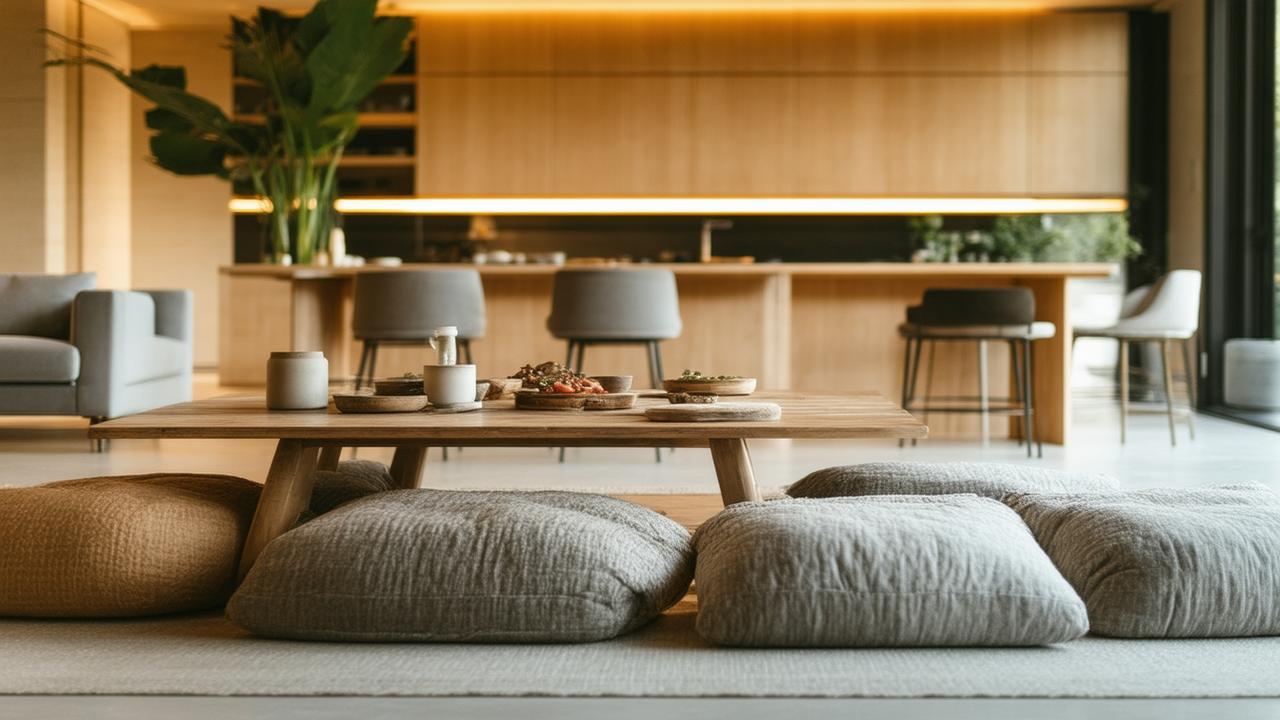
If you walk into a newly renovated city apartment in Copenhagen, Seoul, or Berlin, you might find no sign of a traditional dining set at all. Instead, there may be a wide, soft sofa facing a low table that can be raised or rolled away; big floor cushions clustered around a simple wooden platform; or a generous island that merges stove, sink, and eating space in one continuous slab of stone. Meals happen where life already is—on the sofa, at the window, on the rug—rather than in a separate, slightly formal zone.
This is not a simple case of people becoming “lazy” or careless about tradition. It’s a design response to the way we now live: smaller spaces, multi‑purpose rooms, blurred lines between work and rest, and a craving for comfort that doesn’t always look like upright chairs and polished centerpieces.
The Global Inspirations Behind This Shift
The idea of life without a towering dining table is not entirely new. In fact, much of the world has long eaten without it. Step into a traditional Japanese home and you may find a low chabudai table with cushions on tatami mats. In parts of India or the Middle East, it’s common to eat seated on the floor, on rugs, or with low stools gathered around metal or wooden trays. Mediterranean families have long blurred the lines between indoor and outdoor eating, taking food to balconies, courtyards, and terraces instead of a designated dining room.
What is new is how these cultural inspirations are now merging and being re‑imagined in modern urban homes. Designers talk about “soft dining zones” instead of dining rooms. Instead of insisting on a static wooden altar for meals, they design spaces with layers: a pull‑out counter for two, a couch with a pivoting table, floor poufs that slide beneath a bench when not in use. The dining function is no longer tethered to one solemn piece of furniture; it migrates like sunlight across the day.
Curiously, this doesn’t mean people care less about eating together. It often means they’re trying to protect it—just in a way that better fits their lives. Rather than walking to a cold, unused room at the end of a long working day, they snack and share dishes where they already feel relaxed: the living room, the balcony, the kitchen nook beneath a hanging plant. Meals become looser, but also more frequent, woven into everyday life instead of saved for “proper” occasions.
The Emotional Breakup: Why the Table No Longer Fits
Still, there is something undeniably emotional about saying goodbye to the dining table. For decades, it has symbolized stability and togetherness. So why are people willing to let it go?
First, there’s the matter of space. City apartments are shrinking, with open‑plan layouts becoming the norm. When your living room is also your office, your gym, and your guest room, dedicating a large footprint to a table that’s only fully used a few times a month starts to feel extravagant. Many couples and small families quietly admit they end up eating on the sofa most nights anyway. The table turns into a catch‑all: unopened mail, empty glasses, the package you haven’t returned yet. Its symbolic weight no longer matches its practical use.
Then there’s changing work culture. With laptops and remote jobs, the dining table accidentally became a desk—and once it’s cluttered with chargers, notebooks, and coffee cups, mealtime feels less sacred and more like sliding over to one side of an office. The new trend embraces furniture that is designed for this fluid reality: adjustable pieces that can smoothly switch between work and eating without a visible identity crisis.
There’s also a subtle emotional shift. Many younger adults didn’t grow up with formal daily dinners in a separate room. They remember weeknight meals in front of the TV, takeaway on the coffee table, cereal at the kitchen counter. The dining table doesn’t carry the same aura of “home” that it did for older generations. Instead, “home” might now feel like a big, deep sofa where everyone sprawls with bowls in hand, or a sunlit corner with two stools and a plant‑filled windowsill.
The New Furniture Taking Over: More Than Just a Coffee Table
So what actually replaces the dining table? Not one single object, but a new family of flexible, hybrid pieces. Imagine walking into a small, light‑filled apartment and seeing this:
- A wide, cushioned bench along the wall, stuffed with pillows, facing a low table on smooth casters. The table top can rotate and rise to dining height, then sink back down for board games or laptops.
- A kitchen island that stretches into the living space, one half for cooking, the other half with bar stools and hidden storage for plates and cutlery.
- A fold‑down wall slab that acts as a slim desk by day and a snack bar by night.
- Floor cushions in thick linen or cotton, piled beside a short, sturdy platform perfect for communal, family‑style eating.
Designers call this a move toward “multi‑modal living.” Every piece has at least two lives. You might not recognize it at first, but the center of the home is still there—it’s just lower, softer, and constantly shape‑shifting. The old script (“Sit straight, hands off the table, napkin on your lap”) is replaced with something more casual and more responsive to how we actually inhabit our spaces.
As this trend spreads, brands and craftspeople are experimenting: adjustable‑height coffee tables, cushioned benches with hidden cutlery drawers, sectional sofas with integrated swivel trays, and plug‑in islands that can be wheeled around the room. The dining table hasn’t disappeared; it has broken apart and dissolved into the room itself.
| Old Dining Setup | New Flexible Alternative | Best For |
|---|---|---|
| Large wooden table with 6 chairs in a separate room | Kitchen island with bar stools and storage | Small families, open‑plan apartments |
| Formal dining set used on weekends only | Height‑adjustable coffee table plus deep sofa | Couples, remote workers, movie‑night households |
| Separate kids’ table and adults’ table for gatherings | Low communal platform with floor cushions | Larger groups, informal feasts, cross‑leg sitters |
| Dining table doubling as a cluttered home office | Fold‑down wall table plus compact movable side table | Studio apartments, solo dwellers |
Designing a Life Without a Dining Table
Letting go of the dining table isn’t as simple as selling it online and eating wherever your plate lands. The homes that do this well usually follow a quiet set of rules, whether they realize it or not.
1. Protect a “Gathering Zone”
Even without a table, there needs to be a place where people naturally come together. That could be a corner of the living room with a low table and cushions, or one end of the kitchen island framed by stools and a hanging lamp. The trick is to make this area visually anchored: a rug, a pendant light, a cluster of plants. It tells the body, “This is where we sit and share.”
2. Think in Layers, Not Rooms
Instead of a separate dining room, think in zones that appear when you need them and vanish when you don’t. A tray on the coffee table that holds cutlery and napkins; stackable stools that live under a console; a tabletop leaf that clips onto the island when you have guests. The more easily your space can change mood, the more hospitable it feels, even without a towering table.
➡️ If you want your kids to respect you when they are older stop clinging to these 8 selfish habits
➡️ Goodbye microwave as households switch to a faster cleaner device that transforms cooking habits
➡️ Most people store cleaning products incorrectly, making them less effective
➡️ Heating: the 19°C rule is outdated: experts reveal the new recommended temperature
➡️ Michael Schumacher, the new separation
➡️ Marine biologists warn of a troubling shift in orca interactions with vessels
➡️ IKEA brings a cult sofa back from the dead after 50 years – design fans rush to get one
3. Keep Rituals, Even If Furniture Changes
What many people fear losing isn’t the table itself, but the rituals around it: lighting a candle, everyone putting their phones away, sharing one big dish. Those rituals can move. You can still announce, “Let’s set the table,” even if “the table” is a low platform and a scatter of cushions. You can still light that candle on the coffee table, or call everyone to the island, or bring out a special platter that only appears on certain nights. Furniture changes; ritual is what makes it feel like home.
What We Lose, What We Gain
There will always be people who love a traditional dining room, and there’s a kind of deep, slow pleasure in that: the feel of proper chairs, the spread of a tablecloth, the clink of glasses over polished wood. It’s worth acknowledging that something is indeed lost when we trade that for eating in the same place we watch shows or answer emails. Boundaries blur; formality dissolves. It can become harder to know which moments deserve full attention and which are just snacks between tasks.
But something is gained, too. In many of these new homes, eating together stops being a performance and becomes more like breathing—less staged, more frequent. The pressure to “host” perfectly softens into an invitation to “come as you are and sit where you like.” The table disappears, but the impulse to gather does not. It simply changes posture, dropping closer to the floor, leaning against the sofa, settling by the window with a view of the street.
Maybe that’s the strange gift of this trend from abroad: it invites us to ask what we really need in order to feel together. Is it a certain piece of furniture, or is it the way we listen to each other over bowls and plates, however and wherever they rest?
Somewhere, my grandmother’s dining table still exists, in another house, in another life. It will probably outlive us all. Yet if she walked into a modern, table‑less apartment and saw everyone clustered on cushions around a low, sun‑warmed platform, laughing with their mouths full, she might recognize something: the same old human hunger, not just for food, but for each other.
FAQ
Is getting rid of a dining table practical for families with children?
It can be, as long as you create a clear, stable eating zone—like a low table or a sturdy island—with kid‑friendly seating. Many children enjoy floor seating, and wipeable rugs or mats can make cleanup easier.
Will I regret losing a traditional dining space for holidays and guests?
You might miss the formality, but flexible furniture can handle larger gatherings if planned well. Consider extendable surfaces, stackable chairs, or a fold‑out table stored for special occasions.
Does eating on the sofa all the time feel messy or unhealthy?
It can, if there’s no structure. The key is to define a “meal mode”: clearing surfaces, using trays, and having a small ritual—like placing napkins and water glasses—to signal that it’s mealtime, not just snacking.
How do I start transitioning away from a dining table without fully committing?
Begin by using a coffee table, island, or low platform for some meals each week. If you notice the dining table mostly collects clutter, it might be time to downsize or replace it with more flexible pieces.
Is this just a temporary trend or a lasting shift in how we live?
While design trends change, the move toward multi‑functional, smaller, and more flexible spaces reflects long‑term urban living patterns. The traditional dining room may become rarer, but the need to gather and share meals isn’t going anywhere—only the furniture is evolving.





