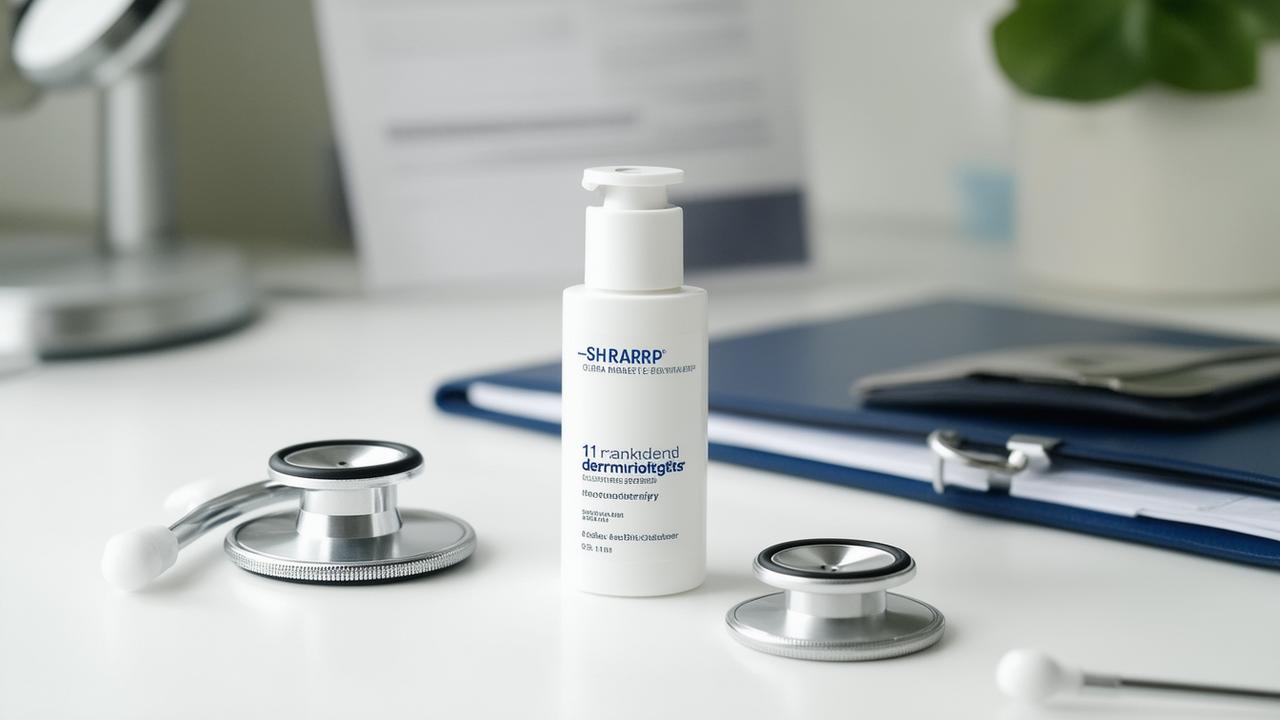
The first thing I noticed was the sound. Not the sterile hush of a department store beauty counter, but the low, gentle murmur of glass bottles clinking and a humidifier whispering in the corner. The room smelled faintly of green tea and something soft and clean, like cotton drying in the sun. I was sitting in a small, plant-filled studio with a board-certified dermatologist who, for the first time in my life, was not reaching for Nivea or Neutrogena when I asked a simple question: “If you had to pick just one moisturizer—for real life, not for a commercial—which would it be?”
She paused, then smiled in that way people do when they know they’re about to ruin your brand loyalty forever. “Neither,” she said, turning to a nondescript white jar with an almost plain label. “This is the one most of us are reaching for now. It’s boring to look at, but it’s beautiful on the skin.”
The Quiet Rise of the “Unsexy” Moisturizer
This is not a story about a glittering, perfumed cream that promises miracles in thirty seconds. It’s about a quiet little formula that has been sitting in the corner of dermatology clinics, pharmacy shelves, and research papers, slowly climbing the ranks until, almost without fanfare, it became the new gold standard for everyday hydration.
Ask enough dermatologists off the record—late in the day, when clinic hours are over and the sales reps have gone home—and a pattern emerges. The product they use personally, the one they recommend to friends, parents, and teenagers with skin on the brink, is almost always the same kind of thing: a mid-priced, fragrance-free, ceramide-rich moisturizer with a texture that feels like a cloud and behaves like a shield.
Call it the Anti-Showoff Cream. No glass jar. No rose-gold lid. No microscopic diamonds harvested from moonlight. Just a formula designed with almost ruthless practicality: restore the skin barrier, hold onto water, keep inflammation down, and upset nobody’s face in the process.
What Makes This Moisturizer Different (And Why Experts Are Obsessed)
To understand why this type of moisturizer is quietly dethroning the classics, you have to step inside your own skin—literally, to the outermost layer called the stratum corneum. Picture it as a brick wall: the “bricks” are your skin cells, and the “mortar” that holds them together is made of lipids—ceramides, cholesterol, and fatty acids. When that mortar crumbles, water escapes, irritants sneak in, and suddenly words like “sensitive,” “dry,” and “reactive” start to feel personal.
The new number one that dermatologists keep circling back to is less about glowing marketing and more about these fundamentals. Its formula usually ticks a few specific boxes:
- Ceramides: These are the structural lipids your skin naturally produces. Modern “number one” moisturizers mimic and replace them, helping to patch up the wall.
- Humectants like hyaluronic acid and glycerin: These act like tiny water magnets, drawing moisture into the upper layers of the skin.
- Occlusives like petrolatum or dimethicone: Lightweight but effective sealers that keep that moisture from evaporating into the dry air of your office, subway, or bedroom.
- Minimal fragrance and irritants: Because it is designed not to pick a fight with any skin type, especially sensitive, rosacea-prone, or acne-prone faces.
When dermatologists describe why this category of moisturizer wins, they rarely talk about “radiance” or “youth.” They talk instead about data: transepidermal water loss measurements, barrier repair times, flare-up frequency. When used daily, these formulas tell a quiet story in numbers—less redness, smoother texture, fewer rough patches, fewer breakouts triggered by harsh ingredients.
The Texture That Feels Like a Glass of Water for Your Face
The first time I applied one of these expert-favorite creams, it surprised me. It didn’t sit on my skin like a heavy winter coat, nor did it vanish in that alarming way some gels do, leaving you wondering whether you hallucinated the whole experience. Instead, it had a particular kind of slip—like a light mousse meets a gel-cream cloud. When I spread it across the back of my hand, it went cool for a moment, then simply settled in, leaving a soft, almost satin finish.
This is one of its greatest strengths: universal wearability. The formula is usually crafted to straddle multiple worlds at once:
- Hydrating enough for dry and mature skin.
- Non-greasy enough for combination and oily skin.
- Gentle enough for reactive, post-treatment, or acne-prone skin.
Instead of coating your skin in a shiny film, it tends to leave you with the kind of finish that looks simply healthy—as if your face just drank a long, slow glass of water. No glitter. No “dewy” that edges into greasy. Just the quiet confidence of skin that is, quite literally, functioning properly.
How It Compares: Classic Favorites vs. The New Standard
To really see why experts are migrating away from old staples like Nivea and Neutrogena, it helps to set them side by side—not to declare villains and heroes, but to understand the evolution of what we ask a moisturizer to do.
| Feature | Traditional Creams (e.g., classic Nivea-style) |
Dermatologist-Favorite New Moisturizer |
|---|---|---|
| Texture | Thick, occlusive, often heavy on the skin | Light cream/gel-cream; absorbs quickly, non-greasy |
| Key Focus | Surface softness, basic moisture | Barrier repair, hydration balance, daily skin health |
| Core Ingredients | Emollients, occlusives, sometimes fragrance | Ceramides, glycerin, hyaluronic acid, cholesterol, fatty acids |
| Skin Types | Best for very dry, non-sensitive skin | Formulated for dry, normal, combo, many sensitive and acne-prone skins |
| Daily Comfort | Can feel heavy, especially in heat or humidity | Comfortable year-round; layers well under SPF and makeup |
In short, the classic formulas are like wrapping your skin in a wool blanket: warm, but not exactly adaptive. The new generation of barrier-focused moisturizers acts more like a breathable technical jacket—adjusting, cooperating, and respecting what your skin is already trying to do.
Why “Barrier First” Is the New Beauty Philosophy
There’s a quiet rebellion happening in bathrooms everywhere. People are tired—tired of ten-step routines, tired of burning, peeling, purging, tired of chasing glow through discomfort. The pendulum has swung from “more is more” back toward a grounded, nature-informed truth: your skin already knows how to protect you, if you stop tearing it down.
This is where barrier-focused moisturizers step into the spotlight. Instead of promising overnight transformation, they offer something more sustainable: a foundation. They create the conditions under which your skin can heal itself, handle active ingredients better, and respond more calmly to stress—whether that’s wind, pollution, or a late night in front of a laptop.
Dermatologists increasingly talk about three pillars of everyday skin health:
- Gentle cleansing: No stripping, no squeaky-clean tightness.
- Barrier-supporting hydration: A moisturizer that replenishes lipids and water without irritation.
- Sun protection: Broad-spectrum SPF by day.
Everything else—retinoids, exfoliating acids, brightening serums—is optional, layered on top of that foundation. Without a strong barrier, even the best anti-aging or brightening product can feel like pouring lemon juice on a paper cut.
How to Know If You Need a Barrier-Focused Moisturizer
You may already be living in barrier distress without having the words for it. The signs are subtle at first, then suddenly impossible to ignore:
- Skin that stings when you apply products that never used to bother you.
- Redness that lingers—especially around the nose, cheeks, and chin.
- Dryness and oiliness at the same time: flaky in spots, shiny in others.
- Makeup that no longer sits smoothly, clinging to rough or patchy areas.
Switching to a modern, ceramide-rich moisturizer isn’t glamorous. It won’t give you that adrenalized thrill of a strong peel. But over a few weeks, many people notice a quiet, cumulative change: their skin stops “complaining.” It stops itching after showers. It flushes less easily. It starts to look less like a project and more like… skin.
Folding the New Number One into a Real-Life Routine
No one lives in a skincare commercial. We live in cramped bathrooms, with half-squeezed tubes and products we bought on a whim. The good news is that this new-style, expert-favorite moisturizer isn’t demanding. It slides into most routines with almost suspicious ease.
Here’s how many dermatologists suggest using it:
➡️ If you want your kids to respect you when they are older stop clinging to these 8 selfish habits
➡️ Goodbye microwave as households switch to a faster cleaner device that transforms cooking habits
➡️ Goodbye to the dining table : the new trend from abroad that replaces it for good in homes
➡️ Most people store cleaning products incorrectly, making them less effective
➡️ Heating: the 19°C rule is outdated: experts reveal the new recommended temperature
➡️ Michael Schumacher, the new separation
➡️ Marine biologists warn of a troubling shift in orca interactions with vessels
- Morning: Cleanse gently (or just rinse if your skin is dry), apply any treatment serums you use, then this moisturizer, then sunscreen. The lightweight texture makes it ideal under SPF and makeup.
- Evening: After cleansing—and after any actives, such as retinoids or exfoliating acids—apply a slightly thicker layer. For very dry or compromised skin, some people “sandwich” their retinoid between two thin layers of moisturizer for extra protection.
- Minimalist days: On days when your skin feels fragile, skip the extras. Just cleanse, moisturize, and protect with SPF. Let the barrier heal.
Because these moisturizers are designed to be non-comedogenic and low in irritants, they tend to play nicely with most other products. The biggest adjustment isn’t technical; it’s psychological—the decision to let “healthy” be the goal, not “dramatically different overnight.”
Reading the Label Like a Skin Scientist
You don’t need a lab coat to identify this new class of number-one moisturizers. You just need to know what to look for. On the ingredient list, you’ll often find:
- Ceramides (often labeled as ceramide NP, AP, EOP).
- Glycerin near the top of the list.
- Hyaluronic acid or sodium hyaluronate.
- Cholesterol and fatty acids such as caprylic/capric triglyceride.
- Absence of strong fragrance or essential oils—especially if your skin is sensitive.
You’ll also notice something curious: the price is typically moderate. Not drugstore-cheapest, not luxury-counter shocking. That’s part of why experts recommend them so freely; they’re realistic. You can actually use them morning and night without feeling like you’re massaging your face with liquid rent money.
Skin, Simplified: Why This Moisturizer Matters More Than the Hype
There’s a point, somewhere between your first breakout and your first fine line, where you realize that skincare is less about transformation and more about stewardship. Your skin is an ecosystem, not a canvas; it remembers every harsh cleanser, every overzealous scrub, every night you decided exfoliating twice was definitely better than once.
In that context, the ascent of this quiet, ceramide-centered moisturizer to “number one” status among many experts makes deep sense. It’s a product that doesn’t ask your skin to be something it isn’t. Instead, it hands back the tools your skin needed all along:
- Water, held gently in place.
- Lipids, replenished rather than stripped away.
- A calm, steady environment in which to repair.
It’s not that Nivea or Neutrogena are villains; they’ve been comforting generations of faces. But the conversation has evolved. We’re no longer satisfied with “soft for a few hours.” We want resilience. We want skin that can handle central heating and city air, hormone swings and long-haul flights. Skin that might still flush, still age, still live a normal human life—but do so with as much comfort and strength as possible.
And that is why, in quiet clinics and busy pharmacies, experts now reach past the familiar blue and white tubs to pick up a different kind of jar. It doesn’t look like a miracle. But in the way it restores what was missing and respects what was already there, it comes very close.
FAQ
Is this type of moisturizer only for dry skin?
No. While it’s excellent for dry and mature skin, its balanced mix of humectants, lipids, and lightweight occlusives makes it suitable for many normal, combination, and even oily skin types. The key is the non-greasy texture and non-comedogenic formulation.
Can I use a barrier-focused moisturizer if I have acne?
Often, yes. Many acne patients benefit from restoring their barrier, especially if they’re using drying treatments like benzoyl peroxide or retinoids. Look for versions labeled non-comedogenic and avoid heavy, strongly fragranced formulas. When in doubt, patch test on a small area first.
Will this replace all my other skincare products?
Not necessarily. It forms the backbone of your routine, but you can still use targeted treatments—like vitamin C, retinoids, or exfoliating acids—if they suit your skin. Think of this moisturizer as the safety net that keeps your barrier stable while you use those actives.
How long before I notice a difference?
Many people feel an immediate sense of comfort and softness, but barrier repair is a gradual process. Visible improvements in redness, flakiness, and reactivity often appear within two to four weeks of consistent use.
Do I still need sunscreen if I use this moisturizer?
Absolutely. A barrier-supporting moisturizer keeps your skin healthy, but it does not replace UV protection. For daytime, apply sunscreen as the last step of your routine after your moisturizer has absorbed.





