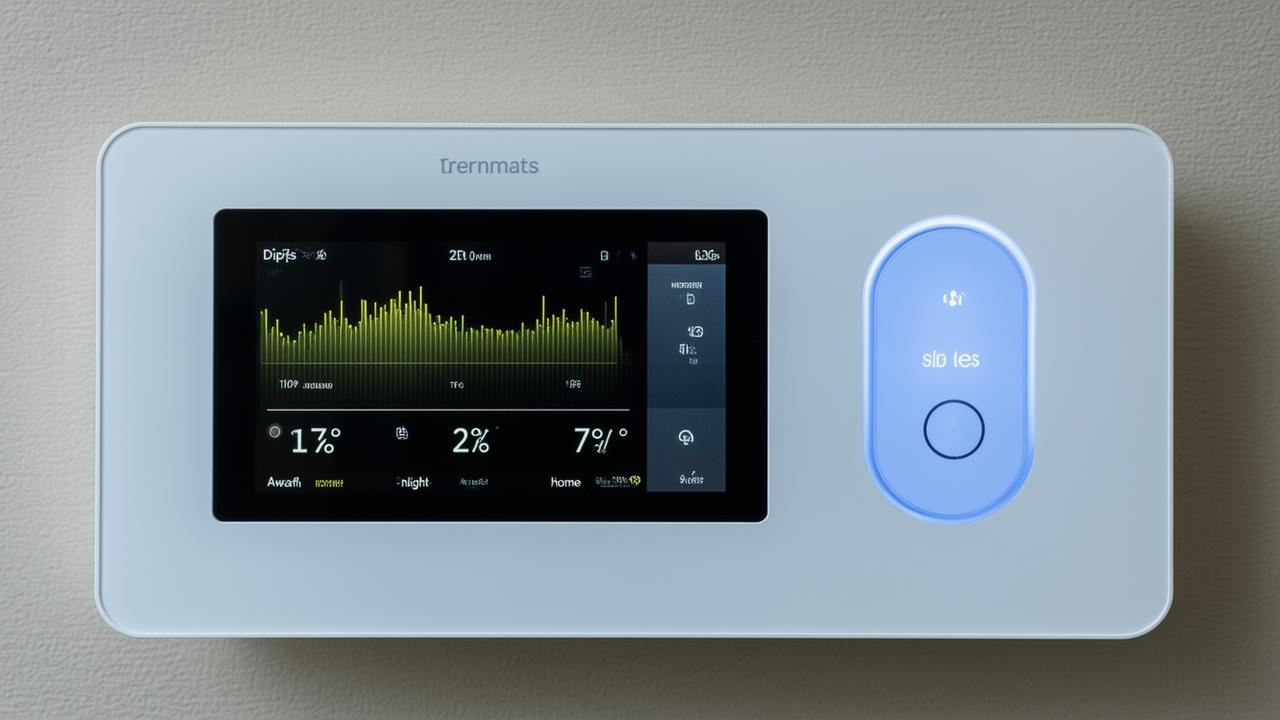
The first cold evening always sneaks up on you. One minute the house is full of late-afternoon light and the smell of dinner, and the next there’s that unmistakable edge in the air—the quiet bite of approaching winter. You stand in the hallway, hand hovering over the thermostat like it’s a moral decision. Do you flick the heating on now and risk watching the energy bill climb… or leave it off and pull on another jumper? And somewhere, in the back of your mind, that old debate wakes up again: is it cheaper and better to keep the heating on low all the time, or turn it on only when you need it?
The Myth of the “Always-On” Comfort Blanket
The idea of leaving the heating on low all the time has a seductive kind of logic. It whispers: keep things steady, avoid the shock of reheating cold rooms, and your boiler won’t have to work as hard. Like keeping a pot of soup at a gentle simmer instead of turning the stove off and on. It sounds efficient… until you look at how a house really behaves.
A house is not a thermos flask. It leaks warmth constantly—through walls, windows, roofs, floors, tiny drafts you never notice until a candle flickers on a still night. Heat is constantly trying to slip outside where the air is cooler. Physics doesn’t care if your radiators are on “low” or “high”; it only cares about the difference between the inside temperature and the outside temperature.
That difference has a name: the temperature gradient. The greater it is, the faster your home loses heat. So if you keep the house warm all the time, even at a “low” setting, you’re inviting a long, slow, steady escape of energy into the world beyond your bricks and glass. You are, in essence, paying for the privilege of warming the street.
The alternative—letting your home cool down when you don’t need it warm, then reheating it—feels counterintuitive. People imagine boilers heaving and groaning, burning through mountains of gas or electricity just to “catch up.” But modern heating systems don’t have that kind of memory. They simply respond to the current conditions: how cold your home is right now, what temperature you want, and how quickly they can bridge that gap.
The Slow Art of Losing Heat
To really understand which is better, imagine your home overnight. Outside, the temperature drifts downward. Inside, the warmth you paid for earlier in the evening begins to seep away—through poorly insulated lofts, thin glass, gaps under doors, even the cat flap banging softly in the wind.
If your heating is left on low all night, it’s like leaving a very gentle but constant tap of energy flowing. Your boiler or heat pump keeps nudging the temperature upward every time it slips below that low setting. The house is never allowed to cool too much, so the temperature gradient between inside and outside stays relatively strong all night. Result: a long, slow, steady loss of energy.
If, instead, you turn the heating off at night, the house starts to cool. As it cools, the temperature gradient with the outside shrinks, and your rate of heat loss slows down. Yes, you’ll need to heat those rooms back up in the morning, but during the cooling period and the cooler plateau later in the night, you’re losing less overall energy. Over hours and days, that matters a lot.
That’s the crucial piece: what matters is not how “hard” the boiler works when it’s running, but how long you’re asking it to keep your home at a temperature higher than the outdoors. Turning the heating off when you don’t need it means fewer hours of heat loss. Fewer hours of heat loss generally means less energy used and less money spent.
When “It Depends” Is the Honest Answer
Still, life isn’t lived inside physics diagrams. People have different houses, different boilers, different bodies. There are old stone cottages that shrug off cold with thick walls, and there are draughty rentals that might as well be made of paper and will lose heat as soon as the boiler sighs off. There are people working from home all day, others leaving for twelve-hour shifts, and others with health needs that make cold temperatures more than just a mild discomfort.
The truth is: for most reasonably insulated homes, it is more efficient and cheaper to heat only when you need it, rather than keeping your heating on low all the time. But there are caveats—especially if your home is extremely poorly insulated, or if damp and condensation are constant battles, or if you live with someone who is very vulnerable to the cold. In those cases, you might need a gentler, more continuous approach—but even then, “always on low” is rarely the smartest, only option.
What Actually Uses More Energy? A Simple Comparison
Think of two imaginary homes over a cold winter’s day:
- Home A leaves heating on low all the time, aiming for a gentle, constant warmth.
- Home B uses a timer and thermostat, heating up in the morning, off during the workday, on again in the evening, then off at night.
Assume the outside conditions and insulation are the same. Home A is always warmer inside for more hours of the day; Home B is cooler for much of the day and all night. Because Home A keeps a higher inside temperature for longer, it loses more heat over 24 hours—even if the boiler never blasts to its “max” power. Home B uses higher heat in short bursts, but for fewer total hours of loss.
That difference adds up. Here’s a simplified way to visualize the practical pattern for most people, especially those out of the house for long stretches:
| Heating Strategy | Typical Pattern | Energy Use Tendency | Comfort Level |
|---|---|---|---|
| Always On Low | Low heat 24/7, small temperature swings | Higher overall, because home is warm for more hours | Even, gentle warmth; fewer cold spots, but more waste |
| On/Off with Timer & Thermostat | Warm only when needed (morning/evening) | Lower overall, especially if away during the day | Comfort when home, cooler when away/asleep |
| On/Off Manually, No Pattern | Random bursts of heat based on how cold you feel | Unpredictable; can be wasteful if left on by accident | Swings between too cold and too hot |
While this is simplified, it reflects what energy experts, building engineers, and countless winter bill-payers observe over time: control and timing win over constancy.
The Quiet Power of Thermostats and Timers
In the middle of this debate, there’s a quiet, underrated hero: the humble thermostat. Or better yet, a programmable thermostat with a timer. These devices are essentially your negotiation team between comfort and cost.
Instead of asking, “Should I keep the heating on low all the time?” a better question might be, “When do I actually need my home to be warm?” The reality is that most people do not need every room in the house to be gently heated 24 hours a day. You probably care most about warmth:
- In the morning, when you get up.
- In the evening, when you’re home and resting.
- In specific rooms—the living room, bedrooms, maybe a home office.
A timer lets you preheat your home just before you wake or come home, and then let it cool when you’re away or asleep. A thermostat prevents the system from overheating the space beyond what’s needed. Together, they do what “always on low” can’t: give you targeted warmth.
Modern smart thermostats go a step further, learning how quickly your home heats and cools, adjusting themselves to keep you comfortable at the times you care most, and easing off at the times you don’t. They’re designed around the very principle that constant heating isn’t necessary to feel consistently comfortable.
Comfort, Health, and the Human Factor
Of course, the numbers and graphs can’t feel the cold. You can. And so can the people you live with—children, older relatives, those with health conditions made worse by low temperatures or damp. A home that swings wildly between hot and cold can be more than uncomfortable; it can be unhealthy.
That’s where nuance matters. For some households, allowing the home to become very cold between heating periods isn’t wise. If someone is at home all day with limited mobility, or has respiratory issues agitated by chill and damp, a more stable background temperature might be essential. In those cases, you might run the heating more often, or keep it on at a moderate level—but you can still use thermostats, thermostatic radiator valves (TRVs), and zoning to avoid heating unused spaces.
Insulation plays an enormous role here. A well-insulated home holds onto its warmth much more slowly; it doesn’t crash to icy temperatures the moment the boiler flicks off. The better insulated your walls, loft, floors, and windows are, the more confidently you can lean into the “heat when needed” approach. In a very poorly insulated property, the drop-off is faster and harsher, making the balance between comfort and savings trickier—but not impossible.
➡️ If you want your kids to respect you when they are older stop clinging to these 8 selfish habits
➡️ Goodbye microwave as households switch to a faster cleaner device that transforms cooking habits
➡️ Goodbye to the dining table : the new trend from abroad that replaces it for good in homes
➡️ Most people store cleaning products incorrectly, making them less effective
➡️ Heating: the 19°C rule is outdated: experts reveal the new recommended temperature
➡️ Michael Schumacher, the new separation
➡️ Marine biologists warn of a troubling shift in orca interactions with vessels
In such homes, instead of leaving the heating on low endlessly, you might find a middle path: smaller temperature drops between “on” periods, draught-proofing every gap you can find, thick curtains drawn early, and a focus on heating the rooms that are actually being used, rather than the whole house.
Practical Ways to Use Less Without Feeling Miserable
It’s one thing to talk about heat loss in theory and another to stand in a cold kitchen at 6 a.m. in January. To bridge that gap between logic and lived experience, a few practical strategies can help you get the best of both worlds:
- Use a timer strategically. Set the heating to come on 20–30 minutes before you wake and shut off a bit before you leave or go to bed. You won’t notice the exact moment it turns off; you’ll just enjoy the residual warmth.
- Let rooms cool when not needed. Spare bedrooms, unused dining rooms, hallways—turn radiators down (not off entirely if damp is an issue, but lower).
- Lower the thermostat slightly. Each degree you drop can make a noticeable difference to your bill, often without a dramatic effect on comfort if you adjust gradually.
- Layer your comfort. Rugs on cold floors, heavy curtains, draught excluders, a warm blanket in your favourite chair—all these soften the edges of cooler air, letting you run the heating less.
- Fix the leaks. Simple draught-proofing—sealing gaps, adding door brushes, checking window frames—cuts heat loss and makes the “on when needed” approach feel more natural.
Over time, these small shifts turn into a quiet new normal: a home that warms up when you need it, coasts comfortably when you don’t, and doesn’t guzzle energy 24 hours a day just to maintain a background glow.
So… Which Is Better?
When the evening closes in and your hand hovers over the thermostat again, here’s the distilled truth.
For most homes and most people, it is better to turn the heating on and off as needed, using a thermostat and timer, rather than leaving it on low constantly. The reason is simple: the longer your house is kept warm, the more heat it loses, and the more energy you pay for. Turning it off when you don’t need that warmth reduces the total hours of heat loss.
There are exceptions—fragile health, very damp homes, extreme draughtiness—but even then, “always on low” is rarely the most efficient or the only comfortable way. A thoughtful pattern of timed heating, zoned rooms, and steady but not excessive background warmth will usually out-perform the old myth of gentle, endless heating.
In the end, the question isn’t just about physics or even about money. It’s about control: shaping the climate of your home around the rhythm of your life, rather than letting the boiler churn away in the background, quietly, relentlessly, all day and all night.
FAQ
Does turning the heating on and off damage the boiler?
No. Modern boilers and heating systems are designed to cycle on and off. Short, extreme cycling (constantly turning it on for a few minutes and off again) isn’t ideal, but normal timed use with a thermostat is entirely expected and safe.
Is it ever cheaper to leave heating on low all the time?
In most cases, no. Leaving heating on low means your home stays warmer for more hours, so it loses more heat overall. Only in very specific situations—like extremely well-insulated, thermally massive buildings with special systems—might the difference be small enough to ignore.
What temperature should I set my thermostat to?
Many people find 18–21°C comfortable for living spaces, with bedrooms often cooler. The best setting is the lowest temperature at which you still feel comfortable. Reducing by even 1°C can noticeably cut energy use.
Should I turn off radiators in unused rooms?
Turning radiators down in unused rooms can help save energy, especially if doors stay closed. In very damp or cold climates, it can be better to keep a low background heat rather than switching them fully off, to avoid mould and condensation.
Is a smart thermostat worth it?
Often, yes. Smart thermostats make it easier to match heating to your schedule, avoid heating an empty home, and fine-tune temperatures. Over time, the improved control can lead to meaningful savings and more consistent comfort.





