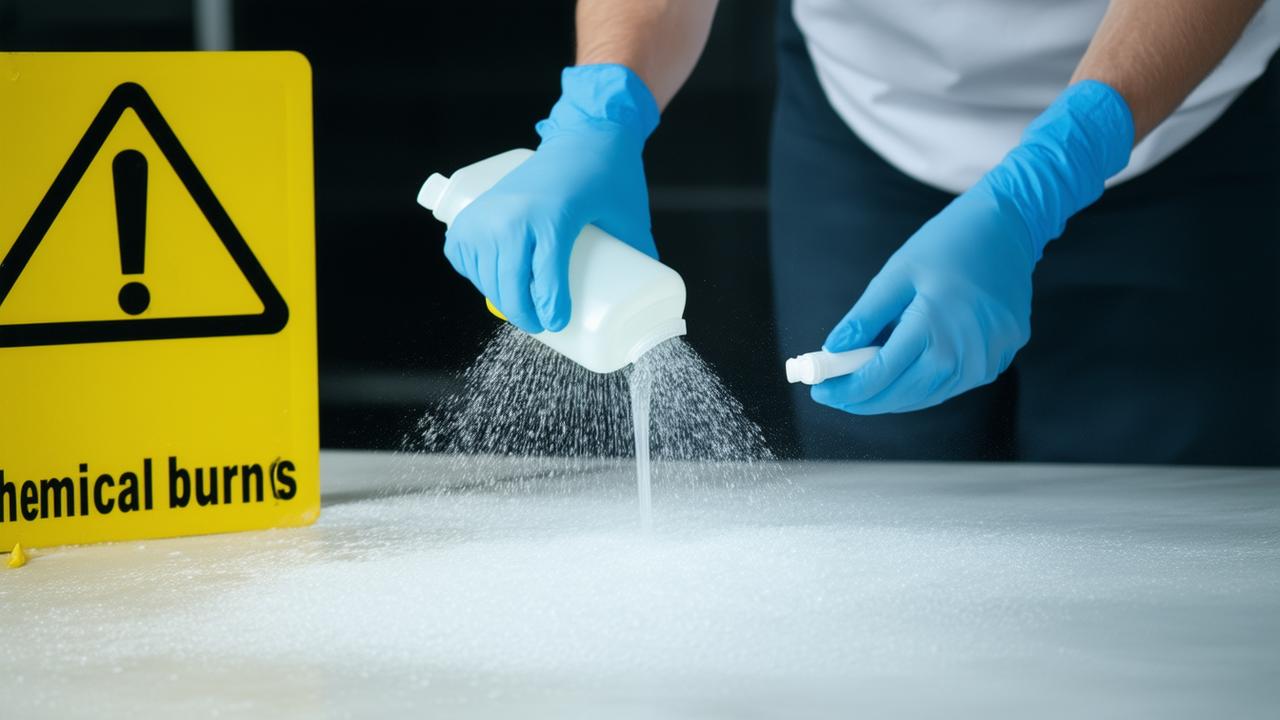
The smell hit you first—sharp, clean, almost electric. Somewhere between a salad dressing and a hospital corridor. You stood in your kitchen, white bottle in one hand, clear bottle in the other, wondering if you were about to unlock a powerful cleaning secret… or accidentally recreate a high school chemistry disaster. Vinegar and hydrogen peroxide: two harmless household staples, until someone on the internet suggests mixing them together. Then suddenly, they’re a “miracle disinfectant” in one video and a “chemical weapon” in another. So which is it?
The Chemistry in Your Kitchen Sink
Let’s step away from the panic and into your kitchen, where this whole story usually begins. The counter is streaked with yesterday’s coffee, a cutting board still smells faintly of garlic and raw chicken, and a spray bottle labeled “natural cleaner” sits within reach. On the shelf: a bottle of 3% hydrogen peroxide, the same one you use on scraped knees, and a jug of distilled white vinegar.
Both feel simple, old-fashioned, almost quaint—things your grandparents might have used long before neon-blue cleaning gels appeared on supermarket shelves. Vinegar is just diluted acetic acid, born from fermented alcohol. Hydrogen peroxide is water with an extra oxygen atom, a fragile little molecule that loves to break down into harmless water and oxygen. Alone, they’re mild-mannered heroes of the eco-cleaning world. Combined… that’s where things get interesting.
When you mix them directly, hydrogen peroxide and vinegar don’t just politely coexist. They react. Together, they can form something called peracetic acid—an aggressive oxidizer that can be both more powerful and more problematic. Think of it like inviting two quiet guests to your dinner party, only to watch them lock eyes, move to the center of the room, and start a surprise dance-off that no one quite consented to.
The Myth of the “Super Cleaner” Mix
Scroll through social media cleaning hacks and you’ll find endless recipes: equal parts vinegar and hydrogen peroxide in a single spray bottle. Promises of “kills everything,” “safer than bleach,” “perfect for kitchens and bathrooms.” It sounds seductively simple. But chemistry doesn’t care about convenience or virality.
When these two meet in the same container, peracetic acid forms in small but unpredictable amounts. In low, carefully controlled concentrations, peracetic acid is indeed a powerful disinfectant used in food processing plants and hospitals. It can kill bacteria, viruses, molds, and spores. But those professional products are precisely formulated, tightly regulated, and used with ventilation, training, and safety gear. Your improvised kitchen concoction? That’s more like DIY roulette.
Peracetic acid in higher concentrations can irritate your skin, eyes, and lungs. That sharp, throat-catching tang in the air when people mix them is your body’s first warning. Breathe too much of it in a closed bathroom or small kitchen and you might find your chest tightening, eyes stinging, and head throbbing. It’s not a guaranteed disaster—but it’s a gamble. And your home shouldn’t feel like a chemistry lab where you hope the odds are in your favor.
Why Experts Cringe at the “Mix”
Most safety experts and cleaning scientists agree on one thing: do not premix vinegar and hydrogen peroxide in the same bottle. It’s not that peracetic acid is inherently evil—it’s that the uncontrolled formation of it is the problem. You don’t know the exact concentration you’re creating, how it will change over time, or what fumes it will release in your unventilated bathroom or small laundry room.
There’s also a practical issue: hydrogen peroxide is unstable. It slowly breaks down when exposed to light or heat. Mix it with vinegar, store it in a spray bottle on your sunny windowsill, and you’re brewing a changing chemical soup whose potency you can’t predict. The clear, simple safety label on your original bottles no longer applies. You’ve created a new substance—without the guidance or guardrails.
A Powerful Duo—If You Use Them the Right Way
Here’s the twist: many of the same experts who warn against mixing these ingredients in one container will tell you that, used in sequence, vinegar and hydrogen peroxide can be surprisingly effective. Not as a blended potion, but as a tag team.
Picture this: You’re cleaning a wooden cutting board after prepping raw chicken. First, you spray it thoroughly with vinegar and let it sit. The sour, pungent scent blooms in the air, cutting through the lingering meatiness. Vinegar helps dissolve mineral deposits, break down residues, and create an unfriendly environment for some microbes. Then, after wiping or allowing it to air for a moment, you spray hydrogen peroxide over the same surface. Tiny bubbles fizz where they find organic material, that familiar soft crackle that whispers “something is happening.”
Used one after the other—never mixed in the same container—these two can complement each other. Each works a bit differently on microbes, and together (sequentially) they can boost overall disinfection. Some food-safety research has shown that alternating them on surfaces can reduce bacterial counts more than either alone. You’ve turned a dangerous blend into a smart one-two punch.
The Safe Way to Pair Vinegar and Hydrogen Peroxide
Think of them as two separate tools in your cleaning toolkit, not ingredients in a single magic potion. The rules are simple, but they matter:
- Use separate bottles. Keep hydrogen peroxide in its original opaque bottle whenever possible. Vinegar can go in any clean, labeled spray bottle.
- Spray one, then the other. It doesn’t really matter which you use first for everyday home cleaning, as long as they’re not combined in a container.
- Allow contact time. Let each sit for at least a few minutes on the surface before wiping, to actually give them time to work.
- Ventilate. Open a window or run a fan, especially in small spaces like bathrooms.
- Never store a pre-mixed solution. If you combine them accidentally, dispose of the mix down the drain with plenty of water and ventilate.
Used this way, the duo can be genuinely useful: helping sanitize cutting boards, fridge shelves, sink areas, or even bathroom fixtures where you’d rather not bring in harsh chlorine bleach. You’re not chasing a viral hack—you’re using chemistry with respect.
When This Combo Shines—and When It Absolutely Doesn’t
Not every cleaning job is a job for vinegar and hydrogen peroxide. Sometimes they’re perfect. Sometimes they’re the wrong tool entirely. The trick is learning to read the situation, to look at your home as a landscape of different micro-environments, each with its own needs.
Good Uses for the Vinegar + Hydrogen Peroxide Tag Team
- Kitchen surfaces (non-stone). Countertops, cutting boards, fridge handles, and sink rims—especially after handling raw meat.
- Reusable containers. Lunch boxes, plastic containers, and some metal bottles (as long as they’re not reactive metals like aluminum).
- Door handles and high-touch areas. Particularly during cold and flu season.
- Bathroom fixtures. Toilet handles, flush buttons, taps, and shower handles.
Places You Should Skip Vinegar or Peroxide
- Natural stone. Granite, marble, and some quartz surfaces can be etched or dulled by vinegar’s acidity.
- Unsealed wood. Too much moisture (from either liquid) can warp or damage it.
- Colored fabrics. Hydrogen peroxide can act like a mild bleach and lighten colors.
- Delicate metals. Some metals, like aluminum or copper, may react or tarnish more quickly.
Your home is not a laboratory, but it is an ecosystem. The goal isn’t to sterilize every inch, to wage war on all microbes. It’s to lower risk where it’s highest—on that cutting board after raw chicken, in that bathroom after a stomach bug—using the gentlest effective tools you can manage safely.
Comparing Common Home Disinfecting Options
Still wondering how vinegar and hydrogen peroxide stack up against other household standbys? This quick overview can help you decide which bottle to reach for when.
| Option | Main Strength | Key Downsides | Best For |
|---|---|---|---|
| Vinegar | Great at cutting grease, minerals, and some microbes | Not a hospital-grade disinfectant; strong smell; can damage stone | Everyday cleaning of glass, tiles, some counters |
| Hydrogen Peroxide (3%) | Solid disinfectant; leaves no toxic residue | Light-sensitive; may bleach fabrics; mild irritant | Disinfecting small surfaces, cutting boards, bathroom touch points |
| Bleach (diluted) | Very powerful disinfectant, even in outbreaks | Harsh fumes; can damage surfaces and fabrics; must be diluted correctly | High-risk messes, such as bodily fluids, certain mold situations |
| Vinegar + Hydrogen Peroxide (sequential use) | Enhanced disinfection without harsh chlorine | Must not be mixed in one bottle; requires two steps | Kitchen and bathroom surfaces where stronger cleaning is desired |
So, Dangerous Hack or Underrated Tool?
The truth lives in the nuance—and in the details of how you use these two bottles. Yes, mixing vinegar and hydrogen peroxide directly in the same container can create a risky, irritating chemical brew. That’s the part your lungs, eyes, and skin might remember for all the wrong reasons. As a “one-bottle hack,” it deserves its bad reputation.
➡️ Probably F?15s, F?16s, F?22s And F?35s : Dozens Of US Jets Now Converging On The Middle East
➡️ Neither tap water nor Vinegar: The right way to wash strawberries to remove pesticides
➡️ Nivea : I applied the blue cream every night to only one side of my face for a week, here’s what happened
➡️ Japan crosses a red line with a new stealth missile capable of mid air corkscrews to evade defenses and strike beyond 1,000 km
➡️ Heavy snow is expected to begin tonight as authorities urge drivers to stay home, while businesses push to keep normal operations running
➡️ It’s official and it’s good news: from February 12, gas stations must display this new mandatory information at the pump
➡️ Many people don’t realize it, but cauliflower, broccoli and cabbage are all different varieties of the very same plant
But dismissed entirely? That’s where the story flattens into fear rather than understanding. Used in sequence, with separate bottles, a little airflow, and a basic respect for what’s actually happening on a molecular level, vinegar and hydrogen peroxide become something quietly powerful: a flexible, relatively gentle alternative to harsher disinfectants in many everyday situations.
In a world where we’re encouraged to either blast everything with industrial-strength chemicals or trust that “natural” always means harmless, this pair sits somewhere more honest. Not perfectly safe, not inherently dangerous—simply tools that demand attention, intention, and a bit of humility.
So next time you stand at your kitchen counter, one bottle in each hand, pause before you pour them together in the name of convenience. Keep them apart, let them work in turn, open a window, and remember: good cleaning isn’t about shortcuts. It’s about knowing your tools, respecting your space, and choosing solutions that are powerful for the mess in front of you—and gentle on the people who live there.
FAQ: Vinegar and Hydrogen Peroxide at Home
Can I mix vinegar and hydrogen peroxide in the same spray bottle?
No. Mixing them in one container can create peracetic acid, which may irritate your eyes, skin, and lungs, and whose concentration you can’t easily control. Always use them in separate bottles.
Is it safe to use vinegar and hydrogen peroxide on the same surface?
Yes, as long as you apply them one after the other, not mixed together. Spray one, let it sit a few minutes, then spray the other. Wipe or rinse as needed and keep the area ventilated.
Which should I use first: vinegar or hydrogen peroxide?
For most home uses, the order isn’t critical. Some people prefer vinegar first to cut residues, followed by hydrogen peroxide for extra disinfection. The key point is separation, not strict order.
Can I use this combo instead of bleach?
Sometimes, yes—especially for everyday kitchen and bathroom surfaces. However, for severe contamination, certain infections, or large mold problems, appropriately diluted bleach or professional products may still be more suitable.
Is hydrogen peroxide alone enough to disinfect surfaces?
At 3% strength, hydrogen peroxide is an effective disinfectant for many common household microbes, as long as you give it enough contact time (usually several minutes) and use it on appropriate surfaces.
Does vinegar really disinfect, or is that a myth?
Vinegar does have some antimicrobial activity, but it’s not as strong or broad-spectrum as products specifically labeled as disinfectants. It’s excellent for general cleaning and helps reduce some germs, but it’s best paired with stronger agents like hydrogen peroxide for true disinfection.
What should I do if I already mixed vinegar and hydrogen peroxide?
Don’t panic. Open a window or turn on a fan, and pour the mixture down the drain with plenty of water. Rinse the container, let it air out, and avoid making that mixture again. Use the two liquids only from separate bottles going forward.





