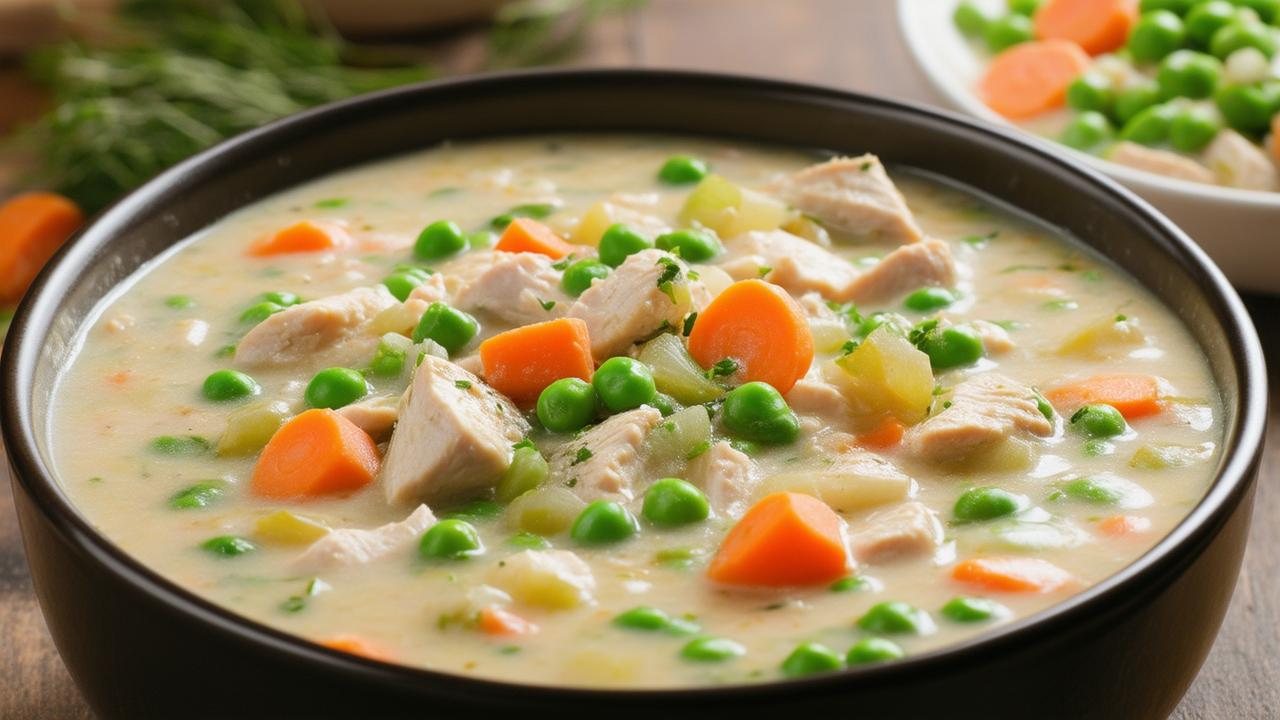
The first time I tasted the filling, I forgot all about the crust. Steam rose in soft curls from the pot, fogging the kitchen window, and that familiar smell of butter, onions, and chicken wrapped around me like a thick winter sweater. I stood at the stove, spoon in hand, “just checking the seasoning,” and realized I’d eaten half my serving before the pastry even made it to the table. That’s when it hit me: this creamy chicken pot pie filling is good enough to stand on its own. In fact, it might be better that way.
The Night the Crust Became Optional
It started on one of those evenings when the sky feels very close to the roof. The kind of evening when you can hear the wind sluicing down the alley, rattling loose gutters and sighing through the trees. I’d promised myself a proper dinner: golden crust, crimped edges, the whole classic chicken pot pie story. But the day had been long, and my patience, short.
The vegetables sat on the cutting board like colorful, resigned little soldiers: carrots, celery, onions, peas still frosty in their bag. A rotisserie chicken waited to be picked clean. I put on some low music, the kind that hums more than sings, and let the rhythm of small kitchen tasks take over. Knife through carrots. Knife through celery. The soft, peppery fragrance of onions surrendering in a pan of melted butter.
Somewhere between the roux coming together—flour and butter thickening into a pale, silky paste—and the first splash of broth, I forgot about the crust. Or rather, I stopped caring about the effort it required: the chilling, the rolling, the patching of cracks. What I wanted was already happening in the pot. The sound of it, for one thing: that tiny, almost secretive sigh of cream hitting hot metal, the quiet bubble at the edges as the sauce thickened and claimed every vegetable, every thread of chicken.
When Comfort Lives in a Spoon, Not a Slice
People talk about comfort food like it’s a thing, but it’s really a moment. For me, it was leaning over the stove with a wooden spoon and taking that first slow taste of the filling. No biscuit topping. No puff pastry. No bottom crust threatening to go soggy. Just a spoonful of rich, velvety sauce clinging to small chunks of chicken and vegetables that still held the faintest suggestion of bite.
I remember how it hit in stages. First, the warmth. That deep, almost sleepy warmth of something thick and hot and fiercely savory. Then, the flavor: the way thyme and black pepper and chicken broth layered themselves together into something more than the sum of their parts. There was a quiet sweetness from the carrots, a grassy whisper from peas, an almost roasted depth from the browned bits of onion and celery scraped up from the bottom of the pan.
I had pastry chilling in the fridge. I had every intention of rolling it out, cutting vents, brushing it with egg wash. Instead, I ladled the filling into a bowl, sat down at the table, and ate it just like soup. No knife. No need to saw through flaky layers or worry about whether the crust was done underneath. Just me, a spoon, and that slow, steady reassurance that only a truly good, creamy chicken dish can give.
By the time I got up for seconds—because of course I did—the decision had already been made. This wasn’t pot pie filling anymore. This was a whole meal, all by itself.
The Quiet Alchemy of Simple Ingredients
There’s a kind of kitchen magic that happens not with complicated techniques, but with patience and paying attention. This pot pie filling is that kind of spell. It doesn’t need exotic ingredients. In fact, the charm lies in its ordinariness: butter, flour, broth, cream or milk, a little garlic, the vegetables you already have, and leftover chicken waiting to be given a second life.
Imagine the scene up close: butter sliding across the pan, pooling in shimmering gold. The sharp, green smell of fresh celery as it hits the heat, the slow release of sweetness from onions turning translucent. Flour dusted over like the first hint of snowfall, disappearing as you stir, transforming from powder to paste to something that clings gently to your spoon. The broth goes in with a hiss, lifting all the browned flavor from the bottom of the pot. Then comes the thickening—a lazy, quiet dance as the sauce goes from thin and restless to heavy enough to coat the back of a spoon.
When the cream joins the party, the transformation is complete. The color softens into a pale beige, just this side of ivory. The scent turns cozy and round, the sharpness smoothed out, replaced by a fuller, deeper promise. Add the chicken, add the peas, add the carrots and maybe a handful of corn if that’s what your freezer has to give. Scatter in thyme or rosemary, a bit of salt, a twist of black pepper, and let everything settle into itself.
What you get is not just “filling.” It’s a stew that eats like a hug. It’s the part of pot pie everyone secretly wants more of. And without the crust as a buffer, every bite is the good part.
The Moment It Became a Weeknight Regular
At first, I told myself it was temporary. “Next time,” I said, “I’ll make the crust.” But the next time came and went, and I realized something: without the crust, this dish slipped beautifully into weekday life.
There’s no waiting for pastry to chill. No heating the oven for an extra 40 minutes. Instead, it became a one-pot ritual I could start and finish in about half an hour, especially if the chicken was already cooked. I’d stand in the kitchen, listening to the whirl of the vent fan, the clatter of a spoon against the pot, the tiny ricochet of frozen peas hitting hot sauce. The air would fog just a little. The windows would catch a soft blur of condensation. And dinner would be ready before I had time to change my mind and order takeout.
Sometimes I pour the filling over a hunk of buttered toast, the edges soaking and collapsing like a savory bread pudding. Other nights, it goes over mashed potatoes, turning them into a kind of reverse pot pie—filling on top, soft starch underneath. When I’m feeling slightly more virtuous, I spoon it into a deep bowl and call it “chicken and vegetable stew” and no one argues. With rice, it becomes almost like a thick, cozy casserole served in a bowl. With a green salad, it suddenly looks as if I had a plan all along.
It’s the kind of food that doesn’t ask you to be perfect. It doesn’t care if your knife skills are uneven or if your carrots come out in lopsided coins instead of elegant cubes. Once everything goes into the pot and the sauce thickens around it, those imperfections vanish into something unified, something soothing.
How It Compares: With Crust vs. Without
Crust still has its place. On holidays, when the table fills with dishes that only appear once or twice a year, I’ll still seal this filling under a blanket of pastry and bring it to the table, golden and puffed and crackling. But on Tuesdays, when the laundry is still unfolded and the emails haven’t stopped, the no-crust version wins every time.
In a way, it made sense to look at it more clearly, to see how it fit into real life. One day, I scribbled a little comparison at the table while the pot simmered. It looked a bit like this:
| Aspect | With Crust (Classic Pot Pie) | Without Crust (Just the Filling) |
|---|---|---|
| Time | Longer – dough prep, chilling, baking | Quicker – one pot on the stove |
| Effort | Rolling, crimping, egg wash, oven timing | Chop, stir, simmer, serve |
| Texture | Contrast of crisp crust with creamy interior | Pure creaminess, stew-like comfort |
| Flexibility | Mostly a standalone main dish | Pairs with toast, rice, potatoes, or on its own |
| Leftovers | Crust can soften over time | Reheats beautifully, thickens and deepens in flavor |
Looking at it this way, it was obvious: on the days I just needed something warm and real, the filling alone was the better fit. The flavor is the same, sometimes even more intense, because nothing distracts from it. It’s like listening to your favorite song unplugged—no fancy production, just the heart of it, laid bare.
Little Rituals That Make It Even Better
Over time, I’ve discovered small touches that turn this humble mixture into a dish with personality. Sometimes I throw in a splash of white wine right after the vegetables soften, letting it reduce down before the broth goes in. Other times, it’s a pinch of nutmeg whisked into the cream, so subtle no one can name it, but everyone feels that something is especially right.
➡️ Hygiene after 65: not daily, not weekly experts reveal the ideal shower frequency that actually supports health and well-being
➡️ Just a spoonful of this cheap kitchen liquid in mop water leaves floors smelling fresh and radiant for nearly a full week
➡️ Kate Middleton breaks royal tradition at Remembrance Day : following in Duchess Sophie’s footsteps as royal watchers debate the meaning behind it
➡️ Mixing vinegar and hydrogen peroxide in your home: a dangerous DIY hack or a powerful solution that experts say we should be using more
➡️ Light fast apple cake made with oil and yogurt for effortless desserts
➡️ Known as the most fertile soil on Earth, the “black gold of agriculture” has chernozem layers up to 1 meter deep and turned Ukraine, Russia and Kazakhstan into one of the world’s biggest breadbaskets and strategic assets
➡️ I learned it at 60: few people actually know the difference between white and brown eggs
Fresh herbs, when I have them, get chopped and tossed in at the very end—parsley for brightness, thyme for that slow, woodsy depth, a bit of rosemary when the weather is cold and wet. On lazier days, I let dried herbs bloom in the butter at the very beginning, their fragrance rising with the steam.
I’ve made it with leftover roast chicken, with poached chicken, even with shredded turkey after holidays. I’ve swapped peas for green beans, added mushrooms when they were beginning to wrinkle in the fridge, stirred in a handful of spinach at the last second so it wilted into silky green ribbons. It’s generous that way, this filling—accepting whatever you have to offer, turning it into something that feels deliberate instead of improvised.
But the heart of it never changes: a creamy, savory sauce that clings to the spoon and leaves just enough sheen on your lips to make you go back for one more bite. And then another. And then, begrudgingly, to scrape the bottom of the bowl with a piece of bread, so you don’t waste a drop.
The Dish That Waits for You
There’s something quietly beautiful about a meal that doesn’t demand anything from you except a bowl and a spoon. No carving, no careful slicing, no worrying whether the pastry puffed up just right. This creamy chicken pot pie filling is that kind of meal: gentle, forgiving, endlessly adaptable.
It waits for you on the stove, keeping warm over a low flame while you answer the door or fold one last basket of laundry. It’s there for the nights when you didn’t plan, when dinner sneaks up on you like dusk. It feeds a crowd if you double it, makes a solo meal feel like care instead of compromise if you don’t.
Sometimes, when I do make a crust again, I still steal a bowl of the filling before it ever sees the inside of the oven. Old habits. Or maybe new ones. Either way, it feels like the truest part of the dish—the soul of pot pie, unbothered by formality, standing proudly on its own.
So if you find yourself hovering over a pot of it someday, spoon in hand, wondering whether you can just skip the crust entirely, here’s your permission: you can. You absolutely can. Call it a stew, call it a filling, call it dinner. You won’t miss the crust nearly as much as you think. And you might just find, as I did, that this is the version you come back to, again and again, whenever you need something warm enough, kind enough, and creamy enough to soften the edges of the day.
FAQ
Can I make this filling ahead of time?
Yes. The filling keeps well in the refrigerator for about 3 days. As it cools, it thickens, so when reheating, you can stir in a splash of milk or broth to loosen it back to your preferred consistency.
Does it freeze well?
It freezes surprisingly well. Let it cool completely, portion it into airtight containers, and freeze for up to 2–3 months. Thaw overnight in the fridge and reheat gently on the stove, adding a bit of broth or cream if it’s too thick.
Can I make it lighter or less rich?
You can. Use milk instead of heavy cream, or a mix of broth and a smaller amount of cream. You can also reduce the butter slightly. The texture will be a bit less velvety, but still comforting and flavorful.
What can I serve it with if I’m skipping the crust?
It’s great over mashed potatoes, rice, egg noodles, or buttered toast. You can also serve it alongside a simple green salad or steamed vegetables for a more balanced plate.
Can I make this vegetarian?
Yes. Swap the chicken broth for vegetable broth and replace the chicken with hearty vegetables like mushrooms, potatoes, or chickpeas. The same creamy base and herbs will still deliver that cozy, pot-pie-style comfort.





