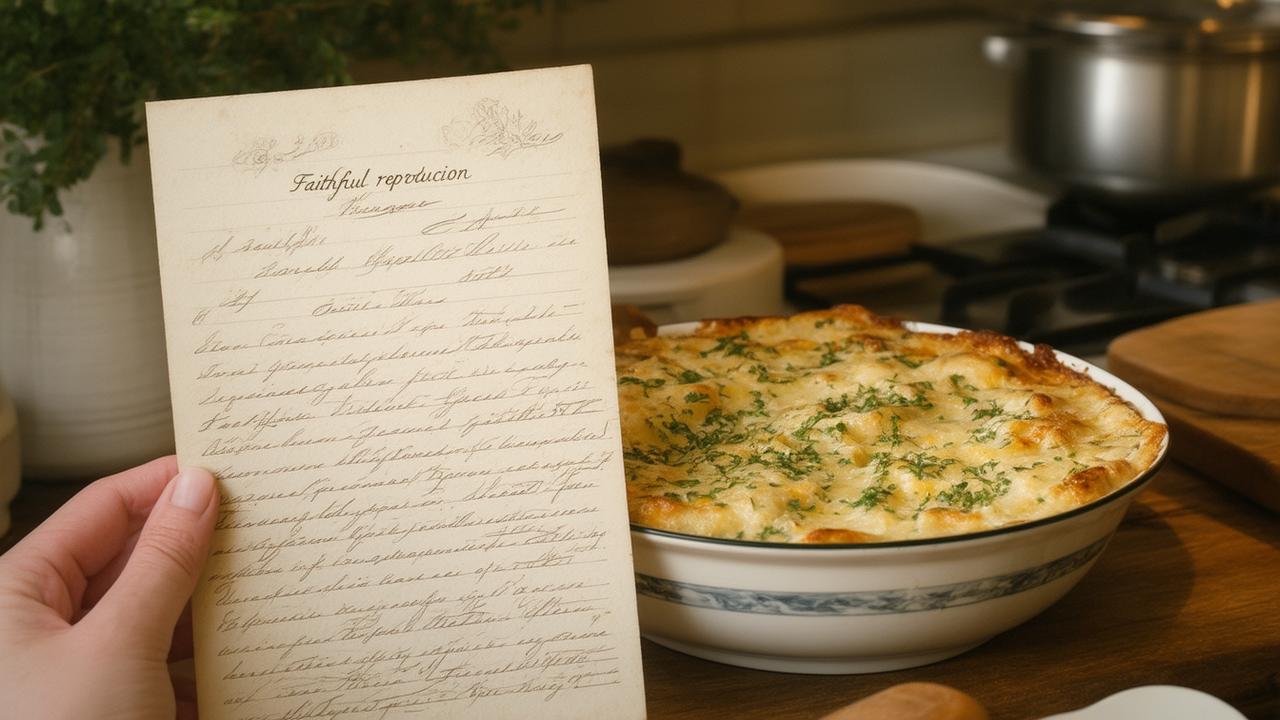
The recipe landed in my lap on a Tuesday that had no business being as gray as it was. One of those days where the sky feels too low, the coffee tastes thin, and the to‑do list seems to breed quietly in the corner while your back is turned. I wasn’t looking for a new dish or a grand experiment. I just wanted something—anything—that might sew a clear seam through the middle of the day. And there it was: a simple recipe, unassuming, like a handwritten note forgotten in a cookbook. I read it once, twice, waiting for the usual itch to tweak, substitute, “improve.” It never came. Instead, an odd, stubborn thought unfurled:
What if I make this exactly as it is?
The Quiet Rebellion of Following Directions
The kitchen was unusually still when I began. No podcast murmuring in the background, no music, no timer chiming yet—just the hush that settles when you decide, almost ceremonially, to pay attention. The recipe was for something deceptively modest: a one-pan roasted lemon herb chicken with vegetables. The kind of dish that shows up at family tables and weeknight dinners, a quiet understudy instead of the star. But that day, it felt like a dare.
Normally, I am a chronic adjuster. I believe in extra garlic on principle. I double the herbs, splash in more citrus, swap whatever vegetable looks at me funny. I treat recipes like suggestions—loose outlines waiting for my personality to scribble in the margins. But this time, I measured the olive oil with respect. I leveled off the teaspoon of salt instead of doing my usual generous pinch. I followed the instruction to use red onions, not yellow, even though a bag of yellows sat right there on the counter, practically shouting their availability.
As I laid out the ingredients, I could feel the pull of improvisation tugging at my sleeve. Add smoked paprika? A knob of butter? A splash of white wine? My brain, well trained in the art of meddling, trotted out one suggestion after another, like a persistent friend rearranging your living room without being asked. But there was something calming—almost radical—in telling myself no. Not this time. This time, the recipe gets to be itself.
Ingredients as Characters, Not Objects
I started with the chicken thighs, pale and cool, their surface tacky from the chill of the fridge. I patted them dry as the recipe said, feeling the paper towel dampen beneath my fingers. The act felt oddly intimate, like shaking off the day’s noise. Then came the olive oil, a slow amber ribbon pooling in a wide bowl, catching the light in lazy glints. The scent was rich, green, a little pepper at the back of my nose.
Lemon followed—thick-skinned, glossy, and stubborn under the knife. As the blade bit in, a bright spray of citrus oil leapt up, misting my fingers and the cutting board. The smell rose immediately: sharp, sunlit, unapologetically alive. I pressed each half, feeling the resistance give way, juice threading down my palms in thin, sticky lines. I didn’t reach for extra. The recipe asked for one lemon, and that was enough. Apparently.
Garlic came next, each clove a small moon in its paper shell. The flat of the knife landed with a soft crack, loosening the skins, releasing that familiar, grounding aroma. Not five cloves. Not a full bulb, as I’ve been known to do. Just three. Minced finely but not obsessively, enough for rustic specks rather than precise cubes. I sprinkled them into the bowl, watched them cling to the olive oil and lemon like old friends.
Then the herbs: thyme and rosemary. No creative substitutes. No basil, no oregano, no handful of mystery greens from the back of the crisper. I held the thyme stems between my thumb and forefinger, stripping tiny leaves that fell like green confetti onto the wood. The rosemary needles resisted, then broke free with a tiny crackle, each one a dark green stroke of pine. I chopped them as instructed—not finely, not roughly, just enough. Their scent rose in waves: forest after rain, hillside in late summer, that deep resinous hum that makes you pause without really knowing why.
Into the Pan: A Small Act of Trust
The vegetables waited politely at the edge of the counter: red potatoes, carrots, and red onion, all sliced exactly as written. No parsnips, no sweet potatoes, no surprise handful of mushrooms that I’d normally toss in “for depth.” Just what the recipe had listed, nothing more.
I tossed the potatoes in the lemon and oil mixture first, watching their white surfaces gloss over, edges catching tiny flecks of thyme and garlic. The carrots followed—slim coins of orange that brightened as they turned in the bowl. Finally, strips of red onion, their layers splitting into arcs and crescents, the color deepening to a glossy magenta as they met the marinade.
The pan welcomed everything in a single, unhurried layer. Vegetables first, spread out so each slice had its own bit of breathing room. Then the chicken on top, skin side up, nested between the vegetables like someone tucking themselves under a shared blanket. I poured whatever remained in the bowl over the top, letting the last streaks of oil and lemon and garlic find their own way into corners.
I almost reached for the pepper grinder one more time. Just a little extra, I thought. Just a touch. But the recipe had already guided me—salt, pepper, done. It felt like breaking a promise to add more, as if I had agreed to play a piece of music as written and was about to slip in a solo. So I placed the pan in the oven, closed the door, and let it all go.
The Alchemy of Leaving Things Alone
There’s a special kind of suspense in cooking when you don’t interfere. When you don’t open the oven every ten minutes, don’t stir, don’t fuss, don’t narrate the process to someone else. Just let heat and time do what they’ve been doing long before we had timers and ceramic baking dishes and thermometers.
The first scent crept out around the twenty-minute mark: faint, savory, almost shy. Then, slowly, the kitchen filled. Roasting chicken carries a particular comfort—it is the smell of Sunday afternoons and shared tables and borrowed casserole dishes. But here it was sharpened at the edges by lemon, bright and clean, cutting through the fat. Rosemary rose on the steam, low and steady, while garlic added a familiar bass note.
I moved through the small tasks of waiting: washing the knife, stacking the cutting board, wiping the counter. A kind of quiet settled in my chest that matched the slow humming of the oven. Every now and then I’d glance at the clock, see the minutes ticking along in a straight line instead of looping circles of distraction.
When the timer eventually rang, it felt less like an alarm and more like a gentle nudge. I opened the oven door and a rush of fragrant heat rolled out, fogging my glasses and warming my face. The chicken skin had crisped to a deep, burnished gold, blistered in tiny bubbles where fat had rendered and crackled. The potatoes at the edges had gone tawny and frilled, their cut sides turning caramel brown. The carrots gleamed, soft but still holding their shape; the red onions had slumped into silky ribbons, their color darkened to something almost jewel-like.
Sitting Down with the Recipe as It Was
There is always that moment after you pull a dish from the oven when the temptation to tinker returns. A drizzle of something, a last-minute sprinkle, an extra squeeze of lemon. I hovered, spoon in hand, feeling the pull. But I had come this far. I had promised the recipe I would see it through unedited—an odd kind of loyalty, but loyalty nonetheless.
I plated a single chicken thigh with a tumble of vegetables. The potatoes yielded under the fork, fluffy inside, edges crisp. The carrots shone like small embers. A shard of onion clung to the chicken, soft and fragrant. Steam rose in small spells. The first bite was all texture and sound: that delicate crackle of skin giving way, then the tender meat, still juicy, humming with lemon and garlic and thyme.
What surprised me most was not some shocking, never-before-tasted flavor, but the coherence of it all. Everything belonged. The lemon was present but not pushy, shining quietly through each bite rather than shouting its arrival. The herbs wove around the chicken and vegetables like a thread that knew exactly where the fabric needed stitching. Nothing was too much. Nothing needed rescuing by an extra ingredient I’d held back in case of disappointment.
➡️ Light fast apple cake made with oil and yogurt for effortless desserts
➡️ Known as the most fertile soil on Earth, the “black gold of agriculture” has chernozem layers up to 1 meter deep and turned Ukraine, Russia and Kazakhstan into one of the world’s biggest breadbaskets and strategic assets
➡️ I learned it at 60: few people actually know the difference between white and brown eggs
➡️ Hygiene after 65 : not once a day, not once a week, here’s the shower frequency that keeps you thriving
➡️ Many people don’t realize it, but sweet potatoes and regular potatoes are not closely related at all, and science explains why
➡️ How to make hardwood floors shine brilliantly using one unexpected pantry item that homeowners swear by
➡️ If you grew up in the 1960s or 1970s, you were likely taught life lessons that have quietly disappeared from modern education
I tasted a potato, its surface kissed by the rendered chicken fat, pockets of roasted garlic clinging to one side. A carrot that managed to be both sweet and savory at once. A strand of onion so soft it almost melted before I could chew it, leaving behind a sweetness edged with lemon. The dish wasn’t dramatic. It didn’t flash or flare. It simply tasted—whole.
A Simple Table for a Simple Meal
To remember it, and to honor it, I wrote the recipe down exactly as I found it and as I made it—unchanged, uncorrected, unembellished. Here it is, in its calm, complete form:
| Component | Details |
|---|---|
| Protein |
4 bone-in, skin-on chicken thighs Pat dry with paper towels |
| Vegetables |
500 g small red potatoes, quartered 3 medium carrots, sliced into 1 cm rounds 1 large red onion, sliced into wedges |
| Marinade |
3 tbsp olive oil Juice and zest of 1 lemon 3 cloves garlic, minced 1 tbsp fresh thyme leaves 1 tsp chopped fresh rosemary 1 tsp salt 1/2 tsp freshly ground black pepper |
| Method |
1. Preheat oven to 200°C (400°F). 2. Whisk marinade ingredients in a large bowl. 3. Toss vegetables in marinade; spread in a single layer on a baking pan. 4. Add chicken thighs to remaining marinade, coat well, place skin-side up on vegetables. 5. Roast 35–45 minutes, until chicken is cooked through and skin is crisp, vegetables tender. 6. Rest 5 minutes before serving. |
What I Learned by Not Changing a Thing
As I ate, slowly, I kept circling back to a quiet realization: I had trusted someone else’s judgment from start to finish. In a world where we are constantly invited to optimize, customize, and upgrade, that felt oddly intimate. A small act of faith. I had allowed the original cook—the invisible hand behind these measurements—to lead, instead of barging in with my own edits.
I thought about how often I do this in life: rearrange, refine, fix before I even understand what is already there. How rarely I allow something to meet me on its own terms. This simple pan of chicken and vegetables became, in its own patient way, a kind of mirror. I could see my habits more clearly: the restless need to improve, the fear of missing flavor, of missing out, of somehow not doing enough.
Yet here I was, fully content, not because the dish was extraordinary in some show-stopping way, but because I had shown up fully to the ordinary. I had tasted it for what it was, not for what I could have made it into. For once, “good enough” didn’t mean settling; it meant listening.
The pan sat half empty on the stovetop as evening leaned quietly against the windows. I packed the leftovers away, knowing tomorrow’s lunch would carry the same ease, the same flavors, deepened overnight. And I thought, as I snapped the container lid closed: there is a certain kind of magic in honoring a recipe by not rewriting it—by letting it be exactly what it promised to be, nothing more and nothing less.
FAQs
Can I still follow the spirit of this recipe if I have to substitute an ingredient?
Yes. The heart of this experience is about respecting the intention of a recipe. If you must substitute—because of availability or dietary needs—do it thoughtfully and sparingly. Ask what role the original ingredient played (acid, fat, texture, aroma) and choose a replacement that fulfills a similar role, rather than turning it into an entirely different dish.
Why does it matter if I “don’t change a thing” when cooking?
Following a recipe exactly, at least once, lets you understand the creator’s balance of flavors, textures, and timing. It’s like learning a song note for note before you start improvising. Only after experiencing the original can you truly know which changes are improvements and which are just noise.
How do I resist the urge to add extra spices or ingredients?
Decide in advance that this is an experiment in trust. Treat it like a small commitment: read the recipe once, agree to follow it, and remind yourself that the goal isn’t perfection—it’s paying attention. Keeping distractions low (no rushing, no multitasking) makes it easier to stay with the plan instead of reaching for “just one more thing.”
What if my oven temperature is different or my ingredients vary in size?
Even when you “don’t change a thing,” you still need to cook with your senses. Start with the written directions but watch for visual and aromatic cues: golden skin, tender vegetables, juices running clear. Use the recipe as a map, and your eyes, nose, and a fork as your compass.
Is it wrong to usually improvise when I cook?
Not at all. Improvisation is one of the pleasures of home cooking. But balancing that freedom with moments of faithful following can deepen your understanding of flavor, teach you new techniques, and reveal combinations you might never have invented on your own. Sometimes, the most surprising discovery is that the recipe was already enough, exactly as it was.





