The first thing you notice is the sound—an almost imperceptible whisper as the oven door opens and a soft wave of heat drifts into the kitchen. Then the scent hits you: warm garlic, a brightness of lemon, a breath of herbs releasing their oils into the air. On the baking tray, the chicken breasts glisten, edges just beginning to caramelize, juices bubbling in tiny amber pools. You nudge one with the corner of a knife and it springs back, not dry, not stiff, but tender. Later, when you slice into it, the knife glides through, and there it is—the thin glimmer of juice gathering in the cut, proof that the simplest kind of alchemy has happened in your oven.
Why Juicy Chicken Breast Feels Like a Small Kitchen Miracle
There’s something almost mythic about perfectly cooked chicken breast. It’s the cut we reach for most often—lean, accessible, endlessly versatile—and yet it betrays us just as often as it feeds us. One minute it’s a promise of a quick, wholesome dinner; the next it’s a pale, fibrous disappointment that needs a drowning in sauce just to be tolerated.
Maybe you’ve been there: You follow the recipe, you set the timer, you trust the process. But when you sit down to eat, the chicken is tight, chalky at the edges, and suspiciously squeaky between your teeth. You chew, and you think, This is fine. Edible. Not great. Not memorable. And certainly not the kind of meal that invites people back to the table for seconds.
Yet the secret to juicy baked chicken breast is not a culinary degree or a cast-iron pan older than you are. It’s not a complicated brine or an elaborate stuffing. It’s simpler than that—a short, deliberate pause before cooking. A small ritual that takes your chicken from mere protein to something you actually look forward to eating.
The answer lives in the quiet space between prep and oven: a brief, well-balanced marinade.
The Short Marinade: A Pause That Changes Everything
Think of the marinade as a conversation between the chicken and everything you want dinner to smell and taste like. In this recipe, that conversation is short and focused. You’re not trying to drown the chicken or bury it in complicated flavors; you’re coaxing moisture into the meat and seasoning it all the way through, not just at the surface.
A good quick marinade for chicken breast rests on a simple trio:
- Fat – Usually olive oil, to carry flavor and keep the meat supple.
- Acid – Lemon juice or a splash of vinegar, to gently tenderize and brighten.
- Salt – To draw flavor inward and help the proteins hold onto moisture.
Aromatic partners—garlic, herbs, spices—come in as supporting characters, adding character and warmth. The key is restraint: enough time for the chicken to drink in seasoning, but not so long that the acid starts to make the meat mushy or stringy.
Twenty to thirty minutes is often all it takes. Long enough for transformation, short enough to fit into an ordinary weeknight. While you wait, you can rinse the cutting board, set the table, or just stand by the window watching the light shift across the sink. The marinade is working even when you’re not.
The Simple, Satisfying Marinade Formula
Here’s an easy ratio you can remember without even writing it down. For about 2 large chicken breasts (roughly 1 pound/450 g total):
- 2 tablespoons olive oil
- 1 tablespoon lemon juice (or mild vinegar)
- 3/4 teaspoon fine salt
- 1/4 teaspoon black pepper
- 1–2 cloves garlic, minced
- 1 teaspoon dried herbs (such as thyme, oregano, or Italian seasoning)
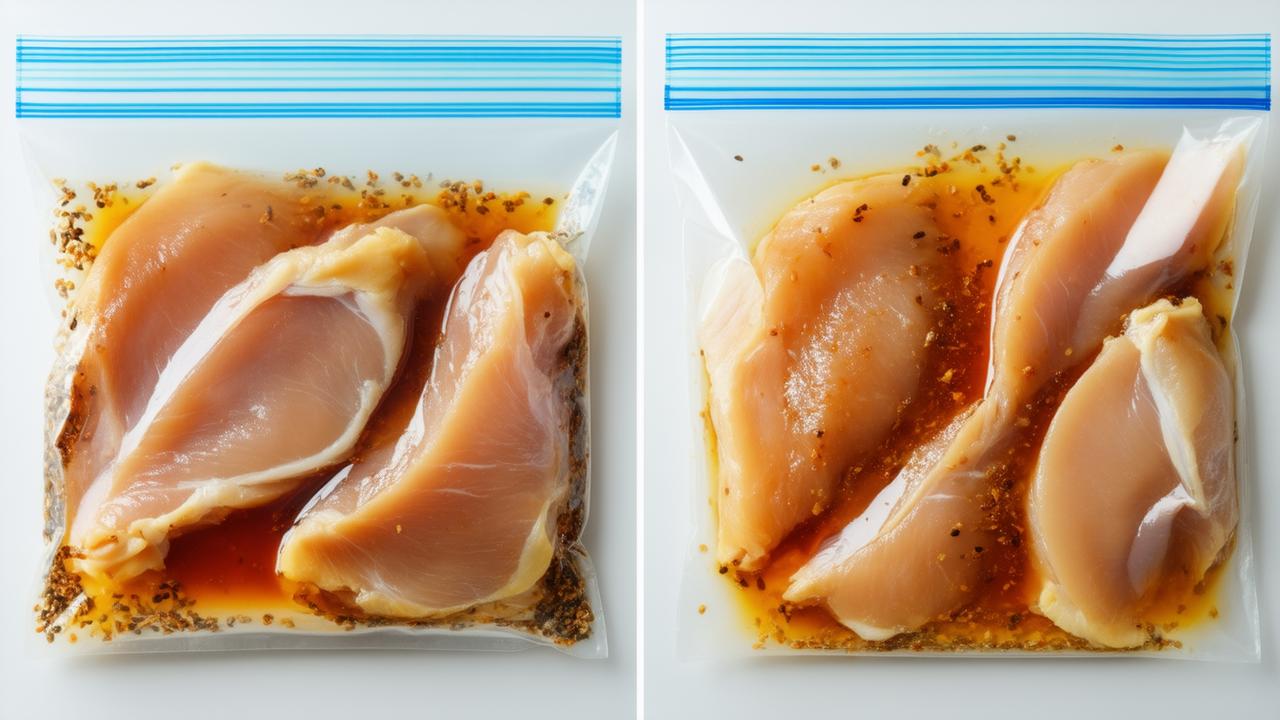
Toss the chicken in this mixture in a shallow dish or a resealable bag, making sure every surface is lightly coated. Slide it into the fridge for that short, essential rest: just 20–30 minutes. You’ll be amazed how such a small window of time shifts the whole outcome of the meal.
The Texture Test: When the Oven Does Its Quiet Work
When the marinating is done and your oven is humming at a steady, comforting heat—around 400°F (200°C)—you move to the next important moment. You line a pan or small baking dish, arrange the chicken breasts in a single layer, and spoon over whatever marinade clings to the bowl. It’s a simple scene, but it holds everything: smell, memory, and the almost invisible physics of heat and protein.
As the chicken bakes, the outside grows opaque and gently golden while the inside shifts from translucent to tender. The marinade’s thin sheen helps shield the surface from drying out too fast and keeps the seasoning where it belongs. The salt you added earlier has already woven its way inward; the lemon has loosened the tightness of raw muscle fibers just enough to keep them from seizing into dryness.
There’s a kind of trust required here. Chicken breast doesn’t announce its readiness with a dramatic crust or a sizzling pan sauce. Its perfection is quiet, precise, and easy to overshoot if you’re distracted. That’s why a small tool—a basic instant-read thermometer—can feel like a form of kitchen grace. You slide the tip into the thickest part of the meat and watch the numbers creep upward.
At 165°F (about 74°C), you’re there. That’s the sweet point where safety meets juiciness, where the proteins have set but not seized, where the meat holds its shape but still yields under your knife.
A Handy Guide to Time, Temperature, and Thickness
Chicken breasts come in all kinds of sizes and shapes. Some are plump and thick at one end, others thin and even. That’s why cooking by time alone can betray you. Still, it helps to have a rough map:
| Chicken Breast Thickness | Oven Temp | Approx. Bake Time | Internal Temp Target |
|---|---|---|---|
| 1/2 inch (thin, pounded) | 400°F / 200°C | 12–15 minutes | 165°F / 74°C |
| 3/4 inch | 400°F / 200°C | 16–18 minutes | 165°F / 74°C |
| 1 inch (typical store-bought) | 400°F / 200°C | 18–22 minutes | 165°F / 74°C |
| 1 1/4 inch or thicker | 400°F / 200°C | 22–25 minutes | 165°F / 74°C |
Use this as a starting point, but let the thermometer give the final word. That tiny number on the display is your quiet assurance that the chicken is cooked, but not sacrificed.
Resting: The Gentle Finale That Locks in Juiciness
The moment you pull the pan from the oven, the chicken isn’t quite ready for its close-up. Inside, the juices are still moving, still searching for balance after the heat. If you slice it right away, those juices rush out, pooling on the cutting board, leaving the meat a little drier than it needed to be.
So you wait—just 5 to 10 minutes. That’s all. You tent the pan loosely with a sheet of foil or simply let the chicken sit undisturbed. During this pause, the juices redistribute through the meat, settling into the fibers so they stay put when you finally cut in.
This rest doesn’t just protect juiciness; it gives you a moment of quiet ceremony. You might toss a salad, warm some bread, or simply stand there, inhaling the aroma, listening to the faint crackle as the chicken cools and the pan settles. It’s an unhurried pause between effort and reward, the kind of interval modern life rarely gives you unless you claim it for yourself.
From Pan to Plate: Serving with Intention
When the resting time is up, you transfer a breast to your cutting board and slice it across the grain. Each piece reveals its own pale, glistening interior, the knife spreading warmth and steam as it moves. You fan the strips over a bed of greens, tuck them beside roasted vegetables, pile them into a grain bowl, or layer them into soft tortillas with crisp lettuce and bright salsa.
The beauty of this recipe is not just that the chicken is juicy; it’s that it’s flexible. The flavors are gentle but confident, ready to share the plate with just about anything: toasted farro, lemony couscous, buttered noodles, or a simple sliced tomato seasoned with salt and olive oil. It’s a quiet, anchoring presence on the table.
➡️ What psychology reveals about people who feel emotionally drained after small social interactions
➡️ I stopped timing my cleaning sessions and my house became easier to maintain
➡️ I made this simple recipe and didn’t change a thing
➡️ If your flowers fade quickly, temperature stress is often the reason
➡️ Why your body feels heavier on some days even when nothing is wrong
➡️ A small daily habit that helps your body feel more balanced
➡️ Climate panic or scientific fact Februarys predicted Arctic collapse and extreme anomalies split experts and fuel public distrust
Making It Your Own: Variations that Travel with the Seasons
Once you trust the backbone of this method—a short marinade, a steady oven, a careful rest—you can let the flavors roam. The structure remains the same: oil, acid, salt, heat, patience. But the accents can wander with your cravings, the season, or what’s left in the pantry at the end of the week.
Imagine a summery version with lemon zest, fresh thyme, and cracked pepper, served next to grilled corn and sliced peaches. Or an autumn spin with smoked paprika, garlic, and a touch of honey, paired with roasted sweet potatoes and warm, earthy greens. Winter may invite rosemary, orange, and a little mustard; spring might call for dill, parsley, and a squeeze of fresh lemon over a salad of peas and tender leaves.
Flavor Variations to Try
- Mediterranean: Olive oil, lemon, garlic, oregano, a pinch of crushed red pepper.
- Smoky Paprika: Olive oil, smoked paprika, garlic, a drizzle of honey, black pepper.
- Herb Garden: Olive oil, white wine vinegar, minced garlic, chopped parsley, thyme, and chives.
- Citrus Mustard: Olive oil, orange juice, Dijon mustard, thyme, and a touch of maple syrup.
- Yogurt-Tenderized: Plain yogurt, lemon, garlic, cumin, coriander (marinate on the shorter side for this one—about 20 minutes).
Each variation lives within the same gentle rules. Don’t overwhelm the chicken; invite it. Let the marinade enhance, not drown. And remember that the juiciness you’re preserving isn’t just about moisture—it’s about texture, comfort, and the quiet satisfaction of a meal that feels both nourishing and considered.
Why This Recipe Finds Its Way into Weekly Rhythm
In time, this baked chicken breast recipe stops feeling like a recipe and starts feeling like a rhythm. You come home, pull chicken from the fridge, and almost without thinking, you whisk together oil, acid, salt, and something fragrant. You let it sit while you listen to a favorite song or catch up with someone you love. You bake it, you rest it, and it emerges not as a rushed afterthought but as the calm center of the evening.
There’s something deeply grounding in cooking this way. The steps are straightforward, but the attention is what transforms them. You’re not just throwing chicken in the oven and hoping for the best. You’re creating a short, deliberate pause—the marinade—that makes everything else smoother and more forgiving.
And every time you cut into that first slice and watch a tiny bead of juice gather and shine, you’re reminded that care in the small moments matters. A 20-minute marinade. A mindful bake. A 5-minute rest. These are not grand gestures, but they turn an everyday ingredient into something quietly extraordinary.
FAQs About Juicy Baked Chicken Breast
How long should I marinate the chicken for best results?
For this style of quick, baked chicken breast, 20–30 minutes in the fridge is ideal. It’s enough time for the salt and acid to start working without changing the texture of the meat. You can go up to 1 hour, but for this simple recipe, longer isn’t necessary.
Can I marinate the chicken overnight?
You can, but it depends on the marinade. If it’s heavy on acid (like lots of lemon juice or vinegar), overnight can start to affect the texture, making the outside a bit mushy. If you want to marinate overnight, reduce the acidic ingredients and focus more on oil, herbs, and gentle seasonings.
Do I have to use a meat thermometer?
You don’t have to, but it makes a big difference. Without one, it’s easy to overcook the chicken “just to be safe.” A basic instant-read thermometer takes out the guesswork and helps you pull the chicken at exactly 165°F (74°C), where it’s both safe and juicy.
Why is my chicken still dry even when I marinate it?
Dryness usually comes from overcooking or very uneven thickness. Try pounding the thicker end of the breast so it’s more even, bake at 400°F (200°C), and start checking the temperature early. Also, don’t skip the resting time after baking—those few minutes help keep the juices in the meat instead of on the cutting board.
Can I use this method for bone-in chicken?
Yes, but you’ll need more time in the oven. Bone-in pieces, like thighs or bone-in breasts, cook more slowly. Keep the same marinade idea, but expect longer bake times and always rely on internal temperature to decide when they’re done.
Is it okay to bake the chicken in the leftover marinade?
Yes. Pouring the remaining marinade over the chicken in the baking dish is safe because it’ll cook fully in the oven. Just make sure any juices in the pan are bubbling hot before serving. If you want to use the marinade separately as a sauce, it must be boiled for safety.
How can I store and reheat leftovers without drying them out?
Store sliced or whole cooked chicken in an airtight container in the fridge for up to 3–4 days. To reheat, cover and warm gently in the oven or on the stovetop with a splash of broth or water, or reheat in the microwave at low power in short bursts. The key is gentle heat, not speed.





