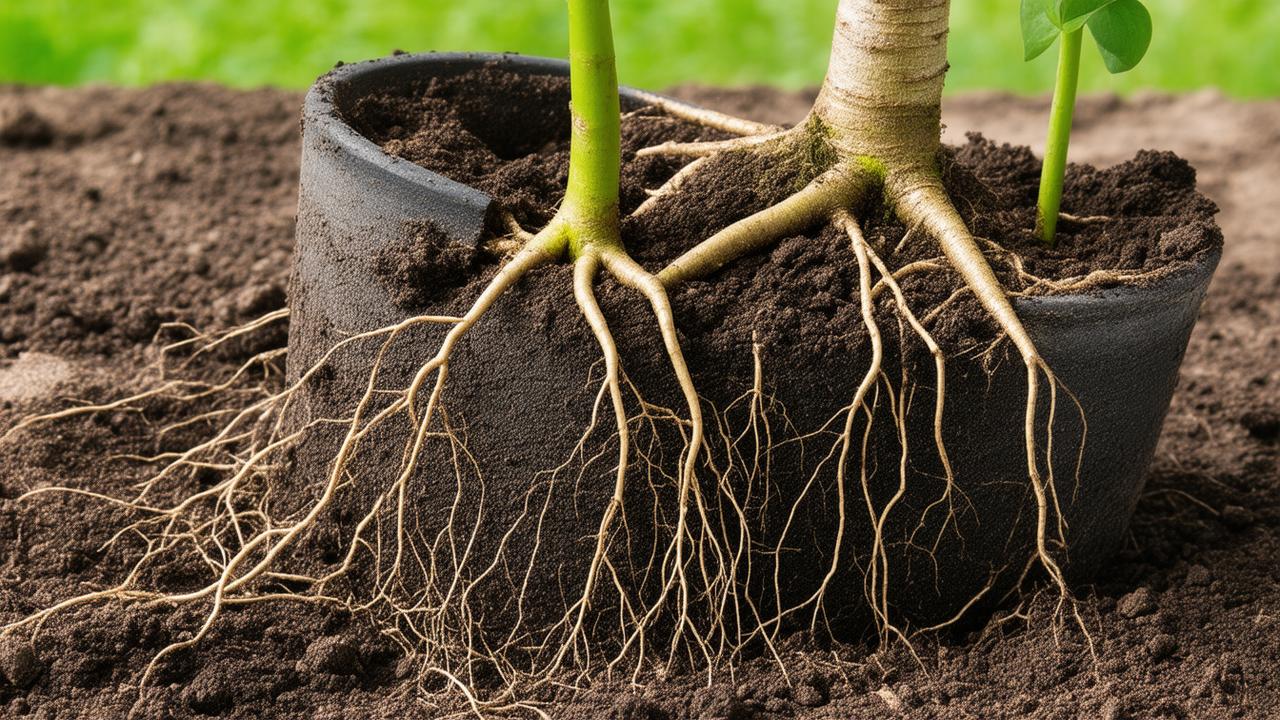
The first thing you notice isn’t the color or the flowers. It’s the slant. The whole pot seems to be quietly migrating east, stems stretching in a strange, synchronized lean, as if the plant is trying to escape. You nudge the terracotta a little, rotate it on the windowsill, step back. For a few hours it looks straighter. By the next morning, it’s back to that same determined angle, as though something beneath the surface is pulling it off balance.
The Leaning Mystery in the Living Room
We’re used to thinking of plants as simple: give them light, water, a decent pot, and they’ll handle the rest. So when a plant consistently leans in one direction, the first instinct is to blame the obvious suspects. Too much sun on one side. Maybe a draft. Maybe it’s just “how this one grows.”
Stand close, though. Look carefully at the soil. Press a fingertip gently into one side, then the other. One side might give a little, crumbling softly. The opposite side might resist, dense and unwilling to move. That subtle difference in feel can be the entire story: uneven soil compaction, a hidden imbalance below the surface that slowly tilts the plant’s world off-center.
This is the part of gardening we rarely talk about—the way gravity, water, and time quietly rearrange the underground architecture. Roots don’t just sit there. They push, burrow, wrap, and brace. As they grow into tightly packed soil on one side and looser, airy soil on the other, your plant begins to lean, not just toward the light, but away from discomfort.
Listening to What the Lean Is Telling You
If you watch closely over weeks instead of hours, the pattern becomes obvious. No matter how you rotate the pot, the plant leans back toward that same direction. The growth is thicker on one side, spindly on the other. Water runs down one edge of the pot, disappearing in seconds, while the opposite side stays dark and damp for days.
Your plant is signaling that the underground landscape isn’t equal. Roots may be bunching on one side, avoiding an area of compacted, suffocating soil. That solid patch could be the result of repeated watering in the same spot, heavy-handed pressing when potting, or even the natural settling of peat-based mixes that collapse over time.
Plants are quiet communicators, but they are not subtle. Leaning, drooping, twisting: these are all forms of body language. When that lean is consistent—and stubborn—it’s often less about a plant “reaching for the sun” and more about it struggling to find balance in a lopsided home.
The Underground Story: How Soil Compaction Gets Uneven
Imagine standing on a floor where one side is firm and solid, and the other side is a mattress that sinks when you step on it. You’d naturally start standing more on the firm part. Root systems do something similar. Where the soil is too compacted, roots get less oxygen, struggle to move, and often pull back. Where the soil is looser, they branch out, multiply, and anchor more strongly.
Over time, this creates a bias. The dense side becomes a kind of dead zone—fewer roots, less water absorption, less stability. The airy side becomes a tangled network of roots doing all the work. Above the surface, the plant follows its foundation, leaning toward the side where life feels easier.
Uneven compaction doesn’t usually happen overnight. It sneaks in through habits and small choices:
- Pressing one side of the soil more firmly when potting or repotting.
- Watering from the same angle every time, creating a channel on one side.
- Using a mix that collapses and settles unevenly as it breaks down.
- Letting a plant sit in the same pot far too long, with roots circling and strangling old soil pockets.
The result is not only visual imbalance but physical strain. A leaning plant is more likely to be unstable, more prone to tipping, or breaking stems under its own weight. And underneath, some roots are thriving while others are effectively trapped.
How to Feel the Difference with Your Hands
One of the simplest diagnostics is purely tactile. Water your plant and, after excess has drained, wait an hour. Then gently press your finger into the soil at several points around the pot—north, south, east, west, right against the rim and closer to the stem.
Pay attention to the sensations:
- Does one area feel like a hard, compacted cake?
- Does another feel soft and crumbly, with a bit of spring?
- Is there an area that remains soggy, while the opposite side is already drying?
These are your clues. You may also notice that your plant’s leaning direction lines up with the area where the soil feels more open and alive. That’s where the roots have concentrated their efforts. The denser side, often the dark, heavy patch, becomes a quiet zone of almost no growth.
Balancing the Pot: Gentle Fixes for Uneven Compaction
Correcting this imbalance is less about a dramatic rescue and more about careful, patient adjustment. Start slowly, especially if the plant is large or has thick, woody stems. You’re not just fixing soil; you’re protecting a living architecture.
A simple first step is to gently aerate. Take a chopstick, a thin dowel, or even the handle of a wooden spoon, and insert it into the soil along the compacted side. Do this slowly, twisting just enough to create narrow channels. You’re not trying to churn the whole pot—just opening doorways for air, water, and roots.
As you loosen, pause if you feel strong resistance. That may be a thick root. Work around it rather than forcing your way through. Over the next few weeks, water more evenly across the surface, not only through your usual “favorite spot.” Those new channels will guide moisture into previously neglected areas, inviting roots in.
When It’s Time for a Full Repot
Sometimes, the imbalance is too deep to fix from above. If the plant has been in the same container for more than a year or two, or if the lean is severe and the root ball feels like a single dense mass, a full repot is your best reset.
When you slide the plant out of the pot, the story becomes visible. One side of the root ball may be heavily colonized, a thick white web. The other side could look sparse, with dark, compacted soil clinging stubbornly. This is the moment to gently tease apart those tight zones. Crumble the densest soil with your fingers, freeing roots that had been pressed into a wall.
Repot into a fresh, well-aerated mix appropriate for your plant—often a blend that includes chunky components like bark, perlite, or pumice rather than relying entirely on fine peat or compost. As you fill around the root ball, resist the urge to pack the soil in hard. Firm it just enough so the plant is stable, but not so much that the mix loses its small air pockets.
Then, importantly, set the plant upright. Not half-leaning the way it was used to. Not tilted to match the old angle. Give it the gift of a clean vertical start, gently staking if needed while the roots rediscover balance in their new, even world.
Seeing the Plant as a Whole System
This is where plant care shifts from a checklist to a relationship. You start to see how everything connects: the leaning stem, the dry patch of soil, the pattern of watering, the quality of the mix. Nothing exists alone.
➡️ Bad news for city dwellers who love silence after lunch a new ban on mowing lawns between noon and 4 p.m sparks anger among gardeners and splits neighborhoods
➡️ Driver’s license : good news for motorists, including elderly people
➡️ Sorry, the Matrix doesn’t exist: new mathematical proofs suggest the universe cannot be a simulation
➡️ People in their 60s and 70s who keep these old-school habits report higher happiness than tech-focused younger adults
➡️ An old-school moisturizer with no luxury branding is crowned the number one choice by dermatology experts
➡️ Day will slowly turn to night as the longest total solar eclipse of the century passes across several regions, creating a rare and spectacular event that scientists say will captivate millions
➡️ Gray hair: 5 habits to adopt to enhance salt and pepper hair without the “granny” effect, according to a hairstylist
When the underground side of plant care becomes part of your attention, you naturally adjust your habits. You rotate pots not just for even light, but for even watering. You feel the soil, not simply glance at its color. You notice how much the plant wobbles when you lightly nudge the stem—another quiet clue about what’s happening at the roots.
This holistic way of seeing makes you slower, more observant. You begin to understand that a plant leaning consistently in one direction isn’t misbehaving or being dramatic. It’s adapting. It’s doing its best with a world that tilts beneath it. Your job is not to force it straight, but to gently re-balance the world it’s living in.
A Simple Snapshot of What to Watch
Use this as a quick visual guide when you’re trying to decode a leaning plant and its soil:
| What You Notice | What It Often Means | What to Try |
|---|---|---|
| Plant always leans the same way, even after rotating pot | Roots favoring one side due to uneven soil conditions | Check soil firmness on all sides; gently aerate compacted areas |
| One side of soil stays wet much longer | Poor drainage or heavy compaction on that side | Improve aeration; ensure pot drainage holes are clear |
| Water runs down one “channel” every time you water | Watering habit creating a compacted path and dry zones | Water more slowly and evenly over the whole surface |
| Plant wobbles easily when you touch the stem | Weak anchoring, possibly from limited root spread | Consider repotting, spreading roots into fresh, even soil |
| Dense, hard soil on one side of the pot only | Localized compaction from potting or watering patterns | Break up the hard zone gently; add airy mix if repotting |
Letting Your Plants Stand on Even Ground
There’s something oddly moving about watching a plant recover from a long, slow tilt. After you’ve loosened the dense pockets, refreshed the soil, and given the roots room to explore, the change doesn’t happen in a single day. It arrives in quiet increments—new growth that points upward, leaves that spread without strain, an entire body that seems more relaxed.
You might catch yourself, days later, glancing across the room and feeling that something is different, but not quite knowing what. Then you realize: the plant is standing tall. Not heroically straight, just calmly vertical. The way it might have grown if the ground had been fair from the start.
Plants don’t ask for perfection. They ask for conditions that are balanced enough for them to do what they were made to do—reach, root, stretch, and rebuild. When you notice that persistent lean, you’re not seeing a flaw. You’re being invited to look deeper, into the compacted corners and airy pockets, and to gently reshape the world they stand in.
In that small act—your hands in the soil, your attention on their quiet signals—you become part of the landscape, too. Not just a caretaker, but a collaborator, helping the roots find even ground so the whole plant can finally, simply, stand in its own light.
FAQ
Isn’t plant leaning usually just phototropism (reaching for light)?
Plants absolutely lean toward light, but when the lean is always in the same direction even after you rotate the pot, or when it’s exaggerated and combined with uneven soil texture, uneven soil compaction is often involved. Light and soil can both shape the way a plant stands.
How do I know if my soil is too compacted in general?
If water sits on top before suddenly disappearing, if the surface feels like a hard crust, or if it’s difficult to push a finger or a thin stick into the soil, it’s likely compacted. In a healthy, airy mix, your finger can enter with gentle pressure and the soil feels springy, not brick-like.
Can I fix compacted soil without repotting?
Yes, to a point. You can gently aerate with a chopstick and adjust your watering habits. This can improve conditions, especially in larger pots. But if the soil has broken down badly or the root ball is very dense, a full repot is the most effective long-term solution.
Will straightening my plant with a stake solve the problem?
A stake can support the plant temporarily, but it doesn’t address the cause. If uneven compaction is forcing roots to one side, the underlying stress remains. Use staking as short-term support while you gradually improve the soil conditions or repot completely.
How often should I refresh or change my potting mix?
Most indoor plants benefit from fresh or partially refreshed soil every 1–2 years. Over time, potting mixes break down, drain less effectively, and compact more easily. Repotting on this rhythm helps prevent the kind of uneven compaction that leads to chronic leaning and root stress.





