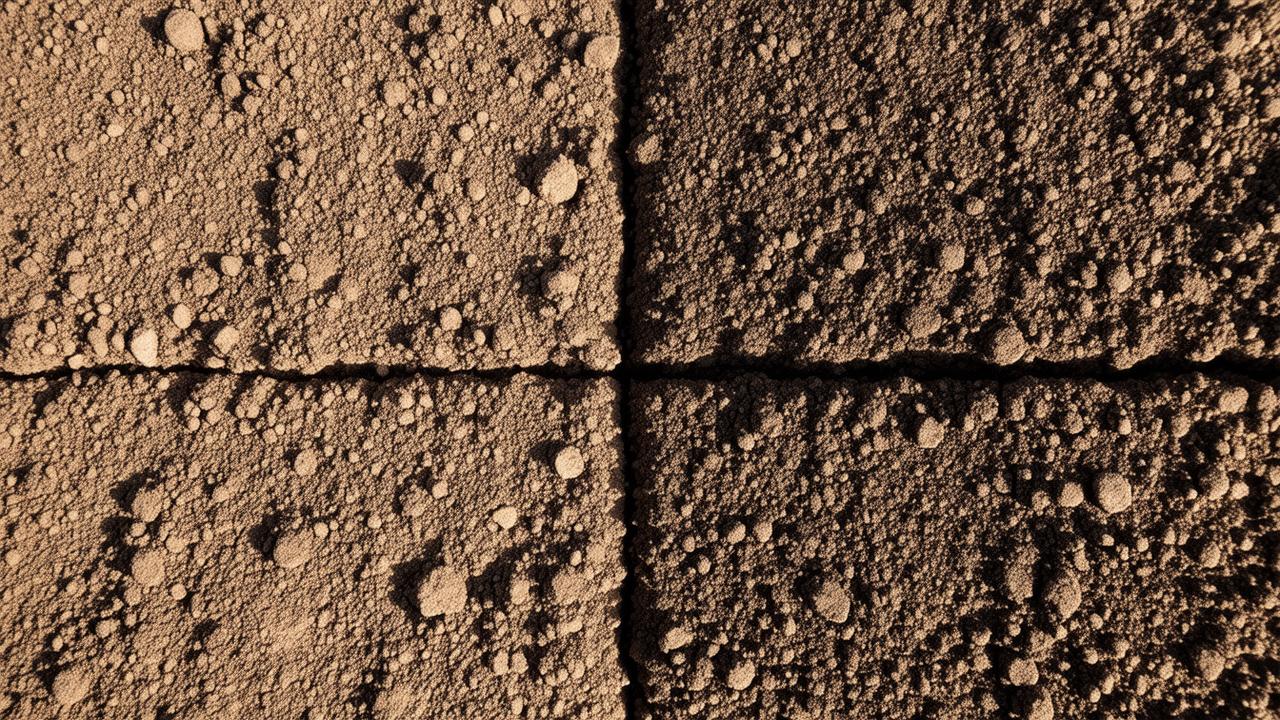
The first time Maya stopped turning her soil, the garden felt strangely quiet. Her shovel lay on the grass, still flecked with last season’s clay. The beds—usually flipped, fluffed, and rearranged this time of year—sat undisturbed, wearing a thin winter crust. She crouched down, pressed her fingers into the cold top layer, and instead of breaking it open with a spade as she’d always done, she just…watched. Tiny beetles stitched their way between grains of sand. A centipede flashed and vanished. The ground, she realized, wasn’t waiting for her to fix it. It was already busy.
The Season Gardeners Started Listening to the Ground
Across neighborhoods, allotments, and community gardens, more people like Maya are pausing mid-dig, holding their spades and asking an almost heretical question: What if turning the soil is doing more harm than good?
For generations, the ritual was simple: spring arrives, ground thaws, you dig deep. The smell of freshly turned earth was practically a promise—oxygen! Fresh start! Clean slate! It felt like kindness, like setting a table for seeds. But over the last decade, many gardeners have noticed a different story unfolding, and it’s written not in gardening catalogs, but in the soil itself.
There were the beds that seemed to dry out faster each year, even though the watering schedule stayed the same. Vegetable rows that needed more compost, more fertilizer, yet yielded less. Clay that grew harder, sand that grew looser, and a lingering feeling that the more they “improved” the soil, the more fragile it became. Some people saw a pattern they couldn’t ignore: soil that was turned and fluffed looked great in the first year or two—then started unraveling.
So they began to experiment. One bed tilled as usual, one bed left mostly undisturbed. One patch mulched heavily, another stripped bare between plantings. Over time, the undisturbed beds started telling an unexpected story—quietly at first, then with undeniable clarity.
The Hidden City Beneath Our Boots
When Maya finally took a soil biology workshop at a local botanical garden, she realized she’d been gardening on top of a city she never knew existed. Her instructor called it the “soil food web,” but the phrase sounded too tidy, too simple, for something so wildly alive.
Under every step of a garden path, there are miles—yes, literal miles—of fungal threads, or hyphae, connecting plant roots like invisible telephone lines. Bacteria cluster in microscopic neighborhoods around root tips, trading nutrients for sugars. Tiny worm-like nematodes move through pores in the soil, grazing, hunting, recycling. Even the humble earthworms, which so many of us picture as lone tunnelers, are part of a complex system of traffic and trade.
When we turn the soil with a shovel or tiller, we don’t just “fluff” dirt. We break those threads. We flip entire districts of that underground city upside down. We expose light-fearing organisms to the sun, bury the ones that need air, shatter the tunnels that channel water and oxygen. For years, gardeners assumed the soil life would just bounce back in a season or two, like a resilient plant pruned hard. But long-term observation and research are suggesting something else: the more frequently we disturb, the more that underground city shrinks and loses its structure.
The early signs are subtle. Soil that once soaked up rain like a sponge now sends it running off the surface. Beds that once smelled sweet and forest-like now have a flatter, dusty scent. Plants need more external input—fertilizer, compost, amendments—because the quiet workforce that once made nutrients available has been laid off, over and over again.
When “Good Soil” Starts to Slip Away
Many gardeners can trace their turning point to small moments. The first time the compost pile refused to heat up like it used to. The year the tomato plants developed blossom end rot even though they’d always thrived in that same bed. Or the slow but steady need to add more organic matter each spring just to keep the soil from feeling depleted.
On her third year of growing in raised beds, Maya noticed something odd. The bed she’d double-dug the most—proud of how loose and airy she’d made it—was now the one that crusted over fastest after rain. Water beaded and slid across the surface instead of sinking in. In contrast, a small corner where she’d lazily spread mulch and barely bothered to dig held moisture days longer. When she pushed her hand into that undisturbed patch, the soil was dark, cool, and faintly crumbly. Things were happening there she hadn’t arranged.
Stories like this have been quietly accumulating, shared at seed swaps, on community garden benches, and in the comment sections of gardening forums: “I stopped tilling one bed as an experiment, and my worm count doubled.” “I’ve been using mulch and no-dig for five years, and I barely need to water anymore.” “Once I stopped flipping my soil, the fungal threads were everywhere under the mulch.”
What Gardeners Are Doing Instead of Turning
This shift away from constant soil disturbance doesn’t look like neglect. It looks, instead, like a different kind of tending—slower, more observational, more about working with the soil’s own rhythms than forcing it into a new shape each season.
Maya didn’t abandon her tools. She simply moved from “turning” to “layering.” Where she once plunged her shovel deep and flipped entire sections, she now loosens only when needed, sliding her fork in to gently crack the surface instead of inverting it. Compost goes on top like forest duff, not buried deep. Leaves, straw, and grass clippings become blankets instead of filler.
| Practice | Traditional Approach | Rethought Approach |
|---|---|---|
| Bed preparation | Deep digging or tilling every season | Minimal disturbance, gentle loosening only where needed |
| Adding compost | Mixing compost into soil layers | Applying compost on top as a mulch-like layer |
| Weed control | Turning soil to bury or uproot weeds | Smothering with mulch, targeted hand weeding |
| Soil health | Frequent reset, rely on added fertilizers | Build long-term structure and biology |
Rather than exposing bare earth between plantings, many gardeners are keeping their soil covered almost year-round. Cover crops—rye, clover, vetch, mustard—are grown not for harvest, but for protection and nourishment. Instead of tilling them in, gardeners chop them at the surface and leave roots in place, letting the underground architecture stay mostly intact.
Some have even shifted how they think of “cleaning up.” Dead plant material isn’t automatically pulled and hauled away. Stems are cut at the base and left as surface mulch. Fallen leaves are corralled into beds instead of bagged for curbside pickup. The garden in late fall looks less like a neatly erased chalkboard and more like a forest floor—messy to some eyes, but dynamic and full of quiet work.
Living With the Slow Magic of Undisturbed Soil
This new relationship with the ground asks for patience. The changes often don’t scream their arrival; they creep in. In Maya’s garden, it started with the sound of rain. One afternoon, standing at the back door, she realized the downpour on her mulched, no-dig beds sounded different than on the compacted lawn—more like a soft hiss than a hard drumming. The next day, those beds were dark and moist underneath their mulch layer, while the lawn shone with puddled water.
A year later, when she peeled back a blanket of straw to tuck in pea seeds, she saw what looked like fragile white threads weaving through the top inch of soil—fungal mycelium, running in every direction. This same network, she’d learned, helps shuttle nutrients and even water between plants. By not flipping and chopping the soil every few months, she’d given that network a chance to stretch and mature.
The texture of the soil changed too. Once a heavy, reluctant clay, it slowly took on what gardeners dream of: crumbly aggregates that hold together when gently squeezed, but fall apart with a light touch. Earthworms appeared in greater numbers, their castings dotting the surface like tiny beads. Weeds became easier to pull, their roots sliding free from a structure that was both firm and tender.
Letting Go of the Urge to “Fix” Everything
Behind this movement away from heavy turning is a shift in humility. Gardeners are beginning to see that soil doesn’t always need improvement in the way we once thought; it often needs restoration, protection, and time. It’s not an empty container waiting to be filled with the right blend of amendments. It’s an evolving ecosystem that remembers what we do to it.
➡️ Why your body feels heavier on some days even when nothing is wrong
➡️ A small daily habit that helps your body feel more balanced
➡️ Climate panic or scientific fact Februarys predicted Arctic collapse and extreme anomalies split experts and fuel public distrust
➡️ Martin Lewis praised winter gadget at Lidl ignites fury as experts warn cheap fixes could backfire on struggling households
➡️ Meteorologists spark outrage as early February signals suggest the Arctic is entering uncharted territory and climate models may be dangerously wrong
➡️ Shocking garden truth one bathroom product quietly eliminates overwintering rats and sparks outrage among animal lovers
➡️ Miracle eye gel that restores sight without major surgery is hailed as a breakthrough but critics call it a dangerous experiment on desperate patients
That doesn’t mean never touching the soil again. There are moments when disturbance is necessary—digging a new bed in a compacted, construction-ravaged yard, planting trees, addressing invasive weeds that have muscled in. But even in those moments, the goal is changing. Instead of “How deep can I turn this?” the question becomes “How little can I disturb and still accomplish what’s needed?”
For many, the emotional shift is as powerful as the practical one. There’s a relief in not feeling responsible for engineering every aspect of fertility, in trusting that billions of tiny organisms are doing intricate, invisible work. There’s wonder in realizing that by stepping back just a little—by not flipping, not scraping bare, not starting over every year—we’re allowing something older and wiser than our favorite gardening book to take the lead.
Maya still loves the feel of soil under her nails, the ache of a day spent working in the beds. But now, some of her most important gardening happens in stillness: kneeling beside a mulched path, watching a beetle slip beneath a leaf; lifting a corner of straw to see the shining tunnels of worms; holding off, yet again, from driving the shovel all the way in.
Rethinking Soil Turning as a Long Conversation
Gardeners are notoriously observant. They’re the ones who notice when the first swallow returns in spring, when the ladybugs appear, when the neighbor’s plum tree ripens a week earlier than last year. The rethinking of soil turning isn’t arriving as a sudden trend so much as a slow, shared noticing. A long conversation across fences, seasons, and generations.
You can hear that conversation in the way people speak about their soil now: not as “good” or “bad,” but as “tired,” “recovering,” “alive again.” You can see it in gardens that look a bit wilder, a bit more layered—beds that stay covered, paths that grow clover, compost that’s spread gently on top instead of churned in.
In time, the hope is that this quieter way of working the ground will leave a different kind of legacy: soils that hold water through harsh summers, that support deeper roots and richer flavors, that teem with life even when no one is watching. A legacy where our greatest act of care, in the end, might not be how much we did to the soil, but how much we chose to leave intact.
Frequently Asked Questions
Is it ever okay to turn soil deeply?
Yes. Deep turning can be useful when breaking ground in severely compacted or disturbed areas, such as post-construction sites. The key is to disturb once or rarely, then transition to minimal disturbance, cover crops, and mulch so the soil structure can rebuild over time.
How do I plant without turning the soil?
In a no-dig or low-dig system, you typically open just enough space for each plant. Use a trowel or narrow tool to create a small hole, insert the seedling or seed at the correct depth, and replace the soil. Keep existing roots and surrounding soil structure as intact as possible.
Won’t weeds take over if I stop tilling?
Weeds can be managed with thick organic mulches, cover crops, and timely hand weeding. Tilling actually brings buried weed seeds to the surface, where they can germinate; over time, less disturbance often means fewer weed seeds being activated.
Do I still need compost if I’m not mixing it in?
Compost is still valuable, but instead of being buried, it can be used as a top dressing. Spread a layer on the surface and let worms, water, and microbes gradually incorporate it. This mimics natural leaf litter decomposition in forests.
How long does it take to see benefits from not turning the soil?
Some benefits, like improved moisture retention under mulch, can be seen within a season. Deeper changes—more earthworms, better crumb structure, richer biological activity—often become noticeable over one to three years of consistent low-disturbance practices.





