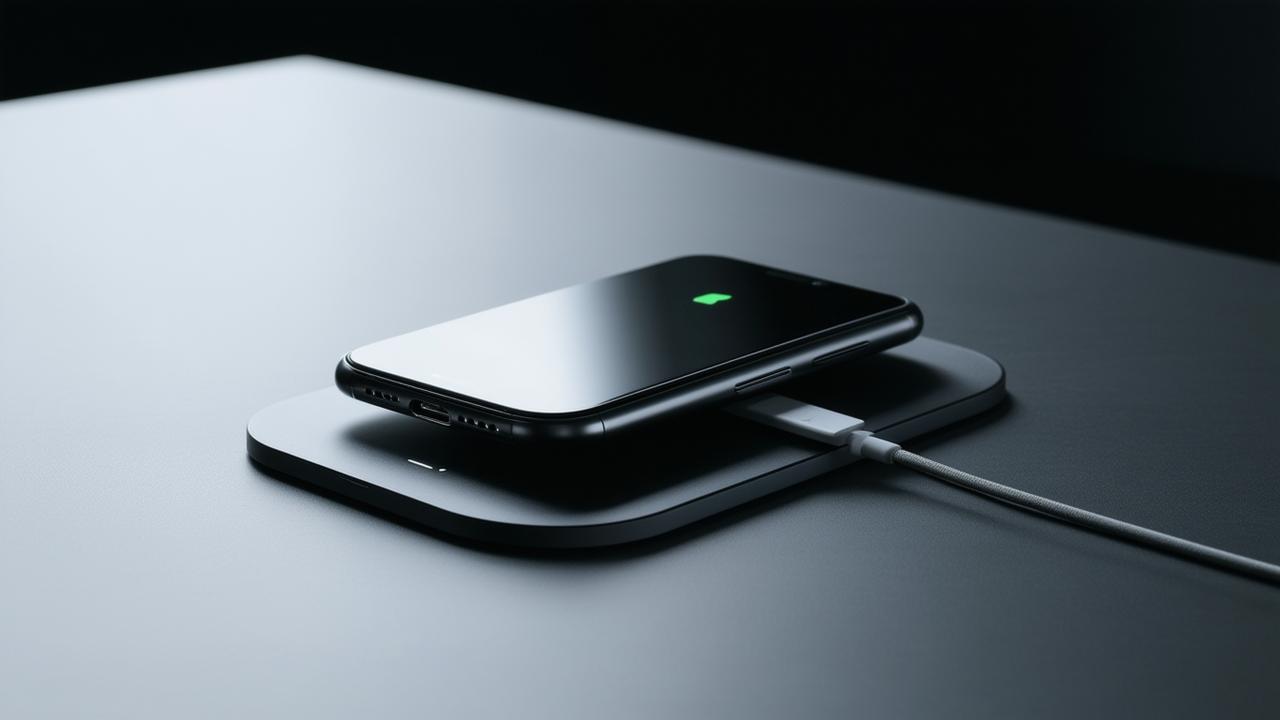
The cable on your desk, coiled like a tiny silver snake, may already be living on borrowed time. For years, we’ve fumbled in the dark to find the charging port, flipped connectors the wrong way, untangled knots at the bottom of our bags. When the EU pushed the world toward USB‑C, it felt like the end of that chaos—a single, elegant standard at last. But in a quiet twist, that same push is now setting the stage for something even more radical: a future where your phone may not have a charging port at all.
The Law That Solved One Problem—and Opened Another
In 2022, when the European Union announced that most portable electronics sold in its member states would have to use USB‑C, it was framed as a win for consumers and the planet. Less electronic waste, fewer incompatible chargers, less frustration. People imagined drawers neatly lined with identical cables, replacing tangled nests of obsolete connectors.
What almost no one talked about at the time was how fast technology tends to move once a rule settles the short term. Regulators like stability; engineers like disruption. So while lawmakers were busy etching “USB‑C for all” into the legal stone, designers and tech strategists quietly began looking one step further down the road.
That next step is surprisingly bold: if you’re forced to use one port now, maybe the next innovation is to have no port at all.
There’s a certain irony to it. A law intended to standardize the physical connector may end up nudging companies to abandon connectors entirely, just to sidestep the constraints and embrace a new design language—one that flows around metal, plastic, and holes in the chassis like water around a rock.
The Strange Appeal of a Phone With No Holes
Imagine picking up your next smartphone and running your finger around its edge. No little black oval. No dust collecting in a charging recess. No place for lint to gather, no vulnerable gap waiting for the next spilled coffee or beach day mishap. Just a seamless frame of glass and metal.
It sounds odd at first, almost unfinished, like someone forgot to drill the holes. But there’s a deeper appeal here that designers have been chasing for years. A portless phone isn’t just an aesthetic statement; it’s a shift in how the device is meant to live with you—how it charges, how it talks to other machines, how it survives the roughness of the real world.
Look at what’s already happening quietly around you. Wireless chargers have slipped into bedside tables, cars, and café counters. Earbuds shed their jacks years ago. Laptops pair with monitors, keyboards, and mice over invisible radio waves. Bit by bit, the essential threads tying our devices together have been replaced by fields of energy and bursts of information traveling through the air.
Phone makers are watching. And the EU’s USB‑C mandate has, in a way, drawn a line in time: before this, chaotic; after this, unified. Beyond this, maybe… wireless.
Why the EU’s Rules Might Actually Speed Up the Portless Future
The EU didn’t set out to kill ports. Quite the opposite: it tried to protect the consumer’s physical connection to their devices. Yet policies have a way of reshaping incentives, and that’s where things get interesting.
By locking in USB‑C as the standard port, the EU has effectively made the physical connector a solved problem—done, regulated, boxed in. Innovation in that small rectangle of metal suddenly looks far less attractive; there’s no room for a new shape, a clever proprietary connector, or a new pin layout. But outside that tiny rectangle? The sky is wide open.
If you’re a smartphone manufacturer looking for an edge, why battle over a port you’re not allowed to change, when you could design a phone that doesn’t need one at all?
And since the law covers “charging” connectors, a fully wireless device starts to look like a legal shortcut: no port, no compliance headaches; no physical slot, no argument about which side is “universal.” Just a slab of glass that sips power from a charging pad and syncs with your files and accessories over Wi‑Fi, Bluetooth, ultrawideband, or yet‑to‑be mainstreamed wireless standards.
The Quiet March of Wireless Everything
Walk through your day and notice how often you plug anything in at all. Maybe your laptop. Maybe your phone at night. But music? Streaming. Photos? Uploaded over the air. Work files? Pulled from the cloud in a few taps. The idea that a cable is the “default” route for connectivity has already started to crumble.
Smartphones, once entirely dependent on their ports, now use them mostly as backup. Firmware updates, once tethered to a computer, now float through the air in silent nighttime downloads. Photos back themselves up while you sleep. Apps and games arrive not in boxes, but in streams of invisible data. The port is still there, like a security blanket from an earlier era—but it’s needed less and less each year.
Companies are already experimenting with hardware that assumes a fully wireless reality. Some concept phones have shipped without SIM trays, using eSIMs instead. Others hide speakers behind microscopic slits or vibrate the display to make sound. Each move carves away another hole, another physical vulnerability, another point of failure.
USB‑C may be the last great universal connector not because it’s perfect, but because its reign overlaps with the moment we finally learn to live without connectors at all.
What We Lose—and Gain—When the Ports Disappear
The future rarely arrives as a clean, utopian upgrade. It arrives with compromises, tradeoffs, and a list of “yes, but…” concerns. A portless phone is no exception.
On one side of the ledger, the gains are obvious. Better water and dust resistance, because there are fewer points of entry. More internal space that can be repurposed for bigger batteries, new sensors, or better cooling systems. Stronger structural integrity with no cutouts weakening the frame. Sleeker, more minimal design for those who love the futuristic look of uninterrupted glass.
On the other side, real worries sit in quiet tension. What happens if your phone freezes and you need to plug it into a computer to restore it? How do technicians diagnose hardware issues when there’s no direct data port? What about people who still rely on wired accessories, like high‑end audio equipment or specialized measurement tools? And what if wireless charging wastes more energy than a simple cable—a problem the EU will care about deeply as it chases energy efficiency and climate goals?
These concerns don’t kill the idea, but they do shape how it will arrive: likely not with a single big leap, but with a series of careful steps—wireless data speeds improving, repair tools evolving, emergency recovery methods going over the air, energy efficiency of inductive charging gradually climbing upward.
A Glimpse at That Portless Day
Picture your morning five years from now.
Your phone rests on a nightstand that looks like any other slab of wood—except there’s a subtle ring pressed into the surface where it sits. While you sleep, the phone charges via a pad built invisibly into the furniture. No cables drape off the edges. No chargers hog the power strip.
When you pick it up, there’s nothing to catch your fingernail, no place where last week’s beach sand still clings. It unlocks as you glance at it, and quietly syncs with the house around you: a watch, a pair of earbuds, maybe glasses. A software update is ready; it downloaded overnight via your Wi‑Fi, checked, verified, and installed without ever asking for a plug.
Later that afternoon, you’re at a café. The table surface itself supports wireless charging; the phone drinks just enough power to keep your battery from dipping while you answer emails. Files you need from your laptop jump over a secure wireless connection. You never pull a cable from your bag, because you never brought one.
➡️ Restoring sight without major surgery: the quiet revolution behind a new clear eye gel
➡️ Add just two drops to your mop bucket and your home will smell amazing for days, no vinegar, no lemon needed
➡️ Space almost ignited a serious conflict between China and the United States over secret military ambitions no one wants to admit
➡️ Once dismissed as a “poor people’s fish,” this affordable species is becoming a prized staple as Brazilians rediscover its safety and nutritional power
➡️ A bowl of salt water by the window in winter: this simple trick works just as well as aluminum foil in summer
➡️ “Suede Blonde” is the hair color everyone wants this winter (it brightens the complexion)
➡️ Snow alerts intensify as meteorologists confirm up to 30 cm of accumulation and release the detailed hour-by-hour timing that each region needs to prepare for
Is that scene guaranteed? No. But the forces pushing us toward it—from regulation to design ambition to simple human laziness about cables—are very real.
The EU’s Unintended Role in a Cable‑Free World
The EU’s USB‑C mandate is pushing manufacturers to support a common physical standard—or rethink physical standards entirely. In essence, it’s doing two things at once:
- Locking in USB‑C as the baseline for the near future.
- Making “no port at all” look like the only way to sidestep long‑term constraints.
Legal frameworks are slow to change. Wireless innovation is fast. Somewhere between those two speeds, product teams and policy experts are already quietly negotiating the future of the portless device. There will be debates about repairability, right‑to‑repair, energy efficiency, accessibility for people who rely on wired aids, and cross‑border interoperability.
But from the consumer’s side, the story will feel simpler. Over a few years, we’ll notice that we plug our phones in less, set them on pads more, and carry fewer cables. At some point—maybe when you upgrade in a few cycles—you’ll open the box of a new device and find only the phone and a slim leaflet. No brick. No cable. No port.
From “One Port for Everyone” to “No Ports at All?”
In a way, the evolution has a strange narrative elegance. We started in the age of competing plugs: thick, proprietary adapters; strange shapes that worked with only one brand. Then came the age of convergence, where USB‑C stood like a common language, a political and technical compromise that felt almost revolutionary in its tidiness. Now we’re standing on the threshold of a third age—one where the goal changes entirely.
The EU wanted everyone to share a single connector. But once you give people a standard and enough time to adapt, something subtle happens: the connector fades into the background, and we start imagining how life would feel without needing it at all.
The path is not guaranteed, and it will be shaped as much by regulators and energy experts as by designers and marketers. But the pieces are already on the board. Wireless standards improving each year. Furniture and cars integrating charging coils. Software stepping in to do work once delegated to cables. And laws like the EU’s USB‑C mandate, which, while written for the world of ports, might accidentally be hastening the world beyond them.
One day, you’ll tug open that familiar drawer full of cables and find them mostly obsolete—a tangle of little artifacts from an era when the way we powered and connected our lives depended on thin metal pins and the hope we’d plugged them in the right way. And you might remember, faintly, how thrilling it once felt when everything finally just used USB‑C… right before we didn’t need ports at all.
At a Glance: From USB‑C to Portless Devices
| Stage | Key Features | Impact on Users |
|---|---|---|
| Pre‑standard era | Multiple proprietary ports and chargers | Cable clutter, incompatibility, more e‑waste |
| USB‑C mandate era | Single physical standard across devices | Simpler charging, easier sharing, clearer rules |
| Hybrid era | USB‑C plus mature wireless charging and data | Ports still exist, but are used less frequently |
| Portless era (emerging) | No physical connectors, fully wireless ecosystem | Greater convenience for many; new challenges for repair, backup, and accessibility |
FAQ: The Future Beyond USB‑C
Will USB‑C really disappear from smartphones?
Not overnight. USB‑C is likely to remain standard for several more years, especially in regions under the EU mandate. But as wireless charging and data transfer become more capable and common, some high‑end or experimental models may begin to ship without any physical port at all.
Why would manufacturers remove ports if USB‑C already works well?
Removing ports allows for better water and dust resistance, more internal space, and cleaner design. It also gives companies freedom from strict hardware regulations tied to physical connectors and encourages users to stay inside a wireless ecosystem of services and accessories.
Is wireless charging as efficient as using a cable?
Today, wireless charging is generally less energy‑efficient than wired charging and can produce more heat. However, the technology is improving, and future standards may narrow that gap. Energy efficiency will be a key point of discussion for regulators as portless designs emerge.
What about right‑to‑repair and data recovery on portless phones?
Those are real concerns. Without a physical port, technicians may need specialized wireless tools or service modes to repair and diagnose devices. Manufacturers and regulators will likely need to define new standards for wireless recovery, diagnostics, and secure servicing to avoid locking users and independent shops out.
Will I need to replace all my accessories if phones go portless?
Eventually, some wired accessories might become less convenient or require adapters and docks. However, the shift will be gradual. For a long time, many devices—especially laptops and mid‑range phones—will continue to include USB‑C, giving users time to transition toward wireless or multi‑standard accessories.
Does the EU actually want portless phones?
The EU’s goal is consumer protection, interoperability, and waste reduction—not specifically portless devices. But by locking in USB‑C as the mandatory standard for ports, it indirectly makes fully wireless designs an attractive alternative path for manufacturers looking beyond the constraints of physical connectors.
How soon could we see mainstream portless smartphones?
Concepts and niche models could appear within a few product cycles. Mainstream adoption will likely depend on how quickly wireless charging infrastructure spreads, how efficient and fast it becomes, and how regulators respond to questions of repairability, accessibility, and energy use.





