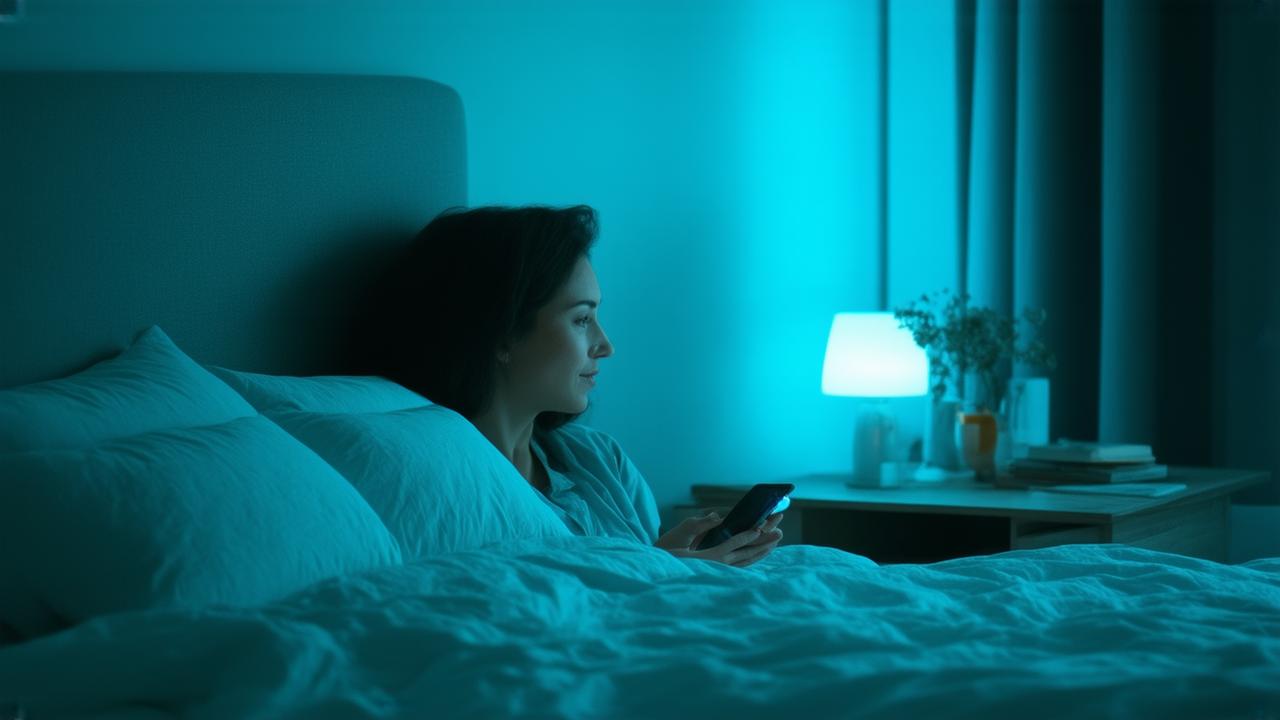
The evening light in a typical Australian home doesn’t look anything like sunset used to. The sky might be running through its last soft oranges, but inside, the house is still wide awake: ceiling LEDs pooling white light over the dinner table, the cool glow of a laptop in the corner, a child’s tablet screen flickering blue cartoons at an hour when, only a generation ago, bed would already be calling. For years, sleep experts have warned us: this blue light is the enemy of rest, a digital dawn that tricks the brain into staying up. So we bought amber glasses, dimming apps, “night shift” modes. Bedrooms became battlegrounds where every tiny gleam was suspect.
But now, tucked away in labs and sleep clinics from Brisbane to Perth, Australian researchers are starting to murmur something quietly radical: maybe it’s not as simple as “blue light bad, warm light good.” Maybe the science of light and sleep for real families, in real homes, is messier, more human—and more hopeful—than the rules we’ve been living by.
The night the lab went wrong (in a good way)
In a small sleep lab on the outskirts of Melbourne, an experiment was supposed to unfold with textbook precision. Volunteers arrived in the late afternoon, had their eyes shielded from daylight, and were guided into softly lit rooms with measured, low-intensity lighting. Electrodes tracked their brain waves; saliva samples measured melatonin, the hormonal drumbeat of nightfall.
Then came the disruption. One participant’s smartwatch flashed unexpectedly during a test; another absentmindedly checked a text on their phone before lights-out, blue-white against the dim glow. A younger volunteer, bored during the long protocol, opened a reading app the researchers had forgotten to lock. In the early days of blue light research, that would have ruined the data—contamination from the “bad” light source. Now, several Australian teams are doing something unusual: instead of throwing those nights away, they look at them more closely.
What they keep seeing is not a simple on/off switch, but a pattern of thresholds, timing, and context. Yes, bright, cool light late at night can push back the body’s natural clock. But not every touch of blue during an evening is a catastrophe. The response depends on how long the exposure lasts, how bright the light is, what time it hits the eyes, and—even more intriguingly—what light you saw earlier that day.
It’s a story of a system far more flexible and adaptive than the blunt warnings suggest, a system evolved not for perfect darkness, but for changing skies, flickering campfires, moonlit dunes, and, now, the shimmering scatter of a digital century.
The old story: blue light as the villain
For years, the public message in Australia around sleep has been clear and sharp: blue light at night suppresses melatonin, delays sleep, and harms health. This guidance wasn’t plucked from thin air. In controlled labs, volunteers exposed to high-intensity blue-enriched light late in the evening did show delayed melatonin release and later bedtimes. Children, with their larger pupils and clearer lenses, appeared even more sensitive.
The translation into policy and parenting advice was immediate: screens before bed were cast as almost toxic. Devices out of bedrooms. Strong warnings about teen sleep debt. Even living-room lighting came under suspicion: those bright “daylight” LED bulbs, with their cool glare, were suddenly the bad guys.
This first wave of caution did help. Families who turned down obsessive late-night scrolling often saw better rest. Shifting bedtime Instagram sessions to earlier in the evening made a difference for some teenagers. Schools and clinics could point to a simple, explainable villain.
But simplicity can hide nuance. Over time, sleep clinicians noticed a tension: some people who followed rigid “blue light rules” still struggled. Others, with far from perfect habits, slept remarkably well. Meanwhile, LED lighting quietly transformed nearly every Australian house, office, and café, creating an illuminated environment very different from the incandescent age on which earlier sleep studies were based.
Researchers began asking uncomfortable questions: Were we over-penalising every patch of blue? Were we ignoring the role of daylight exposure, movement, and social rhythms? And crucially—were hardline rules making families feel guilty instead of supported?
What the new research is whispering
The rethink now emerging from Australian labs isn’t about denying that blue light affects sleep. It’s about filling in the missing chapters. When scientists track Australians living their normal lives—commuting, cooking dinner under LEDs, catching up on news in bed—patterns appear that are softer, more conditional, and unexpectedly practical.
A growing body of work suggests several key ideas:
- Daylight matters as much as darkness. People who get strong, bright outdoor light in the morning and early afternoon seem less vulnerable to moderate evening screen use. The brain’s clock, it turns out, listens to the whole day’s light story, not just the final chapter.
- Intensity and distance change everything. A phone held close to the eyes at maximum brightness is very different from a TV across the room. Many households use screens in ways that don’t resemble lab conditions at all.
- Timing is not one-size-fits-all. Light late at night hits different for an early bird than for a natural night owl. Two hours of screen time at 9 p.m. might be a problem for a 9:30 sleeper, but not for someone who normally nods off at midnight.
- Warmth helps, but it’s not magic. Switching your phone to a sepia-toned “night mode” can reduce some impact, yet if you’re leaning into a bright device at midnight for an hour, colour alone won’t save you.
As these nuances surface, researchers are wary of swinging to the opposite extreme—declaring blue light harmless. Instead, they’re trying to build a more realistic framework: one that lives comfortably in a two-bedroom apartment with overhead LEDs, school laptops, shift-work rosters, and a family that treasures a movie night.
How everyday light really stacks up
To put things in perspective, some teams have started comparing different common evening habits and how much they are likely to influence the body’s clock, especially in typical household conditions.
| Evening Activity | Approximate Light Impact on Sleep Timing* | Practical Takeaway |
|---|---|---|
| Bright phone use in bed, close to eyes, for 1–2 hours right before sleep | High – more likely to delay melatonin, especially in teens | Limit duration; dim screen; stop 30–60 minutes before sleep |
| TV across the room in a normally lit lounge | Low to moderate – depends on brightness and viewing time | Fine for many households if not too late or too intense |
| Warm, dim lamps plus occasional tablet checks | Generally low – especially if checks are brief | Keep screens brief and not right at lights-out |
| Strong morning sun exposure (20–30 minutes) | Anchors circadian rhythm, may buffer some evening light | Make this a daily habit whenever possible |
| Blue-blocking glasses worn all evening | Can reduce melatonin suppression from bright screens and lamps | Useful tool, but still pair with sensible bedtimes |
*Estimates are based on emerging research and typical household conditions, not exact clinical measurements.
Why Australian homes are a special test case
Australian life brings a very particular dance of light and dark. The blazing, high-UV intensity of summer daylight in Brisbane or Darwin clocks the body with an almost aggressive clarity; in contrast, winter mornings in Hobart can be slow, grey, and late to brighten. Many people commute long distances, spending their brightest hours behind glass or in offices. Shift workers—from emergency nurses to mine site crews—live on rotations that tug their body clocks out of sync with the sky.
Overlay this with the rapid rollout of efficient LEDs. Big-box retailers filled shelves with bright, cool “daylight” globes, promising alertness and clarity. Apartment blocks gleamed like aircraft cabins. For daytime concentration, it was almost perfect. For twilight, maybe not.
Australian researchers have begun experimenting not just with rules, but with lighting design itself. Some hospitals and aged-care facilities now trial “dynamic lighting”—bluer, brighter light in the morning; softer, warmer tones at night. The early results: patients fall asleep a little faster, staff feel more alert on day shifts, and the whole building feels more in tune with the arc of the sun outside.
At home, the equivalent is much simpler and cheaper: swapping out a few harsh globes for warmer ones in bedrooms and lounges, or adding a low, amber lamp as the “evening light” everyone gravitates toward. The research is starting to say: this might be enough. Not perfection—just a gentle nudge towards darkness.
From rules to rhythms: emerging guidance for real families
As the new evidence settles into consensus, Australian sleep experts are moving from strict prohibitions to pattern-based guidance. The message is beginning to sound less like law and more like rhythm:
- Anchor your day with morning light. Ten to thirty minutes of outdoor brightness soon after waking teaches your internal clock what time zone it’s in. Even a walk to the bus stop matters.
- Create an evening “light slope”. Let your home’s lighting tell a clear story: bright in the late afternoon, then gradually softer, dimmer, and warmer toward bedtime. One or two lamps, not every ceiling light blazing.
- Watch proximity and timing, more than colour alone. A cool TV across the room at 8 p.m. is often less disruptive than a warm-toned phone 20 centimetres from your face at midnight.
- Protect the last 30–60 minutes before sleep. This is the most sensitive window. Favour reading, gentle conversation, quiet play for kids. If screens must be used, keep them dim and short.
- Keep kids’ and teens’ eyes safe from relentless brightness. Children’s eyes take in more light; that makes them more susceptible. Simple steps—device-free bedrooms on school nights, a cut-off time for gaming—make a real difference.
All of this marks a subtle but meaningful shift. The aim is not to eliminate blue light from modern households—an impossible task—but to choreograph when, how much, and in what emotional setting it arrives.
➡️ Across Australia scientists are mapping a silent rise in urban heat islands
➡️ Inside the Kimberley where ancient rock art is reshaping Australian heritage protection debates
➡️ Australia’s coastal planners are revising sea wall strategies as storm surges intensify
➡️ What Australia’s bushfire science reveals about the future of smoke exposure in cities
➡️ How Australian marine biologists are tracking coral recovery after repeated bleaching events
➡️ The quiet shift in Australian coffee culture as climate pressures reshape bean supply
➡️ Researchers identify a specific type of adult stem cell with exceptional potential to regenerate human teeth and repair bone
The emotional side of light
What the laboratory cannot easily measure is how light feels. A glaring kitchen at 10 p.m., every overhead fitting on, hums with a kind of social wakefulness: the day is still in progress, tasks undone. A low lamp in the corner signals something else entirely. It tells the nervous system: the work is over; the threats are, for now, outside the door.
Australian sleep researchers are beginning to talk more openly about the psychological load of strict light-based rules. When parents are told that every blue photon is harmful, evenings can turn tense. A teenager scrolling through messages is not just a young person trying to stay connected, but a walking sleep hazard. Homes bristle with arguments about screen bans, the glare of worry sometimes brighter than the devices themselves.
In contrast, a rhythm-based approach shifts the focus from fear to design. Instead of policing every tap and ping, families can redesign their rituals: a family walk at dusk, homework done in the brighter early evening, shared shows watched on the TV rather than isolated scrolling in bedrooms, a reading lamp that clicks on almost automatically as the “night mode” of the house.
Modern households are not monasteries, and researchers are not asking them to be. The new guidance is emerging from a deepening respect for what health looks like in the real world: messy, imperfect, but responsive to small, cumulative changes.
Where the science is heading next
The next decade of Australian sleep research is likely to look very different from the last. Teams are moving beyond single-colour light experiments toward “ecological” studies: tracking people’s actual light exposure over weeks, correlating it with sleep, mood, and even school performance. Wearable devices are being used not just to demonise screen time, but to understand how our bodies juggle city lighting, work hours, and family life.
Some projects are experimenting with community-level interventions: how changing street lighting, school schedules, or office window design might ripple through people’s sleep. Others are testing whether “light prescriptions”—simple, personalised plans about when to seek brightness or dimness—can help insomniacs, shift workers, or teenagers out of sync with school hours.
In all of this, the story of blue light is being rewritten. It is no longer the lone villain, but part of a much wider cast of characters: daylight, timing, movement, stress, social connection. For modern households, that’s strangely liberating. The problem is bigger than a phone—and the solutions are kinder than a ban.
Frequently Asked Questions
Is blue light at night always bad for sleep?
No. The impact depends on brightness, duration, timing, distance from your eyes, and how much daylight you’ve had. Intense, close-up blue-rich light right before sleep is more disruptive than brief, moderate exposure earlier in the evening.
Do blue-light blocking glasses really work?
They can reduce the melatonin-suppressing effect of bright, blue-heavy light in the evening, especially if you use screens or strong overhead lighting. They’re a helpful tool, but they work best alongside good habits like dimming lights and setting a regular bedtime.
Are warm “amber” lights enough to protect my sleep?
Warmer lights help, particularly in the last hour before bed, but intensity and timing still matter. A very bright warm lamp can still signal wakefulness to your brain. Aim for both warm and relatively dim evening lighting.
How much screen time is safe before bed for children?
Australian researchers increasingly suggest avoiding close-up screens for at least 30–60 minutes before sleep for children and teens, especially on school nights. Earlier in the evening, moderate use in a well-lit room is usually less of a concern.
What is the single most important light habit for better sleep?
Consistent morning light exposure. Getting outside into natural daylight within a couple of hours of waking has a powerful effect on stabilising your body clock, which can make you more resilient to the inevitable light of modern evenings.





