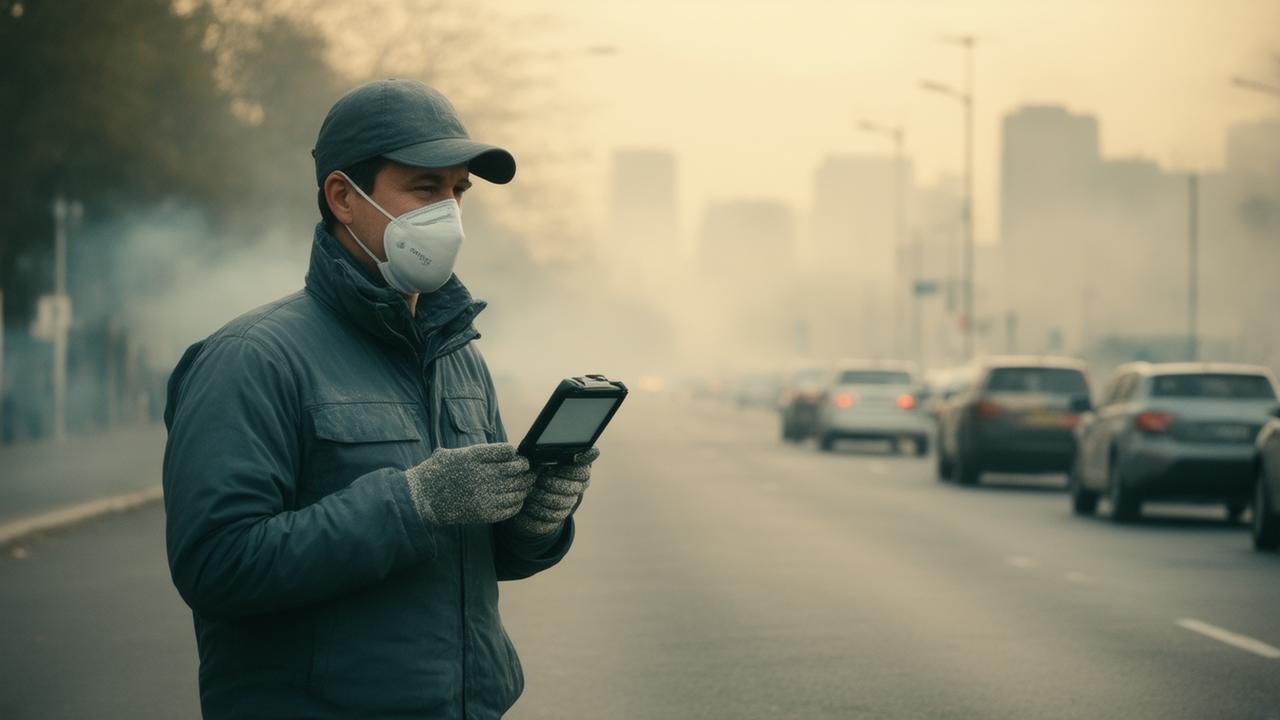
The smoke arrived before the flames. It slipped into the city on a still December morning, soft as breath and just as invisible—at first. By midday it was a taste, bitter on the tongue. By evening it was a color, turning the horizon the shade of old bruise and dissolving the distant skyline into a smudged memory. People in Sydney stepped out of office towers and train stations and stopped, actually stopped, blinking into an orange sun that looked more like a planet seen through a bad telescope than our own star. The air smelled like campfire and melted plastic. Phone screens glowed with air quality warnings, satellite images, and words no one expected to see on a normal workday: “Hazardous. Stay indoors.”
When the Bush Comes to the City
For generations in Australia, bushfire smoke was something that happened “out there”—in forests, on farms, across ranges. It was the stuff of summer radio updates and rural fire maps, a backdrop to the long dry months. But in the Black Summer of 2019–2020, the bush came to the city in the form of a vast, lingering, inescapable haze. It seeped through window frames, curled into stairwells, found its way under doors.
Scientists were watching too, not just as citizens but with a mix of dread and opportunity. Australia, already one of the most fire-prone continents on Earth, had become an extreme laboratory. Bushfire science, sharpened over decades of studying eucalypt forests and drought-stressed landscapes, suddenly had a new frontier: understanding how smoke behaves when it stops being a distant plume on the horizon and starts becoming a daily, intimate presence in urban lungs.
That season, Sydney’s air quality reached levels worse than some of the world’s most polluted megacities. In Canberra, smoke monitors recorded the city briefly having the worst air on the planet. People taped up windows with towels and duct tape. Air purifiers sold out. Morning joggers disappeared. The smell of burning leaves became the smell of burning norms: the old assumption that cities were somehow shielded from the worst of bushfire seasons.
What Bushfire Scientists Are Really Measuring
If you stand on a hill outside a burning forest, the smoke looks simple: a gray-brown river in the sky, thick or thin, drifting whichever way the wind insists. But inside that river is a complex universe of particles and gases. Australian researchers have spent years climbing into that universe—from aircraft, from research towers, from roadside trailers that hum quietly in paddocks and parking lots.
They are measuring particulate matter, especially PM2.5—particles so tiny they can float deep into your lungs and slip into your bloodstream. They’re tracking volatile organic compounds and toxic gases like benzene and formaldehyde. They’re mapping how plumes rise, fall, and wander, shaped by temperature layers and wind shear. They’re correlating satellite images with ground sensors and hospital admissions.
One of the surprising lessons from this work is that smoke does not behave like a polite guest that stays where it’s invited. It rides weather systems across states, hops mountain ranges, and settles into valleys and urban basins created by glass and concrete as easily as by granite and soil. The atmosphere, as Australian bushfire scientists like to say, has a long memory and no boundaries.
Another quieter lesson: the worst health impacts rarely arrive with the dramatic front of flames. It’s not the day of the fire that leaves the deepest imprint on population health—it’s the weeks of chronic, “moderately bad” air that follow or precede it, the days when the sky looks mostly fine but the readings quietly shout otherwise.
City Air, Country Fire: A Dangerous Convergence
Australia’s fire researchers describe the modern fire season less as a season and more as a pressure cooker. Longer droughts, hotter days, and drier vegetation build the heat and pressure; lightning storms and human sparks release it. What emerges from that release is increasingly unpredictable “fire weather,” but the smoke it creates is proving far more predictable—and far more pervasive.
Dense suburbs, apartment towers, and downtown business districts were never designed as refuges from wildfire smoke. Office HVAC systems weren’t built to filter out months of fine particulate matter. Bus stops were not designed as holding pens for children breathing in four times the recommended safe limit for PM2.5. Yet this is exactly what bushfire science suggests urban Australia—and many other cities worldwide—must begin to plan for as a recurring reality, not a freak anomaly.
The science is also showing how different communities in a single city experience the same smoke event in very different ways. People in older houses with leaky windows inhale more of it. Low-income families are less likely to own air purifiers or cars to escape the worst days. Outdoor workers—couriers, construction crews, café staff—carry the weight of exposure on their lungs. Epidemiologists studying the Black Summer found that these days of gray light and smarting eyes corresponded to spikes in asthma attacks, heart problems, and emergency room visits.
As those data sets accumulate, Australian cities are starting to look less like bystanders to bushfire seasons and more like active participants in a landscape-wide event. When a forest burns 300 kilometers away, its smoke doesn’t stop at the city limits sign—it negotiates with skyscrapers, freeways, apartment balconies, and schoolyards, reshaping life well beyond the flames.
| Aspect | Past View of Smoke | Emerging Scientific View |
|---|---|---|
| Location of concern | Near the fire ground only | Regional and urban scales hundreds of km away |
| Health focus | Short-term irritation and visibility | Long-term cardiovascular, respiratory, and mental health impacts |
| Time frame | Isolated days during peak fires | Prolonged weeks or months of recurring exposure |
| Urban risk perception | Cities as safe distance observers | Cities as smoke hotspots with vulnerable populations |
The Future Smells Like Smoke
Ask a bushfire scientist to describe the future, and you’ll often get a pause—a careful, heavy silence—before any words arrive. Because the story they’re seeing emerge from the data is not about one terrible summer but about a pattern: hotter years, drier fuels, longer fire seasons, bigger plumes. Australia’s fire science community is among the first to join these dots in real time, and their conclusions radiate well beyond their own shores.
Climate models combined with fire behavior simulations show a clear trend: more days with fire-friendly weather, more extreme fire events, and more opportunities for “mega-plumes” that push smoke high into the upper atmosphere, where it can travel astonishing distances. In some scenarios, smoke from Australian fires circles the globe, adding a subtle, hazy thumbprint to sunsets in cities that never see a gum tree.
But it’s the low, stubborn smoke that matters most for urban lives—the kind that sits in the boundary layer of the atmosphere and pours quietly into cities like water into a basin. Australian researchers using new supercomputers and increasingly sensitive sensors are getting better at predicting when and where this smoke will accumulate. They’re learning that certain combinations of cool nights, still mornings, and regional burn patterns almost guarantee a bad air day for particular suburbs, even if those places are nowhere near active flames.
In other words, the future of city air will be written partly in forest canopies and grasslands, in the decisions made along rural fire trails and in prescribed burn schedules. It will also be written in emission scenarios and carbon budgets, because every extra notch of warming dries out the tinderbox a little further and tips the balance toward more intense smoke seasons.
Designing Cities for a Smokier Century
So what happens when you accept, as Australian bushfire science increasingly insists we must, that smoke exposure will become a recurring feature of urban life? Cities begin to redesign themselves—not in grand, overnight transformations, but in thousands of small, practical adaptations.
Public health agencies start treating air like a weather hazard that demands a plan: smoke forecasts are folded into daily briefings; text alerts join storm warnings; “smoke days” become as normal as “heatwave days.” Schools rehearse how to move children into the least leaky indoor spaces. Workplaces review air filtration systems and draft flexible work-from-home policies for high-smoke periods. Town planners scrutinize building codes for requirements that once seemed unnecessary: better seals, smarter ventilation, filtration standards.
Indoor spaces turn into micro-climates of refuge. Libraries, community centers, and shopping centers become “clean air hubs” where vulnerable residents can retreat during prolonged smoke episodes. Australian scientists studying filtration have begun to show how even modest improvements—portable purifiers, upgraded filters, DIY box fans with HEPA filters—can sharply reduce indoor particulate levels.
➡️ Across Australia scientists are mapping a silent rise in urban heat islands
➡️ Why Australian sleep researchers are rethinking blue light guidance for modern households
➡️ Inside the Kimberley where ancient rock art is reshaping Australian heritage protection debates
➡️ Australia’s coastal planners are revising sea wall strategies as storm surges intensify
➡️ How Australian marine biologists are tracking coral recovery after repeated bleaching events
➡️ The quiet shift in Australian coffee culture as climate pressures reshape bean supply
➡️ Researchers identify a specific type of adult stem cell with exceptional potential to regenerate human teeth and repair bone
Meanwhile, policy conversations edge into more uncomfortable territory: How do you balance the smoke from prescribed burning—deliberate, cooler fires meant to reduce fuel loads—with the potentially much worse smoke from uncontrolled infernos? Bushfire scientists now frame this as a risk trade-off: some smoke in mild conditions to prevent catastrophic smoke in future summers. That trade-off becomes an urban question too, because it determines not only rural fire behavior but future city air.
Living With the Haze Without Accepting It
There is a danger in stories about inevitability. Say “the future will be smokier” often enough, and resignation creeps in like the very haze we are trying to understand. Yet the lesson from Australia’s bushfire science is not that we must simply get used to choking summers. It’s that we now understand the mechanisms, patterns, and vulnerabilities well enough to act deliberately.
Every fraction of a degree avoided in global warming lessens the fuel stress and the length of fire seasons. Every improvement in building standards, city design, and public health messaging slices away at the health burden of smoke. Every investment in monitoring—those small, humming instruments atop schools and on light poles—turns invisible danger into visible data, into action.
Standing in a smoke-filled street during the Black Summer, it felt like a freakish, almost apocalyptic anomaly. But in the quiet backrooms of universities and research agencies, that same summer has become a library—a vast archive of data on how smoke enters cities, how it affects bodies, how it lingers in minds. It’s being used, piece by piece, to craft a different kind of future: not a smoke-free one, not anymore, but one in which our exposure is limited, anticipated, and taken seriously enough to reshape how we build, breathe, and belong in a warming world.
When the next curtain of smoke slides over an Australian city, people will still step out of train stations and pause. They will still taste the faint bitterness on the air. But, if the lessons of bushfire science are heeded, they will also know more. They’ll read the air quality index like they once read the weather. They’ll decide, with some agency, when to close the windows, where to go, what this moment means for their lungs and for their children. The bush will still come to the city—but the city will be ready to meet it with eyes open, filters humming, and a hard-earned understanding of what that smell of burning really foretells.
Frequently Asked Questions
Why are Australian cities so affected by bushfire smoke now?
Australian cities are increasingly affected because fires are becoming larger, more intense, and more frequent as the climate warms and landscapes dry out. Powerful plumes and shifting wind patterns can carry smoke hundreds of kilometers, and many cities sit in basins or coastal zones where smoke can settle and linger.
Is bushfire smoke worse than normal urban pollution?
It can be. Bushfire smoke contains high levels of fine particulate matter (PM2.5) and a mix of toxic gases. During severe fire episodes, PM2.5 levels in cities can exceed those found in some of the world’s most polluted urban areas, even if only for days or weeks at a time.
What health problems are linked to bushfire smoke exposure?
Bushfire smoke is linked to asthma attacks, breathing difficulties, heart problems, strokes, and increased hospital admissions. Emerging research also suggests possible long-term impacts on cardiovascular health, lung function, pregnancy outcomes, and mental health, especially with repeated or prolonged exposure.
Can staying indoors really protect me from smoke?
Staying indoors helps, but only if the building is reasonably well sealed and, ideally, has good filtration. Many Australian homes are leaky, so smoke can still enter. Using air purifiers, blocking obvious drafts, and spending time in well-filtered public spaces can significantly reduce exposure.
What are scientists doing to help cities prepare?
Scientists are improving smoke forecasting models, expanding air quality monitoring networks, studying health impacts, and testing filtration strategies. Their research informs public health guidance, urban planning, and building standards, helping cities plan for future smoke events rather than simply reacting to them.





