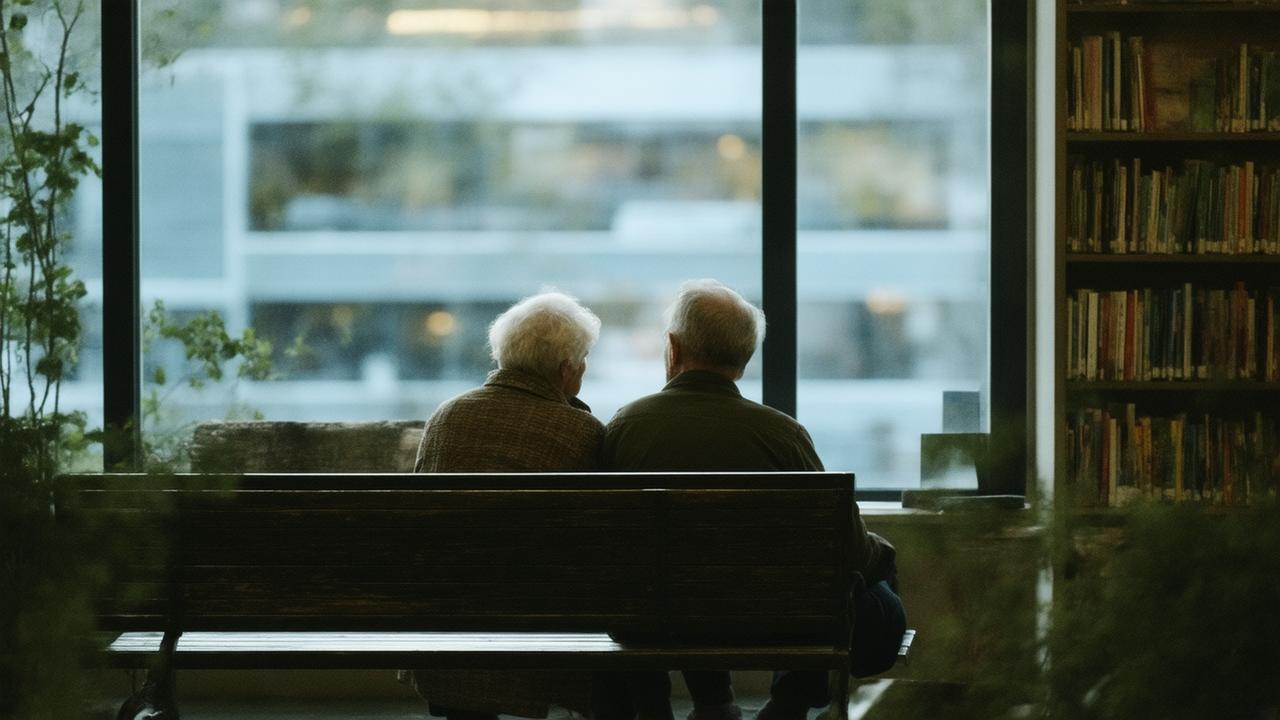
The first thing you notice is the sound. Not traffic, not conversation, not even birdsong—just the subtle, steady hum of a refrigerator and the thin rattle of a window in its frame. It’s the sound of a Wednesday afternoon in a small Sydney apartment, where a woman in her thirties watches the clock, waiting for a text that doesn’t come. Her phone lights up with notifications—app updates, news alerts, a sale at a store she visited once—but not the thing she’s really waiting for: proof that she matters enough to interrupt someone else’s day.
In a country that loves to sell itself as relaxed, friendly, and sun-drenched, loneliness doesn’t fit the postcard. Yet it’s there—in the quiet kitchen, the crowded train, the share house with doors always closed. And now, Australian psychologists are not just listening for it; they’re measuring it, mapping it, and treating it as what it really is: a serious public health risk.
Why Loneliness in Australia No Longer Looks Like an Empty Chair
For decades, loneliness was treated as a feeling—a vague emotional ache best left to poets, songwriters, or late-night conversations. You were lonely, people assumed, because you were alone. The cure? Join a club. Call a friend. Go outside.
But Australian psychologists are challenging that simple narrative. To them, loneliness is no longer just a private emotion; it’s a pattern of risk, as measurable as blood pressure or heart rate. You can sit at a crowded pub in Melbourne, shoulder-to-shoulder with strangers, and still feel profoundly unseen. You can be wrapped in family in a bustling Darwin household and still feel that aching distance from the people you love.
Researchers here often describe loneliness as the gap between the social connection you have and the connection you crave. That “gap” is where the danger lives. And in their labs, clinics, and community projects, psychologists are finding that this gap is widening—fast.
Australia’s geography plays a role. The vast distances, the remote towns, the long stretches of highway where a single roadhouse might be the only light for kilometres—these physical realities echo in peoples’ emotional lives. Add in the shockwaves of the COVID-19 pandemic, rising living costs, remote work, and shifting family structures, and you have a landscape where disconnection can thrive quietly, invisibly, and for years.
The Science of a Silent Stress: How Psychologists Measure Loneliness
To treat loneliness as a public health issue, psychologists first had to do something surprisingly difficult: make it countable.
Inside university research centres from Perth to Brisbane, participants fill out carefully designed questionnaires. One common tool is the UCLA Loneliness Scale, a series of statements like “How often do you feel left out?” or “How often do you feel that there are people you can talk to?” It’s not about whether you attend parties or live alone; it’s about how often your inner world feels cut off from others.
From these answers, researchers can generate a score—a number that quietly carries stories of missed calls, fractured friendships, and evenings spent scrolling instead of speaking. When thousands of Australians take these surveys, patterns emerge: loneliness by age, by postcode, by income, by health status. The feeling stops being “in your head” and starts appearing on graphs, in policy reports, in health briefings.
But psychologists don’t stop at self-report. They look at what loneliness does to the body. Chronic loneliness activates stress systems designed for short bursts of danger, not long-term isolation. Heart rate rises. Sleep frays. Blood pressure climbs. Inflammatory markers—tiny chemical signals in the blood—begin to shift, priming the body for disease.
In this sense, loneliness behaves like other risks we already take seriously: smoking, obesity, untreated depression. You can’t see it in a blood test the way you see cholesterol, but its fingerprints are all over the body’s delicate systems. That’s why psychologists are pushing to have loneliness recognised not just as a mental health concern, but as a measurable, trackable public health risk.
A Public Health Risk Hiding in Plain Sight
The idea that loneliness can shorten lives isn’t new, but the clarity of the evidence now coming from Australia and around the world is hard to ignore. Long-term loneliness has been linked to higher risks of heart disease, stroke, dementia, and even early death. Its impact rivals some of the lifestyle risks that dominate public health campaigns.
Australian psychologists talk about loneliness as a “multiplier.” It rarely arrives alone. It deepens depression, makes anxiety sharper, and can make recovery from physical illness slower and less complete. A person trying to manage diabetes, for example, may find it harder to maintain healthy habits if they eat every meal alone, with no one to nudge them, encourage them, or simply share the effort.
In community health centres, clinicians see a familiar pattern. Someone comes in with sleep problems, vague aches, persistent fatigue. They might mention, almost casually, “I don’t really see people much.” Underneath the physical complaints is a life lived in emotional low light—few conversations, few shared rituals, few moments of feeling truly known.
Psychologists are increasingly treating that loneliness as a serious red flag. They’re pushing for screening questions in GP clinics, aged-care facilities, and mental health services. Just as patients are asked about smoking or exercise, they may one day be routinely asked: “How connected do you feel to the people in your life?”
From Feeling to Figure: How Loneliness Compares to Other Risks
Public health thrives on numbers. To argue that loneliness deserves attention, psychologists often compare its impact to more familiar health risks.
| Risk Factor | Type of Risk | Associated Health Outcomes |
|---|---|---|
| Chronic loneliness | Social & psychological | Higher risk of heart disease, depression, anxiety, cognitive decline |
| Smoking | Lifestyle | Lung disease, cancer, cardiovascular problems |
| Physical inactivity | Lifestyle | Obesity, heart disease, metabolic disorders |
| Poor sleep | Behavioural | Impaired immunity, mood disorders, reduced cognitive performance |
What worries psychologists is that, unlike smoking or inactivity, loneliness is often invisible to others—and sometimes to the person experiencing it. You won’t see a warning label on your calendar, no matter how empty it gets. There’s no simple unit of measurement like “cigarettes per day.” Yet the evidence keeps pointing in the same direction: chronic, unaddressed loneliness quietly wears down the body and mind.
The Landscape of Loneliness: From Outback Towns to Inner-City Towers
Walk through an Australian city and you can feel a different kind of wilderness—the tall glass canyons of office towers, the endless grids of apartments where people live metres apart but don’t know each other’s names. For psychologists, this urban loneliness is just as important as the isolation of remote towns.
In regional and rural areas, distance and limited services can make social connection hard to sustain. Long work shifts, economic uncertainty, and the slow erosion of local infrastructure—post offices, small shops, community halls—can strip away casual meeting points. A farmer might see more livestock than people in a typical week.
In the city, loneliness wears different clothes. A young professional working from home in Brisbane might spend entire days in front of screens: meetings in tiny video squares, conversations reduced to Slack messages, jokes typed rather than spoken. By Friday, they might realise they haven’t physically shared space with anyone for days.
Data from Australian studies suggest that loneliness doesn’t respect age lines either. Teenagers navigating the sharp edges of social media, university students far from home, new parents overwhelmed and underslept, middle-aged adults after divorce, older Australians outliving partners and friends—each group experiences its own version of the same ache.
Technology: Bridge or Barrier?
Psychologists in Australia are particularly interested in the role of technology. On one level, it’s never been easier to connect: video calls across continents, group chats buzzing at all hours, social media feeds full of faces. But the same tools that promise connection can intensify comparison and exclusion.
Scrolling through carefully curated lives can deepen the sense of being left out. Messages “seen” but not answered become tiny stings that accumulate. For some, online spaces offer lifelines of support and community. For others, they become bright screens that only illuminate how alone they feel.
Why Psychologists Are Pushing for National Action
As the research piles up, more Australian psychologists are stepping beyond the therapy room and into the public arena. They’re briefing policymakers, advising health departments, and calling for loneliness to be woven into national health strategies.
The argument is simple but powerful: if loneliness increases the risk of mental illness, physical disease, and early death, then ignoring it is expensive—both in human and economic terms. Hospitalisations, long-term care, lost productivity, the strain on families and carers—all of these costs are amplified when people face them without social support.
➡️ The surprising role of Australian wetlands in buffering floods and storing carbon
➡️ How Australia’s migration story is influencing modern identity and everyday language
➡️ Australia’s renewed interest in nuclear submarines is reshaping Indo Pacific strategic planning
➡️ What Australian historians now believe about the early contact period along the northern coast
➡️ How Australian supermarkets are quietly changing portion sizes without changing prices
➡️ Why Australian scientists are watching Antarctic ice shelves with growing urgency
➡️ Australia’s new appetite for native ingredients is transforming restaurant menus nationwide
Some Australian initiatives are already responding. Community-based programs bring older adults together for group activities. Local councils experiment with “connection hubs”—spaces designed for conversation rather than consumption. Mental health campaigns talk not just about calling a helpline in crisis, but about weaving small, everyday threads of connection before crisis hits.
Psychologists are also advocating for “connection-aware” urban planning: parks that invite lingering, footpaths that make walking pleasant and safe, communal gardens, shared workspaces. Because when the built environment gently nudges people into each other’s orbit, chances for meaningful contact multiply.
From Individual Burden to Shared Responsibility
A core shift in this new way of thinking about loneliness is ethical. Instead of treating loneliness as a personal failing—“you should just get out more”—Australian psychologists are encouraging a more compassionate, collective lens.
If loneliness is a public health risk, then it’s not just up to the lonely person to “fix it.” Workplaces, schools, neighbourhoods, online platforms, and health services all become part of the story. Policies about flexible work, parental leave, aged care, and housing suddenly carry emotional weight. They shape not only where we live, but how often we brush against one another’s lives.
What It Means for the Rest of Us
To read the research is one thing; to feel its implications in everyday life is another. Once you know that loneliness quietly chips away at health, a friend’s cancelled plans or an elderly neighbour’s drawn curtains take on new significance.
For psychologists, the goal isn’t to pathologise every quiet moment or every preference for solitude. Being alone and being lonely are not the same. Solitude can be nourishing, creative, even sacred. Loneliness, by contrast, is the sense that your need for human connection—a deeply wired, biological need—is going unmet.
What Australian psychologists are asking us to consider is this: what if responding to loneliness is as important as encouraging exercise or sleep? What if sending a message, inviting someone for a walk, checking in on a colleague, or talking to the person sitting alone at a community event isn’t just “being nice,” but participating in a subtle, shared form of health care?
Back in that quiet Sydney apartment, the woman watching her phone may not know that somewhere, an academic has turned lives like hers into data charts and policy reports. She may not know that her private ache has a public name, or that it’s finally being taken seriously. But as Australian psychologists trace the contours of loneliness through studies, clinics, and communities, they’re sending a quiet message to people like her: what you feel isn’t a personal defect. It’s part of a much bigger story—and one that the country is slowly, finally, learning how to tell and how to heal.
Frequently Asked Questions
Why are Australian psychologists focusing so much on loneliness now?
Recent research has revealed that chronic loneliness significantly increases the risk of mental health issues, heart disease, cognitive decline, and early death. As this evidence has grown clearer, psychologists in Australia have begun treating loneliness as a measurable public health risk, not just a passing emotion.
Is loneliness the same as being alone?
No. Being alone is a physical state, and many people enjoy solitude. Loneliness is the painful feeling that your social needs aren’t being met. You can feel lonely in a relationship, in a busy workplace, or in a large family if you don’t feel understood or emotionally connected.
How do psychologists measure something as personal as loneliness?
They use validated surveys, such as the UCLA Loneliness Scale, which ask about feelings of being left out, isolated, or lacking companionship. By scoring responses from large groups of people, psychologists can identify patterns and track loneliness across regions, age groups, and time.
Who in Australia is most affected by loneliness?
Loneliness affects all age groups, but it often shows up strongly among teenagers, university students, new parents, people going through relationship changes, those living alone in cities, and older adults who have lost partners or friends. Rural and remote communities can also face unique challenges because of distance and lack of services.
What can be done at a community or policy level to reduce loneliness?
Psychologists recommend a mix of strategies: integrating loneliness screening into health services, supporting community programs and social groups, designing public spaces that encourage interaction, and shaping work, housing, and aged-care policies that make meaningful connection easier, not harder.
What can individuals do if they feel chronically lonely?
Small, consistent steps often help: joining interest-based groups, volunteering, attending local events, or seeking professional support from a psychologist or counsellor. It can also help to focus on quality over quantity—building a few deeper, more trusting relationships rather than chasing large numbers of superficial connections.
Can technology help with loneliness, or does it make it worse?
It can do both. Video calls, online support groups, and message threads can be lifelines, especially for those who are housebound or geographically isolated. But relying only on superficial online interaction, or constantly comparing yourself to others on social media, can intensify feelings of exclusion. Psychologists emphasise using technology to support, not replace, genuine connection.





