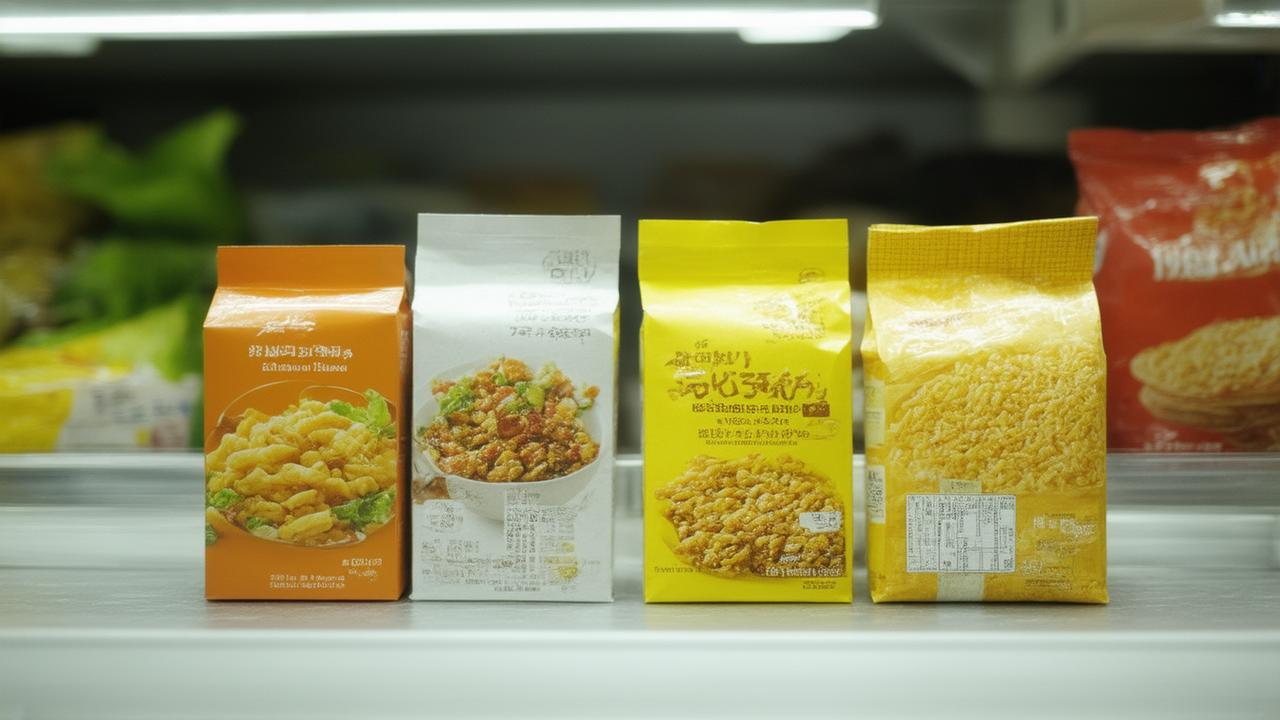
The first time you notice it, you’re standing in the refrigerated aisle, the air humming cold against your cheeks, fluorescent lights shining a little too bright on rows of familiar brands. You reach for the yogurt you’ve bought every week for years. The tub sits in your palm, the label a friendly echo of routine. But something feels off. Lighter. You glance at the corner of the label: 900 grams. You blink. It used to be a full kilo. The price tag below? Completely unchanged.
The silent shift on the shelves
Once you notice it, you can’t stop seeing it. The supermarket, once a neutral backdrop to everyday life, starts to feel like a quiet stage where the rules are changing without an announcement. The chips, the cereal, the ice cream, the blocks of cheese — they all look the same, dressed in the same colours and shapes, the same slogans whispering comfort. But the weight, the volume, the subtle math of what you’re actually paying for — that has shifted, just a few grams at a time.
In Australia, as in many parts of the world, supermarkets and food brands have been increasingly relying on an old trick with a modern gloss: shrinking the contents, but keeping the price. It’s so commonplace it has a name now: shrinkflation. The packets are slimmer. The bars are shorter. The tubs have shoulders that slope just a little steeper. You still pay $4.50, still watch it slide across the scanner, still hear the soft beep of the barcode. The only difference is what quietly doesn’t come home with you.
There is no shelf talker, no bright sticker announcing, “Now with 10% less!” It’s the opposite of a promotion; it’s a subtraction dressed in silence.
Why the packet stays the same but the portion doesn’t
The supermarket is its own kind of ecosystem, a managed landscape of supply, demand, and psychology. When ingredient and transport costs climb, companies face a familiar fork in the road: raise the price and risk losing customers, or keep the price stable and reduce what’s inside.
On paper, it sounds almost reasonable. Wages rise slowly. Energy, packaging, fertilizer, shipping — they all take their share. Companies argue they’re just trying to survive in a world of thin margins and fierce competition. And they’re not lying. Operating a nation-wide supermarket chain in a country as wide and sparsely populated as Australia is a logistical puzzle with high costs built into every kilometre.
But here’s the thing: you notice a price jump instantly. A jar of peanut butter that was $4 last week and $4.80 this week feels like a slap. Most of us have a mental catalogue of prices, especially for the staples. But fewer people notice that the jar that once held 500 grams now holds 450. The label font shrinks before the packet does. A tiny minus sign, invisible at a casual glance, quietly moves the goalposts.
So the solution, from the supermarket’s point of view, skates along the edge of acceptability: make the pain less visible. Keep the number on the price tag still. Let the “hurt” be measured in grams rather than dollars.
The way your trolley tells a different story
Imagine walking through an Australian supermarket on a warm Saturday. You pick up a basket or pull a trolley that rattles slightly on one wheel. The air carries the smell of roasted chicken from the deli, the faint sweetness of bakery bread, that strange, sterile chill from the frozen section. You drift through aisles that have become a map of your life: the brand your kids like, the bread your partner prefers, the muesli bars you take to work.
As you load items in, the trolley fills like it always has. But if you could graph what’s actually in it — the total weight, the total calories, the total number of portions — you might see a different picture. Over the years, a dozen small reductions add up. The cereal that once gave you 12 breakfasts now stretches only 10. The cheese that made five sandwiches now makes four, with corners cut off for the kids’ lunchboxes.
At the checkout, the total creeps upward even though your routine hasn’t changed. Maybe you tell yourself it’s just “the cost of living.” And in a way, it is. But it’s also the cost of less, hidden inside the price of the same.
There’s a quiet, emotional tug here too. We form attachments to particular brands, particular packets — they become props in the story of our lives. A carton of juice on a picnic blanket. A familiar logo on the kitchen bench on a school morning. We trust that what we’re buying today is more or less what we bought yesterday. Shrinkflation breaks that trust while pretending not to.
When “portion control” becomes a marketing story
Somewhere along the way, the language shifts. You begin to see packages talking about “responsible portions” and “better for you sizing.” A chocolate bar that once weighed 60 grams now weighs 45, and on the packet there might even be a halo of virtue: fewer calories per serve, easier to enjoy in moderation.
There’s a grain of truth buried in this. Many of us probably don’t need the largest size; public health campaigns talk about overconsumption every day. But when portion sizes shrink and prices don’t follow, this isn’t public health policy — it’s pricing strategy with a wellness costume.
The tension is that both things can be true at once. Smaller serves might indeed help some people eat less sugar or salt. But they also help preserve profit margins without admitting that the real price per gram has gone up. The supermarket doesn’t say, “We’ve made it easier for you to eat a little less and pay a little more per bite.” It just says, “New size, same great taste.”
Behind the glass doors and cardboard signs, a quiet story of arithmetic unfolds. The cost of cocoa, wheat, milk powder, cooking oil goes up. Instead of printing new price stickers, manufacturers redraw the container shapes. A ridge appears inside the tub. The base curves upward. The edges bevel in. The packet’s silhouette stays the same from three metres away. Only when you turn it in your hand does the truth show up in tiny numbers near the barcode.
Reading the fine print: a shopper’s quiet rebellion
In a landscape where the rules are changing so subtly, paying attention can feel like an act of resistance. Not dramatic, not loud. Just quiet, steady observation.
One of the most powerful tools hidden in plain sight on Australian shelves is the “unit price” — the small print that tells you the cost per 100 grams, per litre, or per kilo. It’s where the camouflage of familiar packaging falls away and you can compare apples with apples, pasta with pasta, yogurt with yogurt, without being tricked by the size of the tub or the shape of the box.
Here’s a simple way this plays out in a typical aisle:
| Product | Pack Size | Shelf Price | Unit Price |
|---|---|---|---|
| Brand A Cereal (Old) | 750 g | $5.00 | $0.67 / 100 g |
| Brand A Cereal (New) | 640 g | $5.00 | $0.78 / 100 g |
| Brand B Cereal | 700 g | $5.20 | $0.74 / 100 g |
From a distance, it looks like nothing has changed: $5 for a box of cereal, just like last month. But the unit price tells you the real story: you’re paying more per mouthful. When you start comparing that small line of text under the bold price, you can begin to steer around the quiet reshaping of portions.
➡️ Why Australian psychologists are studying loneliness as a measurable public health risk
➡️ The surprising role of Australian wetlands in buffering floods and storing carbon
➡️ How Australia’s migration story is influencing modern identity and everyday language
➡️ Australia’s renewed interest in nuclear submarines is reshaping Indo Pacific strategic planning
➡️ What Australian historians now believe about the early contact period along the northern coast
➡️ Why Australian scientists are watching Antarctic ice shelves with growing urgency
➡️ Australia’s new appetite for native ingredients is transforming restaurant menus nationwide
Some shoppers already carry this awareness like an invisible toolkit. They tilt the box to find the weight. They remember that the ice cream tub used to be a full litre. They notice that the family-size chips are starting to look more like “movie snack for two.” And every time they put one product back and pick up another, they nudge the market, however slightly, towards greater honesty.
What this means for our future food stories
Step back for a moment and imagine a future grocery trip, ten or fifteen years from now. The packaging may be brighter, more sustainable, more minimalist. Maybe the labels will carry climate impact scores, or water usage stats, or QR codes that tell the story of the farm. But hidden beneath all that, one question will still matter: how much are we actually getting, and what are we really paying for it?
Shrinkflation, at its core, is about more than grams and dollars. It’s about the relationship between people and the systems that feed them. Food is intimate. It sits at the centre of our family rituals, our cultural identities, our health. When the terms of that relationship are quietly changed — smaller loaves, fewer biscuits, lighter blocks — without an equally clear conversation, it leaves a residue of unease.
Not every reduction is sinister. Sometimes it may keep a small producer afloat. Sometimes it may prevent a sharper price shock. But when the default approach is to shrink in silence rather than speak in honesty, trust erodes. And trust, once it’s gone, is harder to restock than any shelf.
There is another version of this story that could be written. One where supermarkets and brands plainly say, “Costs have gone up; here is how we’re sharing the burden.” One where portion changes are framed as a choice, not a secret. Where consumers are invited into the arithmetic instead of being positioned as people who’d better not know.
Until then, the fluorescent aisles will keep humming. The trolleys will keep rattling over the tiles. The labels will keep promising “great value” while the numbers in the corner quietly tell a different tale. And you, standing in front of the fridge with a tub in your hand, will decide whether to accept the script or start reading the fine print as if your weekly stories — and your weekly budget — depend on it.
Frequently Asked Questions
What is shrinkflation in Australian supermarkets?
Shrinkflation is when products become smaller — fewer grams, fewer biscuits, less volume — but the shelf price stays the same. In Australian supermarkets, it often appears as slightly lighter packets or smaller tubs that look almost identical to the old versions.
Why are supermarkets and brands reducing portion sizes instead of raising prices?
Because consumers react strongly to visible price increases. By keeping the price the same and quietly shrinking the pack, companies try to protect sales while still covering higher costs for ingredients, packaging, energy, and transport.
How can I tell if a product has shrunk in size?
Check the net weight or volume printed on the front or back of the package, and compare it with older packs if you still have them or remember the previous size. Also pay attention to unit pricing on the shelf label, which reveals the cost per 100 grams, kilo, or litre.
Is shrinkflation legal in Australia?
Yes, as long as the label accurately shows the current weight or volume, and there is no misleading claim about the amount inside. The problem isn’t usually legality, but the lack of clear communication about the change in value.
What can shoppers do to protect themselves from shrinkflation?
Focus on unit prices rather than just the shelf price, compare brands and sizes, notice when “family size” packs get smaller, and be prepared to switch products when you see poorer value. Talking about it with others — and occasionally with store staff — also helps keep pressure on retailers and manufacturers to be more transparent.





