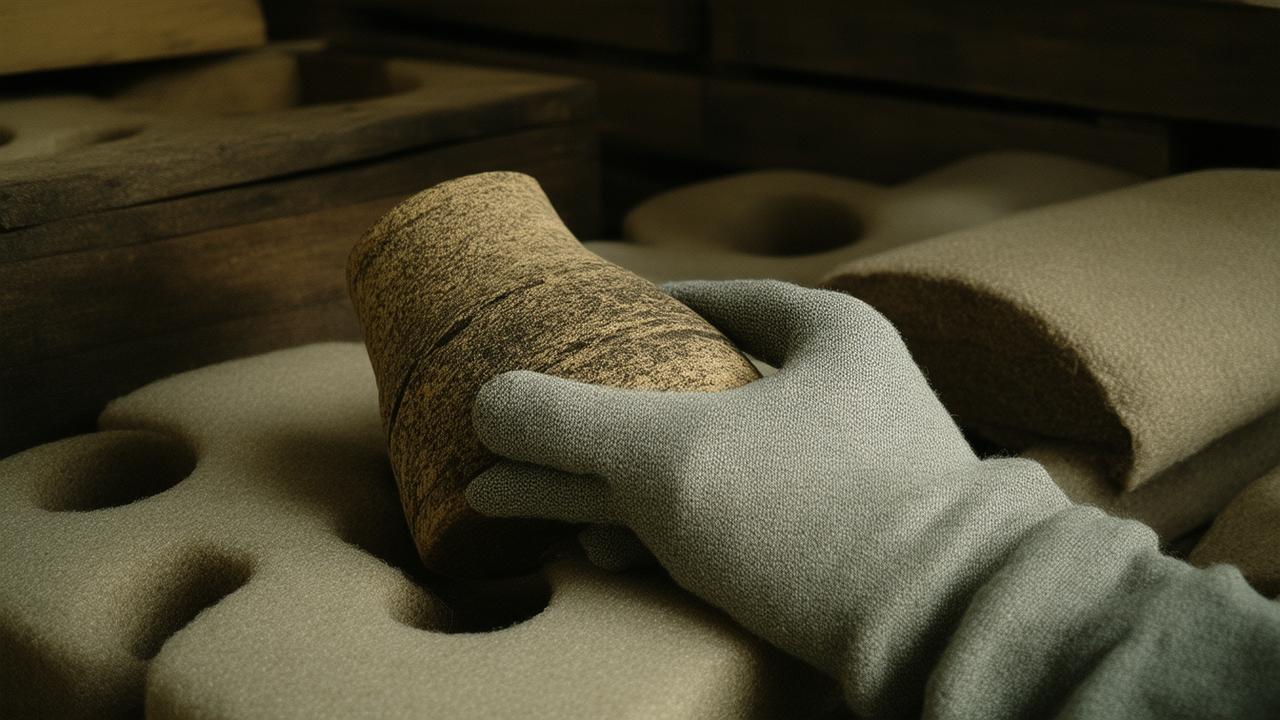
On a quiet weekday morning in Sydney, before the school groups and tour buses arrive, the Australian Museum feels almost like a memory palace. Lights come up slowly over glass cabinets. Climate-control systems hum softly. Behind one locked door, a curator holds a small carved object in gloved hands, the way someone might cradle a bird that has flown into a window and survived. “This was never meant to sit in a drawer,” she murmurs, more to the object than to me. “It’s part of a story that was interrupted.”
Listening to What Objects Remember
Walk through any of Australia’s major museums and you’ll sense an uneasy tension. There is the familiar museum choreography—parents reading labels aloud, students scribbling notes, the soft shuffle of shoes on polished floors. But threaded through it now is another movement, quieter and more insistent: the steady work of rethinking who these collections really belong to, and what should happen to them next.
Colonial-era collections in Australia are not just cabinets of curiosity; they are archives of invasion. Boomerangs tagged with accession numbers, bark paintings taken without consent, spears “collected” during punitive raids, even human remains taken for so-called scientific study—all of these sit within the same institutional walls as dinosaur bones and meteorites. For decades, they were displayed as trophies of exploration or evidence of “vanishing tribes.” Today, those same objects are being re-read as witnesses to dispossession and survival.
In staff-only corridors and off-site storage facilities, a quiet revolution is underway. Curators, conservators, and community liaison officers scroll through databases and pore over old shipping records, looking for the lives that disappear beneath the euphemism of “acquired” or “donated.” The question is no longer just what is in the collection, but how it got there—and whether it should be here at all.
In this shift, objects become more like voices than things. A carved ancestor figure from the Torres Strait isn’t merely a museum piece; it is kin. A cloak made from possum skins and ochre remembers the warmth of ceremonies, the rhythm of language, the cadence of songs. When these items sit on foreign shelves—sometimes continents away—their stories are held in suspension. Repatriation, for many First Nations communities, is how those stories begin to breathe again.
From Cabinets of Curiosity to Conversations of Return
If you want to see how deeply museums are changing, spend time not in the galleries but in the meetings. The most important work now happens around shared tables: museum directors, Aboriginal Elders, Torres Strait Islander representatives, community historians, sometimes lawyers, sometimes young people who carry both grief and determination in their voices.
For much of the 20th century, museums positioned themselves as neutral authorities. Collections were “world heritage,” they said, safer in climate-controlled storerooms than in remote communities. But that story has been steadily unraveling. Aboriginal and Torres Strait Islander activists have spent decades demanding the return of ancestral remains and sacred materials, long before most museums were ready to listen.
The turning point hasn’t been one single moment but a cumulative re-weighting of conscience. National inquiries into the treatment of First Peoples, shifting public opinion, and the persistence of community advocacy have all pushed museums to acknowledge a hard truth: you cannot brand yourself as a guardian of knowledge while housing stolen ancestors in cardboard boxes.
Now, across Australia, institutions are drafting new policies and rewriting old ones. Words like “ownership” and “custodianship” are being joined—and sometimes replaced—by “sovereignty,” “self-determination,” and “First Nations authority.” Repatriation is no longer a rare exception; it is increasingly a core responsibility.
| Museum / Institution | Key Focus in Rethinking Collections | Emerging Practice |
|---|---|---|
| National Museum of Australia | Reframing national stories around First Nations perspectives | Shared curatorship and long-term community-led exhibitions |
| Australian Museum (Sydney) | Auditing colonial-era collections and provenance | Collaborative research, community access, and targeted repatriations |
| State Museums and Galleries | Localised repatriation and community partnership models | Advisory committees of Elders guiding policy and practice |
| Regional & University Collections | Human remains, research collections and teaching materials | Formal repatriation frameworks and research ethics reforms |
Repatriation as Ceremony, Not Logistics
On paper, repatriation can look like a bureaucratic process: inventories, condition reports, shipment arrangements, legal agreements. But speak with those who have stood on the tarmac as ancestors return home, or who have carried carved figures back into Country, and they will tell you it feels much closer to ceremony than to administration.
In a regional museum in Victoria, a curator recalls the day a group of Elders from a nearby community arrived to take home historical objects collected in the late 1800s. Officially, it was a “handover.” In practice, it felt like a vigil. Staff had laid out the items on a table covered with fresh cloth. There were welcomes and acknowledgements, halting speeches, moments of long silence. One Elder placed his hand gently on a shield and simply said, “You’re coming back now.” People cried—museum workers among them.
This is what many museum professionals describe as a profound unlearning. The training they received often emphasised preservation above all else: control humidity, block UV light, limit handling. But repatriation asks a different question: what does it mean to care for an object in ways that respect its spiritual, cultural, and familial life? Sometimes that means allowing smoke and song to enter the storeroom. Sometimes it means understanding that the safest place is not a vault, but a ceremony on Country.
Repatriation pathways vary. Some returns involve negotiation with international institutions, tracing the route of objects that left Australia decades ago. Others focus on state or university collections, where ancestral remains were once treated as specimens, labeled and stacked. Increasingly, museums are working with communities to design protocols for return that place cultural authority firmly in Indigenous hands—who speaks, who carries, who can see, who cannot.
From Policy to Practice: Walking at Community Pace
Policy documents now speak of “community-led processes,” but living up to that phrase is demanding. It means accepting that no two communities want exactly the same thing. Some seek the return of every possible item, intending to decide locally what should be stored, displayed, or buried. Others prioritise ancestors and sacred objects first, choosing later to negotiate about artworks or tools.
For museums, this requires a slower, more relational way of working. Staff travel to community meetings not to present ready-made solutions but to ask, “How would you like us to proceed?” Timelines expand. Some projects unfold over years as trust is rebuilt and information shared. And funding, always precarious, becomes a moral question as much as a logistical one: if an institution can raise millions for a new gallery wing, what responsibility does it have to resource the return of what was taken?
Reading Labels, Rewriting Histories
Even for objects that remain in museums—by choice or for now—the language around them is changing. Once, a display label might have read: “Spear. Collected by Captain X, 1885.” Today, a revised caption might name the Nation, the makers, the place of origin, and the context of removal. It might acknowledge that the item was taken during a conflict or obtained without consent. Sometimes the label is written, or co-written, by community members themselves.
This rewriting of text is more than a cosmetic update. It repositions visitors, asking them to feel the weight of history rather than merely observe its artifacts. A glass case becomes not a neutral window but a question: Why is this here? Who is telling this story? Who has been left out of the frame?
Some museums now incorporate “truth-telling” spaces—small alcoves or entire galleries devoted to the history of colonisation, frontier violence, stolen children, and resistance. Instead of presenting First Nations cultures as frozen in the past, these spaces show continuity: language revival projects, contemporary art, governance structures stretching back tens of thousands of years.
For visitors, the experience can be confronting. It’s easier to admire a finely carved shield than to consider the battle it may have witnessed, the land expropriated, the families scattered. Yet many museum workers insist that discomfort is not a failure of the experience; it’s part of its purpose. When approached with care, that discomfort can become a doorway to responsibility.
Community Voices Inside the Institution
Within the offices and boardrooms, the presence of First Nations people is reshaping how decisions are made. Advisory councils of Elders meet regularly with directors. Curatorial teams now include First Nations curators who bring not just subject expertise, but lived and inherited knowledge. Job descriptions reference “cultural competency” and “community accountability” alongside traditional qualifications.
This shift is as much cultural as it is structural. Instead of asking communities to fit into institutional processes, museums are slowly learning to bend around Indigenous governance practices. That might look like scheduling planning meetings around cultural seasons rather than financial quarters, or recognising that some information is restricted and cannot be photographed, digitised, or shared online, no matter how eager an audience might be.
➡️ Why Australian psychologists are studying loneliness as a measurable public health risk
➡️ The surprising role of Australian wetlands in buffering floods and storing carbon
➡️ How Australia’s migration story is influencing modern identity and everyday language
➡️ Australia’s renewed interest in nuclear submarines is reshaping Indo Pacific strategic planning
➡️ What Australian historians now believe about the early contact period along the northern coast
➡️ How Australian supermarkets are quietly changing portion sizes without changing prices
➡️ Why Australian scientists are watching Antarctic ice shelves with growing urgency
Beyond the Gallery Walls: Country as the Ultimate Archive
There is a growing recognition that no matter how carefully curated, a museum is always a partial story. For First Nations people, Country itself is the primary archive—the living library where story, law, and memory reside in the land, the water, the sky. In this light, even the most respectfully displayed object in a gallery remains, in some sense, out of context.
Repatriation, then, is not just about righting past wrongs; it is also about restoring relationships between people, place, and the material traces of culture. When a bark painting returns to its community, it can be brought back into dialogue with the river whose patterns it echoes. When ancestral remains are reburied, mourning can finally be held properly, rather than suspended across generations.
Some museums are experimenting with new forms of partnership that recognise Country as central. Long-term loans are replaced by shared custodianship agreements. Field trips become opportunities not to extract knowledge, but to sit, listen, and be taught. Exhibitions are conceived not as endpoints, but as one expression in a longer, ongoing relationship with communities and their lands.
In this reimagining, museums become less like vaults and more like meeting places—nodes in a larger network of knowledge that stretches far beyond their walls. Their role is not to own, but to facilitate connection: between past and present, between visitors and the truths of this continent, and most crucially, between First Peoples and the cultural materials that were taken from them.
A Future Built on Return
None of this is simple. There is resistance, sometimes, from those who fear that repatriation means “empty” galleries or the loss of cherished objects. There are legal tangles, budget constraints, and institutional habits that cling like dust. But the momentum is difficult to ignore. Each successful return, each honest label, each community-led project nudges the story of Australian museums in a new direction.
Imagine walking through a future museum on this continent. The first thing you encounter is not a marble staircase, but a Welcome to Country that feels lived rather than decorative. The galleries you enter are co-curated by First Nations custodians whose authority is not token but central. Some display cases are deliberately left empty, accompanied by explanations of what has gone home and why. Other spaces hum with recordings of languages once declared dead, now spoken again by children.
Outside, somewhere beyond the city lights, a group of Elders and young people stand by a river at dusk, completing a ceremony for ancestors finally returned from a faraway storeroom. Smoke curls into the evening air. Names are spoken. In that moment, the museum is not the centre of the story. It is one actor among many—a guest who has finally learned that the most important part of caring for a collection is knowing when to let it go home.
Frequently Asked Questions
What does “repatriation” mean in the context of Australian museums?
In Australian museums, repatriation refers to returning cultural materials—especially ancestral remains, sacred objects, and other items of deep significance—to the Aboriginal and Torres Strait Islander communities from which they were taken. It involves consultation, cultural protocols, and often ceremony, not just the physical transfer of objects.
Why were these items in museums in the first place?
Many items entered museum collections during the colonial period through exploration, missionary activity, scientific expeditions, or outright theft. At the time, First Nations cultures were often viewed as “vanishing,” and collecting was framed as preservation or scientific study, ignoring the lack of consent and the harm caused to communities.
Do all First Nations communities want objects to be returned?
No. Different communities have different priorities and protocols. Many strongly prioritise the return of ancestral remains and sacred or secret items. Others may choose to have certain objects remain in museums under specific conditions, such as community control over how they are displayed or interpreted. The key principle is that communities themselves decide.
Will museums be empty if everything is repatriated?
Museums are not becoming empty; they are becoming more accountable. While some items are returned, others remain by agreement or are replaced by new works created through partnerships. Galleries are also changing focus—telling the stories of repatriation, truth-telling, and contemporary cultural renewal alongside historical collections.
How can visitors support these changes?
Visitors can support change by engaging thoughtfully with exhibitions, reading labels critically, attending programs that centre First Nations voices, and listening to what communities say about their experiences. Sharing what you learn, supporting institutions that prioritise ethical practice, and remaining open to discomfort and learning are all part of the process.





