The first thing you notice is the silence. Not the peaceful kind, but the thick, padded quiet that hangs in many new apartment buildings. Outside, traffic hums and buses sigh, but in here, behind triple-glazed windows and foam-insulated walls, the air feels still. The place smells faintly of new paint and cardboard boxes, like a department store at closing time. You inhale, and the air feels… fine. Maybe a little stale. You crack a window, then remember the sales pitch: “You won’t need to. This building breathes for you.”
When Homes Became Sealed Boxes
Walk into almost any new apartment build in a growing city and you’ll feel it: a subtle, almost imperceptible separation from the outdoors. The windows are heavier. The doors close with a soft, airtight thump. Drafts, once the enemy of comfort, have been all but eliminated. The modern apartment is a capsule built for efficiency.
For developers and planners, that sealed-up feeling is a badge of progress. These buildings are designed to keep in warmth during winter, coolness during summer, and all the expensive conditioned air in between. From an energy perspective, that’s a triumph. From a health perspective, though, more people are beginning to ask whether we’ve gone too far.
For most of human history, our homes were leaky. Air seeped in around window frames, chimneys, and poorly-fitted doors. Smoke, dust, and cold came in too, but so did constant ventilation. Fresh air was a given, not a feature. Today, as cities race to add new apartments and meet climate goals, we’ve entered a new era of ultra-tight buildings—places that depend on mechanical systems to move air, filter it, and replace it.
That shift has quietly revived an old, uncomfortable question: how healthy is it, really, to live in a sealed box?
The Invisible Weather Inside Your Walls
Outdoor weather is easy to notice. You feel the wind on your face, smell the rain, hear the rush of a storm rolling in. Indoor weather is quieter, invisible, and in many new apartments, increasingly engineered. Temperature, humidity, and air composition are now functions of HVAC systems, not open windows.
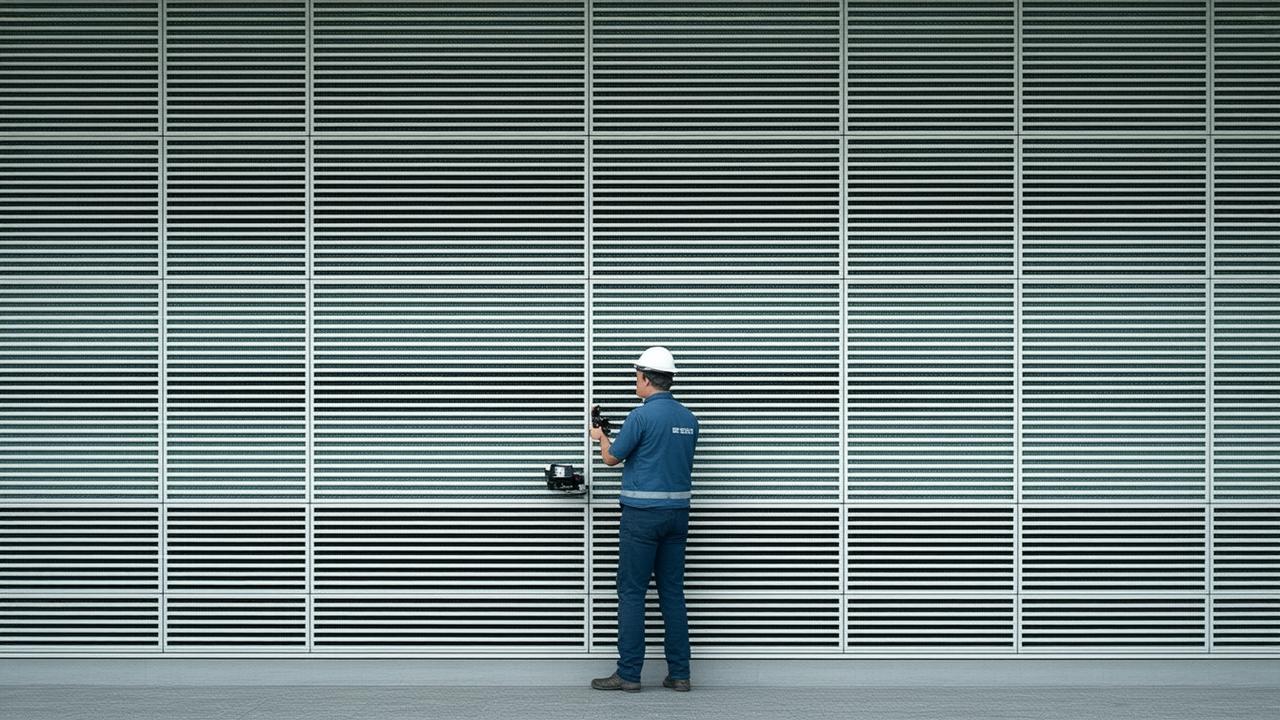
In a new build, walls are insulated, windows are tightly sealed, and ventilation is often routed through efficient, centralized systems. Some units have heat-recovery ventilators that transfer warmth from outgoing stale air to incoming fresh air. Others simply rely on bathroom exhaust fans and the occasional open window. On paper, the numbers can look good—adequate air changes per hour, checked boxes for building codes, compliant energy ratings.
But what you feel inside those apartments can be very different. The air might be warm, yet strangely heavy. Scents linger: last night’s frying oil, this morning’s coffee, the laundry detergent from a neighbor’s dryer. VOCs (volatile organic compounds) quietly off-gas from new flooring, cabinetry, paint, and furniture. Moisture from showers and cooking drifts through sealed interiors, sometimes condensing on colder spots, sometimes sinking invisibly into drywall.
The result is a kind of indoor climate that our senses aren’t particularly good at reading. Cool and comfortable doesn’t always mean healthy. Stuffy and dry doesn’t always mean dangerous. We evolved outdoors, our lungs tuned to breezes, not to filtered recirculated air in a unit on the 18th floor.
The Health Story Written in the Air
Doctors and building scientists have been watching what happens when people spend most of their time in sealed modern buildings. Some patterns are familiar: headaches that seem to float in the air, a constellation of vague symptoms—fatigue, eye irritation, scratchy throats, that feeling of “office air” now extended into the home. In other cases, the problems are far more specific and serious: asthma flare-ups, persistent respiratory issues, mold-related illness.
Children are especially sensitive. Their smaller lungs, faster breathing rates, and growing bodies mean indoor air pollutants hit them harder. In homes where windows stay closed most of the year, indoor air can become richer in carbon dioxide and other compounds. Elevated CO₂ doesn’t just make you sleepy; research has linked it to reduced cognitive performance and difficulty concentrating, even at levels still considered relatively common in poorly ventilated rooms.
Then there are the everyday pollutants that modern living generates without us thinking about it: fine particles from cooking, especially frying and high-heat searing; nitrogen dioxide from gas stoves; synthetic fragrances in cleaners and air fresheners; microplastics from household dust. In a drafty old house, a good portion of this quietly drifts away. In a new sealed apartment, the particles and gases can swirl around for hours.
Why Ventilation Became a Battleground
New apartment builds are arriving at a crossroads. On one side are climate commitments, energy-efficiency standards, and rising utility costs pushing architects toward ever-tighter envelopes. On the other side is a growing realization that indoor air is not a background detail—it’s an environmental factor that shapes our health as surely as diet or exercise.
The debate often plays out quietly, in design meetings and regulatory hearings. How much mechanical ventilation should a building have? Should it be continuous or intermittent? Should every unit get its own system, or should air be distributed through shared shafts and ducts? These questions, once mostly technical and budget-driven, have become questions about equity, health, and even trust.
Residents are starting to ask for more transparency: What kind of ventilation does my unit have? Is outside air really being brought in, or are we just moving the same indoor air around? How often are filters changed? Can I open my windows, and if not, why? There is a growing sense that people don’t just rent or buy square footage—they are also buying the invisible, long-term air service that comes with it.
At the same time, developers face real constraints. Adding advanced ventilation systems costs money and space. Ducts take up precious ceiling height, equipment consumes closets and roof area, and maintenance requirements add ongoing operational costs. In dense urban projects where every square meter is counted and sold, clean air becomes a line item on a spreadsheet—negotiated, reduced, or upgraded depending on budgets and market positioning.
What Actually Happens to the Air in a New Apartment
To understand the debate, it helps to visualize what’s happening in that seemingly still living room. Air enters in a few key ways: through intentional vents and ducts, through the front door, through bathroom and kitchen exhausts, and through cracks and gaps in construction. In a new, tightly built apartment, those cracks are minimal by design.
Here is a simplified glimpse of how indoor air factors compare in many modern units:
| Indoor Factor | Common Source | What Can Happen in Tight Apartments |
|---|---|---|
| Carbon Dioxide (CO₂) | People breathing, pets | Levels can build up during the night or when several people share a small space with limited fresh air. |
| Fine Particles (PM2.5) | Cooking, candles, outdoor pollution leaking in | Particles linger longer, especially if exhaust fans are weak or rarely used. |
| Moisture | Showers, cooking, drying laundry indoors | Can lead to condensation behind furniture, around windows, and in corners—fertile ground for mold. |
| VOCs | New building materials, paint, cleaning products | Off-gassing can be significant in the first months or years, especially with minimal fresh air exchange. |
| Biological Allergens | Dust mites, pet dander, mold spores | Tight, humid areas and shared ventilation can amplify exposure for sensitive occupants. |
In a home that “breathes” mostly through mechanical systems, the quality of design, installation, and maintenance becomes the difference between a healthy indoor environment and one that quietly undermines well-being.
Designing Buildings Where People and Air Thrive
The emerging challenge is not to go back to drafty, inefficient apartments. It’s to design buildings that are both energy-smart and human-smart. This is where new apartment builds can either deepen old problems or become part of the solution.
Some architects and developers are adopting a philosophy that treats ventilation as a primary design feature, not an afterthought. That might mean every unit has its own dedicated fresh-air system, with filtered air delivered to bedrooms and living spaces, and stale air extracted from kitchens and bathrooms. It might mean windows designed not just for light and view, but to allow safe, controlled natural ventilation—even in high-rises, where opening a window can feel like an act of courage.
There is also an increasing focus on materials. If you’re going to seal a building tightly, you have to be more careful about what you seal inside. Low-emission paints, adhesives, flooring, and cabinetry help ensure that the “new building smell” is not a cloud of chemicals lingering for months. Thoughtful layouts can separate cooking and sleeping areas, reducing exposure to kitchen emissions. Shading and orientation can reduce overheating, easing reliance on sealed, air-conditioned spaces.
At its best, a well-ventilated apartment doesn’t call attention to itself. You simply feel awake, clear-headed, comfortable. The air smells like nothing in particular—or like the food you’re cooking only for a short while. Condensation on windows is rare. Your plants thrive on the windowsill. You don’t think about ventilation because it’s quietly doing its job.
➡️ Australia’s changing rainfall patterns are altering the nation’s wheat belt predictions
➡️ How Australia’s museums are rethinking colonial collections and repatriation pathways
➡️ Australia’s housing design is shifting toward passive cooling as summers grow harsher
➡️ What Australian doctors are learning from long COVID clinics in major cities
➡️ Australia’s space industry is quietly expanding beyond satellites into deep tech exports
➡️ Emergency wards are reporting a sharper spike in dehydration cases during prolonged heatwaves
➡️ Bushfire smoke is turning air quality monitors into everyday household essentials
The Resident’s Role in a Mechanized Indoor Climate
Even in the best-designed buildings, the people living inside them shape the indoor climate as much as any blueprint. You can have a state-of-the-art ventilation system, but if bathroom fans stay off, filters never get changed, and windows never open, the air can slowly grow dull.
Many tenants and owners move into new apartments with little information about how their ventilation actually works. Some assume fresh air is constant when the system only runs at certain times. Others don’t realize their kitchen hood just recirculates air instead of venting it outside. The user manual, if it exists, is often buried in a drawer.
Part of the revived debate around ventilation is a call for literacy. People want to know: How do I know if my home has enough fresh air? Should I run fans more often? When is it better to open a window, and when should I rely on filters? These might sound like small questions, but multiplied by thousands of apartments in a city, they become a public health issue.
In some places, building managers are beginning to share simple guidance: turn on the range hood whenever cooking, keep bathroom fans running for a while after showers, crack windows on days when outdoor air is clean, and avoid blocking vents with furniture. Small habits, repeated daily, can significantly change the indoor atmosphere.
Rethinking “Indoor” and “Outdoor” in the Age of New Builds
Stand on a high balcony of a newly built apartment tower and the city feels like a living organism—cars flowing along arteries of roads, trees clustering in patches of parkland, birds looping between rooftops. From up there, the line between indoors and outdoors can feel sharp: behind you, the sealed, climate-controlled interior; before you, the drifting, unpredictable air of the street and sky.
But that line is more porous than it seems. Outdoor pollution slips indoors through doors, windows, and garage ramps. Indoor air flows out, mixing with the street’s invisible cloud. The choices we make in building homes—materials, ventilation, how much we trust a sealed wall versus a cracked-open window—shape not just private comfort, but collective health.
New apartment builds are not just containers for people; they’re evolving ecosystems of air, moisture, and life. They’re places where our lungs negotiate daily with the decisions of architects, developers, regulators, and our own habits. As more of us live vertically, suspended in glass and concrete, the questions grow louder. Should we demand buildings that share their air more generously with the outdoors? Or systems so well-designed that the air inside is cleaner than anything we could breathe at street level?
The debate about ventilation and indoor health is, at its core, a debate about what we believe homes should be. Mere shelters from the elements? Precision-tuned machines that optimize comfort at the push of a button? Or something more nuanced: spaces that acknowledge we are, fundamentally, outdoor creatures who now spend most of our days inside.
At the end of a long day, you step back into that quiet, new apartment. The hallway smells faintly of dust and laundry detergent. Inside, the fan in the ceiling hums softly, a mechanical whisper in the stillness. You open a window, just a crack, and feel a faint thread of cool air brush against your face. For a moment, the boundary between inside and out blurs, and the room seems to exhale with you. Somewhere between the sealed box and the open sky, the future of healthy living spaces is being built—breath by carefully managed breath.
Frequently Asked Questions
Why are new apartments more tightly sealed than older buildings?
They’re designed that way to improve energy efficiency. Tighter envelopes reduce heat loss in winter and heat gain in summer, cutting energy use and utility bills. The trade-off is that they rely more heavily on mechanical ventilation to provide fresh air.
Can a well-insulated, airtight apartment still have good air quality?
Yes—but only if ventilation is properly designed, installed, and maintained. That usually means a reliable source of fresh outdoor air, effective extraction in kitchens and bathrooms, and regular filter changes.
How can I tell if my apartment is poorly ventilated?
Common signs include frequent stuffiness, lingering odors, condensation on windows, mold in corners or behind furniture, and feeling unusually tired or headachy when spending long periods indoors.
Do I really need to use the range hood and bathroom fan every time?
Using them consistently is one of the easiest ways to improve indoor air. Range hoods help remove cooking particles and gases, while bathroom fans clear moisture that can lead to mold and dampness.
Are air purifiers enough to fix indoor air issues in new builds?
Air purifiers can help reduce particles and some pollutants in specific rooms, but they don’t replace the need for proper ventilation. Fresh air exchange is still essential to dilute CO₂, moisture, and gases that filters can’t fully remove.





