The projector hums like an insect trapped in a lampshade. On the wall of a cramped community hall, a river shimmers into life—mud-brown, sun-struck, full of plastic bottles and boys cannonballing from a leaning tree. The audience sits on plastic chairs, arms crossed, eyes narrowed, as if unsure whether they’ve come to see a movie or a mirror. Then, somewhere in the back row, a woman lets out a small laugh of recognition. On screen, a grandmother in a faded floral dress argues with a fish seller about the cost of mackerel. Her voice fills the room, rough and familiar, and suddenly the mood shifts. People lean forward. The film has them. But more than that: they have themselves.
The Quiet Revolution Behind the Camera
This is the revolution no one quite noticed at first. No fireworks, no manifesto—just a slow, insistent turning of the lens toward lives that had long been considered too ordinary to matter.
In the last decade, a new generation of filmmakers—many of them in their twenties and early thirties—have quietly begun to rewrite what “national culture” looks and sounds like. They do not arrive wrapped in red carpets or studio logos. They come with borrowed cameras, patched-together sound gear, and a stubborn patience for long, uncomfortable silences.
They are interested less in heroes than in habits: how a mother folds her daughter’s school uniform in a chlorinated kitchen; how a fisher wakes at 3 a.m. to read the weather by the smell of the air; how a retired factory worker reconstructs his life through the small theater of tea-making. Their documentaries are intimate to the point of feeling almost intrusive, yet they are built from consent, trust, and the quiet, shared understanding that these overlooked lives hold the seeds of who a nation really is.
In their hands, culture is no longer the monumental statue in the city square. It is the chipped enamel cup passed between stories. It is the song hummed while washing dishes. It is the awkward, beautiful struggle of a community trying to decide what to remember and what to let go.
The New Language of Seeing
Less Lecture, More Listening
Once, documentaries spoke with a certain voice: authoritative, polished, always sure. A narrator told you what to think while aerial shots of landscapes made you feel small and properly educated. The world was explained from above.
The new wave of intimate documentary filmmakers does something almost scandalous: they shut up. The camera lingers. The filmmaker’s questions are often off-screen, or absent altogether. You hear the hum of a refrigerator, the scrape of a chair on concrete, the breath between a subject’s half-finished sentences.
This is a cinema of listening rather than lecturing. The lighting is often whatever the room offers. The “mistakes”—a hand drifting into frame, a lens flare from an open window, a blurry focus while someone laughs unexpectedly—are left in. They are part of the truth. The viewer doesn’t feel guided; they feel included, like someone allowed to sit quietly in the corner of another person’s life.
Up Close and Uncomfortable (on Purpose)
In many of these films, the camera sits close enough to catch the small tremors of a face—lips pressed together in anger, eyelids fluttering with fatigue, fingers tapping against a worn tabletop. Conversations are not tidied up for narrative convenience. People contradict themselves, wander off-topic, get lost remembering the name of a cousin last seen twenty years ago. And that chaos begins to feel more accurate than the smooth arc of a scripted drama.
What emerges is a new language of seeing: not the wide, sweeping claim of a nation as one thing, but a mosaic built from the warp and weft of daily lives. It is messy. It is honest. And for viewers used to being flattened into stereotypes, it can feel deeply radical.
Stories from the Margins, Center Frame
From Subjects to Co-Authors
National culture, for a long time, belonged to those with podiums—the politicians, the official historians, the broadcasters with prime-time slots and polished sets. Entire communities lived their lives off-screen, or appeared only as symbols on someone else’s agenda. The new generation of documentary filmmakers is quietly overturning that hierarchy.
Many of them grew up within these marginalized communities. They are not visiting; they are returning. The people in their films are neighbors, cousins, childhood friends, elders who once scolded them for running through the mango grove. This overlap changes everything. Interviews feel less like interrogations and more like long-delayed conversations. The filmmaker is not just extracting stories; they are implicated in them.
In editing rooms lit by laptop glare and sustained by instant noodles, these filmmakers replay hours of footage with a particular care: does this scene show this person’s vulnerability without exploiting it? Does it let them keep their dignity while still revealing the truth? The result is not objectivity—this generation mistrusts that word—but something more intimate and perhaps more valuable: shared authorship.
Rural Nights, Urban Windows
The stories themselves stretch far beyond the usual city-centric narratives. A film might follow a group of young women in a rural village who start a pirate radio station, their voices thin but fierce through crackling speakers. Another might track a night-shift nurse in a crowded urban hospital, her exhaustion and dark humor a quiet anthem for an underpaid, unseen workforce.
Each of these films adds a tile to a growing mosaic. Alone, they are small portraits. Together, they form a counter-archive of national life—one that challenges the grand myths of progress with the granular realities of people simply trying to live.
How Intimate Films Are Reshaping National Imagination
From Spectacle to Self-Recognition
Watch an audience as the credits roll. At first, there is that hesitation: do we clap? This wasn’t “entertaining” in the usual sense. No car chases, no soaring orchestral score, no punchline before the fade to black. But then someone starts talking—about how the house in the film looked exactly like their grandmother’s, about the way the light above the kitchen sink seemed to hold an entire childhood.
This is the quiet power of intimate documentary work: it moves culture away from spectacle and toward self-recognition. The big-budget historical epic might make you proud of battles won centuries ago. The small, patient film about a family grocery store sinking under the weight of supermarket chains asks a sharper question: what does survival look like now?
The national imagination begins to shift. Heroes stop wearing armor and start wearing aprons, rubber gloves, factory uniforms. The idea of “our people” expands to include those usually spoken about only in statistics: the undocumented, the indebted, the dispossessed. Culture becomes less about what we worship and more about what we’re finally willing to look at.
The Digital Campfire
The reshaping doesn’t happen only in theaters or makeshift screening rooms. It happens on smartphones lit beneath blankets late at night, on bus rides where someone downloads a film to watch offline, on projected walls in courtyards where children run in and out of the beam of light.
Social media becomes a kind of digital campfire around which reactions gather. Viewers share clips that feel like home, lines that sting with familiarity, moments that expose hypocrisies. A single scene—a father teaching his son how to navigate police checkpoints, a grandmother hiding her savings in the linings of old blouses—can travel farther and faster than any government-backed tourism video.
Suddenly, national culture is not something handed down from above. It is disputed, joked about, mourned over, questioned, remixed. This is not always comfortable. But it is alive.
The Toolkit of a Quiet Cultural Uprising
Small Budgets, Large Ambitions
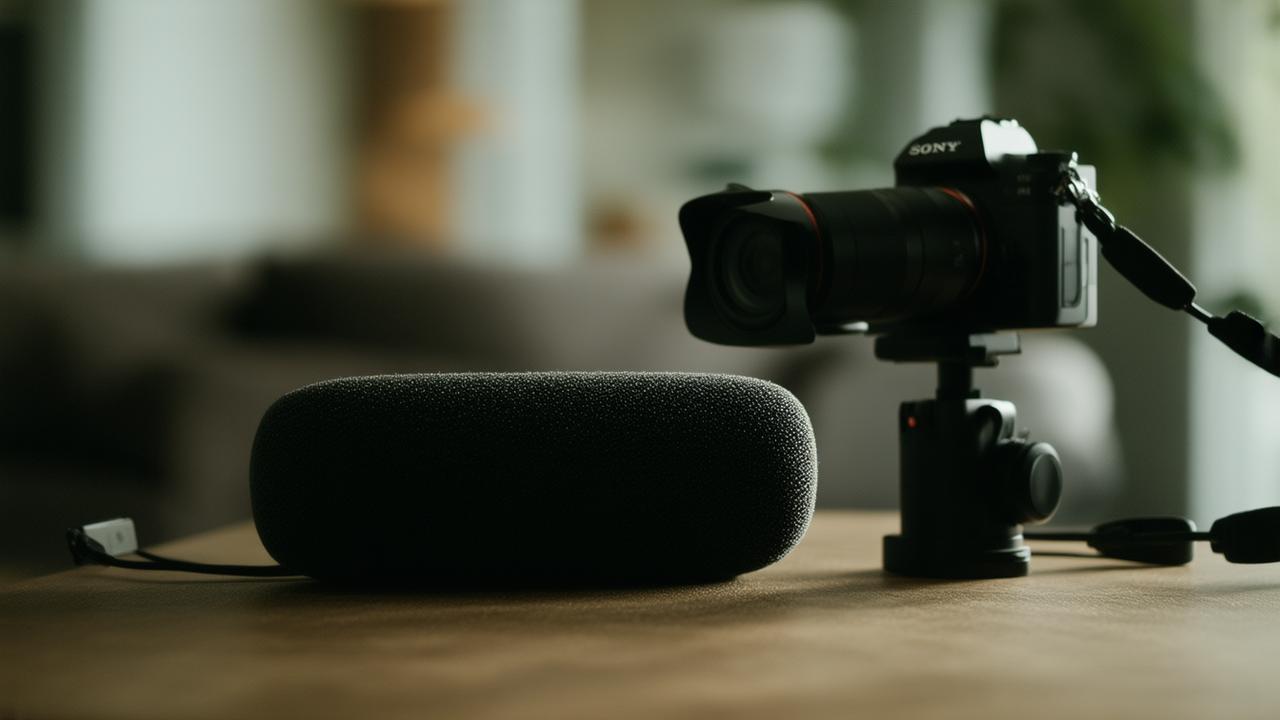
The romantic image of a filmmaker used to involve cranes and crews and call sheets. The new generation often works with devices that fit into a backpack. Their toolkits are modest: a mirrorless camera, a secondhand microphone patched with tape, editing software running on a laptop whose fan sounds like distant rain.
What they lack in equipment, they compensate for in proximity and time. They stay in places for weeks or months, sleeping on floors, sharing meals, becoming almost part of the furniture. Watching them work, you realize the real investment is not money but attention.
Here is a simplified snapshot of what this landscape often looks like today:
| Aspect | “Old School” Documentary | New Intimate Documentary Wave |
|---|---|---|
| Typical Budget | High, studio or broadcaster funded | Low to micro, crowdfunded or self-financed |
| Narration Style | Authoritative voice-over, expert-led | Character-led, minimal or no narration |
| Camera Presence | Distant, observational, polished shots | Close, handheld, immersive and imperfect |
| View of “Nation” | Unified, often celebratory narrative | Plural, contradictory, unresolved stories |
| Audience | Broadcast TV, festivals, classrooms | Community screenings, online platforms, phones |
The difference is not merely technical; it is philosophical. These filmmakers are not trying to conquer attention with scale. They are trying to change perception with intimacy. The national story, they seem to say, can be rewritten from a kitchen table.
➡️ Australia’s changing rainfall patterns are altering the nation’s wheat belt predictions
➡️ How Australia’s museums are rethinking colonial collections and repatriation pathways
➡️ Australia’s housing design is shifting toward passive cooling as summers grow harsher
➡️ What Australian doctors are learning from long COVID clinics in major cities
➡️ Australia’s space industry is quietly expanding beyond satellites into deep tech exports
➡️ Emergency wards are reporting a sharper spike in dehydration cases during prolonged heatwaves
➡️ Bushfire smoke is turning air quality monitors into everyday household essentials
The Risk and Reward of Telling the Truth Softly
Censorship, Pushback, and Small Acts of Courage
Telling the truth softly does not mean it is safe. Many of these documentaries touch sensitive nerves: land disputes, minority rights, labor abuses, police violence, the quiet cruelty of bureaucracy. Power is rarely pleased to see itself reflected in an unflattering close-up.
Some films are denied permits for public screenings. Others circulate in semi-underground networks of drives, encrypted links, and invite-only watch parties. Filmmakers learn to navigate legal gray zones, to blur a face here, mute a name there, without blurring the core of the story.
Yet every time a film screens—even to a small room of twenty people—it creates a tiny fracture in the official narrative. Someone leaves with a question they cannot unask. Someone else recognizes their own complicity. These are not explosive moments. They are seeping, persistent: water working its way through stone.
The Emotional Cost
There is also a quieter strain that does not make headlines: the emotional weight of holding so many stories of pain, resilience, and unresolved grief. Intimate documentary is not drive-by storytelling. It requires the filmmaker to sit inside other people’s suffering, to revisit it in the edit, to answer late-night calls from subjects who suddenly fear what they revealed on camera.
Many in this generation are learning, sometimes too late, that shaping national culture from the inside out requires tending to their own inner weather. They build informal networks of care—group chats where they debrief after difficult shoots, shared spreadsheets of therapists who understand creative work, WhatsApp voice notes that begin with “Are you sleeping enough?”
The resilience of this movement lies not just in technical skill but in these small, human acts of looking out for one another.
Where This Quiet Wave Might Take Us
Imagine the cultural archive fifty years from now. Alongside the official speeches and ceremonial parades, there are hundreds—perhaps thousands—of small, stubborn films. A grandmother’s laugh. A protest chant. A flooded street where children have turned disaster into an improvised swimming pool. A shopkeeper closing a metal shutter for the last time.
Future historians might study these not as embellishments but as primary texts—the emotional handwriting of a nation in a time of rapid change. They will be able to see not just what laws were passed or wars were fought, but how it felt to be alive in the in-between: between rural and urban, tradition and reinvention, despair and a fragile kind of hope.
For now, the movement continues in small rooms: makeshift cinemas in school halls, living rooms with borrowed projectors, late-night laptop screens glowing against tired faces. A new generation of filmmakers walks into these rooms with hard drives in their bags and a quiet conviction on their shoulders: that if you change who gets to hold the camera, you eventually change who a nation believes itself to be.
In the dark, a reel begins to turn, or a file begins to play. On the wall, a face appears—creased, hesitant, beautifully ordinary. Someone in the audience breathes in sharply, recognizing themselves. Culture, right then, is being rewritten in real time, one intimate frame at a time.
Frequently Asked Questions
Why are intimate documentaries important for national culture?
Intimate documentaries show the everyday realities that official narratives often ignore. By focusing on ordinary people and specific places, they reveal how policies, histories, and social changes actually feel on the ground. This helps broaden and deepen our sense of what “national culture” really is.
How are younger filmmakers different from previous generations?
Younger filmmakers tend to work with smaller budgets, lighter equipment, and more collaborative methods. They often come from the communities they film, use minimal narration, and prioritize emotional honesty over polished spectacle. Their work is less about explaining a nation from above and more about experiencing it from within.
Do these films reach large audiences?
Not always in traditional ways. Some may never play in big cinemas, but they travel widely through community screenings, festivals, schools, online platforms, and phone screens. Their influence often grows through conversation and sharing rather than through box-office numbers.
What challenges do these filmmakers face?
They struggle with funding, censorship, political pressure, and emotional burnout. Many also juggle other jobs to support their work. Despite these obstacles, they continue because they see their films as a necessary counterweight to one-sided or sanitized national narratives.
How can viewers support this new generation of filmmakers?
Viewers can attend local screenings, pay for online access when possible, share films and discussions, and advocate for arts funding and spaces that welcome documentary work. Even small actions—like inviting friends to watch a film together and talk about it—help these stories take root in the wider culture.





