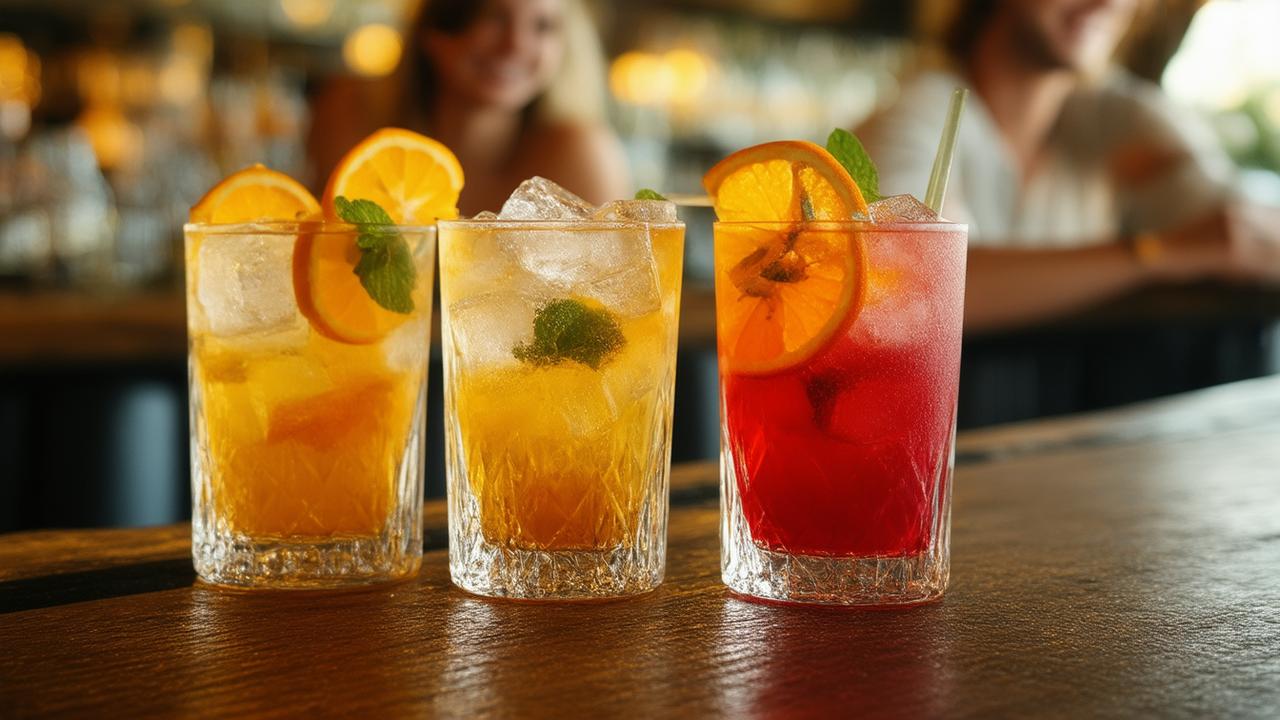
The first thing you notice isn’t what’s there, but what’s missing. No sharp tang of spilled beer on the floorboards. No clatter of shot glasses. No blurred shouting from a corner table. Instead, there’s the slow fizz of a soda gun, the citrusy lift of freshly cut lime, and a roomful of people leaning in closer, not louder. It’s Friday night in the city, and inside this low-lit bar tucked between a tattoo studio and a late-night bakery, the loudest sound is laughter that doesn’t slur at the edges.
When “Going Out” No Longer Means “Getting Wasted”
The bartender—sleeves rolled, shaker in hand—slides a drink across the counter. It looks like a mojito, dressed to impress with muddled mint and crushed ice, but there’s no rum here. Just cold-brewed green tea, elderflower, lime, and something smoky that lingers at the back of your tongue like a campfire memory.
“People want the ritual,” she says, wiping a ring of condensation from the bar. “They just don’t always want the alcohol.” Behind her, bottles glow on the shelves, but a surprising number of them are filled with things that never ferment: distilled botanicals, non-alcoholic aperitifs, zero-proof gins and tequilas with names that sound familiar but behave very differently once poured.
This is the new nightlife. Not entirely sober, not defiantly teetotal, but softly, decisively shifting. The old script of “work hard, drink harder” is fraying at the edges. In its place, something quieter—and in many ways, more daring—is taking root: a culture where “going out” no longer has to mean getting drunk.
The Soft Pulse of a Sober-Curious Generation
The crowd in this bar is mixed: twenty-somethings in thrifted jackets, a couple in their forties sharing a charcuterie board, a group of friends in yoga gear, still glowing from a late class. They move with a kind of alertness you don’t usually see at midnight—eyes clear, voices steady, energy bright but not frayed.
In the language of the moment, many of them are “sober-curious.” They’re not necessarily abstaining forever. They simply want to explore what happens when nights out don’t end in patchy memories and foggy mornings. For some, it’s about mental health; for others, performance, productivity, or a body that refuses to bounce back as quickly as it used to.
Ask around and the answers come layered with nuance. “I love going out,” says one woman perched on a barstool, swirling a drink the color of garnets. “I love music, I love people, I love the whole atmosphere. I just don’t love losing half my weekend to a hangover anymore.” Another person shrugs and says, “I didn’t realize how much of my social life was just…drinking with different backgrounds.”
It’s not that alcohol is disappearing. It’s that the assumption it must be the center of every social orbit is quietly dissolving. Nightlife venues, long calibrated for the clink of glasses and the economics of the bar tab, are beginning to pay attention.
Bars, Clubs, and the Business of Rethinking the Buzz
At first glance, it seems risky. Alcohol has long been the financial engine of nightlife—high margins poured by the ounce. Why would venues tamper with a model that has powered their survival for decades?
The answer is surprisingly practical: because the audience is changing.
Young patrons increasingly arrive with questions that would have sounded odd a decade ago. What’s on your zero-proof menu? Do you have alcohol-free beer on tap? Can you make that cocktail without the rum and still make it taste good? They’re not asking for tap water and a quiet corner. They’re asking for flavor, creativity, and a sense of inclusion that doesn’t hinge on intoxication.
Owners are responding, some tentatively, some all in. Menus that once hid a single “mocktail” near the bottom now dedicate full pages to alcohol-free options. Dedicated “dry nights” or early-evening sober events pull in crowds who once stayed away from bars altogether. Some clubs introduce wristbands or colored tokens that signal “no shots, no pressure,” making it easier for guests to decline a round without having to defend themselves.
Behind the scenes, bar teams are relearning their craft. They talk about tannins and texture, about how to build complexity without the natural bite of alcohol. They experiment with shrubs, ferments, tea extractions, and house-made syrups infused with everything from black cardamom to grapefruit rind. A well-made zero-proof drink, it turns out, takes just as much skill—and sometimes more inspiration—as its boozy counterpart.
The New Menu: Drinks That Remember Your Brain
To get a sense of how deeply this shift is reshaping the experience, you only have to read the menu. Instead of a half-hearted “Virgin Mojito,” you might see a lineup of drinks designed with care, not compromise. They come layered with botanicals and storylines—a citrus highball inspired by coastal walks, a smoky, bitter sipper built to pair with late-night jazz, a sparkling drink made with fermented berries that plays on the tongue like champagne without the head-spin.
| Zero-Proof Drink | Key Flavors | Perfect For |
|---|---|---|
| Forest Tonic | Pine, juniper, tonic, lime | Slow conversations, window seats |
| Midnight Orchard Spritz | Apple, verjus, herbs, bubbles | Dancing without the dizziness |
| Smoke & Citrus Highball | Charred lemon, lapsang tea, soda | Live music, late sets |
| Rosehip Cooler | Rosehip, hibiscus, agave, ice | First dates, warm evenings |
The ritual remains: the slow build of anticipation as the bartender stirs, shakes, and strains; the condensation kiss on the glass; the first sip that unfurls across your tongue. What changes is what happens after. You can have three of these and still bike home safely, still wake up early to hike, still remember everything your friend confided in you at 1 a.m.
Rethinking the Social Contract of the Night
Change the drinks and something else starts to shift, quietly but unmistakably: the way people behave around one another after dark.
Without the familiar haze of alcohol, conversations deepen rather than disintegrate. People notice the music, the lighting, the feel of the space against their skin. There’s more attention to the tactile details—the smoothness of the bar top under your forearms, the slight vibration of bass through the floor, the gentle exhale of the person sitting beside you.
For some, this clarity can feel unnerving at first. Alcohol has long been a social lubricant, a buffer between our polished daytime selves and the more vulnerable truths we keep tucked away. Without it, the night can feel a little too sharp, too honest. But as sober and sober-curious nights become more common, people are learning to navigate that honesty together.
Venue owners are picking up on this shift and redesigning their spaces accordingly. Lighting is softer but more intentional. Seating encourages conversation instead of just facing the bar. Sound systems are tuned so you can feel the music in your body without having to shout over it. Even dance floors are subtly changing: less about losing control, more about feeling fully present in the moment, every spin and step saturated with awareness rather than oblivion.
The Quiet Power of Opting Out
One of the most radical parts of this cultural turn is also one of the simplest: it’s becoming easier to say “no”—to a drink, to another round, to the old expectations of what a “fun night” has to look like.
Instead of “Come on, just one more,” you hear, “They’ve got a great hibiscus cooler here, want to try that instead?” Friend groups experiment with “dry months” or “sober nights out” not as punishments, but as playful experiments, like trying a new restaurant or going on an unfamiliar hiking trail. The stakes feel lower, the curiosity higher.
Underneath it all runs a larger current: a generation increasingly protective of its time, its sleep, its mental health. They are not willing to sacrifice an entire Sunday to a hangover when there are farmers’ markets to explore, long runs to take, side projects to build, and sunlight to step into fully awake.
From Fringe to Feature: How Venues Are Leaning In
This isn’t just a youth movement, though. Older generations, too, are re-evaluating their relationship with alcohol, and nightlife venues that adapt find themselves building broader, more loyal communities.
Some bars now publish their zero-proof menus with the same pride they once reserved for craft beer lists. Others host “mindful nights” with guided tastings of non-alcoholic spirits, talking guests through flavor notes and food pairings as if they were sampling rare wines. There are after-hours yoga sessions followed by social hours with botanical spritzes; listening parties where the headline act is an album played start-to-finish on vinyl, accompanied by thoughtful, booze-free pairings.
➡️ East coast councils are rewriting heat plans as pavement temperatures climb year after year
➡️ Ancient rock shelters in the Kimberley are forcing new debates about heritage enforcement
➡️ Seawall upgrades are accelerating as coastal communities brace for stronger storm surges
➡️ Small coral recovery zones are giving reef scientists a rare moment of cautious optimism
➡️ Coffee roasters are quietly adjusting blends as climate shocks disrupt bean supply lines
➡️ Public health campaigns are shifting tone as vaccine confidence becomes more uneven
➡️ Loneliness is being treated less as a feeling and more as a measurable health threat
In these spaces, bartenders become more like guides than gatekeepers, asking what mood you’re in, what flavors you love, how you want to feel at the end of the night—not just how strong you want your drink.
“I used to feel like my job was to get people drunk, safely,” one bartender says, leaning against a polished counter. “Now it feels more like I’m creating an experience they’ll remember tomorrow.” There’s a certain relief in that, a sense of stepping away from the unspoken tension between making money and watching guests overdo it.
Designing Nights You Don’t Need to Recover From
In the wider ecosystem of the city, these changes ripple outward. Ride-share drivers notice fewer passengers slumped in back seats, the smell of stale liquor clinging to their jackets. Emergency rooms see marginal differences on certain nights. Morning coffee shops welcome people who were out late, yes, but not undone by it.
The city’s rhythm subtly rebalances. Nights don’t feel like a break from life so much as an extension of it—another landscape to move through with intention, curiosity, and care.
And yet, this isn’t a story of perfection or purity. Plenty of people will still choose to drink, and many venues will continue to pour generously. But the binary—drunk or dull, wasted or withdrawn—is losing its grip. In the space between, a new kind of nightlife is emerging, one that honors both the thrill of being out after dark and the quiet satisfaction of waking up clear-headed the next day.
A Future Where the Night Belongs to Everyone
Stand for a moment on a busy weekend sidewalk and you can feel the old and new worlds brushing shoulders. A group stumbles laughing out of a traditional bar, arms linked, singing off-key. Next door, a sober social club pulses with low, steady music; inside, people sip bright drinks and play board games, or tuck into couches to talk about their week.
Neither space cancels out the other. Instead, they sketch a broader map of what it can mean to be out at night, to seek connection in the hours when the sky is black and the city is humming. For those who have long felt excluded from traditional nightlife—because of addiction, religious beliefs, health conditions, or simple preference—the rise of sober and sober-friendly venues is less a trend than an overdue invitation.
As more bars and clubs adjust to this reality, the night itself feels more spacious. You can move through it on your own terms, choosing your pace, your level of buzz, your way home. You can step into the dark without surrendering your clarity, hold a glass in your hand without sacrificing tomorrow.
And as you pull open the door of a softly lit bar where the loudest thing is laughter, where the air smells like citrus and smoke and something tenderly new, you realize: maybe the real intoxication was never the alcohol. Maybe it was always the feeling of belonging, of being awake with others while the world sleeps, of knowing that this, right here, right now, is a night you’ll actually remember.
Frequently Asked Questions
Why are more nightlife venues offering sober or low-alcohol options?
Many guests, especially younger generations, are reassessing their relationship with alcohol. They still want to go out, socialize, and enjoy the atmosphere of nightlife, but without the side effects of heavy drinking. Venues that respond to this shift can attract a broader, more loyal crowd and often see guests staying longer and returning more frequently.
Does offering zero-proof drinks hurt a venue’s profits?
Not necessarily. Well-crafted non-alcoholic drinks can be priced similarly to cocktails, especially when they use premium ingredients and require real skill to make. Guests who might have ordered just one alcoholic drink and switched to water may instead order multiple zero-proof drinks throughout the night, keeping revenue steady or even improving it.
Are sober nights only for people who never drink?
No. Many attendees are “sober-curious” or simply taking a break from alcohol. Sober or alcohol-light nights are designed to be inclusive, welcoming those who don’t drink at all as well as those who just want an evening where alcohol isn’t the main event.
What makes a good alcohol-free menu?
A strong zero-proof menu goes beyond sugary sodas and basic juices. It focuses on balance, complexity, and thoughtful flavor combinations—using herbs, spices, teas, ferments, and non-alcoholic spirits. The best menus treat zero-proof drinks with the same creativity and respect as traditional cocktails.
How can someone start exploring sober socialising without feeling awkward?
Begin with venues that clearly highlight their non-alcoholic options or host sober-friendly events. Go with a friend who’s curious too, so it feels like an experiment rather than a statement. Try a few different drinks, stay open to new flavors, and notice how it feels to leave at the end of the night clear-headed—and still satisfied.





