The first time I noticed it was in a tiny studio in Berlin, the kind that smells faintly of espresso and steam from an old iron. A half-finished coat stood on a dress form by the window, the fabric pooling to the floor in a soft river of gray. I stepped closer, expecting some futuristic lab-made textile—something with an unpronounceable name and a long, synthetic aftertaste. Instead, the designer grinned and said, “It’s wool. Old-school, right?” He said it like a confession and a quiet rebellion at the same time.
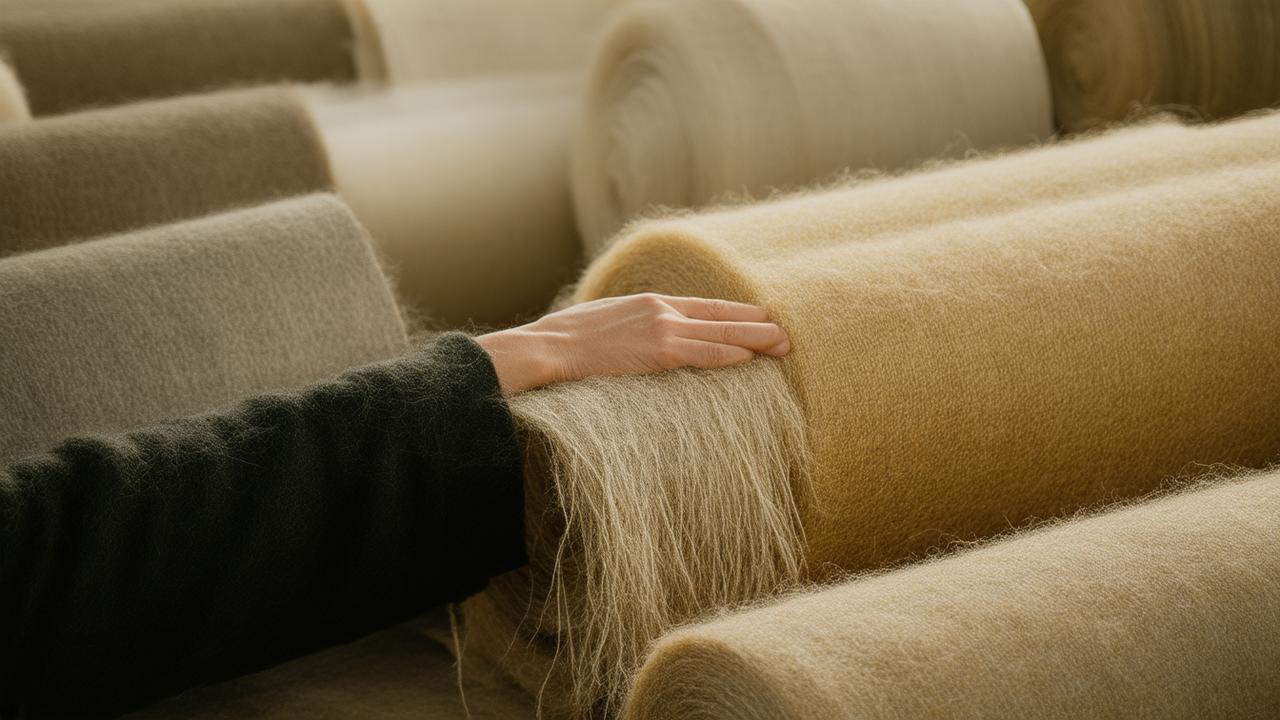
Once you start looking for it, you see the pattern everywhere. On shop floors, runway shows, and secondhand racks, a familiar fiber has slipped back into the spotlight. Not the squeaky acrylic of fast-fashion sweaters, but real wool—dense, breathable, slightly lanolin-scented, and suddenly, improbably, cool again.
The Comeback You Can Feel Between Your Fingers
Pick up a well-made wool garment and there’s a particular weight to it, a kind of gravity. The fibers spring back when you press them, whispering that they’ve been grown, not manufactured. You can almost see the landscapes they came from: wind-scoured hillsides, sunrise mist hanging low over quiet paddocks, sheep moving like clouds across a slope.
For years, fashion chased lighter, cheaper, smoother. Polyester and nylon ruled the racks—fabrics that promised performance and a certain high-tech sheen. But they also pill, snag, trap odor, and melt instead of burn. Now, with climate anxiety humming just beneath the surface of almost every purchase, more people are asking uncomfortable questions: What happens to this shirt after I’m done with it? Why does my winter coat feel like a plastic bag with a zipper?
This is where wool walks back in, not as nostalgia, but as a quietly radical choice. Brands that once replaced wool with synthetics for cost and convenience are circling back, driven by a new kind of pressure: customers who expect clothing to last, perform, and tread lightly on the planet. The same fiber that kept shepherds warm on cold hillsides is turning up in city-ready blazers, technical outerwear, and even performance sneakers.
Why Wool Feels Different on Your Body—and Your Conscience
Wool’s charm isn’t just marketing mythology; it’s structural. Each fiber is like a microscopic coiled spring, trapping tiny pockets of air that keep you warm when it’s cold and cool when it’s warm. That breathability makes wool feel strangely alive on your skin, adjusting to microclimates the way a good companion adjusts to the room.
On a crowded subway in winter, a wool coat breathes. In a heated office, a wool sweater can feel cozy rather than suffocating. It resists odors better than most synthetic fibers; you can wear it longer between washes, which quietly cuts down on water, energy, and time. And when you finally do wash it, it rarely demands high temperatures or harsh cycles.
But what’s pulling fashion labels back to wool is more than comfort. It’s the story behind the fiber: a natural material that grows back season after season, clipped from animals that—when managed well—can be part of regenerative landscapes instead of extractive supply chains.
From Pasture to Pattern: Wool as a Climate Story
It’s an odd twist of fate: some of the most promising “climate-smart” textiles don’t come from futurist labs but from stubbornly traditional fields. When sheep graze on well-managed pastures, their hooves aerate the soil and their grazing patterns can encourage plant diversity. Healthy grasslands store carbon in their roots and soil, turning fields into quiet, green vaults.
Many brands are paying close attention to this connection. Instead of simply buying wool on the global commodity market, they’re tracing it back to the farms, asking detailed questions about animal welfare, land management, and chemical use. Certifications and traceability tags are becoming part of the garment’s narrative, a way of connecting a scarf in a city shop to a hillside half a world away.
It’s not a perfect picture. Sheep, like all ruminants, produce methane. Poorly managed grazing can damage ecosystems. But the fashion conversation is shifting from “natural equals good” to “how was this grown, and by whom?” Wool sits in that nuance—neither saint nor villain, but a material whose impact depends on care, context, and commitment.
Durability in a Throwaway Era
To understand why wool is having a resurgence, you have to stand in front of an overstuffed closet and feel that quiet disappointment: so many things, so little that truly lasts. Seams unravel, elbows thin, colors fade. A lot of modern clothing is designed to fall apart, or at least fall out of favor, quickly.
Wool talks back to that logic. A well-knit wool sweater, if cared for, can stay in rotation for decades. Minor damage doesn’t mean the end; moth holes can be darned, cuffs re-bound, buttons resewn. There’s a certain intimacy in repairing wool, in holding the fabric close and giving it another chapter. That kind of longevity lowers the cost-per-wear dramatically, even when the initial price is higher.
Fashion labels are realizing that durability is not just a nice-to-have; it’s becoming a selling point. When customers ask, “How long will this last?” wool offers an answer rooted in lived experience. Many of us have memories of an aunt’s heavy winter coat that seemed indestructible, or a grandfather’s wool cardigan that softened and shaped itself to the life it lived.
| Feature | Wool | Typical Synthetic (e.g., Polyester) |
|---|---|---|
| Breathability | High – regulates temperature, reduces clamminess | Low to moderate – often traps heat and moisture |
| Odor Resistance | Naturally odor-resistant; needs fewer washes | Holds odor; frequent washing needed |
| Durability | Long-lasting; resilient fiber structure | Can be strong, but prone to pilling and snagging |
| Microplastic Shedding | Biodegradable fibers; no microplastics | Sheds persistent microplastics when washed |
| End of Life | Can biodegrade under the right conditions | Can persist in landfills for decades or longer |
Designers Rediscover an Old Friend
In studios from Tokyo to Copenhagen, wool is back on cutting tables, but it’s not confined to heavy coats and scratchy suits. Designers are experimenting with ultrafine merino for base layers, boiled wool for sculptural shapes, and blended wools that balance softness, strength, and drape.
You can see the excitement in the way they talk about it. They mention how wool “holds” a pleat, how it falls in a clean line but still moves with the body. They talk about color absorption—how dyes sink into wool’s complex fiber structure, giving shades a depth that feels almost velvety to the eye.
Some labels are even leaning into traceability as a creative constraint: designing entire capsules around the output of a single flock or farm, numbering garments like limited-edition prints. In a world drowning in anonymous mass production, the idea that “this sweater comes from these hills, these animals, and these people” becomes not just a sustainability claim but a narrative hook.
Balancing Softness, Ethics, and Science
Wool’s return hasn’t been without friction. Concerns about animal welfare have pushed brands to be more transparent about mulesing, shearing practices, and the conditions in which sheep are raised. Many labels are committing to stricter standards, working with farmers who prioritize low-stress handling and healthy, open landscapes.
At the same time, science is quietly refining what wool can do. New finishing techniques make fibers softer, less itchy, and more resistant to shrinkage. Blends with other natural or recycled fibers tweak performance without losing wool’s core advantages. Some technical garments now use wool in the lining or face fabric while reinforcing high-wear zones with robust synthetics, aiming for the best of both worlds.
Consumers are catching on. A once-blurry term like “merino” now signals a specific kind of experience: fine, next-to-skin comfort that feels miles away from the bulky sweaters of childhood. As labels educate shoppers, sweaters and coats start to carry a little more context: fiber micron count, farm origins, washing instructions that read more like a care relationship than a quick disclaimer.
➡️ East coast councils are rewriting heat plans as pavement temperatures climb year after year
➡️ Ancient rock shelters in the Kimberley are forcing new debates about heritage enforcement
➡️ Seawall upgrades are accelerating as coastal communities brace for stronger storm surges
➡️ Small coral recovery zones are giving reef scientists a rare moment of cautious optimism
➡️ Coffee roasters are quietly adjusting blends as climate shocks disrupt bean supply lines
➡️ Public health campaigns are shifting tone as vaccine confidence becomes more uneven
➡️ Loneliness is being treated less as a feeling and more as a measurable health threat
The New Luxury: Clothes You Can Trust Over Time
Luxury used to shout. It sparkled and strutted. Today, a quieter form is emerging: a well-cut wool coat that doesn’t scream for attention, but silently insists on staying in your life. There’s a certain relief in that. In a world of glitches, updates, and planned obsolescence, a garment that simply works year after year feels like a small act of sanity.
This is where wool shines as a “climate-smart” choice, not in perfection but in alignment. A long-lasting, repairable, biodegradable garment made from a renewable fiber stands in steady contrast to fast fashion’s churn. Every extra season you keep a wool sweater in rotation is one less impulse buy, one less plastic-heavy item heading for landfill.
Fashion labels are beginning to frame wool not only as a material but as an invitation: buy less, choose better, care more. They build in repair services, offer guidance on storing wool through the summer, and normalize the idea that a few signs of wear aren’t flaws but evidence of a relationship. The garment is no longer just an object; it becomes a kind of companion to your seasons and years.
How to Welcome Wool Back Into Your Wardrobe
As brands move toward wool, you might find yourself running your hands along those rails and wondering where to start. The key is to think in terms of workhorses, not showpieces. A mid-weight merino sweater in a color you genuinely love, a tailored wool blazer that fits your shoulders just right, a coat long enough to cover you on winter mornings—these are the quiet anchors of a wardrobe.
When you shop, look beyond the front-of-tag promises. Check fiber content. Is it 100% wool, or a blend? If blended, what with, and why? Ask how to care for it—can you spot clean and air it out instead of washing after every wear? Notice how it feels, not just in that moment under store lighting, but as you move, stretch, and sit.
Then, once it’s in your life, treat it almost like a living thing. Give wool garments a day to rest between wears; hang them somewhere airy. Fold heavier knits instead of hanging to avoid stretching. Store them clean and dry, and consider simple moth deterrents when the seasons change. The more attention you pay, the longer they’ll walk beside you.
FAQ: Wool, Fashion, and Climate-Smart Choices
Is wool really more sustainable than synthetic fabrics?
In many cases, yes—especially when the wool comes from farms with strong animal welfare and land management practices. Wool is renewable and can biodegrade, while synthetics are fossil-fuel-based and shed microplastics. That said, the overall sustainability also depends on how long you wear the garment and how it’s cared for.
Does wool always mean itchy and heavy?
No. Modern wool, especially fine merino, can be soft enough for base layers and T-shirts. Advances in spinning and finishing have made many wool fabrics lighter, smoother, and more comfortable against the skin than the bulky knits many people remember from childhood.
How is wool considered “climate smart”?
Wool comes from a renewable source and can be part of regenerative grazing systems that help support healthy soils and biodiversity. Its durability and odor resistance mean fewer replacements and less frequent washing, which reduce overall environmental impact over a garment’s lifetime.
What should I look for when buying wool garments?
Check the fiber content and aim for high wool percentages. Look for information about sourcing, certifications, and care instructions. Pay attention to construction details like seams, linings, and buttons, as these affect how long the piece will last and how easily it can be repaired.
How do I care for wool so it lasts longer?
Air wool garments between wears, spot clean when possible, and wash gently only when needed—often with cool water and a wool-friendly detergent. Avoid high heat when drying; instead, lay knits flat to dry and reshape. Store them clean, dry, and protected from moths during off-seasons.





