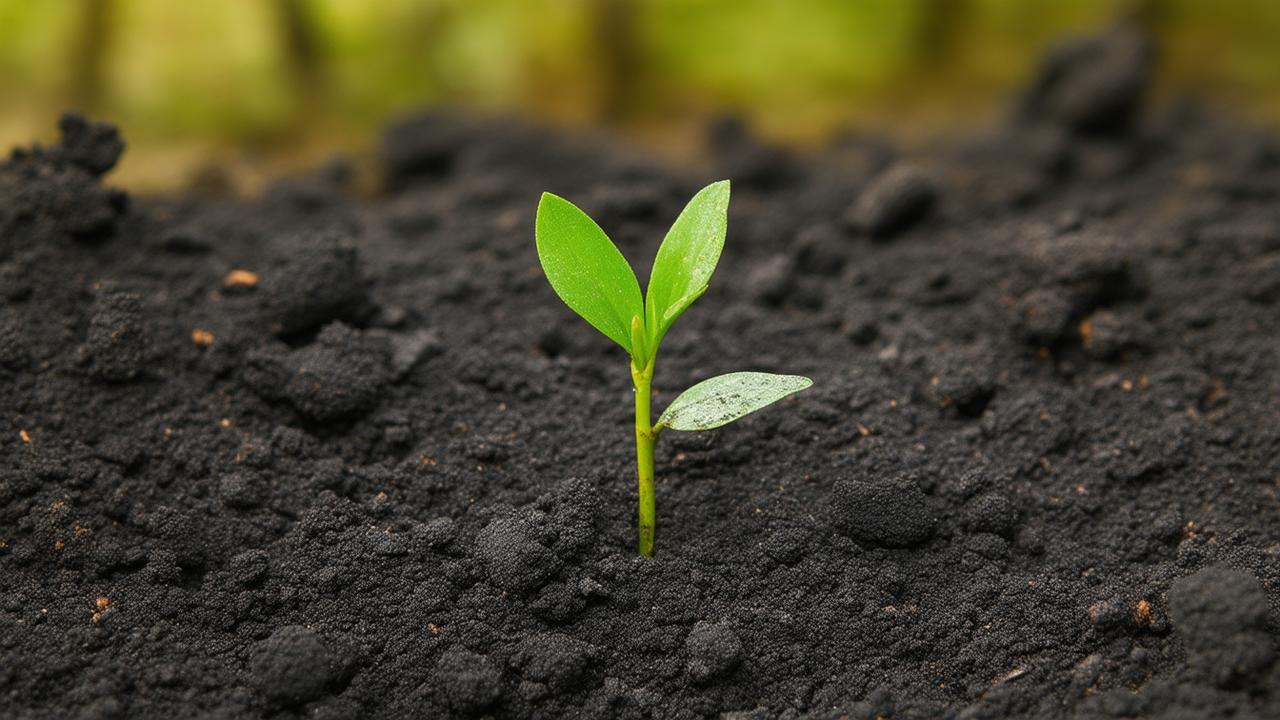
The first green shoot appears where everything once burned black. At first, it feels almost rude to notice it—this tiny, defiant blade of life muscling through charcoal and ash. The ground is still warm from a summer that went on too long. Smoke lingers in the folds of the valley. In the silence after bushfire, the world feels hollowed out, stunned. And then, like a whisper you almost miss, the forest begins to answer back.
The Morning After the Flames
When ecologist Lena Porter stepped out of the four-wheel-drive that morning, the air tasted of metal and memory. The fire had passed through the range three weeks earlier, turning tall eucalyptus forests into a skeletal skyline of grey trunks and empty branches. Underfoot, each step threw up a faint puff of ash. The world crackled: scorched twigs, carbonized bark, the brittle remains of things that used to rustle.
“You can still feel the heat in the soil,” she said, pushing a thermometer deep into the blackened ground. “But give it time. This isn’t an ending.”
For months, the news had been full of numbers—hectares burned, homes lost, millions of animals killed. From the outside, it was easy to believe the fires had wiped the slate clean, that the forest was gone for generations. But that’s the strange, tempered truth of many native forests: destruction is not the final chapter. Fire is written into their biology, coded into leaves, seeds, and sap. What looks like ruin is often a reset.
Within days of the fire front moving on, Lena and her team were already walking these black corridors, tagging trunks with colored tape, noting scorch heights, collecting soil samples. Recovery work, to most people, means rebuilding fences and homes. In forests, it begins with quiet watching—bearing witness to how life returns, and how quickly.
The First Signs of a Comeback
The first transformation is almost invisible, especially from a distance. From the highway, hillsides still look dead a month after the fire: a monochrome wash of soot and snapped limbs. But step closer—kneel, if you’re willing to dirty your jeans—and the miracle is suddenly everywhere.
The surface of the soil has cooled enough to crust, tiny patterns forming where raindrops have tapped the ash. Split that crust with your fingers and the smell rises: damp charcoal, minerals, a surprising hint of sweetness. And nestled in that darkness, something bright.
Grass trees, blackened and sculptural, stand like burnt candelabras. From their centers, brilliant green spears push upward, thin and glossy, as if someone has threaded neon wires through a photograph in black and white. Eucalypts that once shaded the track now wear rings of new foliage around their trunks, epicormic shoots bursting from buds hidden under thick bark. Where fire took the canopy, the trunk itself becomes a temporary crown of leaves.
“These buds have been waiting for years, sometimes decades,” explains Lena, pausing to run her hand over a lumpy stretch of bark. “They’re like a forest’s emergency kit—sealed away until intense heat tells them it’s time.”
It isn’t just what you see. Stand still, listen long enough, and the forest’s heart rate returns. The buzz of native bees investigating freshly exposed hollows. The rustle of a small skink slipping between fallen limbs. A distant kookaburra trying out its laugh over a changed landscape. The silence breaks first at the edges, then fills in from all directions.
How Fast Is “Fast” in a Burnt Forest?
By the end of the first month, many native forests hit a turning point. What seemed like an ending starts to look more like an awkward, hopeful beginning.
Research teams across Australia and other fire-prone landscapes have begun to document this recovery not just in poetic snapshots but in careful measurements. Plot after plot, season after season, they measure stem density, leaf area, bird calls, insect activity. When they compare data from before and after major fires, a clear pattern emerges: native forests, especially those adapted to regular burns, bounce back with startling speed when conditions allow.
| Time Since Fire | Visible Forest Changes | Wildlife Activity |
|---|---|---|
| 2–4 weeks | Epicormic shoots on trunks; first green groundcover; sprouting from lignotubers and roots. | Insects return; scavenger species active; some birds scouting territory. |
| 3–6 months | Dense green flush at mid-height; flowers on fire-adapted plants; thickening understory. | Small mammals and reptiles reappear; more bird calls; pollinators increasing. |
| 1–3 years | Young trees established; canopy beginning to close; leaf litter building. | Complex food webs reforming; breeding territories re-established. |
“We used to assume full recovery took generations,” says Lena. “In some ecosystems, structural recovery—the basic architecture of the forest—starts to resemble pre-fire conditions within a decade. That doesn’t erase the losses, but it does change the story from permanent tragedy to difficult regeneration.”
Hidden Engines of Regrowth
The forest’s comeback story is not just about what springs up after the flames, but what survives inside them. Beneath the charred skin of the landscape lies a network of quiet resilience.
Take seeds, for instance. Some native plants stash their future in the canopy, storing seeds in woody pods that only open under intense heat. When fire roars through, the pods crack and scatter seeds across nutrient-rich ash beds precisely when competition from other plants has vanished. Others hold their seeds in the soil, encased in tough skins that fire and smoke help to break down, telling them it’s safe to germinate.
Then there are lignotubers—gnarled, woody swellings at the base of many plants, packed with dormant buds and reserves of starch. Aboveground, the plant may look obliterated. Underground, it’s merely resetting.
“It’s like the forest has a savings account,” Lena explains, kneeling beside a once-scorched shrub now fuzzed with fresh growth. “In good years, it stores energy and potential. Fire is when it cashes in.”
Even the soil community, so easy to overlook, plays a starring role. Microbes and fungi, some of them adapted to withstand heat pulses, begin processing the ash and charcoal, slowly turning them into forms of carbon and nutrients plants can use. In the first cool rains after a blaze, that transformation accelerates. Each droplet carries dissolved minerals downward, feeding root tips that survived just below the lethal zone.
When Recovery Work Meets Wild Resilience
Human recovery work after bushfire often begins with heavy machinery—clearing fallen trees from roads, making dangerous snags safe, restoring power lines, rebuilding homes. But deeper in the forest, the tools are quieter: measuring tapes, GPS units, notebooks, patient eyes.
Lena’s team spends long days walking transects through burnt country, marking how quickly green returns and where it struggles. They map areas where the fire burned too hot, stripping not only trees but also their seed banks. They look for patches where invasive weeds are already seizing the opportunity created by disturbance.
“We’re not here to fix the forest,” she says plainly. “We’re here to learn how it fixes itself—and where it can’t.”
In some places, recovery means active intervention: sowing native seeds where nothing has survived, erecting barriers to keep feral herbivores from trampling fragile regrowth, stabilizing steep slopes prone to erosion. In others, the most powerful act is restraint—stepping back and allowing natural processes to unfold without further disruption.
Bushfire recovery teams increasingly talk about “working with” the forest rather than “restoring” it. The difference is subtle but profound. It acknowledges that, for many native forests, fire is not a foreign invader but a difficult relative, one they’ve learned to live with over millennia.
What the Birds Know Before We Do
If you really want to know how quickly a forest is recovering, listen to the birds. They are both witnesses and participants, arriving in waves as different layers of habitat return.
Six weeks after the fire, the burnt ridge where Lena first took soil temperatures is almost unrecognizable. The trunks are still black, but their shadows have softened under veils of new leaves. Early winter light filters through like stained glass—greens, silvers, rusts.
A flame robin flashes across the track, landing on a charred stump that now serves as a perfect lookout perch. Honeyeaters zip between flowering shrubs that took the fire as a cue to bloom. Overhead, a wedge-tailed eagle rides a thermal, scanning for movement among fallen timber where recovering mammals are beginning to stir.
“Birds tell us a lot about structural recovery,” says Lena. “Canopy feeders come back as the trees reshoot. Ground feeders follow when leaf litter and insects return. Each species has a threshold—‘I’ll come back when there’s this much cover, or this many insects, or this kind of nesting hollow.’ Watching who returns, and when, gives us a shorthand for how complex the forest is becoming again.”
That complexity builds quickly in fire-adapted systems. Where people see loss, many species see opportunity—open patches, new nesting sites in fire-scarred hollows, a fresh burst of flowering in plants cued by heat and smoke. It’s a reminder that “healthy” doesn’t always mean “untouched.”
➡️ Nightlife venues are adjusting as sober socialising becomes a mainstream choice
➡️ Farmers are experimenting with regenerative grazing to rebuild soil after decades of depletion
➡️ Ocean chemistry data is pointing to faster acidification along sensitive marine habitats
➡️ Fashion labels are returning to wool as demand grows for durable climate smart fabrics
➡️ Archaeologists are returning to old shipwreck sites with new imaging technology
➡️ Households are embracing minimalism as rising costs challenge traditional consumer habits
➡️ Space startups are expanding beyond satellites as deep tech exports gain momentum
The Hard Edges of Optimism
Amid this hopeful surge of green, recovery workers are cautious about telling a simple story. Not every forest, and not every fire, leads to the same kind of comeback.
Climate change is driving more frequent and intense fires, sometimes hitting the same areas before they’ve fully recovered. Young trees, still building their reserves, can be killed before they ever get to set seed. Species that once shrugged off occasional burns are now pushed to their limits.
“Resilience has a breaking point,” Lena says quietly, looking across a slope where almost nothing has resprouted. “What worries us is not fire itself, but the pace and ferocity of it.”
In these hardest-hit patches, recovery work shifts from documenting natural regeneration to making hard choices. Do we intervene heavily, replanting lost species? Do we allow a different kind of ecosystem to emerge—grassland where forest once stood, or shrubland in place of tall timber? How much do we try to “hold the line” against change, and how much do we learn to adapt alongside it?
Even here, though, scraps of resilience remain. A single surviving tree on an otherwise empty slope can act as a seed source, a refuge, a nucleus for renewal. Recovery workers often flag these survivors with bright tape, not to mark their damage, but to honor their importance.
Learning to See the Forest Again
Standing in a regenerating forest is like watching time-lapse footage slowed back down to real time. You become aware of sequences—what comes first, what follows, what waits. You notice how quickly the color palette shifts from black and grey to dusted green, then saturated emerald. You learn to recognize the scratchy calls of birds that specialize in open, post-fire habitats and the later return of species that prefer the dim, dappled light of closed canopies.
For communities living at the edge of these forests, recovery work is not abstract. It’s a way of reclaiming relationship with a place that has terrified and sustained them in equal measure. School groups visit monitoring sites, learning to identify resprouting species, to measure tree growth, to understand what “recovery” means beyond the headlines.
“People come here expecting to feel sad,” Lena says as we break for lunch under the shade of a tree that didn’t exist a year ago. “And there is grief. But there’s also this fierce, stubborn beauty in how quickly life pushes back. If you only ever see the fire, you miss half the story.”
Modern bushfire recovery work is revealing that half with increasing clarity. Forests are not passive victims—they’re active participants in cycles of loss and renewal. Our role, if we choose to accept it, is to give them room to do what they’ve evolved to do, while confronting the new pressures we’ve added to the system.
Walk through a recovering forest at dusk and you can feel it: the hum of work being done without witness. Leaves thickening. Roots exploring. Fungi stitching soil back together. Seeds biding their time. The forest may never look exactly as it did before, but it is far from gone.
The first green shoot you noticed at the start of this story? By now, it’s part of a small army. Together, they are rewriting the narrative—one quiet, determined leaf at a time.
Frequently Asked Questions
How long does it take for a native forest to recover after a bushfire?
It varies by ecosystem and fire intensity, but early signs of recovery often appear within weeks. Grasses and resprouting shrubs may be visible within a month, while trees can show epicormic growth on trunks soon after. Structural recovery—where the forest’s basic form resembles its pre-fire state—can take from a decade to several decades, though some elements, like old-growth hollows, may take much longer to return.
Why do some plants seem to thrive after fire?
Many native plants in fire-prone regions have evolved with bushfire as a regular disturbance. They possess adaptations such as thick bark, underground lignotubers, heat- or smoke-triggered seeds, and epicormic buds shielded beneath the bark. These features allow them not only to survive fires, but to take advantage of post-fire conditions like open space, extra sunlight, and nutrient-rich ash.
Are all bushfires beneficial for forests?
No. While many ecosystems rely on occasional fire, the frequency and intensity matter greatly. Extremely hot or repeated fires in short succession can overwhelm even fire-adapted species, destroying seed banks and killing resprouting structures. Climate-driven megafires can push forests past their resilience threshold, making recovery slower, patchier, or leading to shifts toward different types of vegetation.
What role do scientists and recovery teams play in forest regeneration?
Scientists and recovery teams monitor how forests respond after fire, tracking plant regrowth, soil health, and wildlife return. They identify areas where natural regeneration is strong and where it is failing. In places where recovery is struggling, they may intervene by planting native species, controlling invasive plants, managing erosion, or protecting young regrowth from grazing. Their work helps guide long-term land management and informs how we live with fire in a changing climate.
How can local communities support bushfire recovery in forests?
Communities can support recovery by participating in local revegetation projects, respecting post-fire access restrictions to sensitive areas, controlling invasive species on their properties, and learning about the native plants and animals that depend on post-fire habitats. Supporting science-based fire and land management policies, and engaging in local planning discussions, also helps ensure forests have the best chance to regenerate and remain resilient into the future.





