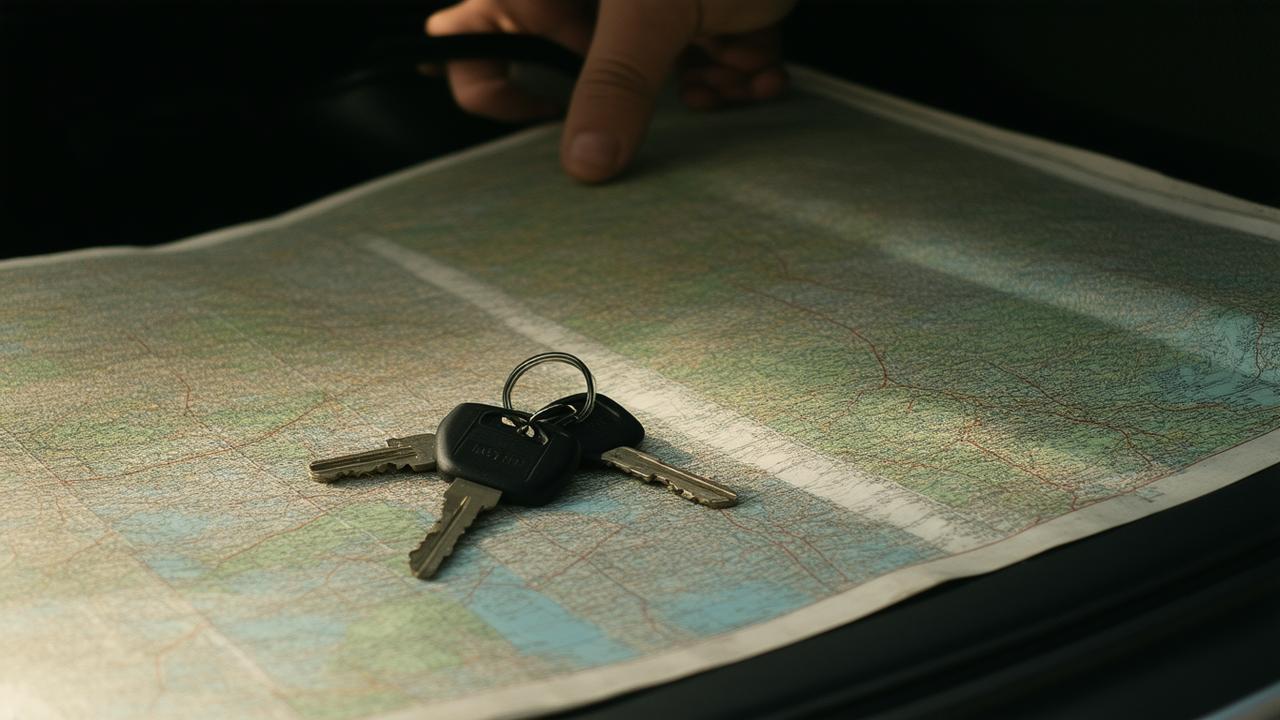
The highway hums like a low, steady song beneath the tires as the sun lifts itself over the horizon. A child’s voice rises from the backseat—“Are we there yet?”—followed by a burst of giggles. Coffee steams in a travel mug in the cupholder; the scent of it mingles with sunscreen, crumpled maps, and the faint trace of last summer’s beach sand still hiding in the car mats. The GPS is quietly insistent, but the real navigation is done by instinct and curiosity: that little turn-off you always wondered about, that lakeshore sign you’ve never followed. It’s early, the tank is full, the playlist is queued, and for the first time in a long while, the family holiday feels close enough to touch—no airport lines, no security bins, no frantic passport checks—just miles of possibility, unfolding one familiar stretch of road at a time.
The Quiet Return of the Road Trip
A few years ago, it seemed like the classic family road trip might be slipping into nostalgia, something we mostly remembered in grainy photos and half-told stories. Flights were cheaper, package deals shinier, and social media feeds were crammed with images from distant resorts and far-flung cities. But then the world stuttered, paused, and rearranged itself. Suddenly, the idea of packing the car and heading somewhere—anywhere—within a few hours began to feel not quaint, but essential.
Now, weekend road trips are quietly rebounding, not as a compromise, but as a deliberate choice. Families are seeking holidays closer to home because it makes emotional and financial sense. Instead of chasing distant bucket-list destinations, they’re rediscovering the small wonders tucked just beyond their own postcodes: a county forest they’ve never walked through, an old mill town turned arts district, a quiet bay where you can still hear the gulls over the engine noise of passing boats.
Part of this resurgence is purely practical. The cost of flights, hotels, and rental cars has climbed sharply; filling a fuel tank, while not cheap, often still undercuts the price of multiple plane tickets. But there’s more at play than a spreadsheet of expenses. The road trip offers something many families have been craving: time together that isn’t eaten up by logistics. The journey itself becomes part of the holiday—a chance to talk, to be bored together, to get lost a little and laugh a lot.
Why “Closer to Home” Now Feels Far Enough
There’s a subtle shift happening in how we define “getting away.” For years, escape was synonymous with distance—the farther you went, the more it counted. Yet in an era of tightening budgets and frayed attention spans, families are discovering that meaningful breaks don’t need to be measured in thousands of miles. They’re measured in the feel of a cool river on your ankles, the smell of pine needles at a trailhead, the mellow glow of a roadside diner sign after dark.
Staying closer to home has its own surprising magic. When you visit a town only an hour away, you’re still technically in your own region, but somehow the light feels different. The radio station changes; accents bend slightly; the bakery on the corner serves a kind of pastry you’ve never seen in your regular supermarket. That blend of near and new is part of the charm: you’re far enough to see the world with fresh eyes, but close enough that you can relax about what you forgot to pack.
There’s also a new appreciation for what’s been under our noses all along. Families who once spent holidays chasing far horizons are now wandering through local nature reserves, coastal roads, and small-town festivals. Kids who might have spent a flight glued to a tablet are now spotting kestrels on telephone wires or counting tractors in passing fields. The distance may be shorter, but the experience feels deeper, more tactile, more rooted.
The New Economy of the Weekend Escape
For many households, the maths are simple: a weekend road trip often costs a fraction of an overseas holiday. With inflation nibbling at grocery budgets and bills, families are thinking carefully about how and where they spend their leisure money. A couple of nights at a local guesthouse or campground, some picnic supplies, and a tank of fuel can add up to a complete, memory-rich holiday without the financial hangover.
There’s a different kind of luxury in knowing you can say “yes” to a spontaneous Friday-night decision: “Let’s drive to the lake tomorrow,” instead of, “Maybe next year, if we save enough.” Road trips put adventure back within reach, not as a grand, once-a-decade event, but as something that can happen several times a season.
The Senses of the Open Road
Part of what makes these revived road trips so powerful is how utterly sensory they are. Unlike the sealed, recycled air of an airplane cabin, driving lets you feel every transition in the landscape. As you roll out of the city, you might smell hot asphalt and diesel. Half an hour later, the air thins out; a hint of cut grass rides the wind through a cracked window. By midday, somewhere between one town and the next, the car fills with the buttery scent of hot chips in paper or the citrus flash of a peeled orange.
The sounds change too. The rising and falling of the engine, the whisper of tires over different road surfaces, the soft thud of bugs on the windshield. A child’s quiet humming mingles with a playlist that might jump from ’80s sing-alongs to modern indie folk. Someone taps fingers on the armrest in time with the music; someone else reads road signs in a dramatic voice just to get a laugh.
Visually, the journey is a slow-rolling film. Power lines bending away over golden fields. The brief, breathless plunge through a tunnel where everyone holds their breath until the light reappears. A ripple of water glimpsed through trees. The flash of a roadside fruit stand, handwritten sign wobbling in the breeze. These are not the spectacular, curated vistas of a brochure—they’re the unscripted scenes that lodge in your memory precisely because they’re so ordinary and yet, in the moment, feel extraordinary.
Small Towns, Big Stories
As weekend road trips return, so too does the spotlight on the places often bypassed at 70 miles an hour. Small towns, once just names on a green sign, are becoming destinations in their own right: a main street lined with brick storefronts, a café that roasts its own beans, a park with an improbably large wooden sculpture that kids can’t resist climbing.
Families are discovering that these communities are full of stories—talkative shopkeepers, local festivals, tiny museums curated with love rather than budgets. When money stays closer to home, it doesn’t just benefit travelers; it feeds local economies, keeping bookshops, bakeries, and family-run motels alive. The same town you’ve blown past a hundred times becomes a place your kids ask to return to because “that’s where we got the best ice cream,” or “that’s where the man with the accordion let me push the buttons.”
Making the Most of a Short Escape
For all their spontaneity, the most satisfying road trips blend just enough planning with plenty of room to wander. Think of them as loosely sketched stories rather than rigid itineraries. A rough circle on the map. A couple of must-visit spots. And in between, space to follow curiosity.
To keep things simple, many families are refining their weekend rhythm. Leave early on Saturday, return Sunday evening, or stretch the trip by slipping out on Friday after work. Pack light: a small cooler, a bag of snacks, a change of clothes, a few well-chosen games that don’t require a screen. The goal is to lower the threshold for “Let’s just go,” so the weekend escape feels easy rather than exhausting.
| Aspect | Flying Holiday | Weekend Road Trip |
|---|---|---|
| Typical Cost | High (flights, hotels, transfers) | Lower (fuel, local stays, picnics) |
| Travel Time vs. Holiday Time | Long check-ins and queues | Journey becomes part of the break |
| Flexibility | Fixed dates and strict schedules | Leave when you like, stop where you want |
| Connection | More time managing logistics | Shared playlists, conversations, silence |
| Local Impact | Money often flows to large operators | Supports small towns and local businesses |
Simple Rituals, Lasting Memories
What sets these short, close-to-home trips apart is how they weave themselves into family life. Instead of being a singular, distant event, they become a series of small rituals. The same roadside lookout where everyone piles out to stretch their legs. The gas station bakery where someone always chooses the biggest, stickiest pastry “for sharing” and then somehow eats most of it. The tradition of turning the music down just before arriving at your destination, rolling the windows down, and listening to the new place.
➡️ A quieter housing revolution is unfolding through passive cooling design and smarter shading systems
➡️ New long COVID clinics are reshaping how chronic illness is diagnosed and managed
➡️ Desalination plants are becoming central to water security plans despite energy concerns
➡️ New shark tracking data is changing safety planning at popular swimming beaches
➡️ A revival of handwritten learning is gaining momentum in schools wary of screen overload
➡️ Wildlife carers are warning of a tougher year as habitat loss meets extreme weather
➡️ A new generation of museum curators is revisiting repatriation and colonial collecting ethics
These repeated gestures give children a sense of continuity and belonging. They remember the curve of a particular road, the smell of a certain pine grove, the way the sky looks over a lake at dusk. And because the trips are shorter and more frequent, the pressure for everything to be perfect eases. If the weather turns or the motel is noisier than expected, there’s always next month, another route, another town.
Rediscovering the Art of Moving Slowly
At its heart, the rebound of weekend road trips is about more than saving money or avoiding airports. It’s about relearning the slow art of movement. On the road, you’re reminded that travel isn’t just about arrival; it’s about the in-between. The pause at a farm stand to buy cherries. The unplanned detour to chase the promise of a waterfall. The quiet, shared awe when a sunset pours molten light across the highway and everyone in the car falls silent for a few seconds.
For families who have felt stretched thin by schedules, screens, and constant news, these small escapes offer something gentle and grounding. A reminder that there are still places close by where you can watch dragonflies skimming over a pond, or stand on a bluff and feel the wind trying to take your hat, or hear your own footsteps on a forest path.
So the next time the week feels heavy and the horizon feels too far away, you don’t necessarily need a boarding pass. You might just need to throw a bag in the boot, twist the key in the ignition, and follow the hum of the road for an hour or two. Somewhere not too far from home, there’s a motel with flickering neon, a trail you’ve never walked, a diner that makes pancakes the size of your plate. The world doesn’t have to be distant to feel wide. Sometimes, all it takes is a weekend, a half tank of fuel, and a willingness to see the familiar with new eyes.
Frequently Asked Questions
Are weekend road trips really cheaper than traditional holidays?
In most cases, yes. You avoid the cost of flights, airport transfers, and often high-priced tourist hubs. While fuel and accommodation still add up, you can control spending more easily with choices like picnics, budget-friendly motels, camping, or day trips that don’t require overnight stays.
How far should we drive for a weekend trip?
For a two-day break, many families find a radius of 1–3 hours ideal. It’s far enough to feel different, but close enough that you don’t spend the whole weekend in the car. The sweet spot is when you arrive with energy left to explore, not just collapse.
What can we do to keep kids happy in the car?
Mix simple activities: audio stories, road-trip bingo, music they help choose, and screen time used sparingly. Frequent short stops—playgrounds, viewpoints, small parks—help break up the journey. Let children take part in navigation or choosing snack stops so they feel involved rather than confined.
Do we need a detailed itinerary?
Not necessarily. A loose plan with one or two key stops each day usually works best. Knowing where you’ll sleep and roughly where you’ll eat removes stress, while leaving space for detours keeps the trip feeling free and adventurous.
How can we make weekend road trips a regular habit?
Keep a small “go bag” ready with essentials, maintain the car in good condition, and create a shared list of nearby places everyone wants to visit. Aim for realistic, low-pressure escapes—once a month or once a season—so trips feel like part of your family rhythm instead of rare, high-stakes events.





