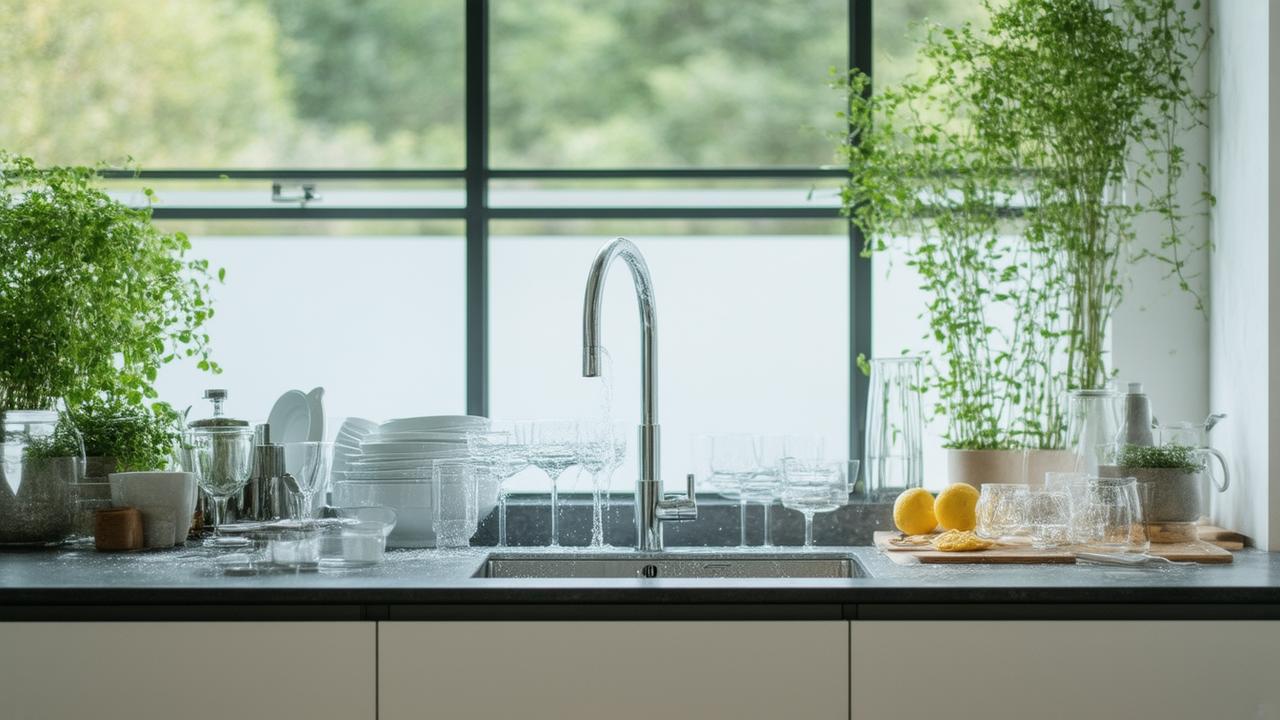
The steel dish rack has been sitting in your sink for so long it almost feels like part of the family. It creaks when you move it, snags the dishcloth, leaves those rusty-looking marks you keep scrubbing away. It hogs half the sink whenever you’re trying to rinse veggies, wash your hands after marinating chicken, or fill the kettle. And somehow, no matter how “organised” you try to be, it always looks cluttered — tea-stained mugs, plastic lunchbox lids, forks that disappear through the gaps. If your kitchen is the heart of your home, that dish rack in the sink is the slightly chaotic corner you try not to look at too closely.
The quiet revolution happening in Aussie kitchens
Across Australia, from breezy coastal units in Wollongong to worker’s cottages in Brisbane and micro-apartments tucked under rooftops in Melbourne, a quiet little revolution is happening — and it starts with saying goodbye to the traditional dish rack in the sink.
This isn’t another “buy 57 matching jars” kind of trend. It’s simpler and more practical than that. We’re talking about a shift in how we use the most hardworking square metre in the house: the space around the kitchen sink.
As more of us shrink our living footprint — whether by choice, rising rents, or a taste for minimalist living — we’ve realised the old wire dish rack isn’t pulling its weight. It takes up too much precious room, is tricky to clean, and never really looks tidy. So Australians are quietly swapping bulky racks for compact, clever, space‑saving drying solutions that tuck away, fold flat, or simply don’t exist in the way we’re used to.
The result? Benchtops that breathe. Sinks that feel open. Kitchens that seem fresher, lighter and surprisingly more sophisticated — without a single renovation.
The problem with the dish rack we grew up with
Think about how often the sink area becomes the bottleneck of your day. You’re trying to get brekkie moving, pack the kids’ lunch, rinse fruit, fill drink bottles, and there it is: a hulking metal frame draped in tea towels and half-dry plastic containers from last night. The water underneath smells faintly like yesterday’s sponge. The cutlery holder is suspiciously grim. The whole thing is, if we’re honest, a bit gross.
Traditional dish racks have a few problems that make them poor roommates in modern Australian kitchens:
- They eat bench and sink space. In smaller apartments or older Queenslanders with narrow benches, a rack can dominate your whole prep area.
- They trap grime, soap scum and food bits. All those corners and wires? Perfect for buildup, not so great for hygiene.
- They never quite look “tidy”. Even when stacked neatly, a full rack just reads as visual clutter.
- They’re always there. Even when you’re not washing up, they stare back, half‑empty, giving the kitchen that “mid-chore” feel.
Meanwhile, you might be working with a single sink and no draining board, or a tiny island bench that has to do triple duty as prep space, eating spot and homework desk. Every centimetre matters. So, if the old dish rack is cramping your style, it might be time to retire it gracefully.
Meet the new wave of space‑saving drying solutions
Instead of one big, clunky rack that lives permanently by the sink, Aussies are shifting to flexible systems that appear when you need them and disappear when you don’t. It’s a bit like moving from a landline to a mobile — once you’ve made the switch, you’ll wonder why you waited so long.
Roll‑up over‑sink mats: the hero you can’t see
One of the biggest game‑changers is the roll‑up over‑sink drying mat. Picture a set of sturdy silicone‑tipped rods that stretch across your sink like a low bridge. Plates stand neatly, glasses rest securely, and water drips directly into the sink — not all over your benchtop.
When you’re finished, you just roll it up like a picnic rug and tuck it into a drawer or stand it vertically beside the fridge. No rust stains, no visual clutter, no bulky frame constantly underfoot.
They’re especially handy in Aussie homes where the sink is the only truly “wet” zone. In a compact Sydney apartment with barely a sliver of bench space, being able to dry dishes over the sink instead of beside it can feel like doubling your kitchen.
Wall‑mounted and fold‑down racks: drying that disappears
In old inner‑city terraces or small rentals where bench space is non‑negotiable, wall‑mounted or fold‑down racks are quietly changing the game. These slim frames sit above your sink or bench. Flip them down when you’ve got a load of dishes, then fold them flat against the wall once everything is dry.
They give you the function of a full rack without living in your direct line of sight. You gain back the benchtop, keep the sink clear and reduce that constant mess-in-progress feeling. And because they drain directly into the sink, no puddles creep across the timber or laminate.
Integrated draining boards and micro‑mats
For many Australians, especially renters, replacing the whole sink isn’t an option. But there are small, clever tools that mimic integrated draining boards without needing a plumber.
Think slim, angled drying mats that sit flush against the sink, channelling water back in instead of letting it pool. Some are rigid; others are made from fast‑drying silicone or microfibre. They don’t look like “a rack” at all — just a neat little landing pad for wet glasses and knives.
When they’re not in use, they hang on a hook or slide into a drawer. That simple act of putting them away signals something powerful: the washing‑up is done, the kitchen is reset, the day can move on.
How this trend changes the feel of your whole kitchen
It might sound dramatic, but removing the permanent dish rack can change how your kitchen feels on a daily basis. Not just in terms of space, but in how calm and orderly everything seems the moment you walk in.
Imagine coming home on a humid Brisbane evening. You open the door and instead of being greeted by a pile of half‑dry plates slumped over a wire jungle, you see a clear bench, an empty sink, and perhaps a single tea towel drying quietly on the oven handle. The room feels instantly lighter, as if someone’s already done the hard work of tidying — even if the dishwasher’s still humming away or a few glasses are drip‑drying over the sink on a roll‑up mat.
Freeing the sink area has some unexpected ripple effects:
- You gain prep space. Suddenly, there’s room to chop veggies, roll out pastry or set up school lunches without working around a metal obstacle course.
- Cleaning becomes easier. Fewer corners and metal spokes mean fewer places for mould, crumbs and that mysterious brown line to hide.
- The kitchen looks “finished”. Without a permanent pile of dishes on display, your kitchen feels more like a calm space than a never‑ending task list.
- You’re more intentional about washing up. If drying solutions appear only when needed, you’re more likely to do a quick wash‑dry‑away cycle and reset.
Simple ways to ditch the rack without making life harder
You don’t need to renovate or invest in custom joinery to get in on this trend. You can start small, with a few tiny tweaks and one or two smart tools.
1. Downsize your daily dishes
Most Aussie households use the same 4–6 plates and cups every day. The rest just loiter in the cupboard “in case” you have ten people over for dinner next Tuesday. By trimming your daily rotation and keeping only what you actually use within easy reach, you’ll have fewer dishes in circulation — and less to dry at any one time.
2. Choose a flexible drying combo
Instead of one big rack, consider a simple combination:
➡️ Place your jade plant in this exact spot: the simple Feng Shui positioning trick said to boost wealth, harmony and lasting happiness at home
➡️ People in their 60s and 70s were right all along: 7 life lessons we’re only now beginning to understand and appreciate
➡️ Put A Lemon Slice In Your Cold Oven : Why People Are Doing It And When It Actually Helps
➡️ Plumbers reveal the half-cup household trick that clears blocked drains fast Plumbers reveal the half-cup household trick that clears blocked drains fast: without vinegar, baking soda or harsh chemicalswithout vinegar, baking soda or harsh chemicals
➡️ Psychology explains why overthinking at night is closely linked to the brain processing unresolved emotions
➡️ People who feel productive but achieve little often follow this pattern
➡️ People who follow this evening habit wake up feeling more rested
- One roll‑up over‑sink drying mat.
- One small drying mat or microfibre pad for delicate items.
- A hook or cupboard handle to hang a single tea towel.
This setup covers most Aussie kitchens, from couples in a Perth apartment to a family of four in suburban Adelaide. It adapts to busy nights and lazy weekends without permanently crowding your sink.
3. Use your dishwasher as a hidden drying rack
For homes with a dishwasher, here’s a little trick: treat it as a drying zone, even when you wash some things by hand. Rinse and pop items straight into the dishwasher to air‑dry behind closed doors. Suddenly, you don’t need a big, visible rack dominating the room.
4. Create a “reset ritual”
The power of this trend really kicks in when you adopt a simple nightly routine. After dinner, wash or load the dishwasher, lay out your roll‑up mat, and dry the quick stuff — kids’ lunch containers, chopping boards, coffee cups. Before bed, roll the mat away, hang the tea towel, and leave the sink area completely clear.
It sounds small, but waking up to an uncluttered bench can nudge the whole day in a calmer direction. Your morning coffee feels less like a pit stop in a mess and more like a quiet moment in a space that’s looking after you.
A quick comparison of drying options for Aussie homes
Here’s a simple look at how different drying setups stack up when you’re trying to keep things neat, tidy and clutter‑free:
| Drying Option | Best For | Space Impact | Clutter Factor |
|---|---|---|---|
| Traditional sink dish rack | Large families who hand‑wash most items | High – permanently occupies sink or bench | High – visible pile of dishes most of the time |
| Roll‑up over‑sink mat | Small to medium households, apartments | Very low – stores in a drawer | Low – only out when in use |
| Fold‑down wall rack | Kitchens with very limited bench space | Low – folds flat against wall | Medium – visible, but not bulky |
| Drying mat + tea towel | Minimalist setups, dishwashers users | Very low – both can be hung or stored | Very low – looks tidy, easy to hide |
| Dishwasher as drying zone | Households with built‑in dishwasher | Zero – all drying hidden inside | Very low – no visible dishes |
Why this small change feels so big
On paper, switching from a bulky dish rack to slim, stow‑away drying tools sounds like a tiny tweak. But in daily life, it often feels like lifting a visual weight from your kitchen. The sink stops being a parking lot for half‑clean crockery and becomes what it was always meant to be: a clear, functional space that flexes with whatever you’re doing.
In a country where so much of life flows through the kitchen — kids rifling through the fridge after school, friends leaning on the island with a glass of wine, Sunday morning pancakes with the cricket murmuring in the background — reclaiming that bit of order can be quietly powerful.
Saying goodbye to the dish rack in the sink isn’t about chasing perfection or turning your home into a showroom. It’s about making your everyday routines less cramped, less cluttered and a lot more enjoyable. A simple shift in how you dry your dishes can give your kitchen that open, calm, “I’ve got this” feeling — even on the busiest weeknight.
So the next time you’re elbow‑deep in suds, glance at that old rack and imagine the space it’s guarding. Picture a clear sink, an open bench, a kitchen that breathes. You might find it’s time to let the old habit go and welcome in a quieter, smarter way to keep things neat, tidy and beautifully clutter‑free.
FAQ
Will a roll‑up over‑sink mat hold heavy pots and pans?
Most good‑quality mats are designed to hold a fair bit of weight, including saucepans and frypans, but always check the weight rating and make sure both sides rest firmly on the benchtop, not just the sink edge.
What if I rent and can’t drill into walls?
You can still ditch the rack by using roll‑up mats, drying mats and your dishwasher as a drying zone. If you want a wall option, look for adhesive hooks or tension rods designed to be removable without damaging tiles.
Won’t I just end up leaving the new mat out all the time?
Possibly at first, but if you build a quick nightly “reset” habit — wash, dry, roll away — it quickly becomes second nature. Because the mat is easy to store, putting it away takes only a few seconds.
Is air‑drying on a mat as hygienic as a traditional rack?
Yes, and often more so, because mats and roll‑up racks are easy to clean and fully dry between uses. Traditional racks can trap grime in hidden corners if they’re not scrubbed regularly.
How do I choose the right space‑saving solution for my kitchen?
Look at your sink size, whether you have a dishwasher, and how many people live in your home. Smaller households often do well with a roll‑up mat plus a drying towel, while larger families might add a fold‑down rack or use the dishwasher as the main drying zone.





