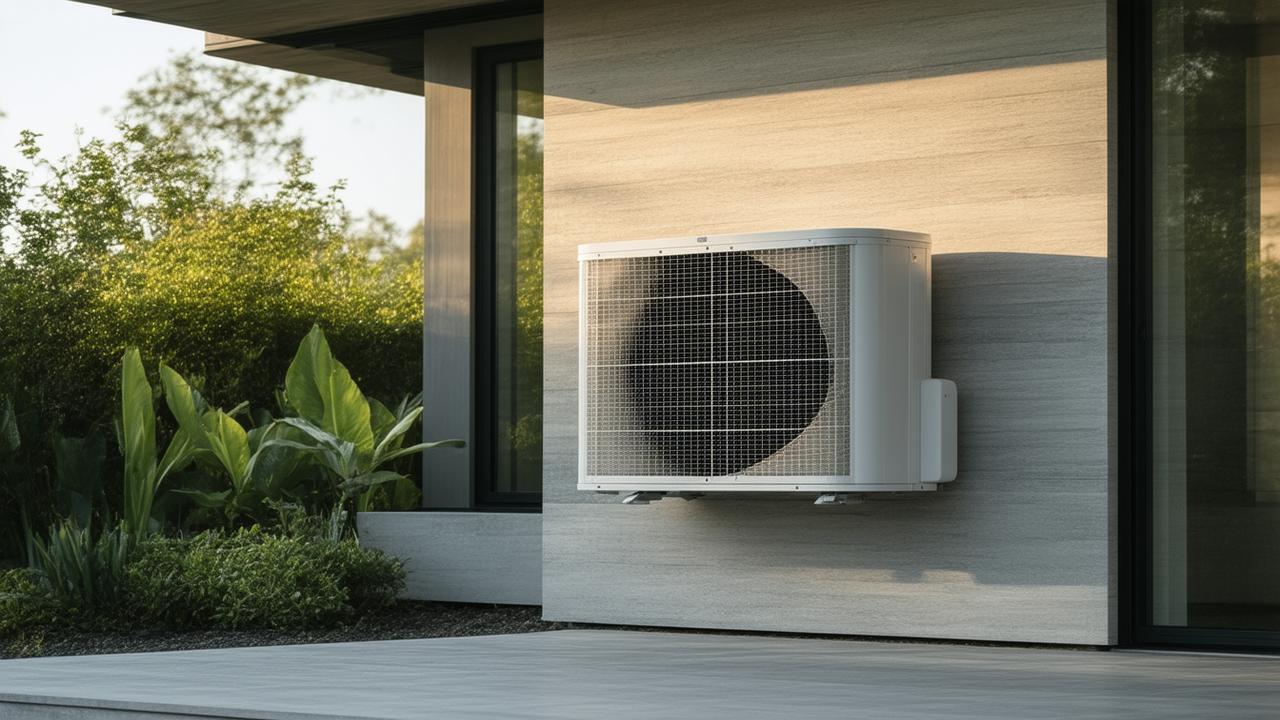
The heat came early that year. By September, the bitumen in western Sydney was already soft underfoot, kookaburras were silent in the shimmering air, and the cicadas screamed through the afternoons like tiny chainsaws. Ella stood at her kitchen window, watching the light bend above the neighbour’s corrugated roof, one hand resting on the air conditioner remote, the other hovering over the power bill stuck to the fridge with a fading magnetic koala. She knew how this story went: cool relief now, financial sting later. But that spring, something different arrived – a slim, almost unassuming cooling unit that promised the impossible: to out‑cool her air con, while sipping just a fraction of the energy.
A New Kind of Cool
The first time Ella switched the prototype on, the sensation was subtle. No roaring compressor, no surge of electricity that made the house lights dip for a heartbeat. Just a faint hum, like a fridge on a good day, and then… the air began to change.
It wasn’t that artificial chill most of us know – the kind that leaves your skin cold but your head strangely stuffy. This felt more like standing in the shade of a big river red gum on a blinding January afternoon. The sun still blazed outside, but inside, the air softened, the heaviness lifted, and her shoulders finally unclenched.
Across Australia, from high‑rise apartments in Brisbane to farmhouses outside Mildura, this same quiet moment is starting to play out. A breakthrough cooling device – part science fiction, part elegant physics – is beginning to slip into homes and businesses, whispering a different future into our hot, restless summers.
The Science Trick Hiding in Plain Sight
To understand why this new device is such a big deal, it helps to picture a familiar scene: a cold drink on a stinking hot day. As the ice melts and the glass sweats, the liquid on the outside slowly disappears into the air. That disappearing act is evaporation – and it takes heat with it.
Traditional evaporative coolers use this principle, but they struggle in humid conditions and often just make hot days feel clammy and damp. Air conditioners, on the other hand, use a powerful refrigerant loop and compressors to punch heat out of your home. They work brilliantly – but at a high cost to your power bill and, increasingly, to the climate.
The new wave of Australian‑designed cooling devices blends these worlds in a smarter way. Instead of relying on brute‑force compressors, they use advanced materials and membranes to pull heat out of the air while carefully managing moisture. Some are built around “indirect evaporative cooling”, where water cools a separate air stream that never actually touches the moisture. Others use ultra‑thin, nano‑engineered surfaces that radiate heat straight into the cold of outer space – a phenomenon called radiative cooling that sounds wild, but is as real as the stars above Uluru.
What makes them revolutionary isn’t just the science. It’s the fact that they can outperform conventional air conditioning on the days Australians dread the most – 40°C scorcher, no sea breeze in sight – while using dramatically less power.
The Moment the Numbers Start to Matter
Storytelling aside, household decisions in Australia often come down to the numbers. We all know that sinking feeling when the summer power bill hits. So what does this new tech actually look like on paper?
| Cooling Option | Typical Energy Use | Comfort on 40°C Day | Best Suited To |
|---|---|---|---|
| Traditional Split‑System AC | 100% (baseline) | Strong cooling, sealed rooms | Any climate, but high running cost |
| Portable AC | Up to 120% of baseline | Patchy, noisy, less efficient | Renters, short‑term use |
| Standard Evaporative Cooler | 30–40% of baseline | Good in dry heat, poor in humidity | Dry inland regions |
| New Breakthrough Device | 15–40% of baseline (model‑dependent) | High comfort, even in mixed climates | Most Australian homes, solar‑friendly |
Those numbers hide an even bigger story. Because they use less power per hour, these devices can often run entirely off a modest rooftop solar system during the day. For a Perth family with a 6.6 kW array, that might mean keeping the whole living area cool through a February heatwave without touching grid power. For someone in regional NSW on a tight budget, it can mean choosing comfort without choosing between cooling and groceries.
The Sound of a Different Summer
There’s another small, almost invisible delight in this technology: the way it changes the soundscape of summer. Traditional air conditioners add a constant mechanical undertone to hot evenings – compressors kicking in, fans whining, louvers rattling. In dense suburbs, that hum becomes part of the background noise of January.
The new cooling devices, with their simpler internal mechanics, run far quieter. At night, that means you can actually hear the rustle of a breeze or the distant call of a boobook owl over the soft murmur of your unit. It’s a small, sensory shift, but it makes summer feel less like hiding from the heat inside a machine, and more like living comfortably alongside it.
Built for an Australian Kind of Heat
Australia doesn’t have one climate; it has a patchwork. The wet, heavy nights of Darwin, the bone‑dry blast of a Broken Hill afternoon, the sticky, still air in a Brisbane rental with no cross‑ventilation. Any technology that claims to be a breakthrough here has to deal with all of that.
What makes this new generation of coolers especially promising is how adaptable they are. In dry inland regions, they lean more on high‑efficiency evaporative processes, harnessing the thirsty air to strip away heat with minimal water use. On the coast and in the tropics, they adjust their mode, using smart control systems to balance dehumidification and cooling so that rooms don’t just get colder – they feel less oppressive.
Many units are being designed from the ground up with Australian housing in mind: double‑brick Perth homes, fibro shacks, weatherboard Queenslanders, and tightly sealed new builds chasing energy‑efficiency ratings. They’re compact enough for townhouses and apartments, robust enough for dust and heat in the outback, and flexible enough to marry into existing ducting or stand alone in a granny flat.
Just as importantly, they’re being tested against our new climate reality. Not the summers our grandparents remember – but the ones we’re actually dealing with now: longer heatwaves, higher night‑time temperatures, bushfire smoke days when you can’t just throw open the windows and hope for a breeze.
Energy Bills, Climate Guilt, and the Quiet Relief of Choice
If you’ve ever hovered over the “cool” setting feeling half‑guilty, half‑desperate, you’re not alone. There’s a strange tension in modern Australian life: we’re acutely aware that blasting cold air all summer drives emissions, yet we also live in a country where heatwaves kill more people than any other natural disaster.
This is where the new cooling tech feels like more than a gadget – it feels like a reprieve. By slashing energy use, it cuts both household bills and the carbon footprint of staying safe. You don’t have to choose between comfort and conscience in the same way.
For renters, there’s an extra layer of hope. Portable and semi‑portable versions of these devices are emerging that don’t need a landlord’s blessing to install. Roll them in, plug them into a standard power point, and suddenly that stuffy top‑floor unit in Adelaide or Melbourne isn’t a sweltering box in January anymore.
What It Feels Like to Live With One
So what changes, day to day, when a house makes the switch?
Mornings start differently. Instead of pre‑cooling your home aggressively before the sun hits, you can let the house warm a little and then set the device to maintain a steady temperature. Because it’s using less power and working with the physics of heat transfer rather than against it, it doesn’t need that frantic early sprint.
Afternoons are calmer. On a 38°C day in western Melbourne, the living room might sit at a comfortable 24–26°C – not freezer‑aisle cold, but pleasantly cool, the sort of temperature where kids still sprawl on the rug, the dog sighs and flops by the glass door, and you can think clearly enough to work from home without melting onto your keyboard.
At night, instead of cycling on and off with a thump, the unit hums along gently, keeping the bedroom bearable while you sleep. Paired with ceiling fans, it creates a wash of air that feels almost coastal, even if the nearest ocean is several hundred kilometres away.
➡️ Place your jade plant in this exact spot: the simple Feng Shui positioning trick said to boost wealth, harmony and lasting happiness at home
➡️ People in their 60s and 70s were right all along: 7 life lessons we’re only now beginning to understand and appreciate
➡️ Put A Lemon Slice In Your Cold Oven : Why People Are Doing It And When It Actually Helps
➡️ Plumbers reveal the half-cup household trick that clears blocked drains fast Plumbers reveal the half-cup household trick that clears blocked drains fast: without vinegar, baking soda or harsh chemicalswithout vinegar, baking soda or harsh chemicals
➡️ Psychology explains why overthinking at night is closely linked to the brain processing unresolved emotions
➡️ People who feel productive but achieve little often follow this pattern
➡️ People who follow this evening habit wake up feeling more rested
And perhaps the sharpest difference arrives when the quarterly bill comes in. For many households, the shift is stark: far smaller spikes in summer, more predictable costs, and fewer “we need to talk about this bill” conversations around the kitchen table.
From Curiosity to New Normal
In the early days, these devices were the kind of thing you’d see in a tech segment on late‑night TV or in a sustainability expo stall. But as the technology matures and prices slide closer to standard air conditioners, we’re moving quietly towards a tipping point: the moment when “What sort of air con should we get?” turns into “Why wouldn’t we choose the one that uses less power?”
Tradies are already starting to talk about them on job sites. Architects are sketching them into plans for passively cooled homes, pairing them with insulation, shading, and smart window design. Councils and community housing providers are running pilots to see how they perform in social housing during prolonged heat events.
For all the cutting‑edge science, there’s something deeply ordinary – in the best way – about their promise: a living room where a toddler can nap safely on a 41°C afternoon, an aged‑care resident who doesn’t dread summer, a student in a share house who can study without a wet towel draped around their neck.
Looking Ahead: Cooling That Belongs Here
Australia has a habit of importing solutions built for other climates, then trying to make them work here. The new generation of efficient cooling flips that script. It’s built for our skies, our dry inland winds, our humid coasts, our patchwork suburbs of brick, tin, and timber.
There’s still work to do – on affordability, on upskilling installers, on ensuring remote communities and low‑income households aren’t left behind. But the direction is clear: cooling that doesn’t cost the earth to run, that partners beautifully with rooftop solar, and that lets us face a heating climate without simply cranking up the machines and hoping for the best.
Back in Ella’s kitchen, another summer is just beginning. Outside, the air already shimmers above the asphalt. She taps the control once, hears that almost‑inaudible hum, and watches the digital display settle on a comfortable, unremarkable number. The cicadas still scream, the sky is still hard and blue, but inside, the heat has lost its power to bully the day.
For a country that has always measured its life in seasons of searing light and dust‑dry wind, that might be the quietest, most radical change of all.
Frequently Asked Questions
Do these new cooling devices completely replace traditional air conditioning?
In many Australian homes they can, especially when combined with good insulation, shading, and ceiling fans. Some households still choose to keep a small conventional system as backup for extreme heatwaves or specific rooms, but the new devices can handle the bulk of everyday cooling.
Are they suitable for humid areas like coastal Queensland or the Top End?
Yes, newer designs are built to handle humidity better than standard evaporative coolers. They use indirect evaporative and advanced heat‑exchange methods to cool without pumping excess moisture into the room. Performance can vary by model, so it’s important to choose units specifically rated for humid climates.
How much can I realistically save on my power bill?
Savings depend on how much you currently use air conditioning, your local tariffs, and your home’s efficiency. Many households can expect summer cooling costs to drop by 40–70% compared with relying solely on traditional split‑systems, especially when paired with rooftop solar.
Do these systems require a lot of maintenance?
Maintenance is generally simpler than for conventional air conditioners. Most units need periodic filter cleaning or replacement, occasional inspection of water components (if used), and a basic annual check‑up. There are no large refrigerant gas top‑ups or heavy compressor servicing in many designs.
Can renters use this technology without making permanent changes?
Yes. Several models are designed as portable or semi‑portable units that plug into standard power points and use minimal or reversible installation. They’re well suited to apartments and rentals where you can’t install a fixed split‑system, but still want efficient cooling.





