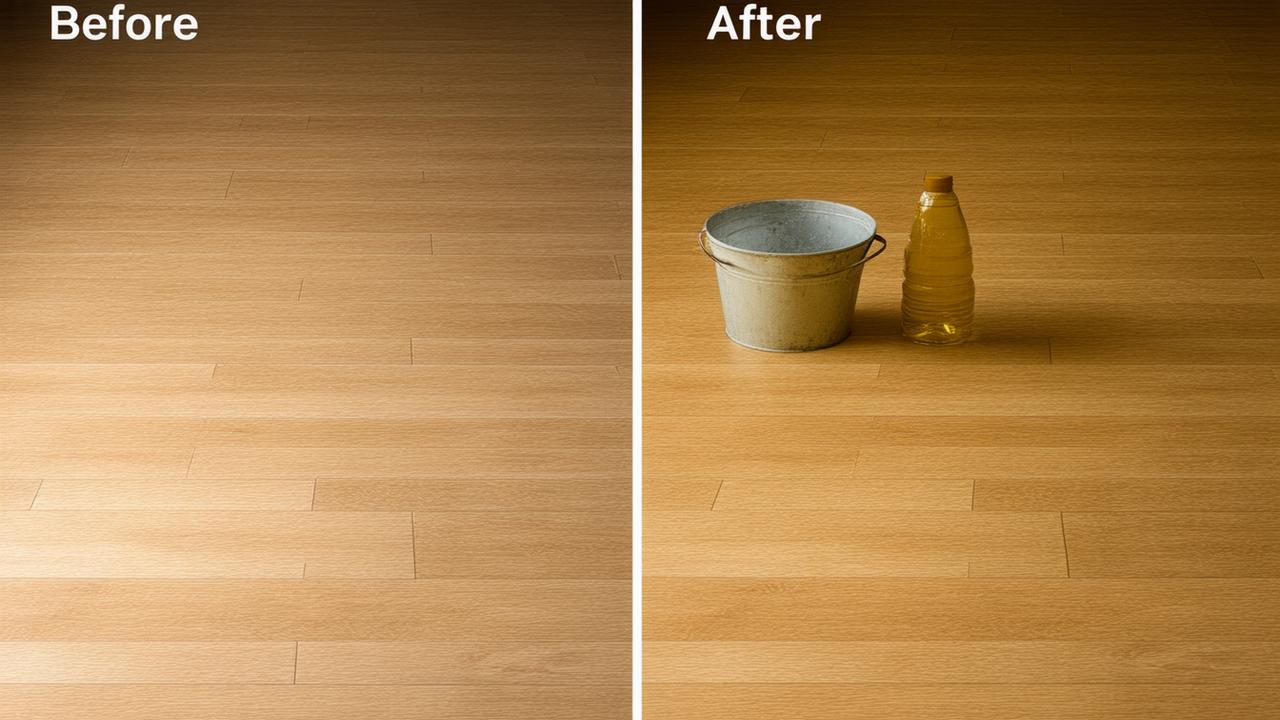
The first time I smelled it again, I was standing in a quiet weatherboard in regional Victoria, late afternoon light spilling across bare timber floors. A cool breeze nudged the flyscreen, carrying the scent that stopped me in my tracks: a soft tang of vinegar, the warm sweetness of soap, a whisper of citrus. It was like walking straight back into my grandmother’s kitchen on a Saturday morning, my bare feet on boards that always seemed to glow, no matter how many muddy boots passed through.
We spend a lot these days chasing “miracle” products: neon bottles, scientific names, promises of instant shine. But the floors in those old Queenslanders, fibro beach shacks and red‑dust farmhouses across Australia didn’t sparkle because of fancy labels. They shone because of something far simpler, mixed in enamel buckets and ice‑cream containers, passed from nonna to nanna to mum: a humble little blend that made hard floors gleam and last, decade after decade.
The Quiet Magic of an Old Australian Kitchen
If you grew up here, you might remember that particular ritual. The kettle would rattle, the mop head would soak, and there, on the bench, sat a chipped jug or old jar of “the mix”. The ingredients were never written down. They lived in gestures.
“A good splash of this.”
“A small glug of that.”
“Just a drop of the oil, love, or you’ll slide right out the door.”
The house would fill with the earthy scent of wet timber and soap as crickets chirped outside and a kookaburra laughed somewhere in the distance. The floor felt different when it dried—clean, but not squeaky. There was a faint sheen, the kind that caught the morning sun and made the whole room seem bigger, calmer, settled.
That old mix worked across states and seasons: in sticky Darwin humidity, dry Adelaide heat, coastal salt air along the New South Wales South Coast. It didn’t just clean; it honoured the surface beneath. It respected old jarrah, baltic pine, polished concrete, even tired lino in Housing Commission kitchens. And like all the best things, it was cheap, simple and forgiving.
The Grandmother’s Mix: Simple, Honest, Proven
Different families had their own spin, but across Australia, the same backbone kept appearing. When you strip away the brand names and bright packaging, the classic grandmother’s floor mix usually comes down to four workhorse ingredients you can still find in any supermarket aisle.
The Core Recipe (for 1 standard bucket)
Here’s the kind of version you’d find scribbled on the back of an old recipe card tucked behind the phone book:
- 1 bucket of warm water (about 8–10 litres)
- 1/4 cup white vinegar
- 1–2 teaspoons mild dishwashing liquid or pure soap flakes
- 5–10 drops eucalyptus or lemon essential oil (optional, but very “Nan”)
That’s it. No fluorescent colours, no foam party, no mystery chemicals. Just a few pantry staples that work together the way good neighbours do.
Why it works so well:
- Vinegar gently cuts through grime, neutralises odours and helps prevent streaks.
- Dish soap or soap flakes lift off dirt, food splatters and the oily film that builds up from daily life.
- Essential oil adds that unmistakably Australian freshness and a mild antibacterial boost—eucalyptus especially feels like open windows and bushland after rain.
The genius isn’t just in ingredients, though. It’s in proportion. The mix is diluted enough not to strip finishes or leave sticky residue. It’s strong enough to deal with red dust, beach sand, paw prints and kids’ footprints from the backyard sprinkler.
How to Use It: The Easy, No‑Stress Routine
What makes this method so suited to Australian life is how little fuss it requires. There’s something deeply comforting about knowing your floors can look loved without a lot of drama—especially when your week is already packed with work, kids’ sport, and trying to remember whether the bin goes out this Tuesday or next.
Step‑by‑Step: The Grandmother’s Way
- Start dry. Sweep, vacuum or use a microfibre dust mop. Australian floors collect everything from red soil to beach sand and gum leaves; removing that first protects your finish.
- Mix your bucket. Fill with warm (not hot) water, add the vinegar and soap, then the essential oil if using. Give it a gentle stir—no need for frothy bubbles.
- Wring the mop almost dry. This is the secret. Old Australian homes often had timber that didn’t like being soaked. You want the mop damp, not dripping.
- Work in sections. Start furthest from the door and move backward. Slow, even strokes. You’re not scrubbing a shearing shed floor after a cyclone—just guiding the mix over the surface.
- Let air do the rest. Open a window, crack the back door. Let that dry, clean smell drift through the house as the floor quietly comes up to a soft shine.
Once the floor dries, you’ll notice something subtle: it doesn’t scream with high‑gloss plastic glare. Instead, it glows. The wood grain shows through, tiles look clearer, even old vinyl seems less tired. It’s the look of clean that doesn’t try too hard.
Timber, Tiles, Vinyl: Adapting the Old Mix to Modern Floors
Australian homes are a patchwork of surfaces. A single house might have hardwood boards in the hallway, tiles in the kitchen, hybrid planks in the living room and cheap vinyl in the laundry. One of the strengths of this decades‑proven mix is how easily you can tweak it for each surface.
| Floor Type | How to Use the Mix | Extra Tips |
|---|---|---|
| Sealed timber / engineered boards | Use the standard mix, mop only with a well‑wrung mop. | Avoid puddles; go with the grain; dry patches with a soft towel if your climate is very humid. |
| Tiles (ceramic or porcelain) | Use the standard mix; you can add a touch more vinegar for soap‑scum areas. | Use a microfibre mop to reduce streaks; focus on grout lines with a soft brush occasionally. |
| Vinyl / lino | Use standard mix but keep vinegar to 2 tablespoons to protect finish. | Avoid very hot water; don’t oversaturate seams or edges. |
| Polished concrete | Standard mix works well; use 1 teaspoon soap instead of 2 to avoid film. | Use a flat mop; rinse the mop head frequently for a streak‑free finish. |
Family stories from across the country echo the same experience. A grandmother in Perth using the mix on cool concrete floors that kept the house bearable through 40‑degree summers. A nonna in Melbourne polishing old Baltic pine until it looked like honey. A nan from a Gold Coast high‑rise, adapting the old formula to new tiles but insisting, “We still do it properly, love.”
Why This Mix Has Outlived Dozens of Cleaning Fads
Every year, a new “revolutionary” floor cleaner pops up on Australian shelves. They promise UV gloss, instant dry, bacteria annihilation and usually come with an eye‑watering price tag. Yet those old recipes still sit folded inside cookbooks, whispered over cups of tea in regional towns and suburban units. Why?
It’s Not Just About Clean—It’s About Trust
This mix has survived decades because it earns quiet trust:
- It’s predictable. You know exactly what’s in it. No weird residue, no surprise reaction with your finish.
- It’s gentle on surfaces. Used correctly, it won’t strip sealers or roughen timber, which is crucial in harsh Australian conditions where sun and dry air already do enough damage.
- It’s child and pet friendly. Once dry, you’re not worrying about toddlers crawling on harsh chemicals or dogs licking their paws after padding across the kitchen.
- It respects budgets. In a country where the cost of living is front of mind for most households, needing only cents per bucket instead of dollars per bottle matters.
There’s another layer, too: rhythm. The act of filling the bucket, wringing the mop, tracing slow paths across the floor has its own quiet therapy. In a world of “quick wipes” and disposable pads, taking twenty minutes to reset the house with something simple feels almost rebellious.
Adding a Personal Touch: Regional Twists and Little Secrets
Ask ten Australian grandmothers about their floor mix and you’ll get the same bones with a handful of local colours.
- In parts of Queensland, eucalyptus oil is non‑negotiable. “Keeps the midges guessing,” one 82‑year‑old joked, tipping in an extra drop or two.
- Along salty coasts, some add a teaspoon more vinegar now and then to cut the faint film left by sea air drifting in open windows.
- On sheep and cattle properties, it’s all about getting rid of that blend of dust and dung—so the bucket might be refilled halfway through to keep the water fresh.
- In tiny inner‑city flats, the same mix is used more sparingly, applied with a spray bottle and microfibre pad instead of a big string mop, to suit smaller spaces and hybrid floors.
You’re allowed to make it your own. Want a touch of lavender oil instead of eucalyptus? Go for it. Prefer pure soap flakes over dish soap? Your floors will likely thank you. The secret isn’t to copy a single exact formula, but to stay loyal to the same philosophy: keep it simple, dilute it well, and treat the floor like you plan to live with it for a very long time.
➡️ Place your jade plant in this exact spot: the simple Feng Shui positioning trick said to boost wealth, harmony and lasting happiness at home
➡️ People in their 60s and 70s were right all along: 7 life lessons we’re only now beginning to understand and appreciate
➡️ Put A Lemon Slice In Your Cold Oven : Why People Are Doing It And When It Actually Helps
➡️ Plumbers reveal the half-cup household trick that clears blocked drains fast Plumbers reveal the half-cup household trick that clears blocked drains fast: without vinegar, baking soda or harsh chemicalswithout vinegar, baking soda or harsh chemicals
➡️ Psychology explains why overthinking at night is closely linked to the brain processing unresolved emotions
➡️ People who feel productive but achieve little often follow this pattern
➡️ People who follow this evening habit wake up feeling more rested
Letting the House Breathe Again
There’s a moment—usually once the floor has fully dried and the last of the afternoon light is sliding across the boards—when you truly see the difference. The house feels quieter. The scuffs can stay, the dents and grooves still tell their story, but the surface glows like it’s been exhaling.
Maybe it reminds you of heading in from the Hills Hoist after school, the kitchen radio playing footy commentary or talkback, the faint squeak of a mop bucket wheel on lino. Maybe you grew up with tiles and ceiling fans in the Top End, where cool, clean floors made the whole house feel a few degrees kinder. Or maybe you’re just now discovering that you don’t need half a cupboard of products to feel proud of your home.
That old mix isn’t glamorous. It doesn’t come with a social media campaign or a limited‑edition scent. But it’s woven quietly through Australian life: through rental inspections, first homes, newborn babies napping on play mats, dogs flopped belly‑down on cool tiles. It’s the sort of simple, sensible wisdom that outlives the trends, the same way a good verandah or a sturdy clothesline does.
Next time you’re standing in the cleaning aisle, surrounded by shiny claims and long ingredient lists, you might remember that chipped enamel bucket and the faint smell of vinegar and eucalyptus drifting through a sunlit kitchen. And you might decide that, just this once, you’ll do it the old way—the easy way that’s been proving itself on Australian floors for generations.
Frequently Asked Questions
Is the grandmother’s mix safe for all timber floors?
It’s generally safe for sealed or finished timber when you use a well‑wrung mop and don’t let water pool. Avoid it on raw, unsealed wood and always follow any care advice from your floor installer or product manufacturer.
Will vinegar damage my floors over time?
In the small amounts used in this mix and heavily diluted with water, vinegar is unlikely to cause harm to most sealed floors. Problems usually come from using it straight or in very strong solutions. If you’re concerned, halve the vinegar and test a small, out‑of‑the‑way area first.
Can I use this mix with a spray mop?
Yes. Mix it in a separate jug, then pour into the spray mop bottle. Use a lighter concentration (for example, 2 tablespoons vinegar and 1 teaspoon soap per litre) to reduce any chance of residue or clogging the sprayer.
How often should I wash my floors with this mix?
For most Australian homes, once a week or once a fortnight works well, with light sweeping or vacuuming in between. High‑traffic areas such as kitchens and hallways might benefit from more frequent mopping.
What if I prefer a stronger scent than eucalyptus or lemon?
You can use other essential oils like lavender, orange or tea tree, but keep the total drops low (around 5–10 per bucket). Strong oils and large quantities are unnecessary and may irritate sensitive skin or pets.
Can this mix replace commercial disinfectants?
It’s excellent for regular cleaning and freshening, but it’s not a hospital‑grade disinfectant. For situations requiring strict disinfection (after illness, for example), use appropriate products as directed, then return to the grandmother’s mix for everyday care.
Does this work on sticky, built‑up cleaner residue?
Often, yes. Over time, the diluted vinegar and gentle soap can help lift old product build‑up, especially on tiles and vinyl. You may need a couple of mops and a bit of extra elbow grease the first time, but many people find their floors feel less tacky and look clearer afterwards.





