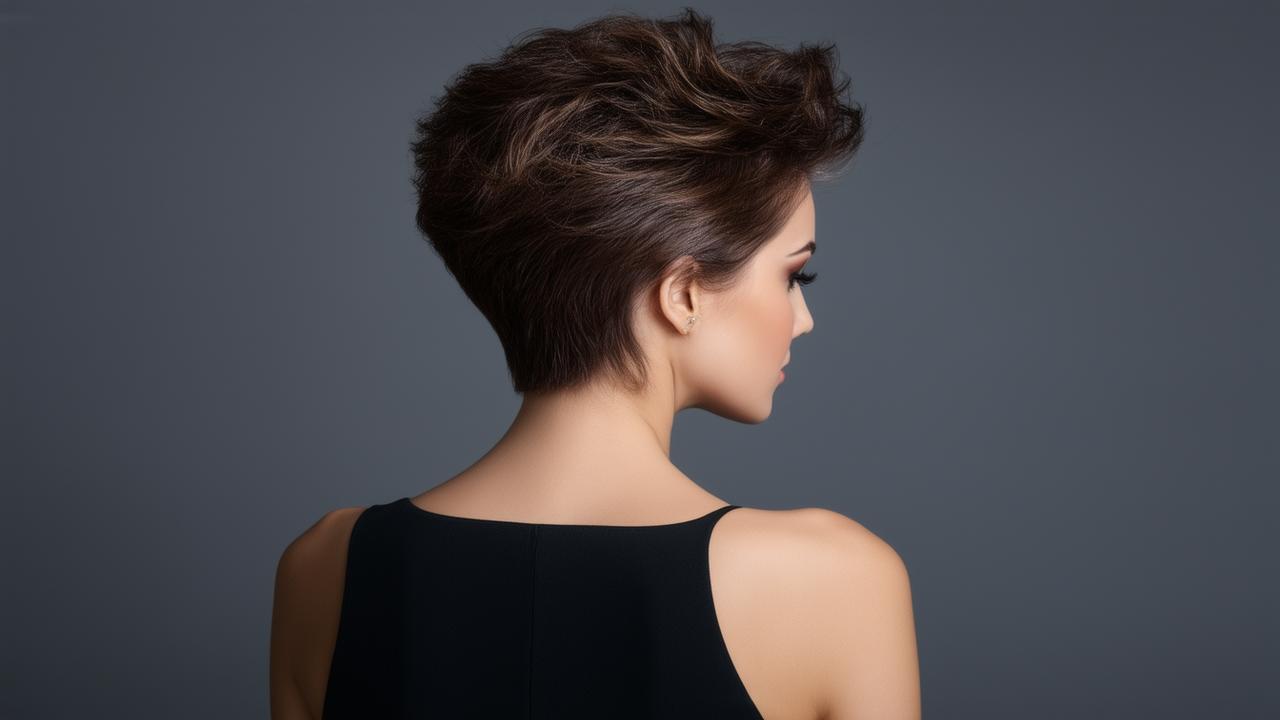
The first thing you notice is the wind. That salt-sweet, early-morning breeze rolling in from the coast, curling around your neck and through your hair as you step out of the car. You catch your reflection in the café window – short hair, fine as spider silk, flattened by your helmet or the humidity or both. The kookaburras are laughing in the gum trees across the road. You’re not. Because for all the effortless, sun-kissed volume you see on Instagram, your own short hair seems to sink and separate before you’ve even ordered a flat white.
Why fine, short hair behaves the way it does
Fine hair is a bit like the sand on a Sydney beach at low tide – soft, beautiful, and quick to collapse under the slightest weight. Each strand is physically thinner than average, which means:
- It shows gaps and part lines more easily.
- It gets weighed down by product and moisture fast.
- It struggles to hold shape and lift for long.
When you cut it short, you might expect instant volume – all that heavy length gone! But the reality, especially under Aussie conditions (think humidity in Brisbane, salt air in Perth, hot dry winds in Adelaide), is that short fine hair can lie flat against the scalp like wet seaweed on a rock.
The good news? The right short cut can make fine hair look not just a bit better, but visibly thicker – the kind of thicker where friends ask, “Have you done something different?” in that narrow-eyed, slightly suspicious way. It’s not about having more hair; it’s about using shape, texture and smart cutting to trick the eye.
1. The airy, textured bob – like sea breeze in haircut form
Picture this: chin-length, softly grazing your jawline, ends that aren’t blunt and heavy but gently chipped into, as if the tips have been nibbled away by the ocean. The airy, textured bob is made for Australian weather – and for fine hair that needs movement more than anything.
Instead of one solid, straight line that clumps together, this bob relies on:
- Micro layers hidden inside the cut to add lift without frizz.
- Soft, feathery ends that keep the edges light so the hair can bounce.
- Gentle shaping around the face to avoid that “helmet bob” look.
In Melbourne or Hobart, where cooler air can keep your style cleaner for longer, this bob holds especially beautifully – the hair swings when you walk, catching the light, making it seem like there’s simply more of it. In stickier climates like Darwin, it helps because there’s less hair sitting on your neck to puff and frizz.
Ask your hairdresser for a chin-length or slightly longer bob with soft internal layering and a broken, textured hemline. Emphasise that you don’t want thinning shears used aggressively; fine hair needs precision, not random removal.
How to style it for visible fullness
After washing, squeeze out the water the way you’d gently press a swimsuit, not wring it. Work in a tiny amount of lightweight volumising mousse or root spray at the crown. Then:
- Blow-dry with your head tipped upside down until about 80% dry.
- Flip upright, then use a round brush at the ends only to curve them under lightly.
- Finish by lifting sections at the roots with your fingers while directing a cool blast of air into them.
The result should feel airy, not stiff. Like your hair’s taken a deep breath.
2. The modern pixie with soft edges – small cut, big impact
There’s a particular kind of freedom that comes with a pixie cut. You step out of the shower, run a hand through your hair, and half the time it air dries before your coffee is cool enough to sip. For fine hair, a well-cut pixie can be a revelation – suddenly your natural lightness works in your favour.
But the key is modern softness, not the super-short, sharp-edged pixie of the early 2000s. The thickening magic comes from a balance of:
- Short, snug sides that contour to the head, removing weight that can drag the top flat.
- A slightly longer top section that can be pushed forward, upward or to the side for lift.
- Feathered edges around the hairline so the cut melts into your skin instead of looking harsh.
Think of this cut like the way light filters through early-morning bushland: no hard lines, just soft, shifting layers.
Why it makes hair look thicker
When the hair is cropped close in some areas and left longer on top, your stylist can create deliberate contrast. The eye reads this difference in length as “density”. Shorter hair also stands up more easily at the roots, especially when it isn’t weighed down by conditioner or heavy products.
This is ideal if you’re active – surfing, running, coastal walks – because even when your pixie gets mussed, it still looks intentional. A dab of matte styling paste, warmed between your fingers and scrunched in at the roots, brings it back to life in under 30 seconds.
3. The graduated “swoop” crop – for side-part lovers
If you can’t imagine life without a parting – the satisfying little line of control in your hairstyle – the graduated swoop crop is your secret weapon. It’s somewhere between a bob and a pixie, with more presence at the front and less weight at the back.
The magic lies in the “swoop”: a slightly longer, side-swept fringe that curves diagonally across the forehead or cheekbone. Underneath, the back and sides are softly graduated (shorter near the nape, longer towards the crown), which creates a subtle stacking effect.
This stacking is like building a tiny hill of hair at the back of your head. Suddenly, even if you’ve got a fine texture, you’ve got a silhouette. The side-swept front gives the illusion of fullness around the face, drawing focus to your eyes and cheekbones instead of that “see-through” feeling at the part line.
How to keep the swoop from falling flat
The trick here is keeping the roots lifted, especially on the side that carries more hair. After washing:
- Blow-dry with a small round brush, pulling the fringe section up and away from the scalp, then over to the side.
- Use a tiny mist of light-hold hairspray or a texturising spray on the under-layer of the swoop, not the surface. This supports the shape without making the top look crunchy.
- In humid conditions, switch heavy serums for a feather-light cream only on the ends so the fringe doesn’t collapse.
4. The softly stacked “beach-shag” bob – texture without the frizz
Somewhere between a bob and a shag, this cut is the love child of coastal living and smart layering. It’s made for the Gold Coast, the Sunshine Coast, the Fremantle foreshore – anywhere you can smell salt on your skin by lunchtime.
The beach-shag bob is slightly longer than a classic bob – brushing the collarbones or just skimming above. It borrows from shag cuts with:
- Gentle, face-framing layers that begin around the cheekbones.
- Light, interior layers only in the mid-lengths and ends to create movement.
- Soft, optional curtain bangs that can blend back into the rest of the hair.
On fine hair, the layering must be done with a surgeon’s care. Too much, and the ends look scraggly. Just enough, and the hair develops that elusive “piecey” thickness, the kind that looks like you’ve just waded out of a rockpool and your hair dried perfectly on its own.
Styling it the low-fuss Aussie way
This cut shines when you embrace a bit of natural texture. If your hair has even a hint of wave:
➡️ Banana peels in the garden: they only boost plants if you put them in this exact spot
➡️ Banana peels in the garden: they only boost plants if you put them in this exact spot
➡️ A retiree who lent his land to a beekeeper is told to pay farm taxes “I earn nothing from this,” he says, as the ruling sparks a heated national debate
➡️ A simple kitchen ingredient slipped down the drain and fixed everything : the plumber found nothing, skeptics call it luck while others say it’s proof
➡️ Psychologists suggest that people who feel “too much” often developed heightened perception as a form of emotional protection
➡️ Place your jade plant in this exact spot: the simple Feng Shui positioning trick said to boost wealth, harmony and lasting happiness at home
➡️ People in their 60s and 70s were right all along: 7 life lessons we’re only now beginning to understand and appreciate
- Scrunch in a salt-free texturising spray on damp hair (salt can dry already delicate strands).
- Twist a few sections around your fingers and let them air-dry.
- Once dry, gently shake out the roots with your fingertips to create space and volume.
If your hair is straight, you can fake the wave with a curling wand on a few random mid-length sections only – avoid the roots and ends, so it looks like a natural bend, not a formal curl.
Choosing the right cut: what to tell your Australian stylist
Walking into a salon and saying, “I want more volume” can mean wildly different things depending on the stylist and the hair type. Fine, short hair needs clear instructions. Here’s a quick comparison you can save before your next appointment:
| Cut | Best For | Volume Effect | Styling Effort |
|---|---|---|---|
| Airy textured bob | Straight to slightly wavy fine hair; city or coastal living | All-over soft fullness and movement | Low–medium |
| Modern soft pixie | Very fine hair; active lifestyles; hot climates | Maximum root lift, thicker look at crown | Low (with trims every 4–6 weeks) |
| Graduated swoop crop | Fine hair with a preferred side part; oval or heart-shaped faces | Lift at back, fuller look around face | Medium |
| Beach-shag bob | Fine hair with some natural bend; coastal or humid climates | Textured, piecey thickness through the mid-lengths | Medium (more if hair is very straight) |
When you sit in the chair, try describing not just the cut you like, but the feeling you want. For example:
- “I want my hair to look thicker around the crown and not show my scalp at the part.”
- “I need a cut that still looks decent air-dried after a swim.”
- “I live somewhere really humid; my hair collapses by midday.”
A good stylist in Australia will also account for local factors – harsh UV exposure, chlorine from backyard pools, ocean salt – and suggest small tweaks to keep your ends from splitting and thinning out.
Light products, big payoff: everyday volume habits
The right cut is half the story. The other half lives in your bathroom and your daily routine. Fine hair is unforgiving of product overload, so a “less but smarter” approach works best:
- Shampoo lightly, condition wisely. Focus shampoo on the roots and scalp; apply conditioner only from mid-lengths to ends to avoid flattening the top.
- Choose lightweight formulas. Look for words like “volumising”, “weightless”, “fine hair” on packaging rather than “rich” or “intense”.
- Use a microfibre towel or old cotton T-shirt. Rubbing with a regular towel roughs up the cuticle, making fine hair frizz and tangle instead of lift.
- Dry the roots first. Whether with a dryer or air, lifting the root area as it dries locks in more height.
- Be cautious with oil. A pin-head amount on the very tips is plenty; more than that and your volume disappears by morning tea.
Bringing it back to you – and that café window
Next time the wind catches your hair as you step out, imagine it catching on strategically placed layers, bouncing off a softly stacked bob or a feather-light pixie, instead of sliding over flat planes. Imagine glancing at your reflection as you wait for your takeaway coffee and seeing not the shape of your scalp, but the outline of a cut that works – fuller at the crown, thicker around the face, alive with movement instead of clinging to your head.
Short cuts for fine hair aren’t about pretending you’ve got a lion’s mane. They’re about using what you have – those delicate strands that glint in the sun – and arranging them in a way that feels intentional, modern, and distinctly yours. With four carefully chosen shapes and a few gentle tweaks to how you treat your hair in the shower, in the sun and in the sea, that “too fine, too flat” feeling doesn’t have to be your everyday reality.
In a country where we spend so much time outdoors – under gum trees, beside beaches, on verandahs watching evening storms roll through – your hair will always be part of the landscape. It might as well be a version of it that makes you feel good every time the breeze blows.
FAQ: Short cuts for fine hair in Australia
How often should I trim short, fine hair to keep it looking thick?
Every 4–6 weeks is ideal. Fine hair loses shape quickly, and once those precise layers grow out, the volume effect softens and the hair can start to look stringy at the ends.
Are layers bad for fine hair?
Heavy or random layers are, but carefully placed, subtle layers are essential for creating lift and movement. The key is minimal, strategic layering by a stylist experienced with fine textures.
Can I still colour my fine hair without making it thinner?
Yes, but gentler is better. Soft highlights or lowlights can actually add the illusion of depth and thickness. Avoid frequent, aggressive bleaching and make sure you’re using good-quality, hydrating but lightweight care afterwards.
What’s the best way to handle humidity with fine, short hair?
Use lightweight, anti-humidity products and avoid over-conditioning near the roots. Styles with shorter lengths or layered bobs tend to hold better in sticky conditions than very blunt, heavy shapes.
Will a fringe make my fine hair look thicker or thinner?
A well-cut fringe or side-swept “swoop” can make hair look thicker around the face by covering any sparse areas at the hairline and drawing attention to your eyes. Just keep the fringe slightly textured, not razor-thin or over-thinned at the ends.





