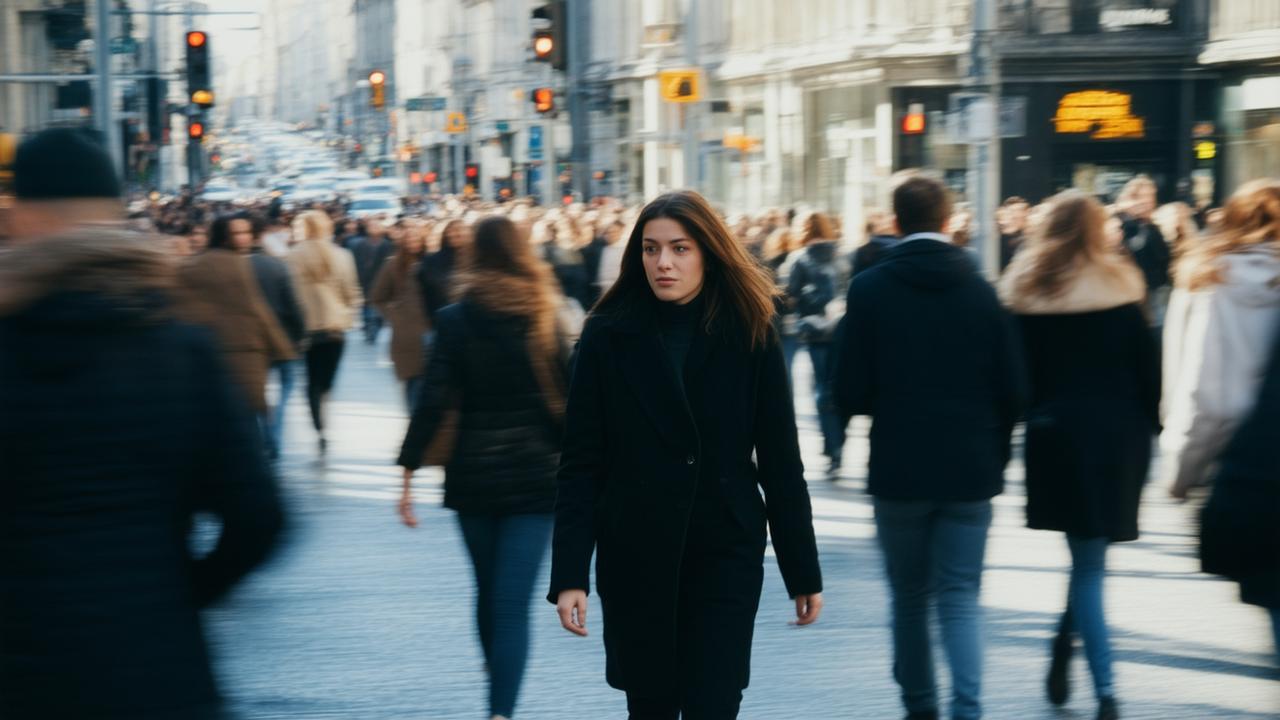
The first thing you notice is the pace. At the tram stop, on the George Street footpath, along the Yarra or the Brisbane River, there’s always that one person slicing through the crowd like they’re late for a flight. You can hear the soft thud of their trainers, the rustle of a tote bag, the clipped click of heels over concrete. While the rest of us drift, dawdle, or scroll our way down the street, they move with a kind of quiet urgency, eyes forward, shoulders set, weaving through gaps as if the footpath were designed just for them.
The Secret Language of Your Walking Speed
Behavioural scientists have been watching this for years—stopwatches in hand, cameras quietly recording, clipboards dotted with notes about cadence and stride. Across multiple studies, in cities from London to Singapore to Sydney, one pattern keeps emerging: people who walk faster than average consistently share similar personality indicators. Not sometimes. Consistently.
Personality, it turns out, leaves footprints.
One large study comparing walking pace and personality traits found that fast walkers tend to score higher on traits like conscientiousness and extraversion, with a particular thread of ambition running through their lives. They’re the ones more likely to show up early, set alarms with multiple back-ups, and mentally rehearse conversations before they happen. They think in bullet points and timelines even when they’re just walking to Woolies for milk.
In Australian cities, where the vibe often oscillates between “no worries” and “get it done yesterday,” these fast walkers can feel like the metronome keeping the beat. In the CBD at lunchtime, you can almost predict who’s going to overtake you: the sharp, focused gaze; the backpack that sits snugly on both shoulders; the phone out, but rarely used as an excuse to slow down. Their walk seems to say: I’ve got somewhere to be, and I know exactly why.
The Footpath as a Personality Test
Imagine, for a moment, that the footpath is a kind of rolling personality test—no forms, no ticking boxes, just the rhythm of your steps. When researchers look at walking pace, they’re not just counting how many steps you take in a minute. They’re reading your body as a living, moving data set.
Fast walkers tend to:
- Navigate crowds intuitively, choosing efficient routes without really thinking about it.
- Maintain a steady, almost mechanical pace, rarely slowing unless forced.
- Display a kind of full-body engagement—arms swinging, torso leaning slightly forward, eyes scanning ahead.
It’s not simply that they’re fitter (though fitness can play a role). Even when scientists adjust for age, health, and body size, that faster-than-average clip is still linked with certain psychological traits—most notably, a strong internal drive and a sense of urgency that doesn’t always show up in conversation, but absolutely shows up in motion.
If you watch long enough on a busy Melbourne morning, you’ll see another pattern: fast walkers are often the ones who look mildly frustrated when trapped behind a group spread four-wide across the footpath. They’ll hover, look for a gap, then slide through the moment there’s a half-metre of space. It’s not rudeness so much as an ingrained need to keep moving, to keep things flowing. They treat time the way some people treat money: too precious to waste.
The Psychology Humming Beneath Quick Footsteps
Why does walking speed reveal so much? Behavioural scientists think of it as an outward sign of an inward tempo—a kind of default setting for how quickly your mind wants life to move. People who walk faster than average often hold certain beliefs about time, productivity, and purpose, even if they wouldn’t put it that way themselves.
Across multiple studies, common personality indicators emerge for fast walkers:
- Goal orientation: They like having somewhere to be and something to do; vague plans make them impatient.
- Conscientiousness: Deadlines, appointments, and obligations matter deeply; lateness feels like a small moral failing.
- Decisiveness: They tend to make choices quickly and stick to them—route, coffee order, weekend plans.
- Higher extraversion or social confidence: Many fast walkers feel relatively at ease in crowds, viewing them more as an obstacle course than a threat.
For Australians used to the “laid-back” national stereotype, this can create an interesting internal contrast. The fast walker in a beach town like Byron or Fremantle sometimes looks slightly out of step with the ambience, like they’ve brought city tempo to a Sunday morning market. But even there, their pace is saying something clear: my inner clock is ticking faster, regardless of the backdrop.
Psychologists also note that your walking speed can act like a feedback loop. The more you move quickly through the world, the more the world often responds as if you’re someone in demand—letting you skip ahead, answer first, get things done. Over time, this reinforces the same traits that started it all.
Australian Streets, Different Speeds
In Australia, the contrast in walking speeds is starkest when places and cultures collide: tourists in thongs pausing on the footpath of Circular Quay while city workers zip around them; school kids ambling down a suburban street while a parent power-walks with a pram. If you pay attention, each suburb seems to have its own tempo. The streets around Martin Place pulse at a different rhythm than Fitzroy’s laneways.
Fast walkers are everywhere, but they’re particularly noticeable in inner-city corridors: Southbank at 8am, North Sydney at lunchtime, the tunnels under Brisbane’s CBD when the rain comes in hard from the river. You can hear it—the difference between a meander and a mission. Flip-flops shuffle; dress shoes and sneakers punch.
Scientists studying walking pace have even suggested that the speed of a city’s foot traffic can reflect its collective mindset. Places with more fast walkers tend to lean into busier lifestyles, longer work hours, more intense competition. That doesn’t mean slower cities are lazy; it means they’re calibrated differently. The Gold Coast boardwalk on a Wednesday morning hums at a different psychological frequency than Collins Street in peak hour.
Yet wherever you go, fast walkers share something in common: they often feel a step or two ahead of their surroundings, eyes already on the next set of lights, the next crossing, the next train they’re calculating whether they can make without running.
| Walking Pace Type | Common Traits | Typical Aussie Scene |
|---|---|---|
| Faster than average | Goal-focused, time-aware, decisive, often ambitious | Power-walking from Wynyard to Barangaroo between meetings |
| Average pace | Balanced, adaptable, comfortable with mild unpredictability | Strolling to the train after work in Richmond or Newtown |
| Slower than average | Reflective, present-focused, often more relaxed about time | Wandering along the Esplanade in Cairns at sunset |
Health, Age, and the Pace of a Life
Of course, not every quick step is a personality statement. Health, mobility, age, and even the day’s weather can all adjust your pace. In the science, these factors get carefully controlled for—researchers compare people of similar age and health, then look at what walking speed still reveals.
Fascinatingly, when you remove the impact of illness or frailty, faster walking is still strongly linked not just to personality traits, but to broader life outcomes. People who naturally walk faster—especially those in midlife—are often found to have better cardiovascular health and, in some studies, even longer life expectancy. It’s as if the body and personality are both tuned to live a little more intensely, to push a little harder against the world.
In Australia’s ageing population, where staying active is becoming a quiet obsession from Hobart to Darwin, walking speed is starting to be seen as a kind of vital sign. Doctors already use gait and pace as subtle indicators of cognitive health and physical resilience. But psychologists go further: they argue that a lifetime of being a fast walker can reflect a lifelong pattern of engaging, striving, and acting.
Still, nuance matters. A slow pace does not mean a dull life or a small personality. Some people consciously slow their steps—a kind of rebellion against busyness. Others, especially in regional towns or coastal communities, walk slow because they’ve measured their days differently: not in tasks per hour, but in tides, seasons, and conversations.
What Your Own Footsteps Might Be Telling You
Next time you’re out walking—through Hyde Park, along the Swan River, up a suburban street in Adelaide—try a quiet experiment. Notice your natural pace when you’re not rushing, when no one is waiting, when there’s nowhere crucial to be. Do you still move briskly, overtaking others? Do you fall into step behind the person in front without thinking? Do you find yourself slowing to look at trees, shopfronts, dogs, people?
Your answer says something about the emotional gear you most often live in.
➡️ A psychologist is adamant : “the best stage in a person’s life is the one where they start thinking this way”
➡️ Goodbye Kitchen Islands : Their 2026 Replacement Is A More Practical And Elegant Trend
➡️ Goodbye steaming : the best way to cook broccoli to keep nutrients plus easy recipes to try
➡️ Goodbye hair dyes : the new trend that covers grey hair and helps you look younger
➡️ Banana peels in the garden: they only boost plants if you put them in this exact spot
➡️ Banana peels in the garden: they only boost plants if you put them in this exact spot
➡️ A retiree who lent his land to a beekeeper is told to pay farm taxes “I earn nothing from this,” he says, as the ruling sparks a heated national debate
If you’re a fast walker, science suggests you’re likely carrying an internal sense of mission, even in small things. You’re probably the one friends rely on to make plans, book tickets, figure out logistics. Your walk hints at a mind wired for momentum, for moving projects—and people—forward.
If your pace is slower, it might reflect a stronger pull toward presence and observation. You could be the person who notices when the jacarandas first burst in November, who actually reads the plaque outside a historic pub, who stops to look at the way morning fog hangs over paddocks on the city fringe. Behavioural scientists see in you not a lack of drive, but a different relationship to time and attention.
And if you float somewhere in the middle—sometimes striding, sometimes strolling—you may have learned the art of shifting speeds: fast when you must be, slow when you choose to be. In a culture that increasingly values both productivity and mindfulness, that flexibility might be its own quiet superpower.
Listening for the Rhythm of a Nation
On any weekday morning, if you stand quietly at a busy intersection in an Australian city and close your eyes, you can almost hear the country’s competing identities in the footsteps. The rapid, staccato beat of those who move with purpose; the unhurried shuffle of those who’ve decided not to let the clock win today.
Behavioural scientists would say those footsteps are more than background noise. They’re data points, each one hinting at a cluster of traits, values, and habits. Fast walkers, across study after study, reveal themselves as driven, focused, slightly impatient with delay, oriented toward what’s next. They’re not better or worse than anyone else—they’re simply tuned to a faster song.
In a land that sells itself on leisure but increasingly runs on deadlines and deliverables, that tension plays out in our gait. The beach and the boardroom leave their marks on the same pair of legs.
So the next time someone surges past you on the path along Bondi, or you find yourself side-stepping through a group on Swanston Street as you power toward a meeting, remember: you’re part of an unwritten story that scientists have been quietly decoding. Your personality, in some small way, is there in the length of your stride, the rhythm of your steps, the speed with which you choose to move through the world.
And if you ever want to understand yourself just a little better, you might not need a lengthy questionnaire. You might just need a footpath, a free half-hour, and enough curiosity to listen to the story your own footsteps are already telling.
Frequently Asked Questions
Does walking faster mean I’m definitely more ambitious?
Not definitely, but research shows a strong pattern: people who walk faster than average often score higher on traits like ambition, conscientiousness, and goal focus. It’s a tendency, not a rule—individual experiences, health, and culture still play big roles.
What if I walk slowly but feel very driven?
That’s entirely possible. Health conditions, injuries, or simply choosing to slow down can override your natural psychological tempo. Personality is complex; walking speed is just one lens among many.
Is walking speed used in medical or psychological assessments in Australia?
Yes. Doctors, physiotherapists, and psychologists sometimes use gait and walking speed as indicators of physical function, ageing, and even cognitive health, especially in older adults. It’s rarely used alone, but it’s a valuable clue.
Can I change my walking speed by changing my mindset?
You can consciously adjust your pace, and over time new habits can stick. People who practice mindfulness often report slowing down, while those who train for fitness or start high-pressure jobs sometimes speed up. Your inner tempo and your walking pace can influence each other.
Are city Australians really faster walkers than people in regional areas?
While hard numbers can vary, observations and some international research suggest that busier, denser cities tend to produce faster walking paces overall. In Australia, that often means inner-city areas move quicker than many regional or coastal towns, where daily rhythms are typically more relaxed.





