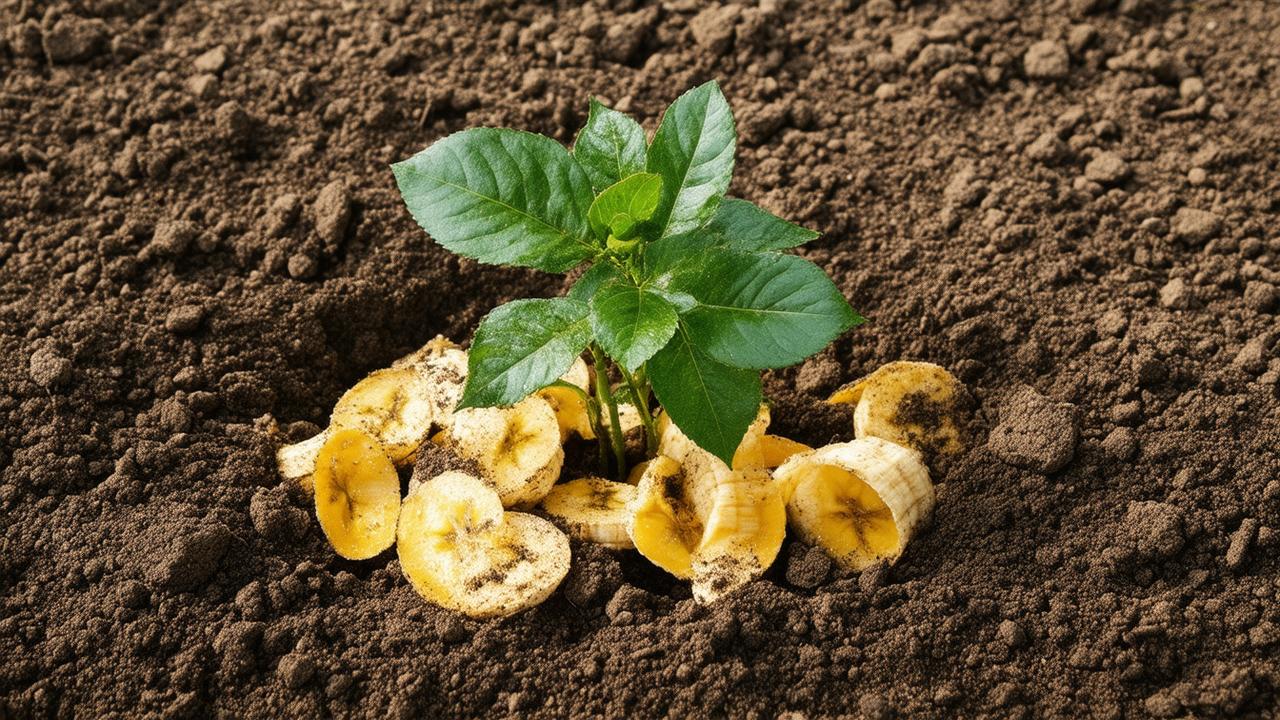
The first banana peel went into the wrong place. I remember it clearly: a bright yellow crescent half-buried at the edge of the veggie patch, glistening after a summer storm in suburban Brisbane. I’d read somewhere—probably in a random comment thread—that banana peels were “liquid gold” for tomatoes. So I chucked one beside a struggling cherry tomato and waited for the miracle. A week later, the peel was still there, leathery and mouldy, the tomato looked the same, and a line of ants marched over the whole sad scene. That was my first clue: banana peels in the garden aren’t magic. In the wrong spot, they’re just rubbish waiting for a bin.
The big banana myth in Aussie backyards
Across Australia, from tiny balconies in Footscray to sprawling backyards in Cairns, banana peels are quietly being tucked under mulch, poked into potting mix, or buried beside roses like secret offerings to the plant gods. Somewhere along the way, “bananas are high in potassium” turned into “banana peels are an instant fertiliser.”
There’s some truth here. Banana peels do contain potassium, a nutrient plants love for strong stems, flowering, and fruiting. They also hold small amounts of phosphorus, calcium, and magnesium. But there’s a catch that Instagram infographics rarely mention: those nutrients aren’t ready-to-eat snacks for your plants. They’re locked up in a leathery jacket of organic matter that has to be broken down by microbes first. And how well that happens depends entirely on where you put the peel.
Just tossing them anywhere—on top of the soil, beside the trunk of your lemon tree, or buried in a random hole—is about as effective as leaving a whole carrot on your plate and calling it a salad. Technically, the goodness is there. Practically, your plants can’t access it in time, if at all.
The secret spot: where banana peels actually help
Here’s the quiet truth experienced gardeners eventually discover: banana peels are most useful when they become part of the invisible engine under your feet—the living, breathing root zone and soil life, not a sad skin slowly mummifying on the surface.
In Australian conditions, especially with our sandy, nutrient-hungry soils and baking summers, banana peels work best when you place them:
1. In an active compost pile, not directly under the plant
If your garden had a digestive system, the compost heap would be the stomach. That’s where banana peels belong first. In a proper compost pile—warm, moist, and alive with microbes, worms, and fungi—the leathery skin breaks down quickly. Nutrients are transformed into a stable, crumbly compost your plants can actually use.
When you throw a peel straight into the soil near a plant, the breakdown is slow and patchy. In cooler regions like the NSW Southern Highlands or Tassie’s Huon Valley, the peel can sit for months. In hot, dry places like Perth or inland Queensland, it may dry out and turn to a brittle, leathery strip long before it decomposes usefully.
Run your fingers through a mature compost pile and you’ll notice how different everything feels. There’s no obvious “banana peel” anymore, just dark, rich, spongey material that smells like a rainforest floor after rain—sweet, earthy, a little bit wild. That’s the form your banana peel needs to be in before your plants can treat it like food.
2. Into worm farms – the VIP entrance for banana peels
If compost is the stomach, the worm farm is the VIP digestive lounge. Banana peels are worm favourites when used properly. In many Aussie backyards, especially in apartments or units with tiny courtyards or balconies, worm farms are the most practical way to turn kitchen waste into plant food.
Chop the peels into smaller pieces, remove the stickers, and tuck them under the worm bedding or existing food layer. Within days, you’ll see the surface soften and darken. A week or two later, the peel is gone, transformed into castings that are absurdly rich in nutrients and microbes.
Now here’s the “exact spot” part: it’s not the worm farm itself that feeds your plants. It’s where you put the worm castings. When you spread those castings into the top few centimetres of soil around your plants—the root-active zone—you’re delivering everything the banana peel had to offer, already processed and perfectly packaged.
3. In the top 5 cm of soil – not at the bottom of the hole
Many well-meaning gardeners gently lay a banana peel at the bottom of a new planting hole, pop in a seedling, and feel clever. On the surface, it sounds logical: food under the roots, right? But roots don’t work that way.
Most feeder roots live in the top few centimetres of soil where oxygen, moisture, and microbes are most active. When you bury a peel deep under a plant, it decomposes in a relatively lifeless zone. The nutrients may never properly move upwards to where the plant can use them.
Instead, think shallow and wide. If you’re using banana peels in any “direct to soil” way, they need to be either:
- First processed through compost or worms, then lightly mixed into the top layer of soil around your plants; or
- Chopped finely and buried very shallowly (2–5 cm) in the root zone, then covered with mulch.
This keeps the action where your plants are actually feeding. It’s like putting the pantry where your household hangs out, not down a ladder in some forgotten cellar.
What really happens when you put peels in the ‘wrong’ spot
Let’s walk through a few common Aussie gardening habits and what’s really going on beneath the mulch.
Picture a small Melbourne courtyard, a few terracotta pots of herbs and a pot-bound citrus soaking up the afternoon sun. You toss a banana peel onto the top of the pot, figuring rain and time will do the rest. The soil dries quickly between waterings, the peel dries too, curls at the edges, and mostly just sits there. It may even grow a dusting of mould—nothing catastrophic, just a slow, mostly useless decay that doesn’t really feed anything.
Or imagine a veggie patch in coastal WA. You dig a little trench beside the tomatoes, drop in a handful of peels, and cover them with a bit of soil. A week later, local rodents or neighbourhood possums figure out there’s a soft, sweet treat buried not too deep. They dig, your soil is disturbed, and your tomato roots are suddenly exposed or damaged.
In warm, humid parts of Queensland or the Top End, things rot quickly. That can be a blessing, but it can also mean a sudden flare of fruit flies or a bad smell if you’ve overloaded one patch of soil with too much fresh kitchen waste.
In all of these scenes, there’s a pattern: banana peels become a minor nuisance or a slow, inefficient offering, rather than a quiet powerhouse of plant health. The wrong spot invites pests, smells, or near-zero benefit. The right spot invites microbes and roots.
Banana peel “teas” and other backyard experiments
Some gardeners soak banana peels in a jar of water for a few days and then pour that “banana tea” around their plants. The idea is seductively simple: quick, homemade potassium liquid fertiliser.
Here’s the reality in plain language: only a very small portion of the peel’s nutrients will actually leach into the water in that short time. You’ll probably smell a mild fermenting odour after a while—proof that microbes are at work—but what you’re making is more like a weak, unpredictable brew than a reliable fertiliser. It won’t hurt in small doses, but it’s not the miracle drink social media suggests.
If you love experiments and the ritual of saving every scrap, go ahead, but treat banana peel tea as a bonus, not a cornerstone of your garden nutrition plan. The real action still happens when the whole peel gets broken down properly in compost or a worm farm, then ends up in that magic top layer of soil.
➡️ Banana peels in the garden: they only boost plants if you put them in this exact spot
➡️ A retiree who lent his land to a beekeeper is told to pay farm taxes “I earn nothing from this,” he says, as the ruling sparks a heated national debate
➡️ A simple kitchen ingredient slipped down the drain and fixed everything : the plumber found nothing, skeptics call it luck while others say it’s proof
➡️ Psychologists suggest that people who feel “too much” often developed heightened perception as a form of emotional protection
➡️ Place your jade plant in this exact spot: the simple Feng Shui positioning trick said to boost wealth, harmony and lasting happiness at home
➡️ People in their 60s and 70s were right all along: 7 life lessons we’re only now beginning to understand and appreciate
➡️ Put A Lemon Slice In Your Cold Oven : Why People Are Doing It And When It Actually Helps
A simple way to make banana peels actually worth the effort
If you live in Australia and eat bananas even semi-regularly, here’s a straightforward system that respects both your time and your soil:
- Keep a small kitchen caddy or container just for compostables (banana peels, veggie scraps, coffee grounds, eggshells).
- Once full, take it to either:
- Your compost bin or heap, or
- Your worm farm.
- Let time, moisture, and microbes do the hard work. In warm Aussie climates, this can be surprisingly quick if you keep things moist and roughly balanced.
- Use the finished compost or worm castings around your plants, lightly mixing it into the top few centimetres of soil and then covering with mulch.
- Repeat, without needing to ever poke single peels into individual holes again.
This way, the banana peel’s journey is simple and circular: kitchen to compost, compost to root zone, root zone to healthy plant, and back again. No pests, no smell, no half-rotten skins glaring at you from the mulch.
How banana peels compare to other kitchen scraps
Banana peels are useful, but they’re not royalty in the compost heap. They’re one of many supporting players in your garden’s quiet drama. Here’s a quick comparison you can skim on your phone while standing at the kitchen bench deciding what to do with that handful of scraps.
| Kitchen scrap | Main benefit | Best place to put it | Notes for Aussie gardens |
|---|---|---|---|
| Banana peels | Potassium, some phosphorus & calcium | Compost or worm farm; then soil surface near roots | Chop first to speed breakdown; avoid leaving whole peels exposed (can attract pests). |
| Coffee grounds | Organic matter, mild nitrogen | Thin layer in compost or lightly mixed into soil | Don’t dump thick wet layers; they can form a crust in hot, dry climates. |
| Eggshells | Calcium | Crushed very finely in compost or soil | Break them up well; whole halves take ages to decompose. |
| Veggie scraps | Balanced nutrients & organic matter | Compost or worm farm | Chop into smaller pieces in cooler regions to speed decomposition. |
Listening to your soil, not the internet
Next time you finish a banana on the back step, pause for a moment before you flick the peel towards the nearest pot. Feel the air—dry inland heat, salty coastal breeze, cool southern drizzle. Think about the soil under your feet—powdery sand, stubborn clay, or rich loam if you’re one of the lucky ones. These details matter more than the quick tip you saw online.
Ask yourself: will this peel actually break down here, or just sit? Will it draw in the living things I want—worms, microbes—or the visitors I don’t—rats, flies, cockroaches? And most importantly, will the nutrients end up where the roots can reach them?
For most Australian gardens, the honest answer is simple: the “exact spot” where banana peels boost your plants is not directly under a single seedling or half-buried beside your rose. It’s in your compost bin or worm farm first, then in the top layer of soil around your plants, where roots and microbes are already having quiet conversations.
When you treat banana peels as ingredients in a slow, ongoing soil-building recipe—rather than magic bullets—you start to see them differently. Not as a hack, but as part of a whole living system: the kitchen, the compost, the soil, the plant, and you, standing there in the morning light, banana in hand, part of the cycle instead of just throwing something “away.”
FAQ: Banana peels in Australian gardens
Can I just throw banana peels straight onto my garden bed?
You can, but it’s not very effective. Whole peels on the soil surface decompose slowly, can attract pests, and don’t reliably feed your plants. It’s far better to compost them or send them through a worm farm first, then add the finished compost or castings to the soil.
Is it safe to use banana peels from supermarket bananas?
Yes, but they may contain traces of chemicals from conventional farming. If you’re concerned, composting or worm-farming the peels first helps break down many residues over time. Avoid using fresh peels directly around very young seedlings if you’re worried about sensitivity.
Will banana peels make my plants flower more?
Banana peels add some potassium, which supports flowering and fruiting, but they’re not a stand-alone fertiliser. Think of them as a small boost within a broader soil-building routine that includes compost, mulch, and, if needed, more balanced organic fertilisers.
Can I put banana peels in pot plants?
Not whole and not deep. In pots, whole peels can rot unevenly, attract fungus gnats, or go slimy. Use banana peels via worm castings or compost mixed lightly into the top few centimetres of potting mix, then cover with a little fresh mix or mulch.
How long do banana peels take to break down in Australia?
It depends on climate and how you use them. In a warm, moist compost heap, they can disappear within a few weeks. On dry, exposed soil or in cool regions, they can hang around for months. Chopping them up and keeping them in an active compost or worm system speeds things up dramatically.
Are banana peel “teas” worth making?
They’re not harmful in moderation, but they’re weak and unpredictable compared to proper compost or worm leachate. If you enjoy making them, treat the liquid as a mild supplement, not your main fertiliser. The real value of the peel still comes from full decomposition.
What’s the simplest way to use banana peels if I’m just starting out?
Start a small compost bin or worm farm, even on a balcony. Put all your banana peels in there. When you’ve got dark, crumbly compost or worm castings, spread a thin layer around your plants and gently mix it into the top of the soil. That’s the “exact spot” where your bananas finally become true plant food.





