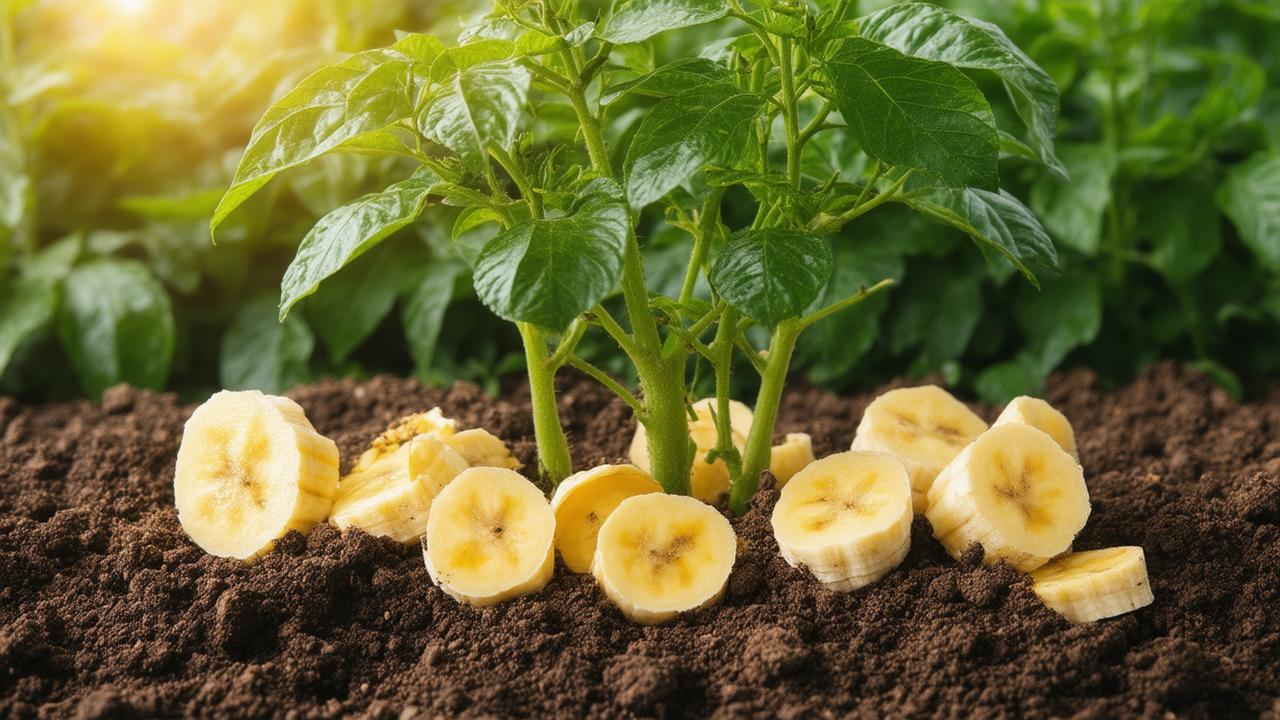
The first time I buried a banana peel in the garden, it was an accident. I was standing barefoot on the warm pavers, the scent of tomato vines hanging in the late-summer air, and I just didn’t feel like walking back to the kitchen compost bin. So I scooped a little trench at the base of a rose bush, tucked the peel in, covered it, and forgot about it. Weeks later, that same rose was putting on a show that made the others look slightly embarrassed—lush, glossy leaves, tight red buds lined up like they were waiting for a parade. It felt like magic. It wasn’t. It was placement.
The Quiet Power Inside a Banana Peel
Banana peels are tiny nutrient packages: soft, humble, and usually tossed in the bin without a second thought. But in a garden—especially an Australian garden where our soils can be stubborn, sandy, or just plain tired—they become something else entirely.
Inside that spotted yellow jacket is a miniature pantry of plant goodies. There’s potassium, which helps plants move water efficiently and build strong stems; a touch of phosphorus for roots and flowers; a sprinkle of calcium; plus traces of magnesium and other micronutrients. Not a complete fertiliser, but a useful side dish.
But here’s the thing many gardeners miss: it’s not just what’s in the banana peel, it’s where you put it. Tossed on top of the soil, it attracts pests, mould, and disappointment. Buried too shallow or too far away from the active roots, and your plants barely notice.
To truly boost your plants, that peel needs to sit in a very specific place: right in the zone where the roots are actively feeding.
The Exact Spot: Where Roots Are Hungry
Every plant has a “dining room” underground—a zone where the finest, most delicate feeder roots are busy sipping nutrients and moisture. In many garden plants, this area is roughly under the outer edge of the foliage, often called the drip line. It’s where rain falls from the tips of leaves and where much of the action is happening below the surface.
That’s the exact spot where a banana peel quietly turns into plant food.
Think of it like this: if you left a full plate of food in the spare bedroom, you wouldn’t be shocked if everyone in the kitchen stayed hungry. Nutrients need to be where roots are most active, not randomly scattered where they can’t reach them, wash away, or sit in dry soil doing very little.
In practice, this means:
- Not burying peels right up against the plant’s stem (that can encourage rot and pests).
- Not throwing them on the surface and hoping for the best.
- Placing them in a shallow trench just beyond the main stem, near the drip line, where the feeder roots roam.
Once you see the garden this way—as a network of invisible mouths waiting underground—banana peels stop being rubbish and become little care packages you can place with precision.
How Deep and How Close?
For most garden beds, dig a narrow trench about 5–10 cm deep in a ring or a few sections around your plant, roughly at that drip line edge. Lay the peel flat (or cut it into pieces), then cover it completely with soil. You don’t want it visible to birds, dogs, or curious native wildlife.
| Plant Type | Best Spot for Peel | Approx. Distance from Stem |
|---|---|---|
| Tomatoes & Capsicums | Shallow trench around drip line | 10–20 cm |
| Roses & Ornamentals | Ring around outer foliage edge | 15–25 cm |
| Fruit Trees (young) | Scattered trenches under canopy | 30–50 cm |
| Potted Plants | Small pieces under surface, away from stem | A few cm from pot edge |
Why Australian Gardens Respond Differently
Across much of Australia, we garden on old, weathered soils—often sandy, low in organic matter, and quick to dry out. In many suburbs, raised beds sit above heavy clay or fill. It’s a beautiful challenge: big skies, brutal summers, and soil that doesn’t always play nice.
In these conditions, banana peels can help, but only when they’re placed where microbes and moisture can actually do something with them.
Microbes and worms are the quiet workforce of the soil. They’re the ones that break down the peel, release the nutrients, and ferry them to plant roots. In hot, dry conditions—like a January afternoon in Adelaide or a windy day in Perth—anything left on the surface can dry out and mummify before it really decomposes.
Buried in that sweet spot—5–10 cm deep, in the moist zone near active roots—the peel stays damp enough for bacteria and fungi to get to work. In a mild coastal Sydney garden, decomposition might be relatively quick. In a drier inland patch with bare soil and strong sun, it’s slower, which makes precise placement even more important.
If you’re in northern Australia where the wet season brings drenching rains, burying peels also stops them from floating away or rotting in puddles. For coastal gardeners battling bandicoots, brush turkeys, or curious dogs, a buried peel is far less of an invitation than one tossed on top like a bright yellow flag.
Banana Peels in Pots and Balconies
Australian gardeners are increasingly gardening upwards—on balconies, in courtyards, and in window boxes. In pots, space is tight, and decomposition smells or fungus can become a problem quickly if organic material is dumped on the surface.
In containers, the “exact spot” is just under the top layer of potting mix, away from the main stem and not jammed against the sides where it dries out. Cut the peel into small pieces, tuck them 3–5 cm deep, and always follow with a light watering. This helps stop odours and keeps breakdown gentle and even.
Common Mistakes: Why Banana Peels Sometimes Fail
For every gardener who swears banana peels transformed their roses, there’s another who shrugs and says nothing happened. Often, it’s not the peel—it’s the method. A few missteps show up again and again in Australian backyards:
- Leaving peels on the surface: This invites rodents, birds, insects, and can look messy. In warm climates, they dry like cardboard and do very little.
- Burying too close to stems: This can cause localised rot and concentrate moisture where it’s not welcome.
- Using them as a replacement for proper fertiliser: Banana peels add certain nutrients, but they’re not balanced. Relying on them alone can leave plants short on nitrogen or other essentials.
- Overloading small spaces: Cramming lots of peels into a small pot or a tiny area of a bed can attract fungus gnats, produce sour smells, or cause temporary imbalances as microbes tie up nitrogen to break them down.
When placed thoughtfully—buried in the active root zone, spaced sensibly, and used as a supplement rather than a cure-all—banana peels often make a subtle but real difference. Better foliage colour, stronger stems, slightly happier blooms. Less fireworks, more quiet support.
Bananas, Bees, and Bloom Power
Potassium is linked to flowering and fruiting, and many gardeners notice better rose displays, stronger tomato vines, or richer colours in ornamentals when they add banana peels to an already healthy regime. In an Australian context, where harsh sunlight and sudden heatwaves can stress plants, anything that supports water balance in the plant tissues is worth a look.
➡️ Banana peels in the garden: they only boost plants if you put them in this exact spot
➡️ A retiree who lent his land to a beekeeper is told to pay farm taxes “I earn nothing from this,” he says, as the ruling sparks a heated national debate
➡️ A simple kitchen ingredient slipped down the drain and fixed everything : the plumber found nothing, skeptics call it luck while others say it’s proof
➡️ Psychologists suggest that people who feel “too much” often developed heightened perception as a form of emotional protection
➡️ Place your jade plant in this exact spot: the simple Feng Shui positioning trick said to boost wealth, harmony and lasting happiness at home
➡️ People in their 60s and 70s were right all along: 7 life lessons we’re only now beginning to understand and appreciate
➡️ Put A Lemon Slice In Your Cold Oven : Why People Are Doing It And When It Actually Helps
Imagine a line of lavender buzzing with bees along a fence in Fremantle, or a row of lilly pilly hedges glowing in a Brisbane backyard. Banana peels alone won’t create that scene—but they can be part of the quiet background support that keeps plants robust enough to flower well, resist minor stress, and recover after hot days.
Simple Ways to Use Banana Peels (Without Overthinking It)
You don’t need a laboratory approach. Just a small ritual you repeat whenever a banana appears in the fruit bowl. Here are practical methods that work in real Australian gardens:
- Trench-and-tuck method: For beds and borders, dig a slim trench near the drip line, lay the peel flat or sliced, cover it, and water in.
- Ring feeding for roses: Space peels (or their pieces) in a ring around each rose bush, always under the soil, repeating every few weeks during the growing season.
- Chopped peels in compost: If you have a compost bin or heap, chop peels and mix them through. Later, when you spread that compost around plants, the nutrients are more evenly available.
- Potted plant boosters: For patio citrus or large ornamental pots, cut tiny pieces and bury them shallowly away from the trunk, taking care not to overload.
What unites all these methods is that same focus: get the peel into the moist, living part of the soil, where the feeder roots actually are.
A Small Habit With a Quiet Payoff
In a world full of flashy gardening products, banana peels are delightfully ordinary. No bright labels, no complicated charts, no shipping required. Just yesterday’s snack, quietly returning to the soil under your feet.
Picture it: early morning in an Aussie backyard, magpies warbling somewhere up the street, the hose cool in your hand. You kneel down beside a lemon tree, scrape a little groove in the mulched soil at the edge of its canopy, and tuck in a peel. It takes less than a minute. You cover it, water it, and walk away. No fanfare.
Weeks later, when that lemon tree throws new flushes of glossy leaves, or your roses push out another round of blooms, you won’t see the peel anymore. You’ll just see the way a small, thoughtful habit has folded itself into the life of your garden.
In the end, the magic isn’t in the banana—it’s in the placement. Put it in that exact spot where roots are hungry, and a simple peel stops being kitchen waste and becomes part of the quiet, ongoing conversation between you, the soil, and everything growing in it.
Frequently Asked Questions
Do banana peels really help plants, or is it a myth?
Banana peels do contain useful nutrients, especially potassium and a little phosphorus and calcium. They’re not a myth, but they’re also not a miracle fertiliser. When buried in the active root zone, they can gently support overall plant health, especially as part of a broader routine that includes good soil, compost, and appropriate fertiliser.
Where exactly should I bury banana peels around my plants?
Place them in a shallow trench 5–10 cm deep, near the plant’s drip line—the outer edge of the foliage where feeder roots are most active. Avoid placing them right against the stem or trunk. Cover them completely with soil to discourage pests and keep decomposition even.
Can I just throw banana peels on top of the soil or mulch?
You can, but it’s not ideal. On the surface, peels often dry out, mould, or attract rodents, insects, and pets. In Australian heat and sun, they can become leathery and break down very slowly. Burying them shallowly near the root zone is far more effective.
Are banana peels safe for all plants in Australian gardens?
Generally, yes, when used in moderation and buried properly. Most fruit trees, roses, flowering ornamentals, and vegetables can benefit. Just don’t overdo it in small pots or very tight spaces, and don’t use banana peels as the only source of nutrition. Some native Australian plants prefer very low-phosphorus conditions, so for sensitive natives it’s safer to skip direct peel use or rely on well-made compost instead.
How often should I add banana peels to my garden?
For most beds, every few weeks during the growing season is plenty. Think of banana peels as small, regular snacks for your soil rather than a big, one-off feast. If you eat bananas daily and have a lot of peels, spread them across different areas of the garden or add some to your compost to avoid overloading any one spot.





