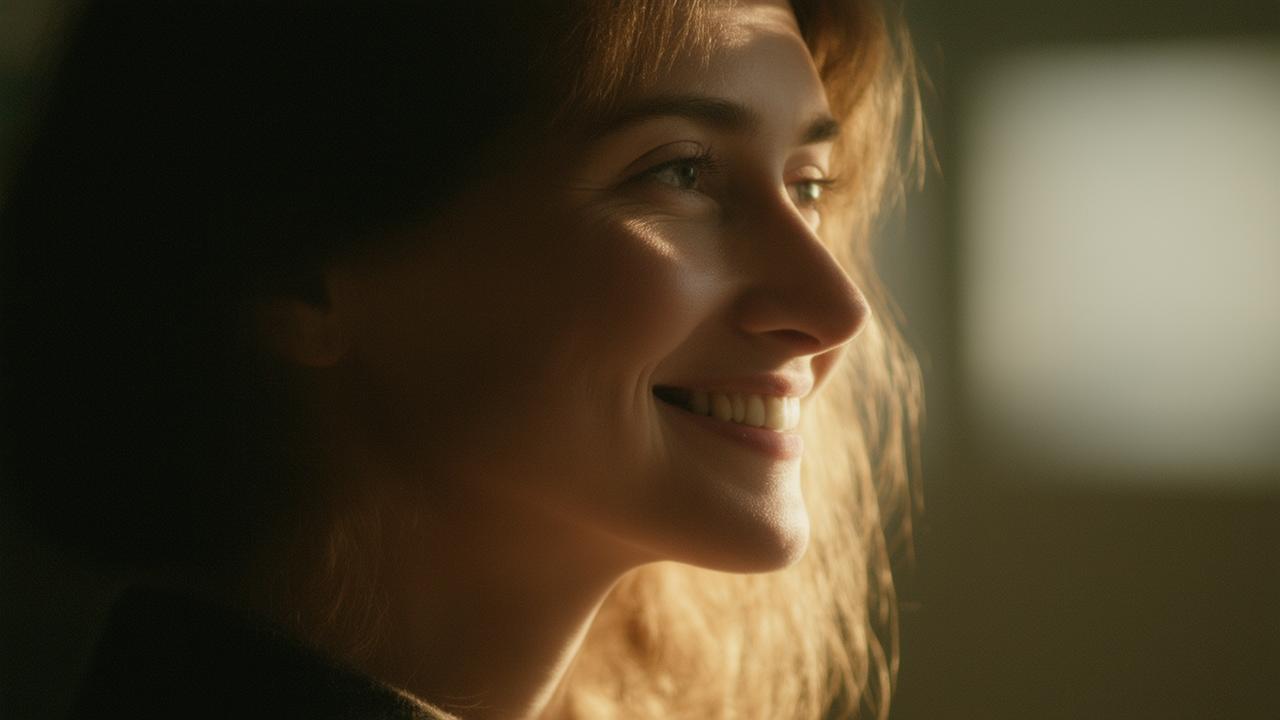
The kookaburras start before the traffic does. If you wake early enough in any Australian city, there’s a moment just before dawn when the sky is a deep bruised blue, the air is soft and cool, and the birds seem to know something you don’t. On one of those mornings, sitting on a weathered back step in suburban Brisbane with a mug of too-strong tea, I listened to that ragged chorus and realised: life was quieter in my head than it had ever been—and somehow, more alive. Not because everything was perfect. Far from it. The mortgage, the job, the nagging worry about ageing parents and anxious kids—none of that had gone away. But something inside had shifted. And it was this quiet internal turn that a Melbourne psychologist later told me may be “the best stage in a person’s life—when they finally start thinking this way.”
The Stage No One Tells You to Look Forward To
We grow up being sold a very particular story about “the best years of your life.” It’s plastered across glossy uni brochures, Instagram travel reels, and well-meaning relatives at Christmas who swear that school or your twenties are as good as it gets.
But Dr. Eliza Hart, a clinical psychologist who has spent two decades working with Australians from Fremantle to Far North Queensland, disagrees. Fiercely.
“The best stage,” she tells me over a video call, “isn’t a number. It’s not your twenties or thirties or retirement. It’s the turning point where you stop asking, ‘How do I keep up?’ and start asking, ‘What do I actually care about?’ That first moment of honest, values-based thinking—when your choices finally line up with who you really are. That’s when life gets interesting.”
She pauses, smiling. “And what surprises most people is how ordinary that moment looks from the outside.”
It might be a parent sitting in the car outside a Coles, realising they’re tired of snapping at their kids. A tradie on smoko staring at a job site and thinking, “I can’t do this for another thirty years.” A retiree walking a dog along a beach in WA and feeling the slow, unsettling question rise: “So… what now?”
There’s no soundtrack. No camera crew. Just the low hum of an Australian morning or afternoon and a private decision: I want to think differently about my life.
The Quiet Shift: From “What’s Wrong with Me?” to “What Matters to Me?”
So what is this new way of thinking that Hart is so adamant about?
“Most of us,” she explains, “spend the first chapters of life in survival mode—social survival, financial survival, emotional survival. We ask: Am I good enough? Am I behind? Am I doing what I’m ‘supposed’ to?”
In a culture that prizes busyness and endless improvement, this becomes the soundtrack. We jog around the Tan, eyes on our step count. We work late to secure the promotion, then lie awake scrolling real estate apps, comparing ourselves to people with bigger balconies and better water views.
The turning point comes when the questions change.
“The best stage begins when someone wakes up, often after some sort of emotional fatigue or personal crisis, and starts asking instead: What actually matters to me? If I took away everyone else’s expectations—my parents’, my boss’s, even my younger self’s—how would I spend a Tuesday? Who would I be kinder to? What would I let go of?”
This isn’t a grand philosophical project. It’s surprisingly practical and deeply sensory—grounded in the feel of your own life, here and now, under an Australian sky.
- Standing on the sand at Coogee and noticing your body soften at the smell of salt and sunscreen.
- Realising you feel more like yourself in old shorts at a Byron campsite than in the fancy clothes you bought for a corporate job you’re not sure you even like.
- Noticing that the coffee with your best mate on a Wednesday arvo fills you with a sturdier kind of joy than any Black Friday purchase.
“Values show up in moments like these,” Hart says. “And when people start building their days around those values instead of their fears, that’s when they tell me, ‘Life makes more sense now, even when it’s hard.’”
The Australian Backdrop: Why Our Landscape Nudges Us Toward This Stage
If there’s anywhere on Earth that quietly invites this kind of rethinking, it’s here. Something about the Australian backdrop—with its harsh summers, long horizons, and unpredictable bushfire seasons—conspires against the illusion that we’re in total control.
“In my experience,” Hart notes, “Australians get jolted into this new way of thinking by the land itself as much as by life events.”
She tells me about a FIFO worker in WA who used to kill time between shifts with booze and online shopping. “He came to me after a cyclone warning shut everything down. He’d been standing outside his donga, looking at that strange, green-grey sky, and suddenly thought, ‘If this all blew away tomorrow, what would I wish I’d done differently?’”
That question would have sounded corny to him a year earlier. Now it felt urgent, like a missed call from someone he actually wanted to talk to.
Or the Brisbane nurse who, during the 2019–20 bushfires and then the pandemic, realised her patience for small talk about kitchen renovations and school rankings had evaporated. “She told me, ‘I don’t want to spend my one short life debating benchtop materials. I want conversations that feel like saltwater—cleansing, honest, alive.’”
Dr. Hart laughs when she describes this, but her eyes are serious. “We live on a continent that reminds us, again and again, that certainty is a story we make up. When people finally let that sink in, they often become braver, softer, and more focused on what matters. That’s the stage I love to see.”
Common Signs You’re Entering This “Best Stage”
It doesn’t arrive with a banner. More often, it sneaks in sideways. Hart sees the same quiet signals in her clients, whether they’re in Hobart, Darwin, or out near Dubbo:
| Old Way of Thinking | New Way (The “Best Stage” Shift) |
|---|---|
| “I need to catch up with everyone else.” | “My pace is my own, and I’m allowed to choose differently.” |
| “I’ll be happy when I achieve X.” | “I can live according to my values now, even while I’m still working toward things.” |
| “Other people will think I’m failing if I slow down.” | “The people who matter will want me to be real, not impressive.” |
| “I should be more like them.” | “My job is to be more like myself.” |
Notice how subtle these shifts are. None of them require you to move to the country, quit your job, or take up sunrise yoga on the beach (unless that genuinely matters to you). They’re changes in how you relate to your own life.
The Myth of “Too Late”
One of the most Australian flavours of regret shows up in four words: “I’ve left it too late.”
Too late to change careers at 45. Too late to leave a marriage that doesn’t quite fit anymore. Too late to go to TAFE, to learn the guitar, to come out, to leave the city, to try for kids, or to decide not to have them. We carry this “too late” story like an invisible swag, heavy on our shoulders.
Hart hears it all the time. “I had a 68-year-old client in Adelaide who was almost apologetic for wanting to rethink her life. She said, ‘Isn’t this work supposed to be for younger people?’ I told her, ‘You’re right on time. Your brain is still capable of growth. Your heart clearly wants something. That’s the exact criteria.’”
The best stage, she says again and again, isn’t about youth. It’s about permission.
Permission to change your mind.
Permission to upset a few people by choosing differently.
Permission to build a life that feels like it actually belongs to you, even if it doesn’t photograph well for social media.
“We underestimate the courage it takes,” she adds. “Sometimes the bravest act I witness is a person in their fifties deciding to be kind to themselves for the first time. Or a bloke in his thirties admitting that what he really wants isn’t a bigger ute, but more time at home with his kids and a job that doesn’t chew him up.”
How to Nudge Yourself Into This Stage (Without Burning Your Life Down)
There’s a temptation, once you glimpse this new way of thinking, to torch everything at once—the job, the relationship, the postcode. Occasionally that’s necessary. Often, it’s not.
“You don’t have to blow up your life to live more honestly,” Hart says. “You can start with very small, very concrete experiments.”
➡️ Goodbye Kitchen Islands : Their 2026 Replacement Is A More Practical And Elegant Trend
➡️ Goodbye steaming : the best way to cook broccoli to keep nutrients plus easy recipes to try
➡️ Goodbye hair dyes : the new trend that covers grey hair and helps you look younger
➡️ Behavioral scientists say that people who walk faster than average consistently share the same personality indicators across multiple studies
➡️ Banana peels in the garden: they only boost plants if you put them in this exact spot
➡️ Banana peels in the garden: they only boost plants if you put them in this exact spot
➡️ A retiree who lent his land to a beekeeper is told to pay farm taxes “I earn nothing from this,” he says, as the ruling sparks a heated national debate
1. Listen to Your Body’s “Yes” and “No”
Notice when your shoulders lift toward your ears, when your jaw tightens, when your stomach turns to stone. Then notice when your breath drops a little deeper, when your chest feels spacious.
“This sounds woo-woo to some Aussies,” Hart admits, “but our bodies are often more honest than our minds. If your whole system says ‘no’ to something every single time, pay attention. If it lights up at the thought of a small change—like joining the local footy club again or taking Fridays off if you can—that’s information.”
2. Ask: “If Nothing Changes, How Will I Feel in Five Years?”
Sit with this one quietly. On a tram in Melbourne. On a verandah in Cairns. In a parked car outside Woolies. Let the question work on you.
If the answer is a hollow sort of dread, that’s your cue that this best stage of life is knocking. It’s not judging you. It’s inviting you to re-align, even a little.
3. Shrink the Change
Australians, particularly those raised on stories of explorers and sporting heroes, tend to romanticise big gestures. But meaningful change is often stubbornly small.
- Instead of quitting your job overnight, talk to your manager about redistributing tasks or trialling a different role.
- Instead of ending a friendship abruptly, experiment with more honest conversations and slightly firmer boundaries.
- Instead of moving interstate, spend a week in the region you’re dreaming about and notice how your body feels there.
“The best stage,” Hart says, “is usually built out of a hundred tiny, brave tweaks—not one dramatic leap.”
4. Practise Disappointing the Right People
This might be the hardest part. When you start living closer to your values, somebody will be unimpressed. It might be the boss who liked your people-pleasing, the friend who prefers you burnt out and always available, or the family member who had a script for your life you’re now quietly rewriting.
“The moment you realise you can survive someone else’s disappointment without abandoning yourself,” Hart says, “that’s a sign you’re fully in this stage. It’s confronting, but deeply freeing.”
The View From Here
The kookaburras will keep laughing. The magpies will keep swooping. The rent will still be due; the kids will still get nits at the worst possible time. This best stage of life isn’t some serene, untouchable plateau.
It’s messier and more human than that.
You’ll still snap at your partner, then regret it. You’ll still have days where the commute on the M4 or the bus along Anzac Parade feels endless. You’ll still be ambushed by grief in the baking aisle at Coles when a song from ten years ago comes on.
But under all of that runs a quieter current: I am allowed to shape this life. I am allowed to think for myself. I am allowed to change.
On a warm, windy evening somewhere in Australia—maybe on a balcony in Perth, maybe on a worn front step in Launceston—you might notice it. The air will smell faintly of eucalyptus and hot asphalt. Someone will be burning dinner two houses down. A dog will bark, a train will pass, a mozzie will whine in your ear.
And beneath all that familiar noise you’ll hear another sound: the gentle click of something inside you falling into place as you finally begin to think this way. Not about being younger. Not about being “ahead.” Just about being real, right now, in the only life you’ve got.
That’s the stage the psychologist is so adamant about. Not glamorous. Not filter-ready. But deeply, stubbornly alive.
Frequently Asked Questions
Is this “best stage” just a midlife crisis with better branding?
Not quite. A midlife crisis is often driven by panic and impulsive decisions designed to outrun ageing or discomfort. This stage is slower and more grounded. It’s about aligning your actions with your values, not escaping your life. It can happen at 25, 45, or 75.
Do I need to see a psychologist to reach this stage?
No, but therapy can help you move through it more clearly and with less self-sabotage. Many people enter this stage through life events—illness, loss, burnout, or simply growing tired of old patterns. Support from a psychologist, GP, or counsellor can make it easier to navigate.
What if my responsibilities (kids, mortgage, caring for parents) make change impossible?
They might limit big, dramatic changes, but they rarely rule out smaller, values-based shifts. You might not be able to quit your job, but you can set boundaries, adjust priorities, seek flexible work, or carve out protected time for what matters most.
How do I know my choices aren’t just selfish?
Values-based choices usually deepen your capacity for care, not reduce it. If living more honestly makes you more present, kinder, and less resentful, that’s not selfish—that’s responsible. Selfish choices typically ignore the impact on others; values-based ones consider both you and the people around you.
Is it ever “too late” to start thinking this way?
No. Brains and hearts remain capable of growth well into older age. People in their sixties, seventies, and beyond can and do make powerful, life-brightening changes—sometimes as simple as new friendships, creative pursuits, or finally setting long-overdue boundaries.





