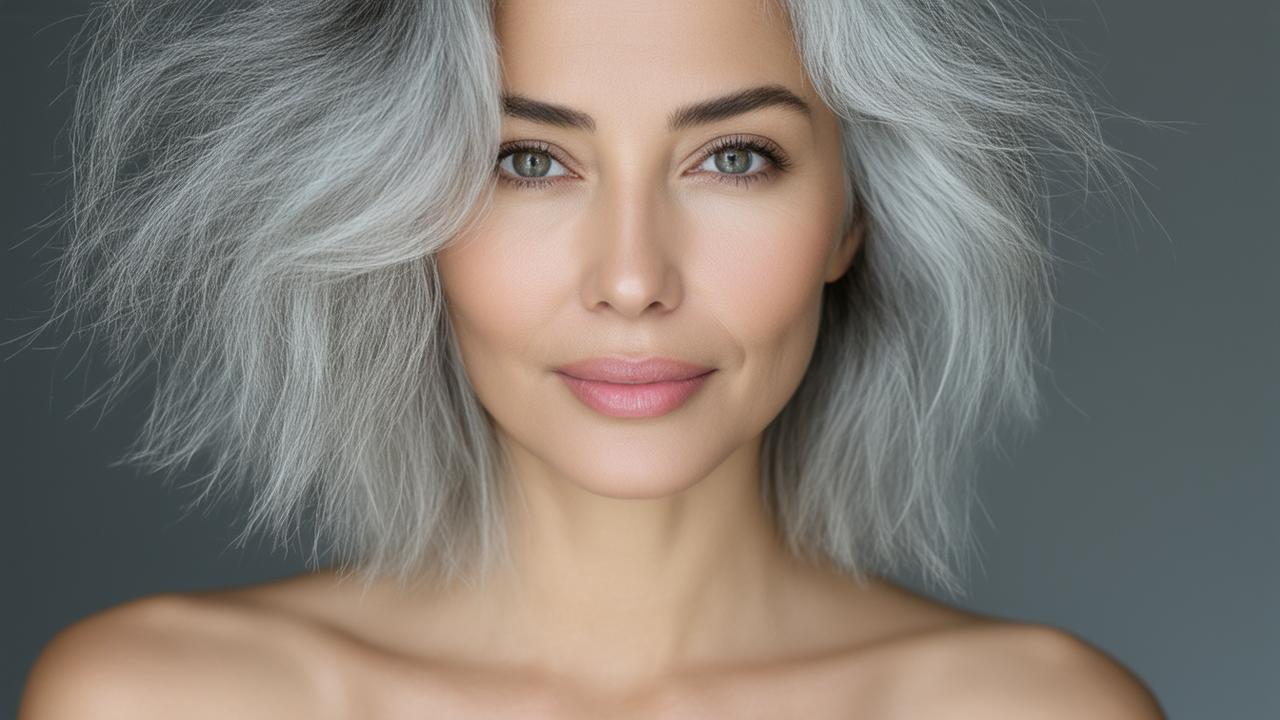
The first time you see a glint of silver in your fringe, it feels like someone has quietly changed the lighting on your life. One moment you’re breezing through a Tuesday morning, coffee in hand, the next you’re paused in front of the bathroom mirror, fingers gently tugging at a stubborn grey strand that refuses to blend in. In Australia, where the sun is harsh, the lifestyle is relaxed, and “low-maintenance” is almost a national value, more and more people are asking the same question: do I really want to keep colouring my hair… or is there another way?
The Quiet Revolt Against the Colour Bowl
For decades, the answer to grey hair was automatic: book an appointment, pick a shade, cover it up. Salons across Sydney, Brisbane, Melbourne and Perth filled with the scent of ammonia and strong developer, the familiar sting at the hairline, the rustle of foils. We accepted it as part of the cost of “looking put together,” a line item in the budget right next to gym memberships and skincare.
But something has begun to shift. In living rooms in Adelaide, on verandas in Darwin, during coastal walks in Byron and Fremantle, conversations are changing. The question isn’t just “How do I hide my greys?” anymore. It’s “How can I work with them? How can I look fresher, younger, and more ‘me’, without committing to a lifetime of dye?”
It’s a quiet revolt—less dramatic than shaving your head or going full platinum—but it’s powerful. Australians are starting to lean into a gentler, more flexible approach to ageing hair. Rather than full-coverage colour that demands root touch-ups every few weeks, new techniques are surfacing that blend, soften, and enhance grey instead of smothering it. The result? Hair that looks natural, dimensional, and surprisingly youthful—without the hard line of obvious regrowth.
The New Trend: Blending, Not Hiding
The Rise of Grey-Blending and Lived-In Colour
The new trend isn’t about declaring war on your grey hair. It’s about strategic peace talks. Stylists across Australia are seeing a rise in “grey-blending” services: techniques that weave your natural grey into a flattering, modern colour story rather than trying to bury it.
Think ultra-fine highlights and lowlights threaded through your natural shade, soft balayage that kisses the hairline and temples, or translucent toners that nudge your greys into chic silvery beige or smoky champagne. Instead of a block colour that screams “dyed,” the effect is soft and multi-dimensional—so your eye doesn’t zero in on any one strand. It just sees “healthy, youthful hair.”
In a Marrickville studio, a stylist lightens just a few sections framing a client’s face, diffusing the sharp contrast between dark roots and bright white strands. In a Hobart salon, another client opts for a pearl-toned glaze over her greys, turning what she once called “wiry, dull bits” into something that looks deliberate and luminous.
And here’s the real magic: because the new trend blends grey into a tonal family rather than disguising it, regrowth is far less obvious. You get those precious extra weeks — sometimes months — between appointments. Less maintenance, more freedom.
Why This Looks Younger Than Full Coverage
It’s easy to assume “no greys = younger,” but that equation is starting to feel dated. Full-coverage, opaque colour can flatten the hair, making it look like a helmet rather than something alive and moving. In Australia’s famously bright light, solid blocks of dark colour can actually look harsher and age you, especially when skin tones soften and shift with time.
Blended, multi-tonal hair mimics what we naturally associate with youth: movement, light reflection, softness around the face. By allowing some grey to live in the mix—but edited, tinted, and supported—it gives the impression of vitality rather than denial. You’re not pretending you’re 22; you’re signalling that you’re comfortable in your skin, and you take care of yourself in a way that suits your life now.
What’s Actually Happening in the Chair?
From Drugstore Box to Studio Palette
So what does this look like, practically? Let’s say you’re sitting in a salon in Canberra on a Saturday morning. You’ve arrived with 40–60% grey at the temples and scattered through the crown, plus years of old colour hanging onto the ends. Instead of the usual “What shade are we doing?” your stylist might start with: “How much grey do you want to see?”
From there, they might suggest:
- Micro-highlights: Very fine, scattered highlights just a shade or two lighter than your natural colour, to blur the contrast with grey.
- Shadow root: A soft, slightly deeper colour near the scalp that gradually melts into lighter lengths, making regrowth incredibly subtle.
- Toners or glosses: Demi-permanent shades that adjust the tone of your greys—cooling down any yellowish tinge from the sun, or warming them up to flatter your skin.
- Face-framing lights: A few brighter pieces near the face that draw attention to your eyes and cheekbones, creating a lift without needles or surgery.
These colours are usually demi- or semi-permanent, free from harsh ammonia, and less likely to cause that brittle, over-processed feeling so many of us know too well. They fade gently instead of growing out in that tell-tale “band.”
The Scalp and Health Bonus
Many Australians are also thinking harder about what they’re putting on their scalp. With rising awareness of sensitivity, allergies, and endocrine-disrupting chemicals, the idea of marinating your head in strong dyes every few weeks has lost some of its appeal.
Blending approaches often rely on:
- Less frequent colour sessions
- Milder formulations that sit mostly on the hair shaft, not the scalp
- Glosses and toners that condition as they tint
For anyone who’s ever walked out of a salon with a tight, itchy scalp or redness around the hairline, that’s no small win.
Matching the Trend to Australian Life
Sun, Salt, and Surf: Working With Our Climate
Australia is not gentle on hair. Between UV rays, pool chlorine, salty ocean dips and hot winds, our strands do some hard miles. Traditional permanent dyes can fade brassy, turn flat, or expose harsh demarcation lines under that kind of pressure.
Grey-blending and lived-in colour actually work with the climate. When your colour is intentionally varied—tiny ribboned lights here, soft shadows there—the sun’s natural lightening looks less like damage and more like an upgrade. That bit of extra lift at the tips after a Gold Coast summer? It often just enhances the effect.
And when your greys peek through a little more after a few months, they don’t scream “I’ve missed my appointment.” They just read as part of the blend—especially when you maintain tone with home care.
| Approach | How It Looks | Maintenance Level |
|---|---|---|
| Full Grey Coverage | Solid, opaque colour, obvious regrowth line | High – root touch-ups every 3–6 weeks |
| Grey-Blending | Soft, natural, multi-tonal, greys diffused | Medium – refresh every 8–12 weeks |
| Natural Grey with Toner | Natural grey enhanced, less yellow, more shine | Low – gloss every 10–14 weeks |
The Budget and Time Equation
There’s also a quietly practical side to this new wave. Life in Australia is not cheap. Between rising rents or mortgages, fuel prices, and the cost of simply enjoying our enviable lifestyle, the idea of tying yourself to expensive, frequent salon visits feels less and less appealing.
Grey-blending might cost a little more upfront than a box dye, but when you stretch appointments from every month to every two or three, the long-term maths begins to shift. Plus, the time saved—from not spending entire afternoons in the chair or wrestling with gloves and staining cream in the bathroom—is hard to overstate.
Looking Younger Without Pretending You’re Younger
Softness, Shine, and Shape Over “Not a Single Grey”
When people say, “You look younger,” they’re often responding to cues that have nothing to do with the exact percentage of grey in your hair. They’re seeing:
- Shine that catches the light when you move
- Soft edges and flattering tones around your face
- A hairstyle that feels current, not stuck in a past decade
- A sense of ease—like your look fits your life, not the other way around
The new trend leans into all of this. Instead of forcing your hair to resemble its 25-year-old self, it asks: what colour, tone, and cut make your eyes brighter? What makes your skin look clearer? What fits your lifestyle—kids’ sport on Saturdays in Geelong, board meetings in the CBD, or early swims at Bondi?
➡️ A psychologist is adamant : “the best stage in a person’s life is the one where they start thinking this way”
➡️ Goodbye Kitchen Islands : Their 2026 Replacement Is A More Practical And Elegant Trend
➡️ Goodbye steaming : the best way to cook broccoli to keep nutrients plus easy recipes to try
➡️ Behavioral scientists say that people who walk faster than average consistently share the same personality indicators across multiple studies
➡️ Banana peels in the garden: they only boost plants if you put them in this exact spot
➡️ Banana peels in the garden: they only boost plants if you put them in this exact spot
➡️ A retiree who lent his land to a beekeeper is told to pay farm taxes “I earn nothing from this,” he says, as the ruling sparks a heated national debate
Sometimes that means keeping some of your darker base and weaving greys into it. Sometimes it means lightening everything a notch or two so new whites slip in almost unnoticed. Occasionally, it means toning your natural grey into a silvery, beachy hue that feels more “Noosa chic” than “I’ve given up.”
The Emotional Shift
There’s something quietly radical about sitting in your hairdresser’s chair on a Wednesday night in Parramatta and saying, “I don’t want to hide it all anymore—just help it look good.” It’s a different tone from the old apology-laced, “I know, I know, my roots are terrible.”
This shift changes the conversation from fixing a problem to styling a feature. The greys become part of the story of your life—late-night drives, coastal holidays, heartbreaks, big wins—rather than a sign you’ve fallen off some impossible youth treadmill.
Starting Your Own Goodbye-to-Dye Journey
How to Talk to Your Stylist
If you’re feeling the tug to step away from full-coverage dyes, you don’t have to make a dramatic announcement. You can simply start by saying:
- “I’d like to see what my natural colour is doing and blend with it rather than fully cover it.”
- “I want my greys to look intentional, not like I missed an appointment.”
- “Can we move towards lower-maintenance colour over the next few visits?”
Show photos that feature soft, natural blends rather than perfectly uniform colour. Ask about demi-permanent shades, glosses, and highlight patterns that are specifically designed for people with some grey, not despite it.
Supporting the Look at Home
At home, small tweaks have a big impact:
- Use a gentle, sulphate-free shampoo to protect delicate grey strands and keep toner from washing out too quickly.
- Consider an occasional purple or blue shampoo if your greys skew yellow in the Aussie sun—just not every wash, or you might overdo the cool tones.
- Lean on leave-in conditioners and lightweight oils; grey hair can be drier and more porous, and shine always reads as youthful.
- Protect with hats or UV sprays when you’re out in harsh midday light—great for both your hair and your skin.
None of this needs to be a big production. It’s about small, consistent choices that support the new relationship you’re building with your hair.
FAQs
Will blending my grey hair really make me look younger?
Often, yes—because the goal is softness and dimension, not pretending you don’t have any grey at all. When grey is blended and toned, it can brighten your face, soften harsh lines, and add movement to your hair. People usually notice that you look fresher or more rested, without being able to pinpoint exactly why.
How long does grey-blending last compared to traditional dye?
Grey-blending tends to grow out more gracefully. Depending on your hair growth and the specific technique, you might only need to refresh every 8–12 weeks, sometimes even longer, whereas traditional root coverage often demands a visit every 3–6 weeks.
Is this suitable for both women and men in Australia?
Absolutely. Men are increasingly opting for subtle blending and toning instead of stark, obvious colouring. Whether you’re in a corporate role in Sydney or working outdoors in rural WA, a blended approach can look natural, professional, and low-maintenance.
Can I do grey-blending at home with box dye?
True grey-blending is technique-based and best done by a professional. Box dyes are designed mainly for full coverage and can create harsh lines or flat colour. If you want a genuinely natural, dimensional result, it’s worth booking with a stylist, at least for the initial transformation.
What if I decide I miss my old fully coloured hair?
You’re not locked in. One of the advantages of this trend is its flexibility. You can always move back to fuller coverage, adjust the tone, or experiment with different blends over time. Think of it as an evolving relationship with your hair, not a one-way door.
Will my hair be healthier if I stop using permanent dyes?
Most people notice an improvement. With less frequent colouring, gentler formulations, and a focus on condition and shine, hair often feels softer, less brittle, and more responsive to styling. Combined with some basic sun and heat protection, your strands can bounce back surprisingly well.
How do I know if grey-blending is right for me?
If you’re tired of visible roots, frequent salon appointments, harsh regrowth lines, or the feeling of “fighting” your hair, it’s worth exploring. A consultation with a colourist who understands grey-blending can help you decide how bold or subtle you’d like the change to be—and how to make your natural shift towards silver work for you, not against you.





