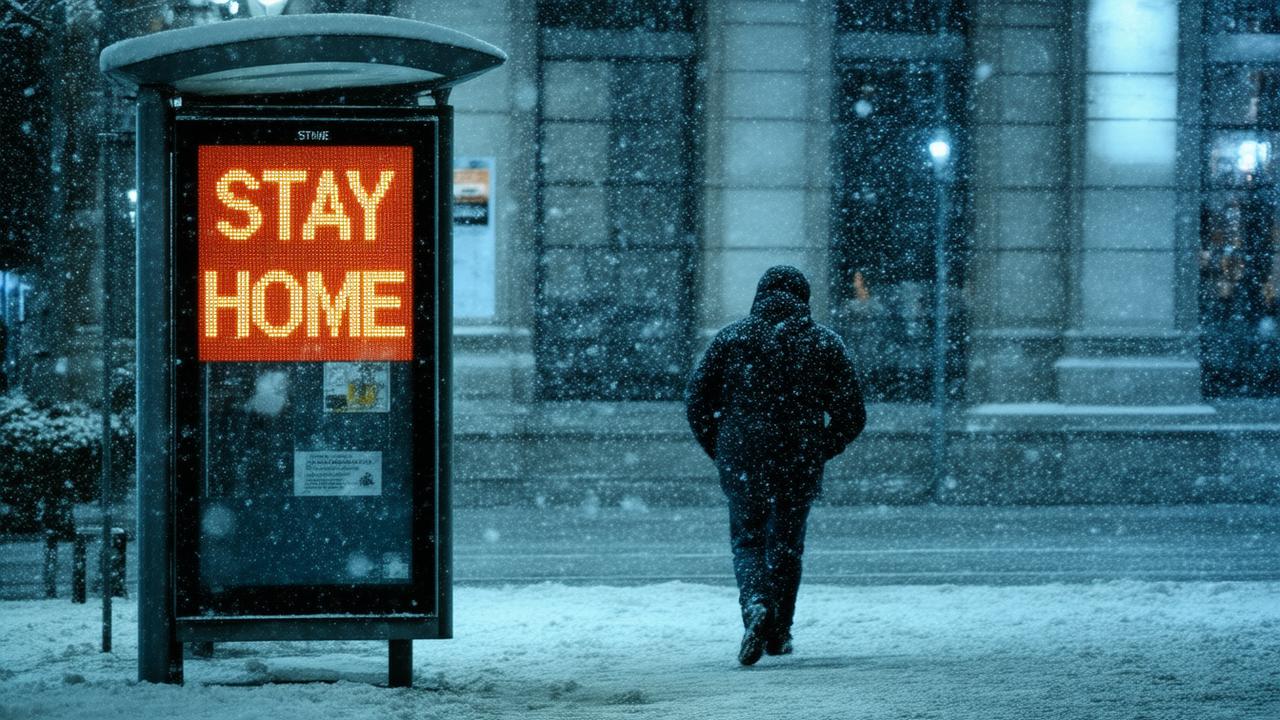
The first flake lands on the windscreen just after dusk, a slow‑drifting scrap of white that seems almost embarrassed to be here. This is Australia, after all—land of scorched summers, salt‑crusted utes and Christmases at the beach. Yet tonight, in the high country and across a swathe of the south‑east, the air feels heavy and strange, like the sky is holding its breath. Forecast models whisper the same message: heavy snow is coming, and it’s coming fast.
The Night the Road Went Quiet
By 7pm, the temperature has slipped below freezing on the alpine approaches. Damp bitumen, glazed by sleet, takes on a lifeless sheen in the fading light. At a servo on the outskirts of Jindabyne, the smell of diesel and hot pies mingles with the sharp metallic scent of cold air. Inside, the radio crackles with a familiar, measured voice:
“Authorities are urging people to delay all non‑essential travel. If you can stay home, stay home.”
On the wall behind the counter, a corkboard carries a clutter of handwritten notes—lost dogs, share‑rides to the snow, seasonal work offers. Tucked between them, a fresh printout shows bold red text: SEVERE WEATHER WARNING – HEAVY SNOWFALL AND DANGEROUS DRIVING CONDITIONS. The attendant glances at it, then back at the line of customers. A tradie in a hi‑vis jacket scrolls through his work group chat, jaw tightening as messages ping in.
“Boss reckons we’re still on for tomorrow,” he mutters. “Snow or no snow.”
Outside, the first swirl of flurries thickens, turning the glow of the streetlights into hazy halos. The world softens, muffled. For a moment, it looks almost magical—until the first truck rumbles past, wheels hissing on the slick road, and you’re reminded that this story isn’t really about pretty snow at all. It’s about the uneasy tug‑of‑war between safety and business as usual.
When Warnings Meet the Weekly Roster
The pattern is familiar now. The Bureau of Meteorology pins up a warning: heavy snow, dangerous wind chill, possible white‑outs above 800 metres, maybe even lower. State transport authorities jump in with their own alerts, mapping out likely closures and chain‑fitting zones. Police and SES crews take to social media, urging drivers to rethink that late‑night run, that early commute, that “quick trip” over the range for a meeting that could easily be a call.
Yet, in offices and warehouses from Canberra to the outer suburbs of Melbourne, group emails and chat messages tell a different story: “We’re open as usual.” “Please make every effort to attend.” “Business continuity is essential.”
If you live in the Snowy Mountains, the Victorian Alps, or the higher country of Tassie, you might recognise this quiet conflict. You listen to the Premier’s press conference: stay off the roads unless it’s absolutely essential. Then your boss says, “See you at eight.” Which message wins?
For many Australians, especially casual workers or those on tight contracts, the choice is painfully simple. No work often means no pay. Stay home for safety, and the electricity bill or the rent might not care about the weather.
The snow itself doesn’t care either. It just falls—thick, soft, indifferent—onto roofs and roads and windscreen wipers, obscuring the painted lines and swallowing the edges of the world in slow, drifting silence.
The First Real Bite of Winter
In a country more at ease with drought than blizzard, snow catches us off guard. Here, winter is usually a sharp wind off Bass Strait, a frosty windscreen in Ballarat, or a wet, sulking week along the Illawarra. But in the alpine regions, winter bites harder. Roads that felt benign and winding on a sunny autumn afternoon become treacherous ribbons under a slurry of snow and black ice.
Inside a highway patrol car edging its way up a mountain pass, the dashboard lights glow blue and green against the dark. A constable stares ahead, wipers panting across the glass, snowfall thickening into a wall of white. He knows these nights: the spin‑outs on curves, the tourists in rental SUVs with the wrong tyres, the locals who overestimate their own experience. He also knows the phone calls that ripple out from a single accident—the family woken at midnight, the station briefing, the paperwork that reduces shattered glass and broken bones into neat, clinical sentences.
Tonight, he’s hoping the roads will stay quiet. The more people who listen and stay home, the less he’ll see in the beam of his headlights.
A Country That Still Thinks in Summer
Australia’s relationship with winter weather is often oddly dismissive. We joke about “soft” cold compared to Europe, brag about going barefoot to the letterbox in July, treat snow like a novelty reserved for ski resorts and social media selfies. But the climate is changing, and with it, the edges of what’s “normal” are blurring. More erratic systems sweep across the south‑east. Rain turns to sleet, sleet to snow, and suddenly towns that usually only flirt with frost are seeing their front lawns turn white.
Our infrastructure, policies, and work culture are still catching up. Many of our roads in high‑risk zones weren’t designed with regular, heavy snowfall in mind. Our vehicle fleets are dominated by cars with tyres more suited to hot asphalt than ice. Our schools and workplaces may have fire plans, but far fewer have truly flexible severe‑weather policies that empower people to stay put without financial penalty.
So when authorities tell people not to drive—especially at night, especially on back roads or over ranges—there’s an echo of uncertainty. Will the boss back me up? Will my job be safe if I don’t show? Will anyone take this snow as seriously as a flood or a fire?
The Push to Keep the Lights On
Meanwhile, businesses look at the same forecast and feel a different kind of pressure. A missed day can ripple through supply chains: deliveries delayed, perishable stock wasted, bookings cancelled. For small operators, a single day’s closure might tip the line between profit and a loss they can’t afford.
So the emails go out: “We’re monitoring conditions, but plan to operate as normal.” Some add, almost as an afterthought: “Use your judgement when travelling.” It’s a way of shifting the risk down the ladder. The company keeps its doors open, technically complying with warnings, while the burden of decision lands firmly on the shoulders of individual staff.
In a Wagga logistics depot, a night‑shift driver stares at his route on a clipboard. It traces a path over high ground that the weather bureau has already shaded in cold blue on their maps. His supervisor shrugs.
“If it’s too bad, just pull over somewhere safe.”
Safe. On a highway with limited shoulders, dwindling visibility, and a blizzard that might intensify by the hour. The snow, once again, has no opinion. It just keeps falling.
Reading the Storm: What the Forecast Really Means
For many Australians, snow forecasts still feel vague, like an invitation to adventure rather than a clear safety warning. Yet those dense meteorological bulletins hide very practical advice if you know how to read them. Phrases like “heavy falls above 800m” might sound distant or irrelevant—until you realise how many well‑travelled roads nudge above that line, even for a few kilometres.
Tonight’s warning maps a broad smear of white and blue across parts of Victoria, New South Wales and Tasmania. It mentions reduced visibility, rapidly changing conditions, and the potential for roads to become impassable. In plain language, that means you can leave home under gloomy skies and still, dry roads, then find yourself just an hour later in a swirling, disorienting white‑out with nowhere safe to turn around.
Authorities know this pattern too well. It’s why they often urge people to change plans before the first snowflakes arrive—long before tyres lose their grip and brake lights blur in the storm. They’re not imagining some apocalyptic scenario; they’re remembering last winter, and the one before that, and all the quiet tragedies that pile up along with the drifts.
A Quick Glance Guide for Drivers
If you’re glancing at your phone, weighing up whether to gamble on that late‑night drive, a few essentials can help sharpen the decision. Here’s a simple comparison to hold in mind when heavy snow is forecast for your area:
➡️ Workers in this role often earn more by becoming specialists rather than managers
➡️ If you want a happier life after 60 be honest with yourself and erase these 6 habits
➡️ Most people store cables incorrectly, this method keeps them accessible
➡️ The hidden cost of financial procrastination most people overlook
➡️ Seniors Applaud New EU Directive Ensuring Lifetime Renewal of Driving Licences After Seventy
➡️ Psychology says people who clean as they cook, instead of leaving everything until the end, consistently share these 8 distinctive traits
➡️ Scientists observe a hidden water reservoir beneath the desert larger than expected
| Factor | Risk if You Drive | Benefit if You Stay Home |
|---|---|---|
| Road conditions | Black ice, reduced grip, hidden hazards under snow | No exposure to ice or sudden white‑outs |
| Visibility | Headlights reflected in swirling snow; harder to see lines and edges | You can clearly monitor updates and conditions from home |
| Emergency response | Longer response times if you crash in remote or alpine areas | You’re not adding to the load on SES, police, and paramedics |
| Work obligations | Arrive stressed, late, or not at all if conditions worsen | Time to negotiate remote work or alternate plans safely |
| Personal safety | Higher risk of collision, injury, or being stranded | You and your family are out of harm’s way |
It’s rarely about whether you can drive in the snow; it’s about whether you need to. When emergency services ask you to stay off the roads, they’re not trying to ruin your plans. They’re trying to make sure everyone—drivers, responders, and road crews—make it through the night in one piece.
Rewriting the Rules of “Showing Up”
Heavy snow in Australia is a kind of test. Not of how tough we are, or how well we can handle a skid, but of what we value when safety and productivity collide. It challenges the old image of the “reliable worker” as someone who pushes through anything—sickness, storms, fire smoke, icy roads—to stand behind a counter or at a desk right on time.
In recent years, we’ve seen how quickly workplaces can adapt when pushed: remote logins, video meetings, flexible hours. The same creativity we used to work through lockdowns can be applied to weather too. A culture that treats staying home in dangerous conditions as an act of responsibility, not laziness, is a culture that lines up more closely with the language of official warnings.
Imagine a snow event where the commute isn’t a hero’s journey, but a sensible question: Is this trip worth the risk to me, to my family, to the strangers who might have to rescue me? Imagine businesses that send out messages like: “We’re closed on site today; if you can work from home, do. If not, you’ll be paid as usual. Safety first.”
It’s not fantasy. Some Australian organisations are already moving in that direction—especially those that operate in disaster‑prone regions and have learned, often the hard way, that people can’t do their jobs if they’re in hospital, or worse.
Out on the road, the constable in the patrol car turns off onto a side street. Snow is banking up on the verges now, swallowing letterboxes and tyres. He passes a house where kids are pressed to a frosted window, faces lit by the glow of a television news broadcast covering the same storm that’s wrapping their town in white. The roads, so far, are quiet. Maybe, he thinks, the warnings have landed this time.
Listening to the Weather, Not Just the Roster
By midnight, the storm is in full voice. Roofs creak under the gathering weight. Tree branches bow low, shedding clumps of snow that land with soft, muffled thuds. The world feels smaller, sound swallowed as the flakes thicken. In some houses, people have pulled mattresses into living rooms, just in case the power goes. Torches and candles line the tables. The kettle, for now, still hums.
On kitchen benches, phones buzz with updates: text alerts about closed mountain passes, delayed buses, schools shifting to online learning. Somewhere between these official warnings and the expectations of employers sits each individual Australian, weighing up a simple, brutally honest question: What matters more tonight—being present at work, or being here, safe, when the sun comes up on a very different landscape?
In the morning, the news will show the usual montage: cars half buried on the verge, tow trucks inching along icy roads, aerial shots of snow‑dusted paddocks that look like they belong somewhere far from gum trees and corrugated sheds. There will be stories of close calls and quiet heroics—neighbours checking on each other, SES volunteers trudging through drifts, farmers digging paths to stock.
But there is another story, less visible, written in the number of people who simply stayed home. The parents who cancelled the trip over the range. The café owner who decided not to open. The manager who sent a late‑night message telling the team to sleep in and log on from home if they could. A collective choosing, in small, stubborn ways, to listen to the weather over the roster.
The snow, as ever, doesn’t care. It only knows how to fall—soft and relentless, cloaking highways and hilltops alike. The question is whether we, as a country more used to sunburn than snowdrifts, can learn to pay attention when the sky says, gently but firmly: Not tonight. Stay home.
Frequently Asked Questions
Is it really that dangerous to drive in Australian snow?
Yes. Even if you’re used to long drives or rough roads, snow and ice change everything. Many Australian roads and vehicles aren’t set up for regular snow, and conditions can deteriorate far faster than you expect, especially at night and on higher ground.
What should I do if my employer expects me to come in during a heavy snow warning?
Explain the official advice clearly and calmly, and ask about alternatives such as working from home or adjusting hours. If you feel unsafe travelling, prioritising your safety is reasonable—particularly when emergency services are actively asking people to stay off the roads.
How can I prepare at home for a heavy snow event?
Have torches, spare batteries, blankets, basic food supplies, and any essential medications ready. Charge devices in advance, keep pets indoors if possible, and avoid going outside unnecessarily, especially near large trees under heavy snow load.
What if I absolutely must drive during the snowfall?
Check the latest road and weather updates, carry warm clothing, water, and a charged phone, reduce your speed significantly, and leave far more distance than usual between vehicles. Avoid back roads and high passes if there is any safer alternative.
Why do authorities and businesses sometimes give conflicting messages?
Authorities focus on public safety and emergency response capacity. Businesses are often trying to manage financial pressure and continuity. Until workplace cultures and policies more fully align with severe‑weather advice, these tensions will continue—but you still have the right to consider your own safety first.





