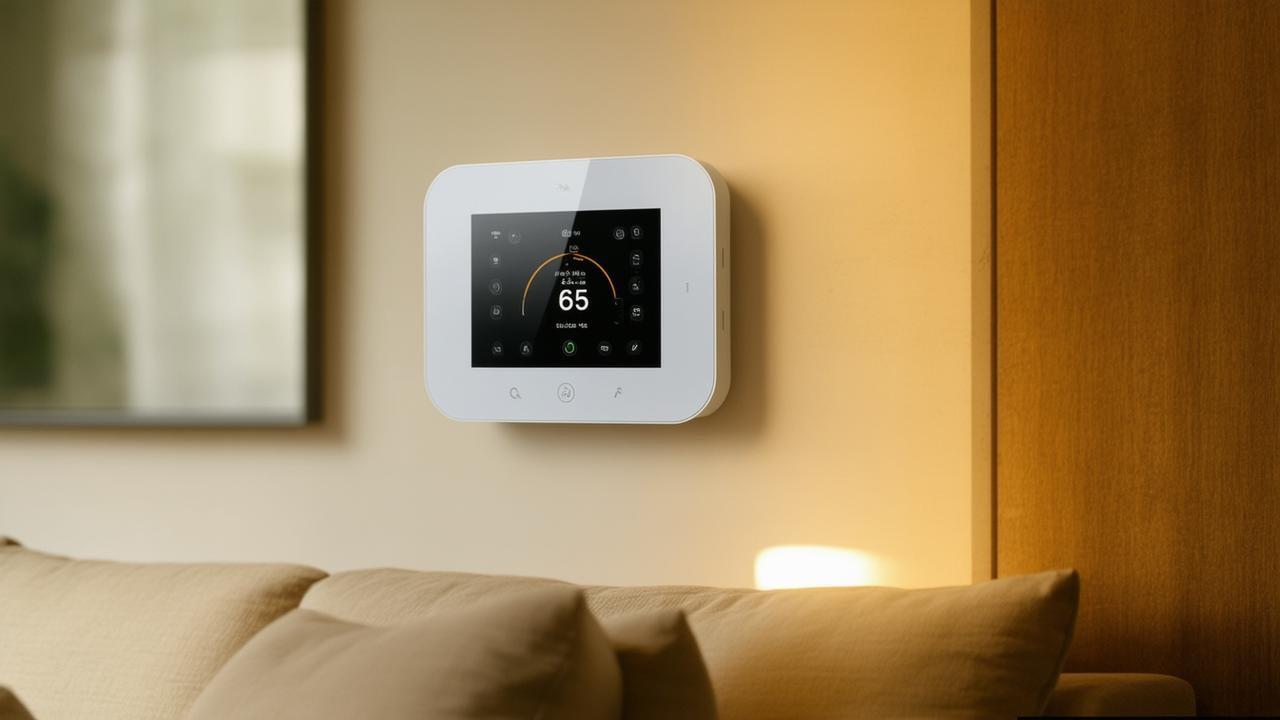
The first cold night always sneaks up on you. One day you’re padding barefoot across warm floorboards, and the next you’re standing in the dark kitchen, shivering in your robe, waiting for the kettle to boil and wondering if it’s finally time to touch the thermostat. For years, Australians have been told to aim for 19 °C. Nineteen became almost a moral number: frugal, sensible, climate‑conscious. But step into any home on a July evening and you’ll quickly learn a quieter truth—most of us don’t actually live at 19 °C. We nudge the dial a little higher, then a little higher again, until comfort wins over guilt.
The end of the 19 °C era
The 19 °C rule has lingered in our minds like an old government slogan from the ‘80s—a relic from an era of thin carpets, leaky windows, and power stations puffing away without much public scrutiny. It came originally from a simple idea: if we all kept our homes cooler in winter, we’d burn less energy and cut both bills and emissions. Noble, yes. Comfortable? Not always.
Ask around your workplace or among parents huddled on the sidelines of a winter footy game, and you’ll hear familiar confessions: “We’re meant to keep it at 19, but honestly, we sit closer to 21,” or “The kids freeze at anything under 22.” The reality is that 19 °C never felt like a one‑size‑fits‑all temperature for a continent that swings from Hobart sleet to Darwin’s sweaty build‑up.
Over the last few years, health researchers, energy modellers, and building experts have quietly been rethinking that magic number. They’ve looked at how our bodies respond to cold, what our houses are actually built like, and how modern heating systems behave. Their conclusion is both comforting and challenging: 19 °C is too blunt a rule for the world we live in now.
There’s a new temperature range in town—and it’s far more nuanced, kinder on your body, and, if you play it right, not necessarily harder on your wallet.
The temperature experts now recommend
So where should the dial really sit on a winter’s night in Australia? When you strip away the slogans and the guilt, experts are converging on a more flexible guideline:
For living areas while you’re awake, most experts now recommend around 20–21 °C for healthy adults, and 21–23 °C for more vulnerable people—children, the elderly, or anyone with health conditions sensitive to cold.
It’s a range, not a rule carved into stone. That range is based on a balance of three things: thermal comfort, health, and energy use. At about 20–21 °C, a healthy adult in a jumper and socks is typically comfortable. Below 18 °C, health risks begin to rise over longer exposures: increased blood pressure, higher risk of respiratory infections, and strain on people with heart or circulation problems. That’s not scaremongering—it’s the slow, invisible impact of living in a chilly house day after day.
For older Australians, babies, or anyone managing illness, even 20 °C can be a bit too cold, especially in draughty homes. That’s where the slightly higher range—21–23 °C—comes in. It’s less about luxury and more about reducing stress on the body. In other words, if your Nan likes the lounge at 22 °C, she’s not being “soft”; she may simply be keeping her body in a safer zone.
Crucially, experts also emphasise something we don’t talk about enough: your clothing, your activity level, and how well your home is sealed and insulated matter as much as the number on the thermostat. A well‑insulated Melbourne terrace at 20 °C can feel cosier than a draughty Queenslander at 22 °C with the cold wind sneaking under every door.
Feeling cold, feeling safe: what your body is telling you
Imagine a July evening in Canberra. Outside, the sky is a bruise of blue‑grey; the frost is already forming on the neighbour’s roof. Inside, the heater hums gently. The thermostat glows: 19.0 °C. You pull your jumper tighter. Your toes feel like small, resentful ice blocks. Technically, you’re obeying the “rule.” Practically, your body is sending a different message.
Humans aren’t built to be thermometers. We don’t experience temperature as a number; we feel it as comfort or strain. When your home hovers too low for too long, your blood vessels clamp down to preserve heat, your muscles tense, and your breathing subtly changes. Over days and weeks, that constant low‑level strain can creep into your mood and sleep, and for some, into their medical records.
Public health researchers now talk about the concept of a “healthy minimum indoor temperature.” For most people, that sits at around 18 °C—below that, the health risks start to meaningfully rise. But here’s the catch: 18 °C is a minimum, not a comfort target. Aiming to live at that minimum all winter to save power is a bit like driving forever on the fuel light—possible, but not particularly wise.
That’s why many Australian health and energy experts now nudge people toward that 20–21 °C comfort band as a practical sweet spot. It’s warm enough for your body to relax, but low enough that you’re not burning through kilowatts just to wander around in a T‑shirt in July. It’s not about “toughening up”; it’s about paying attention to how your body actually feels and choosing a temperature that supports, rather than battles, its natural rhythms.
How to heat smarter, not just hotter
Of course, the obvious question knocks on the door: if we move from 19 °C to, say, 21 °C, are we just signing up for bigger bills and more emissions?
Not necessarily. The lesson from energy experts is that the number on the thermostat is only one lever—and often not the most powerful one. What matters is how efficiently your home holds onto that warmth, and how cleverly you use your heating.
Picture two neighbours on a cold Adelaide night. One has a well‑insulated home with decent curtains, a split‑system heat pump, and doors closed to unused rooms. They set their living room to 21 °C in the evening, then let it drift down overnight. Next door, someone with a drafty house and an old gas heater blasts 24 °C for short bursts, then turns it off when it “feels warm enough,” allowing the house to plunge back down before repeating the cycle. The first house is warmer, more stable—and often cheaper to run over the season.
So if you’re aiming to heat smarter at a modern, healthier temperature range, think in terms of layers of defence rather than one heroic thermostat setting:
- Seal the leaks: Draught stoppers, foam seals around doors and windows, and blocking unused vents can dramatically cut heat loss.
- Respect the humble curtain: Thick, well‑fitted curtains or blinds, drawn as soon as the sun dips, can turn icy glass into a solid barrier.
- Zone your home: Close doors to rarely used rooms. Heat the spaces where you actually live—often just the living room and bedrooms.
- Use efficient heaters: Modern reverse‑cycle air conditioners (heat pumps) are generally more efficient than older electric or gas heaters, especially if sized correctly.
- Dress for the season: Slippers, socks, and a good jumper can mean the difference between needing 23 °C and being perfectly content at 20–21 °C.
Suddenly, 21 °C starts to look not like indulgence, but like part of a well‑calibrated winter strategy.
Different homes, different numbers
Australia’s housing stock is a patchwork of eras and climates: post‑war weatherboard cottages in Hobart, high‑ceilinged Queenslanders in Brisbane, brick veneers in Sydney’s west, and sleek modern apartments in inner‑city Melbourne. Expecting them all to behave the same way at 19 °C was always wishful thinking.
In a sun‑drenched Darwin wet season, “heating” is more about taking the damp edge off a slightly cool evening—if it happens at all. In the Blue Mountains, where frost clings to the gums and mist crawls low across the valley, 21 °C can feel like a gentle act of self‑preservation.
Even within one city, the stories differ. A young couple in a new, well‑sealed townhouse in Perth might keep their living room at 20 °C with barely a whisper from their split system. Across town, an older renter in a single‑glazed unit might run a small heater harder, just to scrape 19 °C in the lounge while their bedroom stays stubbornly cold.
➡️ The streak-free window-cleaning method that still works flawlessly even in freezing temperatures
➡️ The quick and effective method to restore your TV screen to like-new condition
➡️ Thousands of passengers stranded in USA as Delta, American, JetBlue, Spirit and others cancel 470 and delay 4,946 flights, disrupting Atlanta, Chicago, New York, Los Angeles, Dallas, Miami, Orlando, Boston, Detroit, Fort Lauderdale and more
➡️ The sleep pattern that predicts alzheimer’s risk 15 years before symptoms
➡️ These zodiac signs are destined for major prosperity in 2026, according to astrological forecasts
➡️ The RSPCA urges anyone with robins in their garden to put out this simple kitchen staple to help birds cope right now
➡️ The RSPCA urges anyone with robins in their garden to put out this simple kitchen staple today
This is why experts increasingly talk about temperature ranges and context, rather than universal rules. They encourage people to experiment: start at around 20–21 °C for living areas, see how your body feels over an evening, check your energy use, and adjust in small increments. For sleeping, many people are comfortable in cooler rooms—around 17–19 °C—with good bedding. The point isn’t to chase someone else’s magic number, but to discover a zone where your comfort, health, and bills can co‑exist.
A quick comparison: old rule vs new reality
Here’s a simple snapshot of how the old 19 °C idea stacks up against what experts now tend to recommend for Australian homes:
| Aspect | Old 19 °C Rule | Updated Expert Guidance |
|---|---|---|
| Living areas (healthy adults) | Aim for 19 °C to save energy | Comfort range around 20–21 °C |
| Vulnerable people (elderly, babies, illness) | Often still told 19 °C | Safer range around 21–23 °C |
| Health focus | More on energy saving than health | Recognises minimum healthy indoor temps |
| Flexibility | Single target number | Range adjusted for climate, house, clothing |
| Energy strategy | “Turn it down” as main tool | Combine modest temps with insulation, zoning, efficiency |
Designing your own winter comfort rule
In the end, the thermostat is just a tiny plastic storyteller on your wall. It flashes a number, but the real story is written in your breath in the morning, your sleep at night, your power bill at the end of the quarter, and the quiet ease—or tension—in your muscles as you sit on the couch listening to the rain against the windows.
As the 19 °C rule fades into history, a more personal, thoughtful approach is taking its place. For many Australians, that will look something like this:
- Set living areas initially to around 20–21 °C and see how it feels over a few evenings.
- For older family members, very young children, or anyone with health vulnerabilities, lean closer to 21–23 °C, especially in rooms where they sit or sleep.
- Keep bedrooms a little cooler if you’re comfortable, focusing on good bedding rather than higher air temperatures.
- Pay as much attention to draught sealing, curtains, and closing doors as you do to the thermostat setting.
- Watch your energy use over a month and tweak by half a degree or a degree at a time, rather than making big swings.
On some nights, you might drop back to 19 °C with a thick jumper on and feel perfectly fine. On others, after a week of southerly winds and long commutes in the dark, you might decide that 21 °C and a hot cup of tea is what keeps your shoulders from climbing up around your ears. That’s not weakness; it’s listening.
Winter in Australia isn’t going anywhere. The frosts will still whiten paddocks on the outskirts of Ballarat, the westerlies will still shove rain horizontally across Fremantle streets, and those crisp, clear Sydney mornings will still have you hesitating before leaving the duvet. But the idea that virtue lives exclusively at 19 °C—that story is over.
Now, the invitation is simpler and more humane: find the temperature that keeps you well, treat energy as a precious resource, and tune your home, layer by layer, into a place where you can exhale fully when you walk through the door.
Frequently Asked Questions
Is it wasteful to heat my home to 21 °C instead of 19 °C?
Heating to 21 °C can use more energy than 19 °C, but it isn’t automatically “wasteful.” If that extra warmth keeps you healthier and allows you to heat fewer rooms more consistently, the overall impact can be reasonable. Pair slightly higher temperatures with good insulation, curtains, and efficient heaters to keep your bills and emissions under control.
What’s the minimum safe indoor temperature in winter?
Many health experts point to around 18 °C as a minimum safe indoor temperature for prolonged periods, especially for living spaces. Below this, health risks—particularly for older people or those with heart and lung conditions—begin to rise. Comfort targets, however, are usually a bit higher, around 20–21 °C for healthy adults.
Should I heat my bedroom at night?
Not everyone needs to heat their bedroom. Many people sleep comfortably in cooler rooms (around 17–19 °C) with good bedding and warm sleepwear. However, for babies, older adults, or people with health conditions, a slightly warmer bedroom—closer to 19–21 °C—may be safer and more comfortable.
Are reverse‑cycle air conditioners really more efficient than other heaters?
In many Australian homes, yes. Modern reverse‑cycle air conditioners (heat pumps) can deliver several units of heat for every unit of electricity they use, making them more efficient than most electric resistance heaters and many older gas systems. Their efficiency improves in well‑sealed, well‑insulated spaces.
What if my house never feels warm, even at 21 °C?
If your home feels chilly at 21 °C, it might be losing heat through gaps, single glazing, or poor insulation. Start by sealing draughts around doors and windows, using thicker curtains, and closing off unused rooms. Over time, consider insulation upgrades if possible. Improving your home’s thermal performance often makes a bigger difference to your comfort than simply turning the thermostat higher.





