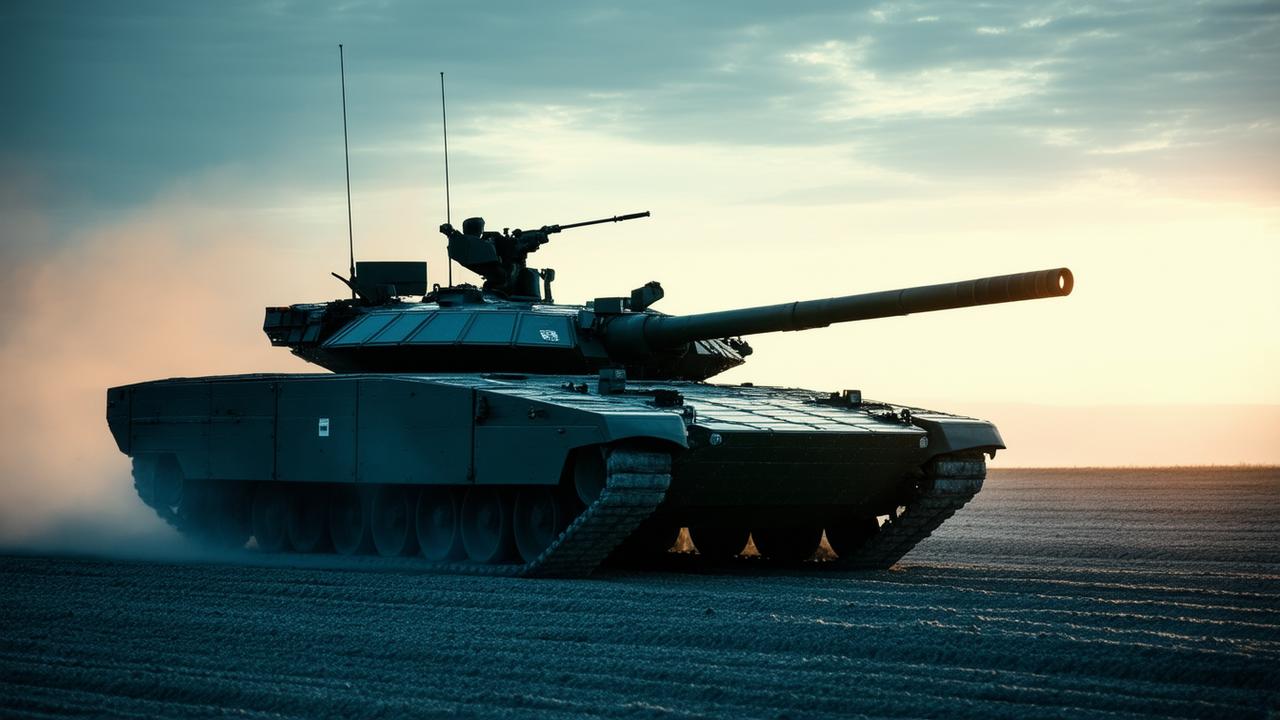
The news slipped quietly across the wires at first – just another financial headline in a world already loud with war talk and market noise. But if you paused, if you let the detail settle, you could almost hear the tectonic plates of Europe’s defence industry begin to shift. A family-owned company from the Czech Republic, Czechoslovak Group, was preparing to step out from the shadows and list on the stock exchange. Not in Berlin. Not in Paris. Somewhere else. A new European defence giant, emerging from a country many Australians still mostly associate with Prague’s fairy‑tale spires and cheap pints, not armoured vehicles and artillery systems.
A Defence Giant Growing in the Quiet Corners of Europe
To picture Czechoslovak Group – usually shortened to CSG – you almost have to forget the slick, glass‑and‑steel imagery that often accompanies giant defence contractors. This is a company that grew up among old factories and rail yards, in the industrial valleys of the Czech Republic and Slovakia, where the Cold War left behind sprawling plants and a deep reservoir of engineering know‑how.
Walk through those facilities today – at least in your mind – and you’d see sparks blooming from welding torches, the oil‑and‑steel smell of heavy machinery, and the squat silhouettes of trucks and howitzers standing in neat rows like hulking metal cattle. Workers in dark overalls move with the efficient choreography of people who have done this for years, yet the conversation at the coffee stations is no longer just about local contracts or modest export deals. It’s about IPOs, global markets and the sense that the company – and the region – is stepping into a much bigger role.
CSG did not appear out of nowhere. It’s the product of the post‑communist transformation of Central Europe, where once‑state‑owned plants were privatised, restructured, and gradually reconnected to Western supply chains. Over the past decade, as the geopolitical temperature rose, defence orders followed. Modernisation programs, NATO commitments, and then the shuddering shock of Russia’s full‑scale invasion of Ukraine gave new urgency to re‑arming Europe. CSG’s factories, which could refurbish, upgrade and build everything from artillery to ammunition and military trucks, suddenly found themselves at the centre of a regional rearmament story.
Why This Matters All the Way Down in Australia
From an Australian vantage point, Prague can feel as distant as the dark side of the moon. Our mental maps of defence usually run along the Pacific: Canberra to Washington, across to Tokyo, up to Seoul, down to maritime Southeast Asia. Europe is background noise – a place of old alliances, long wars and even longer memories. Yet this Czech IPO should make Australian ears prick up.
Australia is in the middle of its own strategic rethink. The Defence Strategic Review has made it clear: the comfortable assumptions of the past few decades are gone. The region is more contested, supply chains more fragile, and the expectation that “someone else” will always outrun us in capability no longer feels safe. As the AUKUS arrangements unfold and our gaze stays glued to the Indo‑Pacific, we are increasingly aware that industrial capacity – the ability to actually build and sustain things – is becoming just as strategic as military doctrine.
That’s where stories like CSG’s come in. They hint at a future where Australia’s defence security isn’t just about big partners like the US and UK, but a broader web of interlocking capabilities: from Scandinavian radar systems to Korean armoured vehicles to – potentially – Central European artillery or ammunition supply lines. A Czech company listing shares may seem irrelevant to life in Brisbane or Perth, but the consequences ripple through the global marketplace that ultimately shapes what the Australian Defence Force can buy, how fast, and at what cost.
Beyond Berlin and Paris: A New Power Map of European Defence
For decades, if you talked about European defence industry, two capitals dominated every conversation: Berlin and Paris. Germany with its industrial might; France with its tightly organised, state‑backed champions. Companies like Rheinmetall, Thales, Airbus Defence and Dassault were the default reference points. Smaller states were often seen as subcontractors, niche specialists, or legacy producers clinging to Cold War infrastructure.
CSG’s rise challenges that mental map. Here is a company from a country of just over 10 million people, gradually assembling a portfolio that spans ammunition plants, armoured vehicle manufacturing, radar and sensors, and even aerospace components. It buys struggling factories and gives them new life, connects them into a central management structure, and increasingly bids not only for local tenders but for major European contracts.
If the IPO lands at the scale being spoken about in European financial circles, CSG could vault into the top tier of the continent’s defence groups, sitting just behind the behemoths of Germany and France. Not bad for a business that traces its modern roots not to a global investment bank, but to a family‑run operation that saw opportunities in old factories others considered relics.
In that shift lies a message that resonates well beyond Europe: industrial power is decentralising. Capability is no longer the near‑exclusive preserve of a few great powers. Smaller, agile states with focused industrial strategies can now carve out meaningful, even decisive roles in defence supply chains. Australia has been trying to do exactly that – from shipyards in Adelaide to armoured vehicle production in Queensland. Watching how Central Europe does it is suddenly very relevant.
What the IPO Actually Means – and Why Markets Care
An initial public offering sounds dry, but beneath the jargon there’s a simple story: a company that once relied on private capital and retained earnings is opening its doors to public investors. In CSG’s case, the move is about more than just cash. It’s also a statement of intent and a test of appetite.
The world is in a new era of rearmament. European states are boosting defence spending, the US industrial base is under enormous strain, and procurement timelines are stretching. Investors, once wary of defence for ethical or reputational reasons, are beginning to look again at the sector’s “defensive” qualities in a financial sense – long‑term contracts, government buyers, predictable demand. CSG’s IPO is a way of turning that global mood into fuel for expansion.
For Australian observers, it’s a reminder that defence is no longer just a line item in a national budget; it’s a global asset class. Our own defence primes – and the local subsidiaries of global giants – will be operating in a market increasingly shaped by investor expectations, ESG debates, and long supply‑chain lead times. A Czech company’s share price in Prague or another European financial centre might one day influence the cost and speed with which artillery shells, trucks, or specialist components can be delivered around the world, including to Australian ports.
| Aspect | Czechoslovak Group (CSG) | Relevance for Australia |
|---|---|---|
| Geographic Origin | Czech Republic & Central Europe | Diversifies Australia’s traditional Euro focus beyond Germany/France |
| Core Strengths | Artillery, ammunition, military vehicles, aerospace components | Potential sources of niche capability and surge capacity |
| IPO Purpose | Raise capital, expand footprint, scale production | Signals rising competition and new partnership opportunities |
| Strategic Context | European rearmament, Ukraine conflict, NATO modernisation | Aligns with Australia’s focus on resilient, diversified supply chains |
| Industrial Model | Revives legacy plants, integrates them into a modern group | Offers lessons for reviving and networking Australian defence industry hubs |
Echoes in the Southern Hemisphere: Lessons for Australian Industry
Stand on a breezy wharf in Henderson near Perth, or in the dry heat of Townsville watching armoured vehicles kick up dust, and you feel the same hum that runs through CSG’s factories: the low, steady vibration of industry becoming strategy. Both Australia and the Czech Republic are mid‑sized countries, used to living in the strategic shadow of larger powers, yet increasingly aware that their security now depends on what their own factories can produce, not just on what allies promise to deliver.
Australia’s defence‑industrial journey has been uneven. We’ve had successes – world‑class niche technologies, globally competitive systems integration, promising missile programs – but also shipbuilding delays, shifting procurement priorities, and a stop‑start rhythm that has made it hard for local companies to plan. What makes CSG interesting is not that it has all the answers, but that it shows how a mid‑sized state can methodically assemble a serious industrial base by:
- Acquiring and modernising legacy plants rather than abandoning them.
- Focusing on specific product lines where it can be globally competitive.
- Leveraging regional security dynamics into predictable demand.
- Using public markets – like this IPO – to scale when the timing is right.
Australia faces a similar set of questions: which capabilities do we truly need to build here? Which can we safely buy off the shelf? Where do partnerships with European suppliers make sense, not just politically, but in terms of hard timing and cost realities? Heavy ammunition and land systems – spaces where CSG is active – could become pressure points if global demand spikes or if regional crises stretch supply. In that scenario, having multiple, well‑capitalised producers in the global market is good news for Canberra.
Could Australia and CSG Actually Cross Paths?
It’s entirely plausible. European defence primes are already embedded in Australian programs, from submarines and air warfare destroyers to radar and communications. As CSG steps onto the public stage and seeks new partners and markets, the Indo‑Pacific will inevitably appear on its horizon.
Partnerships might start small – components, technology exchanges, or joint bids on multinational projects. Or they might never materialise directly at all, with CSG instead contributing indirectly through European programs that eventually flow into Australian supply chains. Yet even that indirect role matters. If a Czech factory can relieve bottlenecks in European ammunition production, it can free up capacity elsewhere that ultimately benefits Australian procurement.
In a world where the line between “over there” and “right here” is thinner than ever, an IPO on the other side of the world can subtly shape the resilience of the kit an Australian soldier relies on in the field, or the stock levels that sit behind a navy planner’s risk calculations.
War, Ethics and the Investment Dilemma
Of course, there’s an uncomfortable undercurrent to all of this. CSG’s meteoric growth is tied to conflict, urgency and fear. Ukraine’s front lines, European anxieties about Russia, shifting global power balances – all of these sit in the background of what investment bankers will soon package as an “opportunity.”
Australians are not strangers to that dilemma. Our pension funds, superannuation schemes and sovereign investors constantly navigate the line between financial returns and ethical constraints. Defence is among the most contested sectors in that debate. For some, any involvement is unacceptable. For others, a robust defence industry – at home and among allies – is a necessary part of deterring war in the first place.
➡️ The streak-free window-cleaning method that still works flawlessly even in freezing temperatures
➡️ The quick and effective method to restore your TV screen to like-new condition
➡️ Thousands of passengers stranded in USA as Delta, American, JetBlue, Spirit and others cancel 470 and delay 4,946 flights, disrupting Atlanta, Chicago, New York, Los Angeles, Dallas, Miami, Orlando, Boston, Detroit, Fort Lauderdale and more
➡️ The sleep pattern that predicts alzheimer’s risk 15 years before symptoms
➡️ These zodiac signs are destined for major prosperity in 2026, according to astrological forecasts
➡️ The RSPCA urges anyone with robins in their garden to put out this simple kitchen staple to help birds cope right now
➡️ The RSPCA urges anyone with robins in their garden to put out this simple kitchen staple today
CSG’s IPO will sharpen those questions in European living rooms and boardrooms, and the echoes will reach Australian shores as global index funds, asset managers and defence‑sector ETFs rebalance their portfolios. Somewhere, quietly, Australian retirement savings may find themselves partially exposed to a Czech defence group whose products help shape the security landscape from the Baltic to the Black Sea.
Whether that feels reassuring or unsettling will depend on each person’s view of how peace is best preserved: through military strength, through diplomacy, or some uneasy blend of both. But the question will no longer be theoretical.
From Prague’s Cobblestones to the Red Dust of the Outback
Picture the arc for a moment. Morning light over Prague’s Vltava River, trams humming across old bridges as office workers file into refurbished warehouses that now house engineers and finance teams. Across the world, the late afternoon sun slants low over an Australian training range, turning dust motes into floating gold as vehicles rumble past in a low‑gear convoy.
What links those two worlds is a quiet industrial revolution. Countries that once saw themselves as takers, not makers, of advanced defence hardware are learning to stand more squarely on their own feet. CSG’s planned IPO is one more milestone in that story – and a signal that the geography of power in Europe’s defence landscape is changing.
For Australians, watching that change with clear eyes matters. It means understanding that our future security will depend on a far broader constellation of partners and suppliers than the old mental maps suggest. It means seeing in Central Europe not just romantic weekend breaks, but serious industrial players whose decisions can roll through global supply chains and end up, indirectly, in the depots and workshops of the ADF.
Somewhere between the clang of a Czech factory floor and the soft thud of boots on Australian red dirt, a new defence era is taking shape – layered, interdependent, and uncomfortably real. A European defence giant, born outside the usual power centres, is about to step into the glare of the public markets. When it does, the shockwaves won’t stop at Europe’s edge. They’ll travel quietly along shipping routes, investment flows and procurement plans, all the way to a continent that has long prided itself on being far away from trouble, yet now finds that distance offers less comfort than it used to.
Frequently Asked Questions
What is Czechoslovak Group (CSG)?
CSG is a Czech‑based industrial and defence conglomerate with activities across defence, ammunition, vehicles, aerospace and related technologies. It has grown by acquiring and modernising legacy Central European factories and integrating them into a unified group.
Why is CSG’s IPO significant?
The IPO is significant because it may elevate CSG into the top tier of European defence companies, showing that a major defence player can emerge from outside traditional centres like Germany and France. It also reflects broader trends of rearmament and rising investor interest in defence.
How could this affect Australia?
While there may not be a direct immediate impact, CSG’s expansion could influence global supply chains for ammunition, vehicles and components. That, in turn, can affect availability, pricing and timelines for defence procurement programs in countries like Australia.
Is Australia likely to partner directly with CSG?
It’s possible but not guaranteed. Partnerships could emerge through joint projects, technology collaboration or indirect involvement via European programs. Even without a formal partnership, CSG’s role in European industrial capacity can still affect Australia through global supply networks.
What lessons can Australia draw from CSG’s growth?
Key lessons include the value of revitalising legacy industrial sites, focusing on specific competitive niches, and using smart timing to access capital markets. CSG’s trajectory highlights how a mid‑sized country can build credible defence‑industrial depth over time.
Does investing in defence companies raise ethical issues?
Yes. Many Australians and global investors wrestle with ethical concerns around defence investment. Supporters argue that credible defence capabilities help deter war, while critics view any involvement in arms production as problematic. CSG’s IPO will likely feature in those ongoing debates.
Will CSG’s IPO change Europe’s security landscape?
It will not transform it overnight, but it will add capacity and competition to Europe’s defence‑industrial base. More well‑capitalised producers can help meet rising demand, support Ukraine and NATO, and reduce bottlenecks in critical supplies – changes that will reverberate well beyond Europe.





