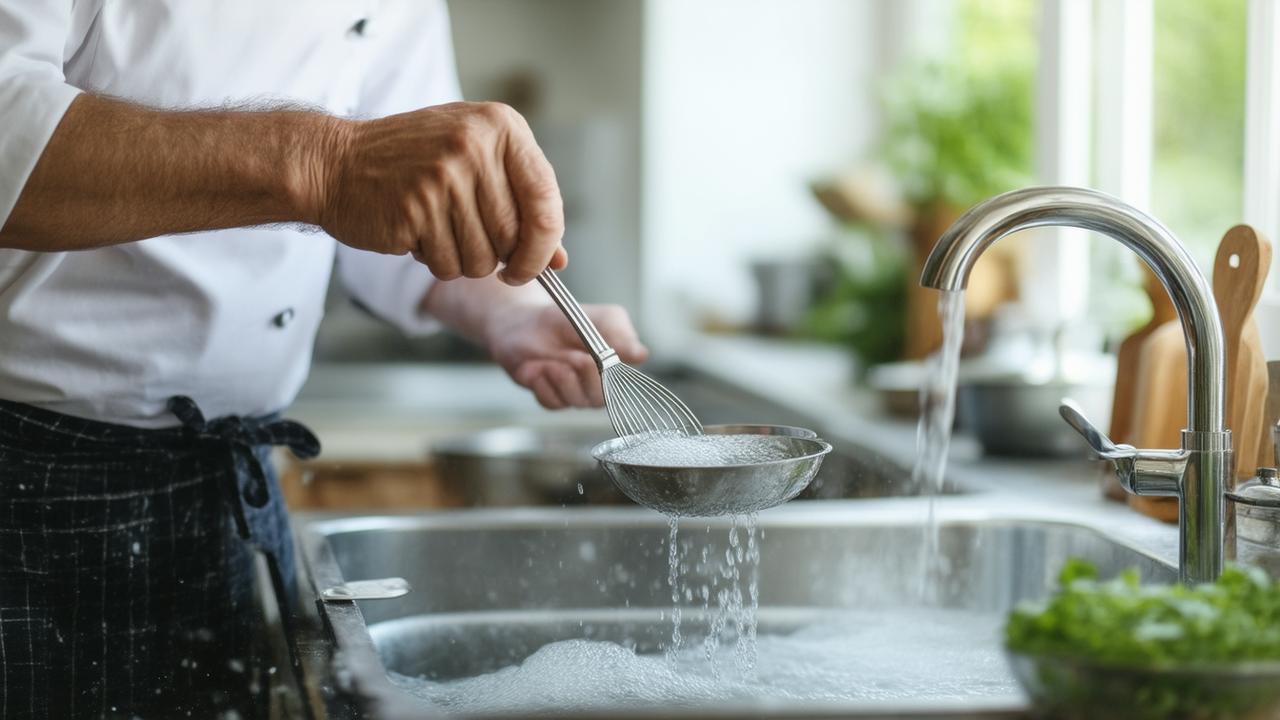
The pan is still sizzling, the onions are browning just right, and there’s that unmistakable smell of garlic drifting through the kitchen. On the bench sits a chopping board dusted with carrot peel, a jar of passata, the olive oil, a wooden spoon. For many of us, this is where the chaos starts to creep in — wrappers, stray herbs, a knife you’ve already used three times but somehow can’t bring yourself to wash. But then there’s that other kind of cook. The one who, midway through stirring the bolognese, quietly rinses the knife, wipes the bench, stacks the bowls neatly next to the sink. By the time dinner is ready, their kitchen looks almost… serene. If you’re one of those “clean as you cook” people, psychology suggests your habits say far more about you than just being “tidy”.
The Secret Lives of Australia’s Tidy Cooks
Spend a slow Sunday afternoon in any Australian suburb and you’ll hear it: the gentle hum of a rangehood, the clink of plates, the gush of a tap. Behind a lot of those sounds is someone pottering around the kitchen, making a meal and, crucially, putting things away before they pile up.
In homes from Brisbane share houses to Perth townhouses and Melbourne terraces, there’s a quiet breed of cook who wipes down the bench while the kettle boils, stacks the dishwasher while the pasta water heats, and returns spices to the pantry without even thinking about it. For them, cleaning isn’t a separate task tacked onto the end of cooking; it’s woven into the rhythm of making a meal.
Psychologists who study everyday habits call this “integrated task management” — essentially, blending multiple tasks into one seamless flow. People who clean as they cook tend to share a cluster of distinctive personality traits and mental habits that show up in other parts of their lives too: in how they work, how they cope with stress, even how they relate to others.
And in a culture where the kitchen is the beating heart of the home — from barbie nights on the deck to weekday dinners thrown together after a long commute — understanding what’s behind this simple habit can be surprisingly revealing.
| Trait | What It Looks Like in the Kitchen | How It Shows Up in Daily Life |
|---|---|---|
| High conscientiousness | Putting ingredients away as they’re used | Reliability at work, meeting deadlines |
| Future-oriented thinking | Minimising the “post-dinner” clean-up | Planning finances, trips, and routines |
| Emotional self-regulation | Keeping clutter low to stay calm while cooking | Staying composed during stress or conflict |
| Respect for shared spaces | Leaving the kitchen usable for others | Being considerate in share houses and workplaces |
| Preference for structure | Following a loose “system” while cooking | Using lists, calendars, and routines |
The 8 Distinctive Traits Behind “Clean-As-You-Cook” Behaviour
1. A Quietly Powerful Sense of Conscientiousness
If you clean as you cook, you’re probably high in what psychologists call conscientiousness — the trait linked to being organised, responsible, and self-disciplined.
Think about the way you handle a simple stir-fry. You chop the veg, slide them into a bowl, wipe the chopping board, return the soy sauce and sesame oil to the pantry, and give the bench a once-over with the cloth. You’re not trying to impress anyone; it just feels right to reset the space as you move through the recipe.
Research consistently shows that conscientious people tend to do better in long-term goals: they’re more likely to save money, stick to plans, and maintain healthier routines. The same mental muscle that nudges you to rinse that knife before it clogs the sink is the one that helps you send that email before it becomes overdue or fill up the car before the fuel light is blinking amber on the M1.
2. Future-You Is Always in the Room
Cleaning as you cook is, in many ways, an act of kindness to your future self. While the sauce simmers or the roast gently crackles in the oven, you take those in-between minutes to do the less glamourous work — scraping plates, wiping spills, stacking cutlery.
This is what psychologists call future orientation: an ability to think ahead and reduce “future pain”. Instead of seeing cleaning as a separate chore, you weave it into the process so there’s no grim “mountain of dishes” moment after you’ve eaten.
In an Australian context, where many people juggle long commutes, long shifts, or irregular hours, this future-focused thinking is a quiet survival strategy. If you’re up at 5am for a tradie job or finishing a late-night shift at a hospital, the last thing you want is to walk into a kitchen disaster zone. People who clean as they cook know this intuitively — and act accordingly.
3. A Need for Calm in the Chaos
Kitchens can be intense: multiple dishes going at once, kids asking what’s for dinner, maybe a dog weaving around your ankles hoping for dropped food. Amid all of that, visual clutter — spills, piles of peel, every pot in the cupboard on the stove — quietly ramps up your stress level.
People who clean as they cook often have a strong need for a sense of calm. They instinctively lower their own anxiety by keeping surfaces relatively clear and tools in their place. Psychologically, this reflects good emotional self-regulation: you manage your environment to manage your feelings.
Some studies show that messy environments can spike cortisol (a stress hormone) and make it harder to concentrate. That means the simple act of quickly rinsing a bowl or wiping a spill isn’t just about neatness — it’s about protecting your ability to think clearly and enjoy the process. In a small Sydney apartment kitchen or a cosy caravan galley on a road trip up the coast, that sense of order becomes even more crucial.
4. Respect for Shared Space and Shared Lives
If you’ve ever lived in a share house in Melbourne’s inner north or a student flat near a uni campus, you’ll know the unspoken kitchen politics. There’s always that one person who leaves a leaning tower of pots “so they can soak overnight”, and another who quietly scrubs the stovetop because they can’t bear the baked-on sauce anymore.
People who naturally clean as they cook tend to be highly attuned to the idea of shared space. There’s an element of prosocial behaviour — actions that take other people into account. Even if you live alone, that same instinct might show up when guests come over: you keep the kitchen under control so everyone feels comfortable, not just you.
This trait often appears in other corners of life too: putting back tools in a shared workshop, clearing your desk in an open-plan office, or wiping down gym equipment after use. It signals a subtle awareness that your environment is connected to others, and your actions either add to the chaos or reduce it.
5. A Love of Systems, Even Tiny Ones
Watch a clean-as-you-cook person in action and you’ll often see a hidden system at work. It’s rarely rigid or obsessive, but there’s a rhythm: chopping station here, scrap bowl there, dishes stacked by the sink in a certain order, tea towel always hung in the same spot on the oven handle.
This is the fingerprint of a mind that loves micro-systems. You may not think of yourself as especially organised — your car might be a bit of a disaster, your inbox overflowing — but in the kitchen, there’s a quiet choreography you’ve refined over time. It’s a practical kind of intelligence that thrives on routines that make life smoother.
Psychologically, this leans toward what’s known as a preference for structure. Not the rigid, colour-coded-diary type necessarily, but an appreciation for predictable workflows. It’s the same instinct that might make you lay out clothes the night before an early flight, or always keep your keys in the same dish by the front door.
6. Mindfulness Hidden in Plain Sight
Cleaning as you cook can look purely practical, but often there’s a layer of mindfulness tucked inside the habit. You’re present enough to notice: that’s going to stick if I leave it, this board will be easier to wash now, those peelings need to go in the compost before they start smelling.
Instead of zoning out and rushing through the process, you tune into the small moments — the warm water running over your hands as you wash a pan, the satisfaction of a crumb-free bench, the small click of a cupboard door closing. This attention to detail is a close cousin of mindful awareness, where you stay anchored in the present while doing everyday tasks.
➡️ These zodiac signs are destined for major prosperity in 2026, according to astrological forecasts
➡️ The RSPCA urges anyone with robins in their garden to put out this simple kitchen staple to help birds cope right now
➡️ The RSPCA urges anyone with robins in their garden to put out this simple kitchen staple today
➡️ What you see is not a ship : at 385 metres long, Havfarm is the world’s largest offshore salmon farm
➡️ “I used to multitask constantly,” this habit helped me stop without effort
➡️ Workers in this role often earn more by becoming specialists rather than managers
➡️ If you want a happier life after 60 be honest with yourself and erase these 6 habits
In a busy Australian lifestyle — juggling school drop-offs, work, footy training, or late-night study — these pockets of simple, embodied attention can be oddly grounding. For some, that quick tidy mid-recipe feels almost meditative, like resetting the mental space as much as the physical one.
7. A Gentle Refusal to Be Overwhelmed
Underneath all of this lies one more subtle trait: a determination not to let things get bigger than they need to be. The person who cleans as they cook has usually learnt, maybe the hard way, that small messes ignored become big messes — on the bench, in the inbox, in life.
Psychologists might link this to lower levels of avoidance. Instead of dodging unpleasant tasks and letting them snowball, you tackle them in manageable chunks. You see the value of five-minute jobs: a quick rinse here, a stack of plates there, before it turns into a full-blown Sunday-afternoon scrub marathon.
This trait often spills into other areas: paying bills before reminder notices, answering tricky messages instead of ghosting, addressing conflict early instead of letting resentment simmer. It doesn’t mean you never procrastinate, but at your core, you prefer being on the front foot rather than perpetually catching up.
It’s Not About Being Perfect — It’s About What You Value
Of course, not cleaning as you cook doesn’t make you careless or lazy. Some brilliant, creative minds thrive in a bit of mess. Some people simply prioritise the joy of the meal or the company around the table, and deal with the washing up later, music turned up, rubber gloves on.
But if you’re one of those people whose hand just automatically reaches for the dishcloth mid-recipe, psychology suggests you’re not just “tidy”. You’re likely future-focused, emotionally self-aware, respectful of shared spaces, and quietly determined not to let life’s little tasks tower over you.
Somewhere in a Brisbane kitchen at dusk, someone is stirring a curry, rinsing the wooden spoon between ingredients. In a Hobart share house, someone’s wiping the bench while the kettle boils. In a Darwin apartment, a small compost caddy is being emptied before the wet season humidity does its worst. These tiny gestures, repeated night after night, sketch a story of who we are — and who we’re trying to be.
Because in the end, the way we move through a kitchen is rarely just about food. It’s about how we move through our days: what we notice, what we let slide, and what we quietly take care of before it ever becomes a problem. And for the clean-as-you-cook crew, that story is one of order in motion, calm amidst sizzle, and a quiet, ongoing conversation with the future self who’ll walk into that kitchen later and whisper, relieved, “Thank you.”
Frequently Asked Questions
Is cleaning as you cook a sign of anxiety or control issues?
Not usually. For most people, it’s a practical strategy that reduces stress rather than creating it. It becomes a concern only if you feel compelled to clean to the point where you can’t enjoy cooking or being with others.
Can I train myself to become a “clean-as-you-cook” person?
Yes. Start with small habits: fill the sink with warm soapy water before you start, use one “scrap bowl” for peels and packets, and tidy during natural pauses like simmering or baking. Over time, these actions become automatic.
Does this trait show up differently in Australian homes?
Often it does. Smaller kitchens in city apartments, open-plan living spaces, and busy work schedules make integrated cleaning especially useful. Many Australians also factor in things like composting, water use, and shared house living.
Is it better for relationships if one partner cleans as they cook?
It can help, but only if expectations are communicated. Resentment often arises when one person silently shoulders the “tidy” role. Talking openly about shared responsibilities matters more than who wipes the bench first.
What if I enjoy a bit of kitchen chaos — does that mean I lack these traits?
Not at all. Personality is complex. You might express conscientiousness and future focus in your work or finances instead of your cooking. The kitchen is just one window into how you prefer to live, not a final verdict on your character.





