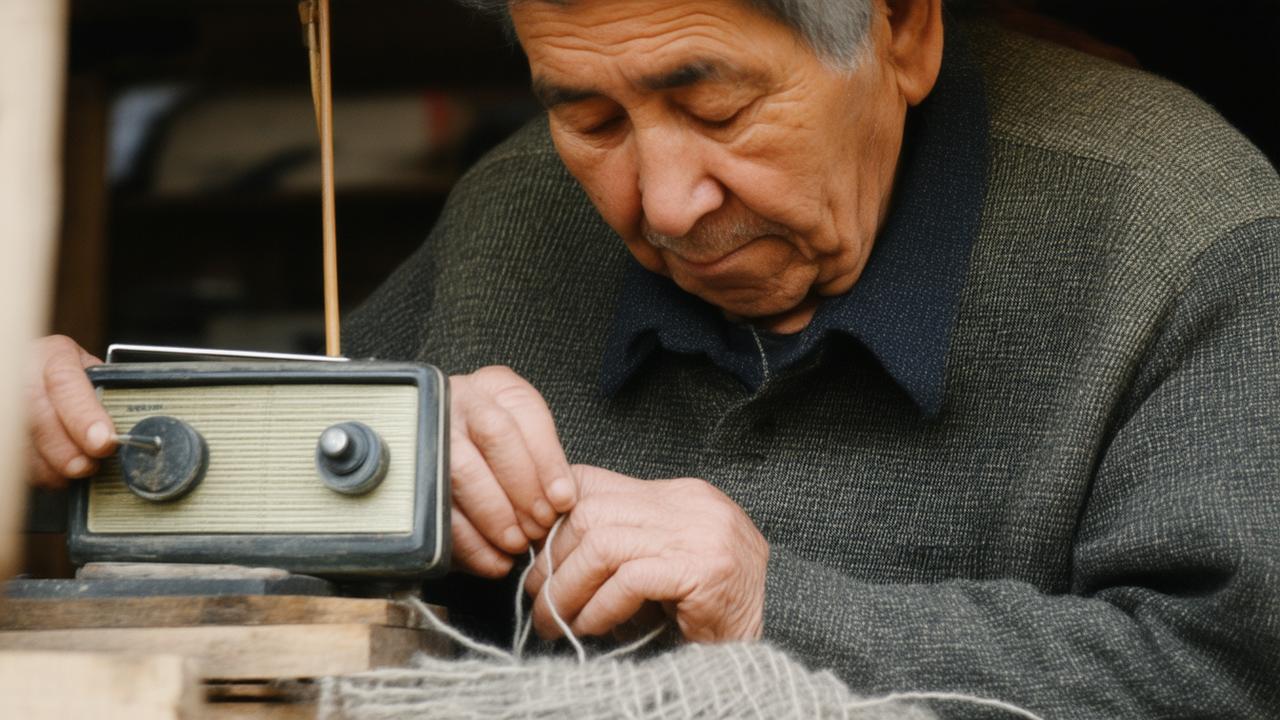
The first thing you notice is the quiet. Not the digital sort of quiet—phone on silent, laptop asleep—but an old-fashioned, sky-wide, cicada-humming quiet. Maybe it’s a memory of summer holidays on the coast, the heat rising off the bitumen, the smell of Aerogard and salt, the thwack of a tennis ball on a fibro wall. If you grew up in Australia in the 1960s or 1970s, this quiet isn’t just nostalgia. It’s the backdrop to a way of growing up that shaped your mind in ways psychologists are only now starting to map out—seven mental strengths that were once common, and are now, in our screen-lit century, surprisingly rare.
The Lost Art of Boredom: How Empty Afternoons Built Tough Minds
Ask someone raised in suburban Melbourne, regional Queensland, or the outer edges of Perth back then what they did after school, and there’s a decent chance they’ll shrug and say, “Not much. Just mucked around.” That “nothing” was actually something powerful.
Psychologists call it tolerance for boredom—the capacity to sit with a lack of stimulation without spiralling into anxiety or compulsive distraction. In the 60s and 70s, kids had whole afternoons where nothing was planned. TV had a few channels. No YouTube rabbit holes. No Minecraft. Just time, sky, and occasionally a stick that became a sword, fishing rod, or magic wand.
That boredom forced the brain to self-generate interest: to daydream, invent games, build cubbies, or just lie on the grass watching clouds move like slow ferries across the sky. Modern research suggests this kind of unstructured time helps develop creativity, self-regulation, and emotional stability. The mind learns it doesn’t need constant hits of novelty; it can create its own world.
Fast forward to Australian households today—where kids move from school to structured sport to homework to devices—and boredom is treated like a problem to fix. But for many people raised in the 60s and 70s, that boredom carved a deep mental well: the ability to sit through dull meetings, long commutes, or tough stretches in life without falling apart. It’s not glamorous, but it’s a quiet kind of resilience that underpins everything else.
Free-Range Childhoods and the Psychology of Risk
From Riding in the Back of Utes to Robust Risk Calibration
There’s a particular kind of memory that people from that era share: being out of the house for hours and no one really knowing exactly where you were. Maybe you were riding a battered bike around the neighbourhood until the streetlights flickered on. Maybe you were roaming bush blocks on the edge of town, following a creek, flicking leeches from your legs, learning which spiders to leave well alone.
Psychologists now talk about risk literacy—our ability to judge what’s dangerous, what’s manageable, and what’s worth it. Children of the 60s and 70s in Australia often had more direct, embodied practice with risk. They climbed trees without helmets, swam in rivers with currents, crossed train tracks, lit campfires on family holidays. It wasn’t safer back then; if anything, it was statistically rougher. But that exposure to real-world, physical risk helped develop a calibrated inner compass.
Today, a lot of kids grow up with safety rails on every edge, literal and metaphorical. Playgrounds are rubberised. Strangers feel more dangerous, even though the data says the world is not more threatening overall. The result? Many young people reach adulthood with less lived experience of managing risk with their own judgement.
Australians raised in the 60s and 70s often carry a kind of grounded courage: not fearlessness, but familiarity. They know what a big wave does when it catches you wrong. They’ve seen a fire grow too fast. They’ve patched their own knees and walked home anyway. Psychologically, that kind of embodied knowledge becomes a pillar of mental strength: the confidence that, yes, things can go wrong—but you can probably handle it.
The Grit of Doing Without: When Scarcity Built Inner Wealth
Learning to Cope When “You’ll Have to Make Do” Was the Default
Australia in the 1960s and 70s was not the land of abundance it appears today. Plenty of families had one car, one phone (attached to a wall), maybe one heater to huddle around in winter. Toys were shared. Clothes were handed down. If something broke, your dad or your mum—or that neighbour who knew everything—had a crack at fixing it before anyone thought of buying a new one.
This day-to-day practice of “making do” shaped what psychologists recognise as distress tolerance and frustration tolerance. When you grow up not expecting instant solutions, you learn to ride out discomfort: waiting for your turn, wearing the itchy jumper a bit longer, walking instead of getting a lift, enduring boredom on long car trips with no iPad glowing in the back seat.
Over time, that builds a sturdy inner message: “I can cope. I don’t need everything to be perfect to be okay.” That stance is increasingly rare in a culture trained to believe that every small discomfort has a quick fix—scroll, order, upgrade, replace.
In modern psychological terms, those raised in the 60s and 70s often hold a stronger sense of internal locus of control: the belief that how life feels is more about how you respond than what you own. You didn’t get a new bike? You learnt to grease the chain on the old one. No money for a beach holiday? The local pool, the hose, and a bit of imagination were enough.
Analog Connection: The Quiet Power of Real-World Community
Thick Social Ties and Emotional Endurance
Picture the classic Australian street from that era: kids from three houses piled into one backyard, adults talking over the fence, someone’s dad fixing someone else’s lawnmower, doors left unlocked more often than not. Many people who grew up then talk about knowing not just their neighbours’ names but their stories.
Psychology has been emphatic on this point for decades: social connection is one of the strongest predictors of mental health. People raised in the 60s and 70s often had community woven into daily life. School wasn’t just a learning environment; it was your social hub. Sport wasn’t another line in a packed schedule; it was where you learnt teamwork, conflict, loyalty. Local footy or netball clubs, surf lifesaving, church groups, Scouts, Brownies—these weren’t extras, they were the skeleton of social life.
The mental strength that came out of this is subtle but profound: a deep familiarity with belonging. That doesn’t mean everyone was happy or included—far from it. Bullying, racism, sexism, homophobia were real and did damage. But in the midst of that, many also developed a resilient capacity to navigate differences, tolerate difficult people, and maintain relationships across time and tension.
In a digital age where conversations are so easily abandoned with a tap, that old-fashioned face-to-face social grit—ringing a doorbell, showing up for a mate, seeing the same people at the same club every Saturday—has become rarer. Those raised in the 60s and 70s had fewer options to disappear from relationships. That constraint often grew into a mental muscle: working things through instead of walking away at the first sign of discomfort.
The Strength of Simpler Stories: Identity Without an Algorithm
Growing Up Before Constant Comparison
Imagine being a teenager without social media: no Instagram, no TikTok, no endless stream of carefully edited lives to measure yourself against. You still had comparisons, of course—the cool kids at school, that one neighbour with a nicer car—but your world was smaller and, in some ways, kinder.
Psychologists today are deeply concerned about the mental load of constant social comparison. People raised in the 60s and 70s developed their sense of self in a world where identity was shaped more by family, local culture, and lived experience than by global algorithms.
The result? A form of mental strength we might call grounded identity. You were “the kid who’s good at maths”, “the one who’s always drawing”, “the fast runner”, “the one whose dad works nights at the factory”—labels that weren’t always fair, but were at least rooted in real interactions. You didn’t see a thousand other teenagers every week performing success, beauty, and popularity for your judgement.
That groundedness often translates, later in life, into something psychologists term self-acceptance: a calmer relationship with who you are. You know your strengths, your flaws, your history. Without 24/7 comparison, many people who grew up in that era developed a quieter ego—less whiplash, more steadiness. In a world now riven by identity angst and image pressure, that’s starting to look like a rare superpower.
When the World Was Slower: Deep Attention in a Distracted Age
Long Books, Long Conversations, Long Summers
Think back to how time moved then. The post arrived once a day. The news came at set times. If you missed a TV show, you missed it. Waiting was part of the fabric of life—waiting for a letter, a lift, a phone call, the cricket score on the radio.
Neuroscience suggests that this kind of life trains a brain differently. Kids who spent hours reading books, building models, sewing, fishing, or listening to records beginning to end developed what we now desperately try to revive with mindfulness apps: sustained attention.
Australians raised in the 60s and 70s often learned, simply because there wasn’t much choice, to focus deeply on one thing at a time. Long walks to school, long bus rides, listening to elderly relatives tell the same story again—these weren’t glamorous moments, but they were mental gym sessions for patience and presence.
Compare that to today’s fractured attention economy, where multiple devices, notifications, and endless scrolling chip away at focus. Those who grew up analog often carry into later life the ability to sit with a problem, follow through on a task, or just enjoy a quiet cup of tea without needing background noise. In psychological terms, that’s a rare capacity for voluntary attention control—choosing what to focus on and staying with it.
➡️ The streak-free window-cleaning method that still works flawlessly even in freezing temperatures
➡️ The quick and effective method to restore your TV screen to like-new condition
➡️ Thousands of passengers stranded in USA as Delta, American, JetBlue, Spirit and others cancel 470 and delay 4,946 flights, disrupting Atlanta, Chicago, New York, Los Angeles, Dallas, Miami, Orlando, Boston, Detroit, Fort Lauderdale and more
➡️ The sleep pattern that predicts alzheimer’s risk 15 years before symptoms
➡️ These zodiac signs are destined for major prosperity in 2026, according to astrological forecasts
➡️ The RSPCA urges anyone with robins in their garden to put out this simple kitchen staple to help birds cope right now
➡️ The RSPCA urges anyone with robins in their garden to put out this simple kitchen staple today
Stoicism with a Soft Underbelly: Emotional Strength, Rewritten
What the 60s and 70s Got Right—and Wrong—About Feelings
Here’s the paradox. The same generations who learnt grit through hardship were often told, “Don’t make a fuss,” “Boys don’t cry,” or “Just get on with it.” Emotional literacy wasn’t exactly a national sport.
On one hand, this created a kind of stoic resilience—a capacity to keep going through tough times that psychologists recognise as a protective factor against breakdown. Many Australians who grew up in that era have weathered recessions, layoffs, illness, grief, and upheaval with quiet determination. They’re used to the idea that life is not always fair, and that suffering is not necessarily a sign something has gone wrong.
On the other hand, some paid a price in repressed emotions and unspoken trauma. What’s striking now is how many from that generation are blending their old-school toughness with newer psychological tools—counselling, open conversations about mental health, breaking family patterns of silence.
The real mental strength here is an evolving one: the ability to hold both. To keep the backbone of “I can cope” while also learning to say, perhaps for the first time at 60 or 70, “I need help.” In an age of rising anxiety and fragility, that synthesis—a sturdy exterior with an increasingly honest interior—may be one of the most valuable gifts those generations can model for younger Australians.
The Seven Strengths at a Glance
Here’s a simple overview of the mental strengths often found in people raised in Australia during the 1960s and 1970s, and why they stand out today:
| Mental Strength | How the 60s/70s Built It | Why It’s Rare Today |
|---|---|---|
| Tolerance for Boredom | Long, unstructured days with few screens and limited entertainment | Constant digital stimulation makes any boredom feel intolerable |
| Risk Literacy | Free-range play, physical risks, and less parental micromanagement | Highly controlled environments reduce real-world risk experience |
| Distress & Frustration Tolerance | Scarcity, “making do”, fixing instead of replacing, fewer instant solutions | On-demand culture trains us to expect quick fixes and comfort |
| Social Grit & Belonging | Stronger local communities, sport clubs, neighbourhood networks | More transient relationships and online connections over local ones |
| Grounded Identity | Identity shaped by real-world roles and relationships, not algorithms | Social media intensifies constant comparison and performance |
| Sustained Attention | Slower pace of life, long-form activities (books, hobbies, conversations) | Fragmented attention from devices and notifications |
| Stoic-but-Growing Resilience | Cultural norms of “getting on with it” through hardship | Modern focus on comfort can undercut toughness, even as awareness grows |
Bridging Generations: What We Can Carry Forward
This isn’t a sentimental plea to go back to leaded petrol, asbestos, and seatbelts as a suggestion rather than a rule. The 1960s and 70s in Australia held plenty that needed to change—and has, thankfully, changed. Many from that era carry scars alongside strengths.
But in a time when mental health is fraying under the strain of speed, noise, and endless choice, those seven strengths shine like old river stones in clear water. Tolerance for boredom. Risk literacy. The ability to make do. Thick, lived-in community. A grounded sense of self. Deep attention. Quiet, steady resilience.
If you grew up in that period, you might recognise these in yourself: the way you can potter in the garden for hours, sit through silence without panic, fix a hinge instead of replacing the door, show up for a friend even when it’s awkward. They’re not just quirks; they’re psychological skill sets that younger generations often crave without even realising it.
And if you didn’t grow up then? None of this is out of reach. You can still weave in unstructured time. Let kids be bored. Take a walk without headphones. Join a local club and stay long enough to feel a bit uncomfortable, then a bit less so. Learn to fix something small. Sit with your feelings without instantly soothing them away.
The mental landscape of Australia has changed, but the sky over those childhood memories is still here: big, blue, and quiet enough—if we allow it—to hear our thoughts again. The strengths forged in that older world aren’t museum pieces. They’re tools. And they’re waiting, patiently, to be picked up again.
Frequently Asked Questions
Did everyone who grew up in the 60s and 70s develop these strengths?
No. These are broad patterns, not guarantees. Many people experienced trauma, disadvantage, or discrimination that eroded their mental health. The seven strengths describe common psychological skills that the era tended to encourage, but individual experiences varied widely.
Can younger Australians develop the same mental strengths today?
Yes. While the environment has changed, the brain’s capacity to learn hasn’t. Parents, carers, and individuals can intentionally build these strengths by allowing more unstructured time, encouraging manageable risk, fostering community, and practising patience and focus in everyday life.
Were people actually mentally healthier back then?
Not necessarily. Mental illness existed but was often hidden, misdiagnosed, or heavily stigmatised. Some people from that era paid a high price for the “toughen up” culture. The difference is that certain resilience skills were more deeply embedded in daily life.
How can I encourage these strengths in my own children or grandchildren?
Offer pockets of boredom without screens, support safe risk-taking (like climbing, exploring, outdoor play), join local activities, model fixing rather than always replacing, and have regular face-to-face conversations without devices present. Small, consistent choices matter more than big gestures.
I grew up then but don’t feel particularly resilient. What does that mean?
It means you’re human. Your personal history—family dynamics, health, trauma, support—shapes you more than any era stereotype. You may still carry some of these strengths in quieter forms, and you can absolutely build on them now with support, therapy, and conscious practice.





