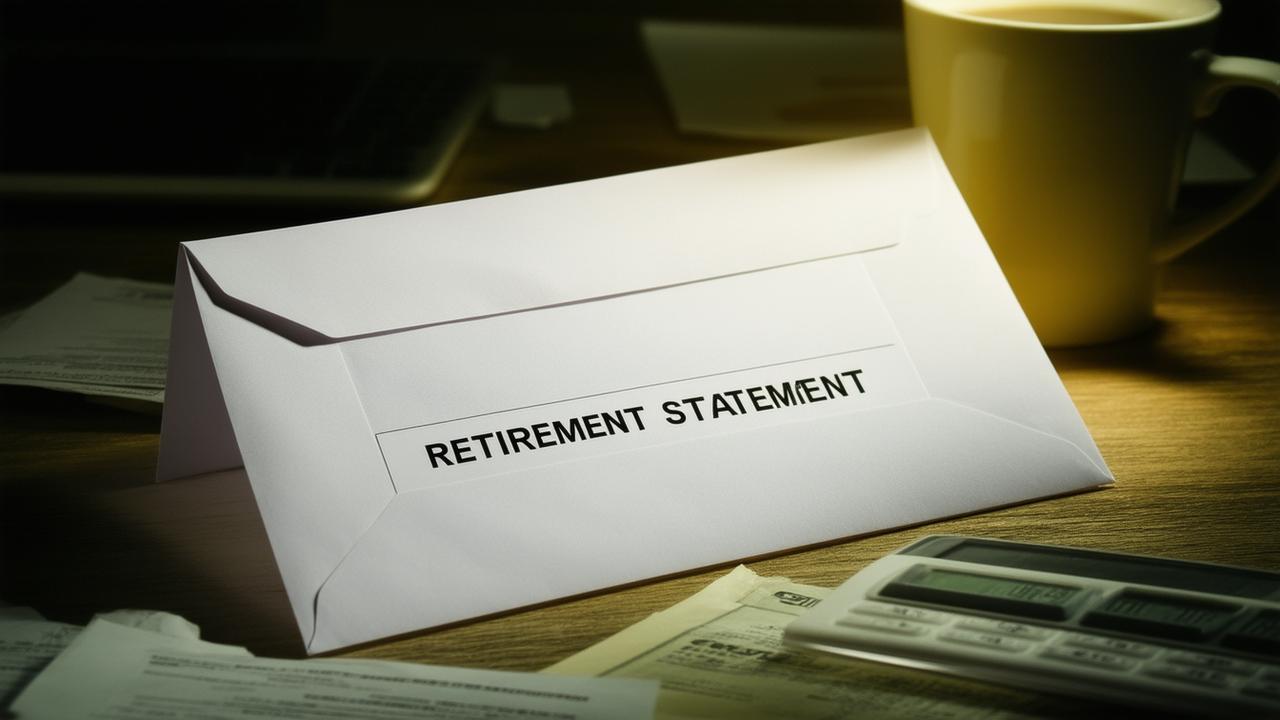
The email sits in your inbox for three days. “Superannuation Statement – Important Information Enclosed.” You see it every time you open your phone, a little digital pebble in your shoe. You swipe past it, again. You’ll open it later, you tell yourself, maybe on the weekend when your brain isn’t fried and the kids aren’t asking what’s for dinner and the dog isn’t scratching at the door. Besides, you think, what difference could a few days make?
When ‘later’ becomes never
Financial procrastination rarely looks dramatic. It’s not a big blow-up or a massive mistake you can circle on a calendar. It’s quieter than that. It’s the stuff you don’t do. The form you don’t fill out. The call you don’t make. The budget you don’t open again after January. The tiny delay that turns into months, then years.
In Australia, land of “She’ll be right”, we are world-class at putting money decisions off until tomorrow. We’ll happily spend half a Saturday comparing camping gear, but the idea of spending an hour calling our super fund feels strangely exhausting. We know we should review our insurances, consolidate our supers, maybe finally figure out what “salary sacrificing” actually means – but somehow it keeps slipping to the bottom of the to-do list, under “clean out fridge” and “buy potting mix”.
We tell ourselves a comforting story: that procrastination is harmless, a sort of neutral pause button. But with money, there is no pause button. There’s only forward. Your super is still moving, the cost of living is still climbing, the mortgage interest is still ticking, the rent is still due. Time keeps going, whether you’re actively steering the financial bus or not.
And this is where the hidden cost of financial procrastination lives – not in one huge, catastrophic decision, but in the quiet compounding of tiny delays. It’s the opportunity you never see, because you never made the call. The buffer you never built, because you never started. The future you quietly, unintentionally shrink.
The emotional tax no one talks about
There’s another cost to financial procrastination that doesn’t show up on a spreadsheet: the constant low hum of stress.
You know the feeling. Lying in bed, staring at the ceiling fan, thinking about the credit card you “really should” pay down, the health insurance review you “really should” do before renewal, the emergency fund you “really should” start once things “settle down a bit”. It’s not full-blown panic; it’s more like having a radio playing static in the next room. You can still function, but you never really relax.
In conversations with friends around Aussie kitchen tables and backyard barbies, money often shows up as a joke. “Oh mate, don’t look at my bank app!” “My super? Yeah, nah, couldn’t tell you.” We laugh, we shrug, we change the subject. Underneath the humour, there’s a shared, quiet unease. Because avoiding decisions doesn’t silence the worry. It just buries it deeper.
That emotional tax is real. It steals sleep. It makes you snap at your partner when they suggest looking at the budget “together, just for a bit”. It turns bills into monsters in the letterbox. It teaches your kids that money is scary or shameful, not something you can learn to handle.
Most of all, it makes your financial life feel like something that happens to you, rather than something you’re allowed to shape.
The numbers you don’t want to see (but really should)
Let’s bring this down from the clouds and into something you can actually picture. Imagine two 30-year-olds in Australia. Let’s call them Mia and Dave. They both earn the same income, have similar lives, both have super. But they treat procrastination differently.
Mia decides, one slightly boring Sunday afternoon, to finally log into her super account. She increases her contributions by a modest $20 a week via salary sacrifice. It takes her 20 minutes and a cup of tea.
Dave means to do the same thing. He just… doesn’t. He’s busy. Work’s hectic. Life’s full. He thinks it won’t matter if he waits “until I’m more settled”. Months blur into years.
Fast-forward to age 60. Let’s assume a 7% average annual return, which is not unreasonable for a long-term growth super fund. Here’s roughly what that 20-minute decision costs if you delay it:
| Scenario | Extra Contribution | Start Age | Value at 60 (approx.) |
|---|---|---|---|
| Mia – starts now | $20/week | 30 | ~$65,000 |
| Dave – waits 10 years | $20/week | 40 | ~$31,000 |
| Difference | ~$34,000 |
The hidden cost of procrastination for Dave? Around $34,000, just from delaying one small decision by ten years. No drama, no market crash, no wild lifestyle – just quietly not getting around to it.
And that’s only one area: super. Now layer on top the cost of leaving high-interest credit card debt running for an extra few years, or sitting in a transaction account earning almost nothing instead of a higher-interest savings account, or putting off that call to your bank about a better mortgage rate. Suddenly, “I’ll do it later” looks a lot more expensive.
The quiet drift away from your own goals
Financial procrastination also has a way of gently steering you away from what you say matters to you. You might talk about wanting to take a year off and travel around Australia in a van, or buy a home near decent surf, or help your kids with uni costs. These things don’t need you to be a finance expert – but they do need you to act before life decides for you.
Without small steps now, those dreams can shrink. The van becomes “just a few weeks off, maybe”. The home by the beach shifts further inland. The help with uni becomes “Sorry mate, you’re on your own with that HECS debt.”
The cost here isn’t just dollars; it’s the slow erosion of possibility.
Why we delay money decisions (even when we know better)
It’s tempting to think procrastination equals laziness, but that’s rarely the truth. Often, it’s about emotion and overwhelm, not motivation.
Three big culprits show up again and again in Australian households:
1. Information overload
The moment you start researching money, you’re hit with a wave of jargon: offset accounts, franking credits, concessional caps, LVRs. It can feel like stepping onto a treadmill that’s already running too fast. So you step back off. Later, you think. When I have the mental energy to deal with this.
2. Fear of getting it wrong
What if you choose the wrong super option? What if you fix your mortgage rate and then interest rates drop? What if you start investing and the market dips next month? Doing nothing feels safer than risking a mistake, even if staying put quietly costs more over time.
3. Shame and comparison
You look around and assume everyone else has it together. They’ve got the new car, the renovated kitchen, the ski trip to Japan. If you’re behind on savings, or dealing with debt, or starting late with super, it can feel embarrassing – like money is a test you’ve already failed. So you don’t ask questions. You don’t seek help. You just wait.
But here’s a gentler truth: most people are winging it more than they let on. Procrastination around money is common, almost normal. Recognising that doesn’t excuse it; it just means you can let go of the shame and focus on practical changes instead.
Turning “sometime” into “this week”
If procrastination is a habit, then action can be, too. The key is not to declare a “New Financial Me” and try to fix everything in one heroic weekend. That’s a recipe for burnout and more avoidance. Instead, think in tiny, specific, almost laughably small steps.
Start with one 20-minute window
Pick a time this week when your brain isn’t fried – maybe a morning, maybe a quiet lunch break. Set a 20-minute timer. In that time, do one concrete thing:
- Log into your super fund for the first time in years and check your balance and fees.
- Download and open a budgeting app and link just your main account.
- Call your bank and simply ask, “What’s my current mortgage rate, and is there a better one you can offer?”
- Set up an automatic transfer of $20 a week into a separate savings account labelled “Emergency Fund” or “Future Me”.
When the timer goes off, you stop. Even if you’re mid-task. The goal isn’t perfection; it’s proving to yourself that you can take action without it swallowing your whole day.
➡️ The streak-free window-cleaning method that still works flawlessly even in freezing temperatures
➡️ The quick and effective method to restore your TV screen to like-new condition
➡️ Thousands of passengers stranded in USA as Delta, American, JetBlue, Spirit and others cancel 470 and delay 4,946 flights, disrupting Atlanta, Chicago, New York, Los Angeles, Dallas, Miami, Orlando, Boston, Detroit, Fort Lauderdale and more
➡️ The sleep pattern that predicts alzheimer’s risk 15 years before symptoms
➡️ These zodiac signs are destined for major prosperity in 2026, according to astrological forecasts
➡️ The RSPCA urges anyone with robins in their garden to put out this simple kitchen staple to help birds cope right now
➡️ The RSPCA urges anyone with robins in their garden to put out this simple kitchen staple today
Make your future self more real
Part of why we procrastinate is that our “future self” feels vague and distant, like a stranger. It’s easier to look after your 5-year-old today than your 75-year-old future self.
Try this: imagine yourself in 20 or 30 years, somewhere in Australia you actually love – maybe on a small balcony in Fremantle, a quiet cul-de-sac in Ballarat, or a coastal town on the NSW South Coast. Picture what a good day looks like. Do you want to be forced to work, or choosing to? Do you want to be worried about every bill, or relaxed enough to shout the grandkids ice-creams at the beach without sweating the cost?
That person is not a stranger. They are literally you. Every time you take a small financial action now – paying a bit extra off the credit card, nudging up your super, building a buffer – you’re sending that future you a care package.
Letting go of the myth of the “perfect moment”
One of the most seductive lies of financial procrastination is the idea that there’ll be a better time later. After the busy season at work. After the kids are older. After the next trip. After you get a pay rise. After, after, after.
Here’s the uncomfortable truth: life in Australia is not getting cheaper. Rents climb, groceries inch up, interest rates move. Waiting for the “perfect” moment to get organised is like waiting for Sydney traffic to be magically empty – you’ll be sitting there a long time.
But you don’t need perfection. You just need a first step. Something small enough that you can do it this week, not “one day”. Something that makes your money feel a tiny bit more under your control, and a tiny bit less like a fog you’re stumbling through.
Your inbox will probably always have another unread statement. Your mailbox will keep offering up bills and white envelopes you don’t want to open. The static of financial worry might never disappear completely.
Yet every time you choose to act instead of delay – to open the email, make the call, tick the form, set the transfer – you turn the volume down. You reclaim a little more peace, a little more choice, a little more future.
The real hidden cost of financial procrastination isn’t just the dollars lost in compound interest and high fees. It’s the life you quietly give up living, piece by piece, while you wait for later.
What if “later” started this week?
Frequently Asked Questions
Isn’t it better to wait until I earn more before worrying about this stuff?
Earning more helps, but it doesn’t replace good habits. Small actions – like automating $10–$20 a week into savings or super – matter more the earlier you start. If you learn to manage $1,000 well, you’re better prepared to handle $10,000 or $100,000 when it arrives.
What’s the most important thing to tackle first if I’ve been procrastinating for years?
Start with stability. For most Australians, that means:
- Building a small emergency fund (even $500–$1,000 is a start).
- Paying down high-interest debt like credit cards.
- Checking your super fund fees and contributions.
Pick just one of those to focus on for the next month, not all three at once.
How can I stop feeling overwhelmed by all the financial choices?
Limit your inputs. Instead of googling endlessly, choose one or two trusted sources or one professional (like a licensed financial adviser) and work from there. Break tasks into 20-minute chunks and give yourself permission to not know everything before you start.
What if I’m in my 40s or 50s and only just getting started?
You’re not alone, and it’s not too late. You may need to be more intentional – reviewing your super, considering extra contributions, reducing unnecessary debt, and being clear about your retirement expectations – but meaningful progress is still possible. The worst option is more delay.
Do I need a financial adviser, or can I do this myself?
Many Australians can manage the basics themselves: budgeting, building a buffer, paying down debt, and understanding their super. A financial adviser can be helpful if you have complex circumstances, larger assets, or simply want personalised guidance and accountability. Whether you get advice or go it alone, the key is acting, not endlessly postponing decisions.





