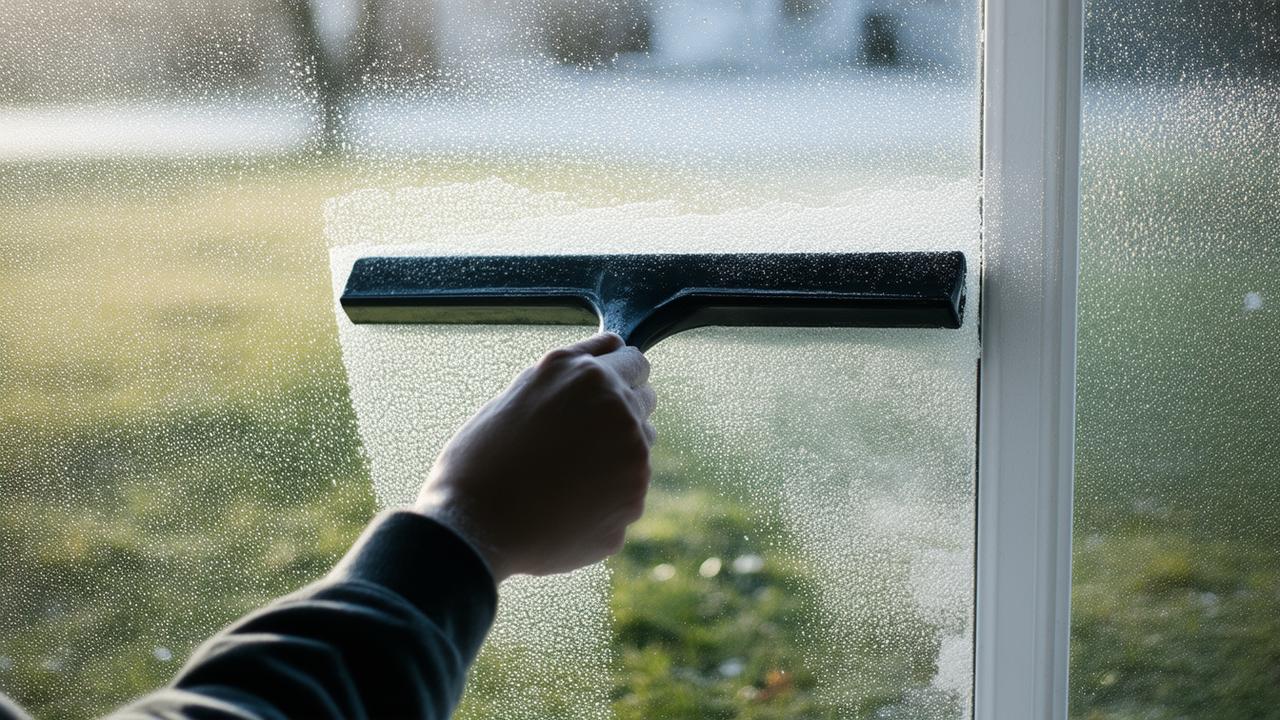
The first time I saw someone cleaning windows in a Tasmanian frost so thick it looked like icing sugar, I thought, “No way those panes are ending up streak-free.” The air bit at my face, the hose crackled with thin ice, and the breath from the bloke on the ladder curled away like smoke. Yet when he stepped down and the sun slid over that glass, the window shone so clean it almost vanished. No cloudy smears. No frozen film. Just a clear, sharp frame on the pale blue morning sky.
The Winter Window Problem We Don’t Talk About
If you live anywhere in Australia where winter actually feels like winter—think the Adelaide Hills, Canberra, Ballarat, the Blue Mountains, Tassie—you already know the quiet frustration of cold-weather window cleaning.
You pick a half-decent day, grab the bucket and detergent, and before you’re halfway through, your hands are numb, the water’s turning slushy, and as soon as the glass dries you’re left with streaks that catch the low afternoon sun like scratch marks. Or worse, the water freezes in the corners, leaving a filmy bloom that makes the whole job look unfinished.
Most of us just give up and decide, “I’ll wait for spring.” Meanwhile the salty coastal air, bushfire soot, dust storms, condensation, and city grime all bake themselves a permanent seat on your windowpanes. Inside, the winter light already arrives at a lower angle and for fewer hours—and whatever brightness we do get has to fight its way through smudges, kid fingerprints, and the ghostly tide lines left by summer storms.
Here’s the thing: window cleaning in freezing or near-freezing weather isn’t impossible. You just can’t do it the same way you would in a warm Sydney autumn or a mild Brisbane winter. The secret is less about elbow grease and more about chemistry, timing, and tools that play nicely with the cold.
The Cold-Weather Secret: Change What’s in Your Bucket
The Tassie window cleaner I watched that morning wasn’t a magician; he just understood winter. When water freezes on glass, it expands and grabs at dirt particles, then melts into streaks the second the sun hits. The trick is to stop it freezing in the first place—and to leave nothing on the glass that can dry patchy.
That means your usual warm-weather mix—bucket of cold water, dash of dish soap—is working against you in winter. Dishwashing liquid can become a little gloopy in low temps and leave a faint residue that shows up as foggy streaks once dry.
Here’s the cold-proof base method used by professionals across chilly parts of the world, adapted for Australian conditions and products you can actually find at the local supermarket or hardware store:
| Component | What to Use (AU-Friendly) | Why It Works in the Cold |
|---|---|---|
| Base Liquid | Warm (not hot) tap water | Slows the cooling of the solution, makes it more comfortable on your hands, helps lift greasy film. |
| Streak-Free Agent | A few drops of clear dishwashing liquid (no moisturisers or lotions) | Reduces surface tension so the liquid glides and doesn’t bead; helps cut through kitchen and urban grime. |
| Anti-Freeze Additive | Unscented methylated spirits (metho) | Lowers the freezing point of the solution, evaporates fast, leaves glass dry and streak-free. |
| Typical Ratio | About 3–4 L warm water + 1–2 tbsp dish soap + 1 cup metho | Keeps solution liquid close to 0°C, cleans effectively, and dries without residue. |
You don’t need fancy, imported window-cleaning chemicals. Methylated spirits—the same purple bottle many Aussies already keep in the shed for cleaning and camping—does the heavy lifting. It evaporates quickly, keeps the water from freezing on cold glass, and cuts through that greasy film that makes windows look hazy instead of crisp.
The Sensory Test: When the Glass “Sings”
You’ll know you’ve got the ratio right when your squeegee glides smoothly but you can still hear a faint squeak, like a soft little song against the pane. Too much metho and the rubber will drag. Too much detergent and you’ll get fat, slow suds that leave a dull trail.
Standing on a veranda in the crisp silence of a Canberra morning, you’ll see the difference immediately. The solution runs thin on the glass, almost like a clear veil rather than clouds of foam. When you pull the squeegee down in one steady stroke, the glass behind it looks almost sharper than reality: sharper trees, sharper distant rooftops, sharper winter clouds bunched on the horizon.
The Step-by-Step Winter Method (That Actually Works)
This method is simple, but in cold weather, sequence and timing are everything. Think of it less like a chore and more like a small winter ritual: one you might even start to enjoy when the air smells like rain and woodsmoke.
1. Pick Your Moment
Even on frosty days, there’s a window (no pun intended) when the glass is least hostile. Aim for late morning to early afternoon, when the sun has had a chance to take the bite out of the air but before it sinks behind roofs or gum trees.
- Avoid direct, harsh sun on glass—it can cause the solution to dry too fast and leave streaks.
- Don’t clean when the glass is iced over; gently scrape off ice first with a plastic scraper or credit card.
- If there’s a biting wind, work on the sheltered side of the house first.
2. Mix Your Cold-Weather Solution
In a bucket, add warm water, your drops of clear dish liquid, and metho. Swirl gently; you don’t want a foam party, just a light, slick mix. The metho will add that faint hospital-clean scent that vanishes as it dries, replaced by whatever your neighbourhood smells like—ocean air, damp earth, gum leaves, diesel from the nearby highway.
3. Use the Right Tools
Winter exposes every weakness in your gear. A cheap, hard squeegee that just sort of shudders down the glass will make you hate this job. A decent one glides like a blade on ice.
- Squeegee: Go for a rubber blade wide enough to cover a good portion of each pane but not so heavy it tires your wrist. Replace the rubber if it’s nicked or stiff.
- Washer (applicator): A microfibre sleeve on a T-bar holds the solution and scrubs gently without scratching.
- Cloths: Use a stack of clean microfibre cloths or lint-free cotton rags for edges and drips. Old T-shirts work better than fluffy towels.
4. Work in Smaller Sections
In summer you can happily slosh an entire big window and wander off for a second. In winter, that’s how you earn streaks and freezing patches. Instead, split the glass in your mind: top half, bottom half, or even into vertical sections for wide panes.
- Load the washer in your bucket and squeeze lightly so it’s wet but not pouring.
- Apply the solution to a small section, scrubbing gently in overlapping strokes, especially around the edges where grime collects like a subtle grey border.
- Squeegee immediately before the solution has time to chill and thicken.
5. Master the Squeegee Rhythm
This is where the magic—and the streak-free part—kicks in.
- Top edge first: Wipe a dry line across the top of the pane using a cloth, so your first squeegee stroke doesn’t catch drips from the frame.
- Angle matters: Hold the squeegee at a slight angle so water runs towards the side you’re heading for, not back over what you’ve just done.
- One confident stroke: For narrow panes, pull straight down in a single, steady movement, no wobbling.
- Wipe the blade: After each stroke, quickly wipe the rubber with your cloth. In the cold, even a small bead of solution left on the blade can become a ghostly trail on the next pass.
On wider windows, use a sideways “S” motion—like drawing calm waves in the air—letting each stroke overlap the last one slightly. It feels awkward at first, then oddly satisfying, like learning the smoothest way to butter toast.
6. Finish the Edges
Most streak complaints come from neglected edges and frames. Take a dry microfibre cloth and:
- Run it gently up the sides and along the bottom edge where tiny rivulets collect.
- Catch any sneaky drips on the sill before they crawl back onto the glass.
- Step back, tilt your head, and let the low winter light expose any faint smears you missed.
When It’s Properly Freezing: Extra Tricks for Aussie Frost Zones
In some parts of Australia, temperatures flirt with zero or sink well below, especially at dawn and after dark. In those conditions, even metho in the bucket needs a bit of backup.
- Increase the metho ratio slightly (up to about 1.5 cups per 4 L of water), especially if you see the solution starting to bead or ice at the edges.
- Keep your bucket indoors between windows, only bringing it out when you’re ready to do the next section.
- Wear thin, grippy gloves so your fingers stay nimble; cold, clumsy hands make more mistakes than bad tools do.
- Skip the outside at night; let the glass warm just a touch with daylight before you start, even on overcast days.
You’ll notice that instead of fogging up with a milky sheen, the glass dries swiftly, almost as if the air is quietly drinking the moisture away. The metho helps the water vanish before it can freeze, leaving nothing but the crisp smell of cold air and your reflection looking back, sharper than you’re used to seeing it in July.
Why This Old-School Method Still Beats the Sprays
Walk into any Australian supermarket and the cleaning aisle promises miracles: ready-mixed glass sprays with blue dyes, bright labels, and words like “crystal” and “diamond” printed in big, confident fonts. In warm weather, some of them do a decent job. In the cold, many struggle.
➡️ The quick and effective method to restore your TV screen to like-new condition
➡️ Thousands of passengers stranded in USA as Delta, American, JetBlue, Spirit and others cancel 470 and delay 4,946 flights, disrupting Atlanta, Chicago, New York, Los Angeles, Dallas, Miami, Orlando, Boston, Detroit, Fort Lauderdale and more
➡️ The sleep pattern that predicts alzheimer’s risk 15 years before symptoms
➡️ These zodiac signs are destined for major prosperity in 2026, according to astrological forecasts
➡️ The RSPCA urges anyone with robins in their garden to put out this simple kitchen staple to help birds cope right now
➡️ The RSPCA urges anyone with robins in their garden to put out this simple kitchen staple today
➡️ What you see is not a ship : at 385 metres long, Havfarm is the world’s largest offshore salmon farm
Those sprays are usually designed to evaporate quickly in moderate temperatures. On a chilly Adelaide Hills morning or a frosty Launceston afternoon, they linger just a touch too long, giving you that hazy, wipe-mark pattern that only truly shows when the sunlight comes low and sideways through the window—usually right when guests arrive.
The old blend of warm water, a whisper of soap, and metho has always been a favourite among Aussie tradies for a reason: it’s cheap, scalable, and predictable. Whether you’re cleaning the cottage windows on a windswept Tasman Peninsula block or the sixth-floor glass of a Melbourne apartment buffeted by southerlies, the physics don’t change.
And there’s something quietly grounding about the process. Instead of spraying, wiping, and throwing away another wad of paper towel, you fall into a rhythm: dip, swipe, pull, wipe blade, repeat. Breath in front of you in faint white puffs, the soft squeak of rubber, the slosh of water, the dull thud of the squeegee handle as you rest it against the sill between panes.
Keeping the View All Winter Long
Once you’ve done a proper, streak-free clean using this cold-weather method, maintenance becomes easier. A quick once-over every few weeks on the worst offenders—the kitchen window above the sink, the kids’ fingerprint gallery, the salty panes facing the coast—keeps the whole house feeling brighter.
You start to notice the little things: how a crisp, clear pane makes the late afternoon sky over Perth turn from flat grey to layers of soft lilac and blue; how the wattles or bottlebrush outside look almost painted when you’re not peering through a veil of smears and watermarks; how winter rain droplets bead and slide differently on properly cleaned glass.
In a season when many of us feel penned in, huddled near heaters and drying racks, clean windows quietly expand your world. They invite the short, sharp winter light deeper into the room. They frame the bare branches, swollen clouds, and misty hills like a series of living paintings. And they remind you, every time you walk past, that the outside world hasn’t gone anywhere; it’s just waiting for you on the other side of that invisible barrier.
FAQs: Streak-Free Window Cleaning in Cold Aussie Weather
Is methylated spirits safe to use on all windows?
For standard household glass, yes. Methylated spirits is commonly used by professionals. Avoid using it on tinted films or special coatings unless the manufacturer says it’s safe, as harsh cleaners can damage some films over time.
Can I use vinegar instead of metho in winter?
Vinegar helps cut mineral deposits but doesn’t lower the freezing point as effectively as metho. In very cold conditions, vinegar-based mixes may still freeze or leave streaks. You can add a splash of vinegar, but metho is the real cold-weather workhorse.
What if I don’t have a squeegee?
You can use a microfibre cloth only, but you’ll work harder and be more prone to streaks. If you do it that way, keep flipping to a dry section of the cloth as you wipe and work in very small areas. For best results, invest in a decent squeegee—it’s usually a one-time purchase that makes a big difference.
Is this method OK for double-glazed windows?
Yes. You’re only cleaning the external surfaces, and the solution won’t penetrate the sealed unit. Just be gentle around seals and frames, and don’t flood any weep holes in the frame with excessive water.
How often should I clean my windows in winter?
For most Australian homes, once at the start of winter and a light touch-up mid-season is enough. Coastal or high-traffic urban areas may need monthly quick cleans, especially on the windward side or above busy roads.
Can this method be used on mirrors and shower screens too?
Yes. The same warm water, tiny bit of detergent, and metho mix works beautifully on mirrors and glass shower screens, especially in cooler bathrooms where steam lingers. Just avoid letting the solution sit too long on metal fittings.
Is it safe for pets and kids?
Once dry, the glass is safe. During cleaning, keep kids and pets away from the bucket and metho bottle. Store any leftover metho out of reach, with the lid tightly closed, and never leave the solution in an open container indoors.





